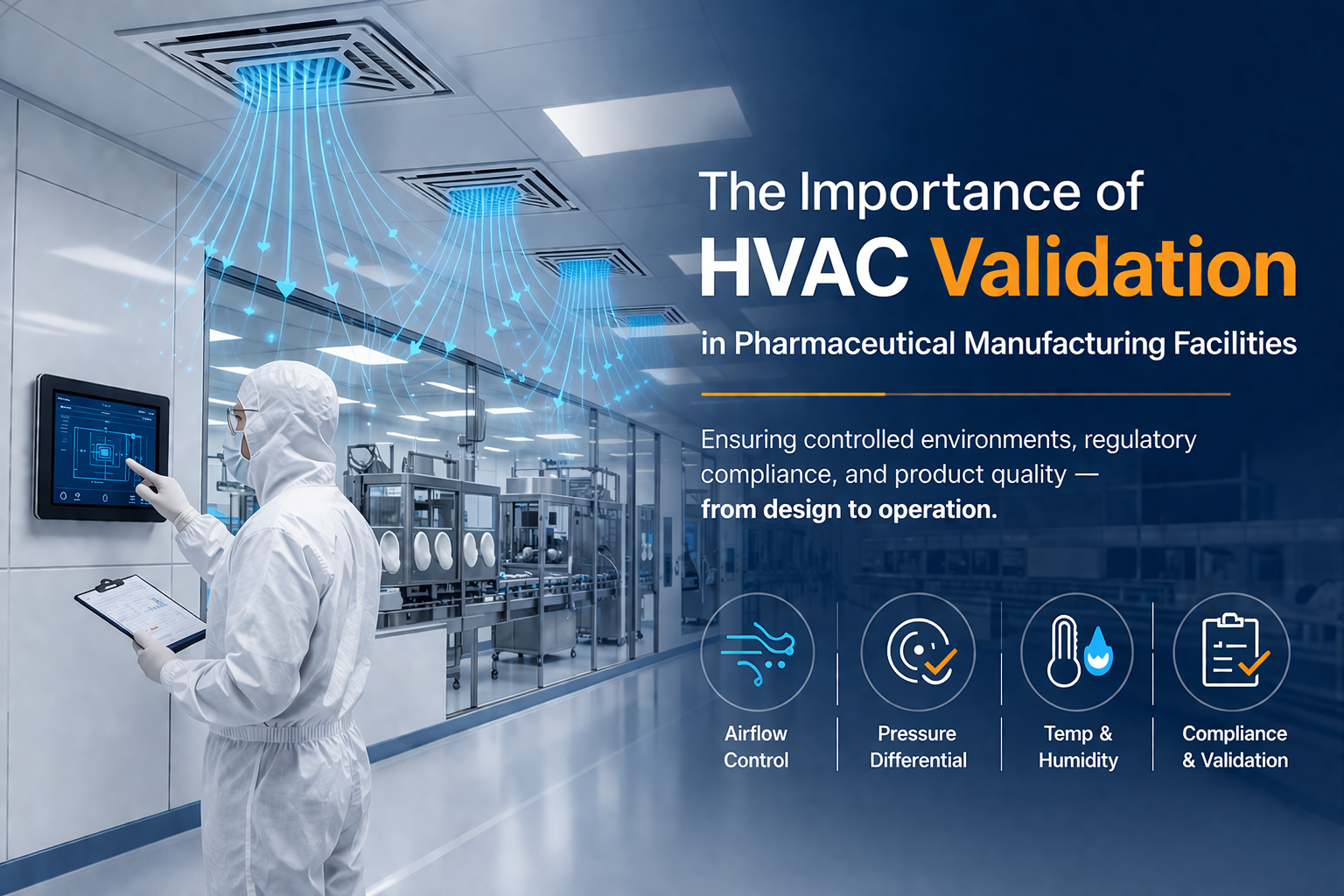
Cleanrooms for pharmaceutical production are more complex, highly regulated, and performance-focused than ever before. Not only do facilities need to maintain product quality standards, but they also need to ensure compliance under rigid timelines.
HVAC systems are no longer just operational components of your facility: They’re critical to your products’ quality, contamination issues and overall compliance.
HVAC validation is the process that guarantees your pharmaceutical HVAC systems will perform when it matters most. Without validation, even the most well-engineered systems can fall out of compliance.
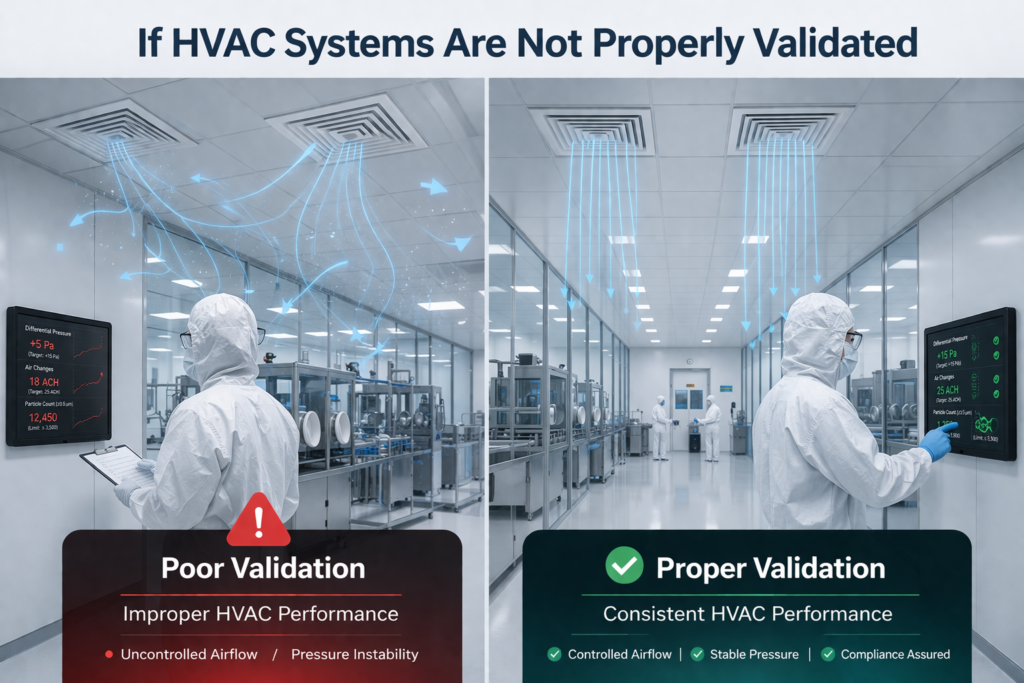
If HVAC Systems Are Not Properly Validated…
Many projects focus heavily on HVAC design and installation, but underestimate the importance of validation.
As a result, systems that appear compliant during design may not perform as expected during actual operations.
This can lead to:
- Inconsistent cleanroom conditions
- Failure to maintain pressure differentials
- Airflow imbalances affecting contamination control
- Delays in commissioning and qualification
HVAC systems are not proven to be compliant by design alone. They are proven through validation.
Why HVAC Validation Matters More Than You Think
HVAC systems in pharmaceutical facilities are responsible for maintaining controlled environments across cleanrooms, production areas, and support spaces.
These systems directly influence:
- Particulate and microbial control
- Temperature and humidity conditions
- Pressure cascades between rooms
In pharmaceutical HVAC systems, even small deviations can impact product quality and regulatory compliance.
For example:
- Incorrect airflow can lead to contamination risks
- Poor pressure control can disrupt cleanroom integrity
- Temperature fluctuations can affect sensitive processes
Validation ensures that HVAC systems perform as intended, consistently and reliably in line with cGMP expectations.
Critical Aspects of HVAC Validation
HVAC validation is not a single activity; it is a structured process that verifies system performance across multiple parameters and typically includes Design Qualification (DQ), Installation Qualification (IQ), Operational Qualification (OQ), and Performance Qualification (PQ).
- Airflow and Air Change Rates
Airflow is one of the most critical parameters in cleanroom environments.
Validation ensures that:
- Air change rates are sufficient to support required cleanroom classifications as per ISO 14644 and GMP guidelines.
- Airflow patterns support contamination control
- Air distribution is uniform across the space
Improper airflow can compromise the entire controlled environment.
- Pressure Differential Verification
Maintaining correct pressure differentials between rooms is essential to prevent cross-contamination.
During validation, teams must confirm:
- Pressure cascades are maintained consistently from higher-grade (cleaner) areas to lower-grade areas
- Transitions between rooms function as designed
- Any pressure loss is quickly detected and controlled
This is a key requirement in maintaining GMP compliance.
- Temperature and Humidity Control
Temperature and humidity are critical for both product stability and process consistency.
Validation ensures that:
- Environmental conditions remain within specified limits
- Systems respond effectively to load variations
- Seasonal changes do not impact performance
Uncontrolled environmental conditions can directly affect product quality.
- HEPA Filter Integrity Testing
HEPA filters play a vital role in removing particulate contamination.
Validation includes:
- Leak testing of filters using PAO (or DOP) methods
- Verification of filtration efficiency
- Ensuring proper installation and sealing
Any failure in filtration can compromise the entire cleanroom environment.
- System Integration and Controls
Modern HVAC systems are integrated with automation and monitoring platforms, such as Building Management Systems (BMS) or Environmental Monitoring Systems (EMS).
Validation ensures:
- Systems are properly integrated and responsive
- Data is accurately captured and recorded
- Alarms and controls function correctly
This integration is essential for maintaining compliance and operational visibility.
- Equipment Qualification
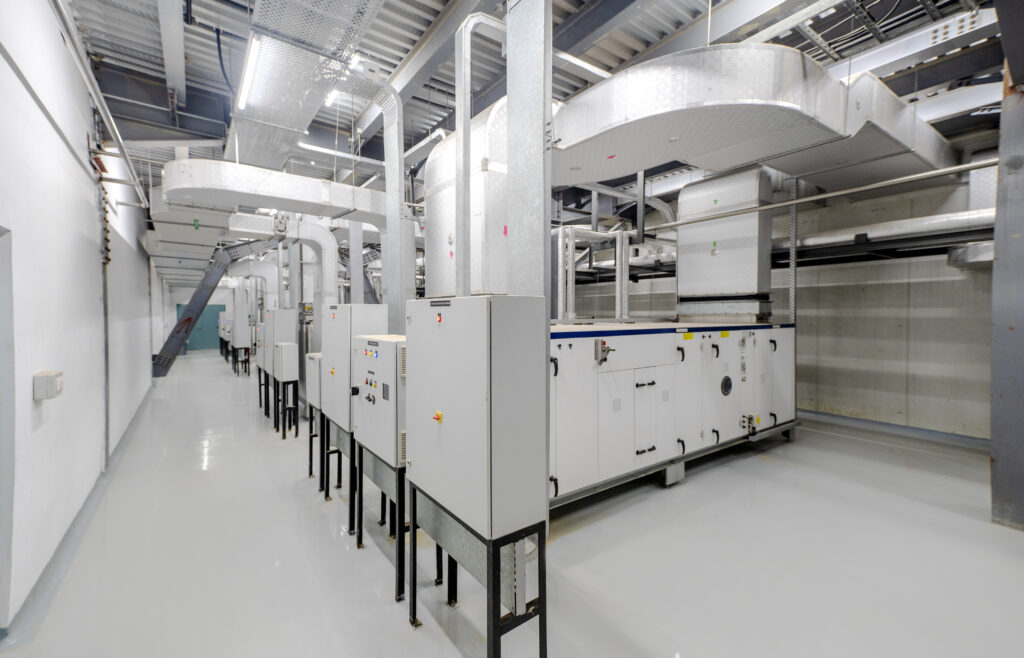
HVAC consists of multiple subsystems, such as air handling units, ductwork, filters, and sensors.
Validation that all HVAC equipment and subsystems operate correctly under actual operating conditions and function as an integrated system.
Each subsystem should work properly within the system.
- Documentation and Compliance
Validation is only complete when it is properly documented.
This includes:
- Test results and performance data
- Deviations and corrective actions
- Alignment with regulatory requirements such as US FDA, EU GMP, and WHO guidelines
Robust documentation supports audits, inspections, and long-term compliance.
HVAC Validation and Manufacturing Efficiency
There is a common assumption that validation is only about compliance. In reality, it plays a significant role in operational efficiency.
When HVAC systems are properly validated:
- Cleanroom conditions remain stable
- Production interruptions are minimized
- Maintenance issues are reduced
- Energy usage is optimized
Efficient HVAC performance directly contributes to consistent manufacturing output.
Why Traditional Approaches Fall Short
In many projects, HVAC validation is treated as a final step after installation.
This creates challenges such as:
- Late discovery of system performance issues
- Delays in commissioning and qualification
- Increased rework and cost
Without early alignment between design, installation, and validation teams, HVAC systems may not perform as intended.
Modern pharmaceutical projects require validation to be considered throughout the design and execution phases.
Delivering Validated HVAC Systems from Day One
To ensure reliable performance, HVAC validation must be integrated into the project lifecycle.
Engineering teams should:
- Align design with validation requirements from the beginning
- Involve CQV teams early in the project
- Ensure integration with automation and monitoring systems
- Validate systems under real operating conditions
This approach reduces risk and improves both compliance and efficiency.
How Pharma Access Approaches HVAC Validation
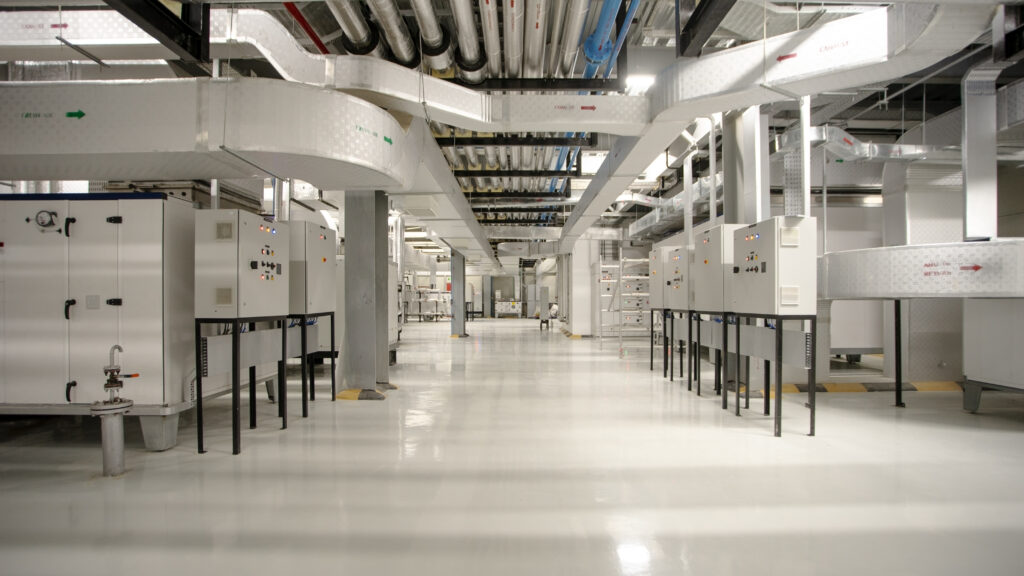
HVAC validation at Pharma Access is approached as part of the overall project execution plan.
Engineering HVAC pharmaceutical systems with CQV considerations from the design stage enables systems to be qualified and validated for performance, operability, and regulatory compliance.
This approach minimizes rework, reduces commissioning delays, and supports stable operations from the start.
Conclusion
HVAC systems are central to pharmaceutical manufacturing facilities. Product quality, compliance, and operational efficiencies depend on HVAC performance.
Validating your HVAC ensures they perform as required under real operating conditions.
You can have the best-designed system in the world, and without validation, it will fall short. With validation, facilities can run steadily, compliantly, and efficiently.
HVAC validation in pharmaceutical manufacturing is no longer optional. It is a fundamental requirement.
FAQ
- What is HVAC validation in pharmaceutical facilities?
It is the process of verifying that HVAC systems perform as intended under actual operating conditions.
- Why is HVAC validation important?
It ensures controlled environments, supports compliance, and maintains product quality.
- What parameters are checked during HVAC validation?
Airflow, pressure differentials, temperature, humidity, and filtration efficiency.
- What role does HVAC play in pharma manufacturing?
It maintains cleanroom conditions and prevents contamination.
- How does HVAC validation impact efficiency?
It reduces downtime, improves stability, and ensures consistent production conditions.