Why Engineering Is the Backbone of Every US Pharma Facility
In 2024, the U.S. pharmaceutical market was estimated at $634 billion and is growing at around 5.72% annually. It’s expected to surpass $884 billion by 2030. All that production relies on one thing more than anything: engineered correctly from the start.
Every medication that ends up in a patient’s hands begins inside of a facility. A facility that must adhere to some of the strictest engineering standards on the planet. If facility engineering is not planned and executed correctly, manufacturers can face product quality failures, FDA observations, warning letters, recalls, or even facility shutdowns. Do it right? You create a compliant, reliable platform that supports safe, effective medication manufacturing for years to come.
Here’s why U.S. pharmaceutical engineering matters more than ever.
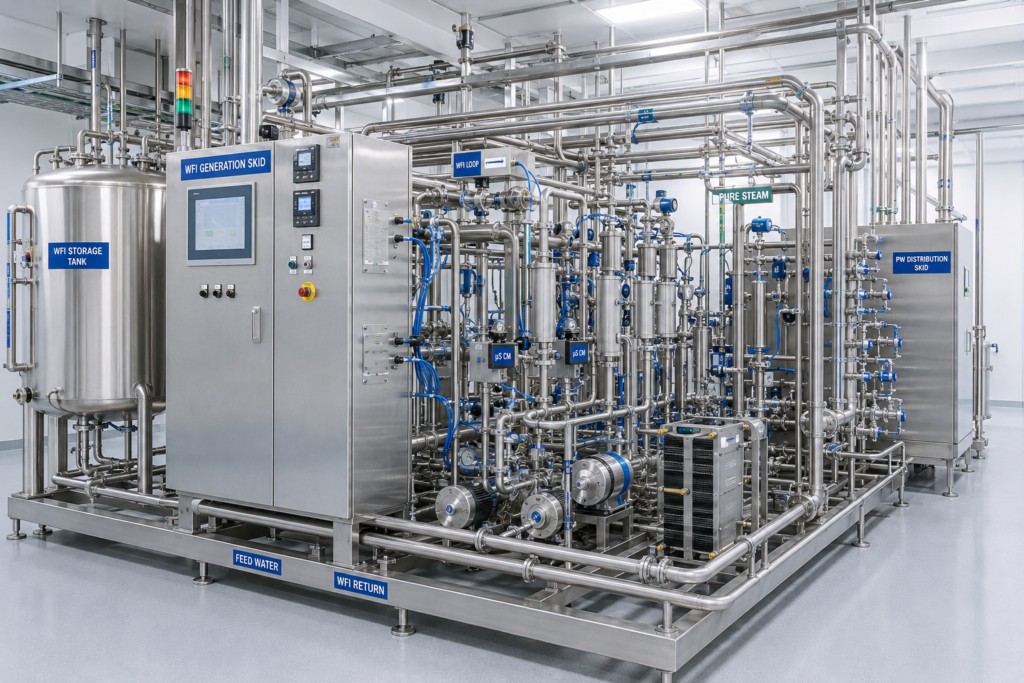
The Regulatory Foundation: FDA cGMP and What It Demands from Facilities
At the regulatory level, the foundation begins with FDA cGMP requirements. The FDA’s 21 CFR Parts 210 and 211 Current Good Manufacturing Practice regulations establish the legal baseline for the design, construction and operation of pharmaceutical manufacturing facilities. They cover everything from the layout of manufacturing areas to equipment qualification and employee training.
FDA inspectors may make sure companies meet these requirements during facility inspections. They’ll scrutinize the facility, the equipment, the processes and procedures, and records. Violations can result in Form 483s, warning letters, product recalls, etc. The FDA has been explicit that if your drug is made in a facility that doesn’t meet 21 CFR Part 210/211, your drug is considered “adulterated” by law even if the drug passes every quality test with flying colors.
In other words, manufacturing facility engineering isn’t some back-room issue. It’s at the forefront of every regulatory decision your pharmaceutical company makes in the US.
In addition to 21 CFR Parts 210 and 211, sterile product manufacturers also have to comply with the FDA’s 2004 guidance on sterile processing. This references the ISO 14644-1 cleanroom classification standards. The ISO classifications range from ISO Class 1 through ISO Class 9, depending on the maximum number of particles allowed per cubic meter of air. For example, an ISO Class 5 environment, which is typically where sterile fill/finish operations are conducted, allows less than 3,520 particles that are 0.5 microns or larger in volume per cubic meter.
Achieving and maintaining those numbers isn’t as simple as popping in a few filters. It requires careful engineering of HVAC design, airflow patterns, pressure differentials, surfaces and more.
What Does GMP Facility Engineering Actually Cover?
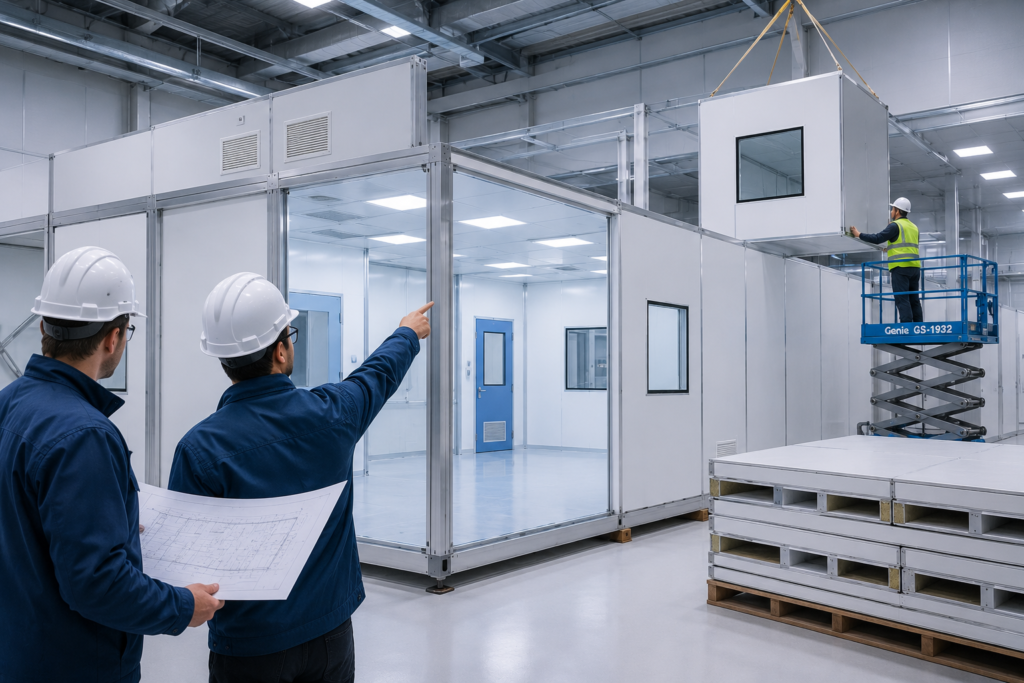
Here is a breakdown of the core engineering disciplines involved in bringing a compliant US pharma facility to life.
Cleanroom Design for US Pharma Facilities
Cleanroom design tends to be the most science-driven aspect when engineering GMP facilities. The classification will define your air change rates, filtration needs, as well as acceptable contamination standards. For example, ISO Class 5 rooms are often designed with high air change rates, commonly in the range of 240-480 air changes per hour. ISO Class 7 spaces are generally operated at 30-60 air changes per hour. HEPA filters, and in select applications ULPA filters, are placed into the HVAC system to continuously filter particulates out of recirculated air.
Equally important is proper zoning of your spaces. The highest classification rooms should be located within protected clean zones and surrounded by lower classification buffers. Along with pressure cascading, this will help ensure that contaminated air does not flow into cleaner areas. Positive pressure will ensure that outside contaminants do not enter your manufacturing areas. If you work with potent compounds or biologics that should not escape, negative pressure containment or appropriate barrier-based containment strategies should be used.
Pharma HVAC Systems in the USA
HVAC engineering cannot be overlooked when discussing cleanroom performance. Pharmaceutical cleanrooms can use up to 15 times more energy than traditional commercial facilities, with over 50% of electricity going towards powering HVAC. This is why engineering today extends past just meeting regulations. Pharma HVAC designers are implementing ISO 14644-16 guidelines regarding energy conservation by utilizing variable air volume units, computational fluid dynamics, and reviewing air change rate with data-driven decision making to name a few methods that reduce energy usage while maintaining clean air quality. Pressure differential monitoring is typically integrated with automated monitoring and alarm notifications if the reading falls out of desired ranges. Temperature and humidity are also tightly controlled within ranges specific to the product type/dosage form being produced whether it be oral solid dosage all the way to lyophilized injectables.
MEP, Utilities, and Process Engineering
Mechanical, electrical, and plumbing systems are critical to pharmaceutical facility performance and compliance. These utility systems have potential hazards that are unique when compared to typical construction. PW and WFI systems are designed so as not to promote microbial growth and must be validated to produce water that meets USP specifications. Compressed gases must meet pharmaceutical specifications for purity. Electrical systems must be able to deliver power reliably, with redundancy or backup strategies for critical manufacturing and support systems where required by risk assessment. Process engineering ties the building shell to the manufacturing process. Whether the facility will produce sterile injectables, oral solid dosage forms, APIs, or biologics/products requires engineering that is designed with the unique contamination concerns, material flows and equipment needs of that product type.
The US Investment Wave and What It Means for Engineering Demand
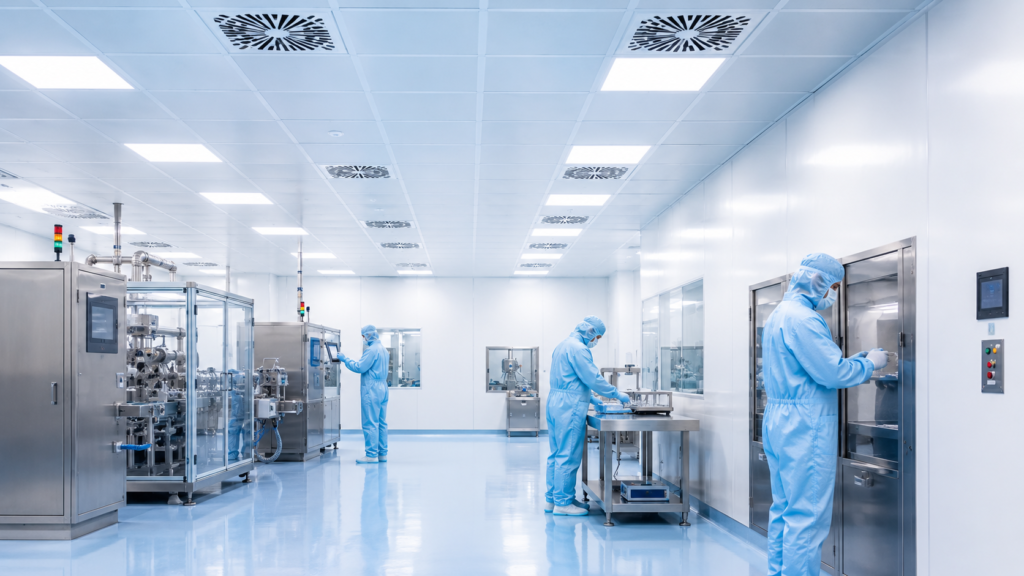
The magnitude of investment activity occurring in US pharmaceutical manufacturing today is hard to overstate. Between all the announcements, US manufacturing capacity commitments for the next four to ten years exceed $480 billion. Since 2020, Eli Lilly has announced more than $50 billion of US facility expansion. Merck broke ground on a $3 billion manufacturing center of excellence in late 2025 in Elkton, Virginia . Novo Nordisk is constructing a second fill-finish facility in North Carolina, which will provide 1.4 million square feet of aseptic space. GSK unveiled a five-year, $30 billion US investment plan.
With all of this reshoring comes a tidal wave of demand for GMP facility engineering across the US. Whether it’s a greenfield build, brownfield expansion, or existing operating facility upgrades – teams with deep regulatory knowledge and engineering expertise unique to each dosage form are in high demand.
Here’s the straight dope: building a sterile injectable facility is NOT like building an oral solid dosage facility. And a biotech facility manufacturing monoclonal antibodies isn’t designed like a cephalosporin API plant. Product dictates engineering.
Quality by Design: Engineering That Starts at the Drawing Board
A significant positive change in pharmaceutical engineering designs solutions happening in the USA over the last decade has been a shift in mindset toward Quality by Design (QbD). Instead of testing quality into your finished drug product, QbD principles involve designing quality into the process and facility from the beginning.
That means facility engineers must translate critical quality attributes all the way back to the design of the physical facility. Placement of air handling units, equipment layouts, material flow paths and even containment strategies are optimized to minimize risk of contamination, cross contamination and process variation. Commissioning, Qualification and Validation (CQV) activities are then used to confirm the facility will perform as designed before manufacturing a single commercial batch.
Simulation-based engineering is now standard practice when designing state-of-the-art pharma facilities. Computational fluid dynamics is used to model airflow in cleanrooms before they are built. Process simulations show how equipment will operate under varying conditions. Utilizing these tools helps minimize expensive design changes after the fact and helps accelerate time to regulatory approval.
Modular and Turnkey Approaches to Pharma Facility Delivery
Speed to market is a tangible competitive advantage in the world of pharmaceutical manufacturing. That’s part of the reason modular facility construction has become so popular with companies hoping to build compliant manufacturing capacity more quickly. Modular pharmaceutical facilities are constructed using pre-engineered, pre-fabricated units that are built elsewhere and assembled on-site. In addition to accelerating build times, they reduce on-site labor hours and can help lower the overall environmental impact depending on project design, logistics, and materials. Modules also undergo testing before they arrive on-site, so integration is more rapid and predictable.
Turnkey engineering consultants like Pharma Access streamline the design, procurement, construction, and validation process by putting it all under one roof. With 24 years of experience working on over 100 projects across 18 countries, Pharma Access has the cross-disciplinary experience that pharmaceutical facility engineering requires. We’ve worked in biotechnology, sterile manufacturing, oral solid dosage, oral liquid dosage, and API facilities. We understand the unique considerations of every type of pharmaceutical manufacturing environment.
FAQs
Q1: What are the main engineering systems required in a GMP pharmaceutical facility in the USA?
A GMP facility in the USA requires cleanroom HVAC systems, purified water and WFI systems, compressed gas systems, electrical infrastructure, mechanical and process equipment, and a building management system that monitors and controls all critical environmental parameters. Each must be designed, installed, and validated to FDA cGMP standards under 21 CFR Parts 210 and 211.
Q2: How is a pharmaceutical cleanroom classified in the USA?
US pharmaceutical cleanrooms follow ISO 14644-1 classification, which ranks environments from ISO Class 1 (strictest) to ISO Class 9 (least restrictive) based on allowable airborne particle counts per cubic meter. Sterile fill/finish operations typically require ISO Class 5 or an ISO Class 5 critical zone within a suitable surrounding cleanroom environment. The FDA references these ISO standards in its guidance on aseptic processing for sterile drug products.
Q3: What does pharma HVAC engineering involve for a US facility?
Pharma HVAC design for US facilities covers air change rate calculations, HEPA filtration selection, pressure differential mapping between cleanroom zones, temperature and humidity control, and energy management. The system must maintain ISO classification and cGMP compliance continuously, with automated monitoring and alarm systems for deviations.
Q4: What is the difference between a greenfield and brownfield pharma facility project?
A greenfield project builds a pharmaceutical facility on a new site from the ground up, giving engineers full control over layout and design. A brownfield project expands or upgrades an existing facility, which introduces constraints around existing structures, utilities, and ongoing production that must be managed carefully to avoid disrupting live operations and compliance status.
Q5: Why is commissioning, qualification, and validation (CQV) a separate engineering discipline in pharma?
CQV confirms that a facility’s systems and equipment perform as designed before commercial manufacturing begins. It includes installation qualification (IQ), operational qualification (OQ), and performance qualification (PQ). The FDA expects this documentation to be in place before a facility receives approval. CQV is not a formality, it is the evidence that the engineering works.