Who Delivers Leading Pharmaceutical Facility Design Solutions for Modern Pharma Plants?

Pharmaceutical Facility Design Solutions for Modern Pharma Plants

The Standard for Modern Pharma Facilities Has Changed

In 2024, the worldwide pharmaceutical manufacturing market was valued at around $589 billion. By 2033, that number is expected to continue growing significantly, driven by expanding pharmaceutical capacity, biologics, and regulated manufacturing demand. Investors are pouring money into reimagining how pharmaceutical manufacturing facilities are built and what they look like.

Between 2024 and 2030, several leading pharmaceutical manufacturers have announced large-scale investments in manufacturing expansion, fill-finish capacity, biologics, and advanced production infrastructure.

The massive influx of capital raises an important question. Who can actually deliver the pharmaceutical facility design solutions required to build and operate modern pharma manufacturing facilities that meet today’s technical, regulatory and operational demands? What separates those who help manufacturers remain inspection-ready from day one?

Let’s take an objective look at what sets the best pharmaceutical facility design companies apart, and what every pharmaceutical manufacturer should look for in a design partner. 

What Modern Pharmaceutical Facility Design Actually Requires

Starting with the Product, Not the Building

One of the most common mistakes in designing a pharmaceutical plant is to focus on the building itself as the centerpiece of design. The facility should be built around the process, and the process is driven by the product.

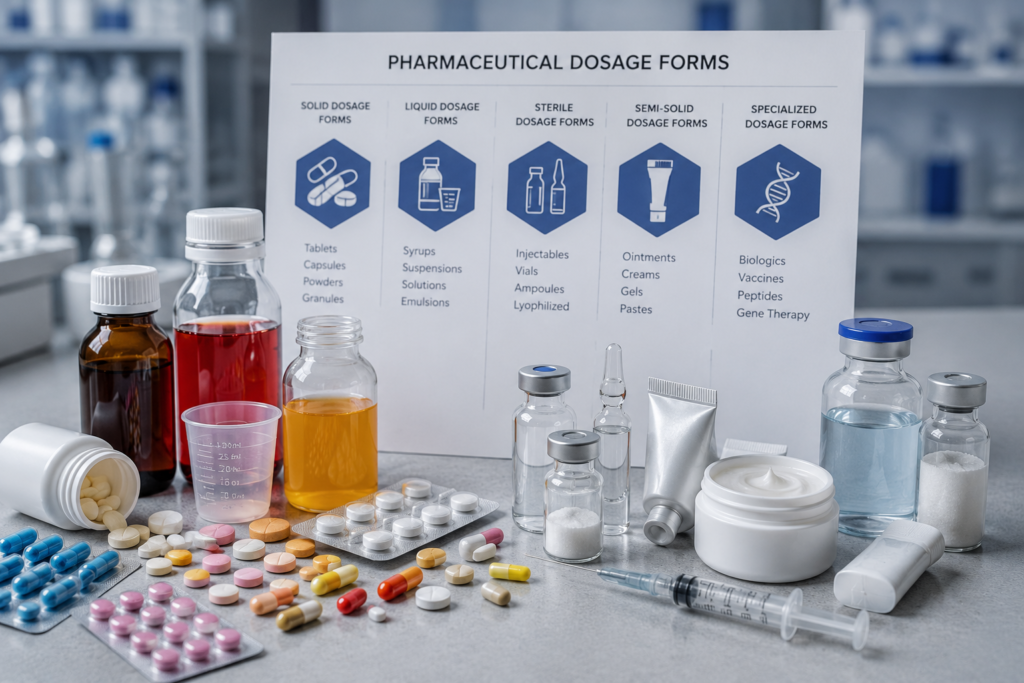
Sterile injectables require an entirely different facility design than oral solid dosages. Biotech manufacturing, such as monoclonal antibodies, requires strict contamination-control and process-specific design considerations that are not the same as those used in tablet plants. And API synthesis plants need unique chemical handling facilities, fume extraction systems, and waste treatment systems that oral dosage forms do not.

World-class pharma plant design services will start with a User Requirement Specification (URS) that translates the product type, dosage form, process, batch size, and target markets into a master list of facility requirements prior to any layout drawings being created. Every subsequent design decision from room classification to HVAC loads to material flow to utility routing to equipment footprint can be traced back to the requirements created from that URS.

Pharma engineering services that do not take the time to develop this foundation may create facilities that look compliant on paper but become difficult to operate consistently in practice: contamination excursions, failed EM tests, inadequate containment, or undersized utility systems. 

Cleanroom Design as an Engineering Discipline

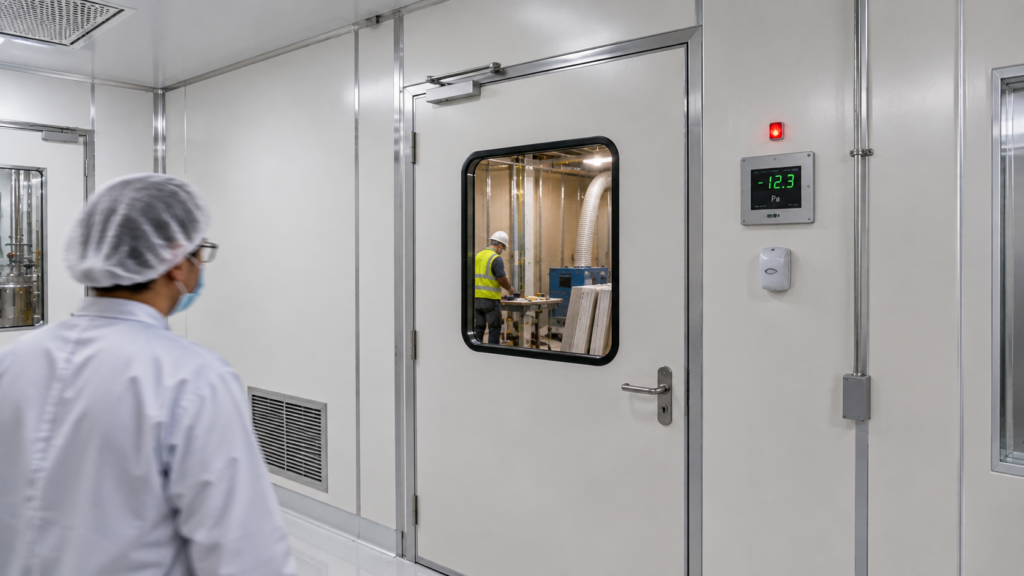
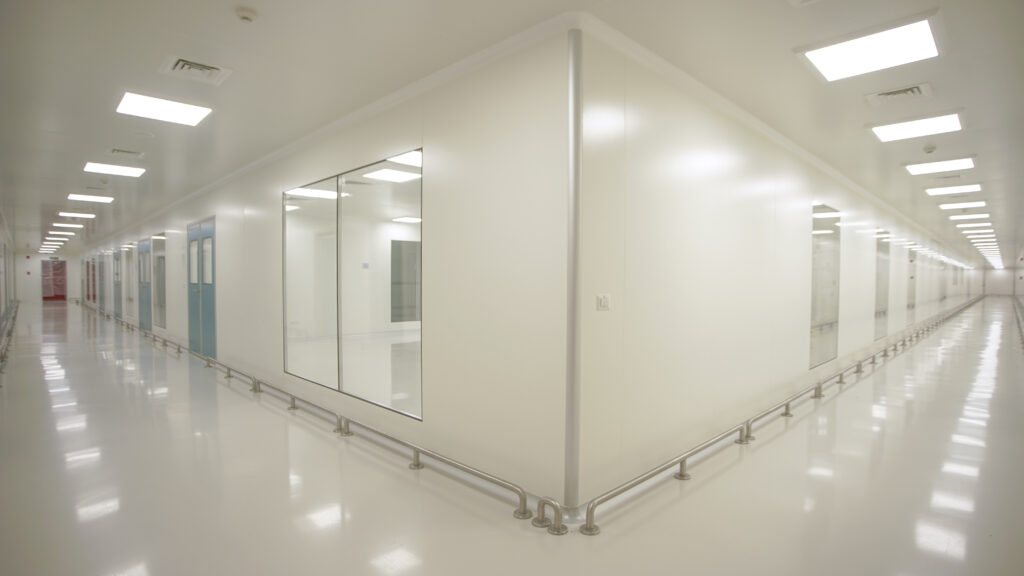
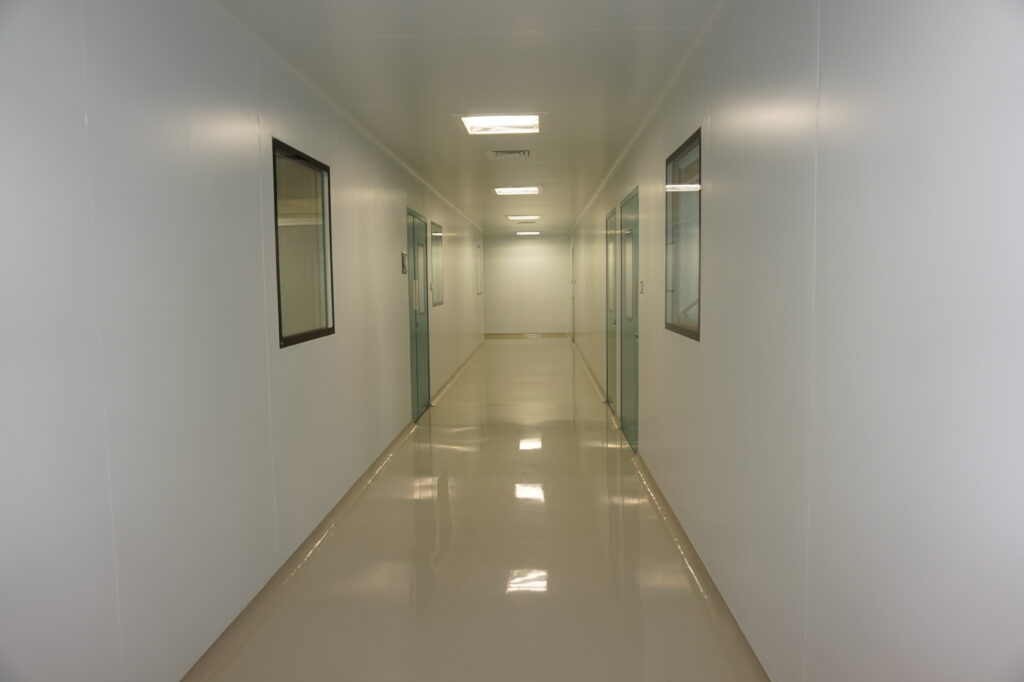
Cleanrooms are often classified under ISO 14644-1. This standard gives specifications for Class 1 through Class 9 cleanrooms based on the number of particles permitted per cubic meter of air. Regulatory frameworks such as EU GMP Annex 1 and FDA cGMP expectations add requirements beyond particle classification, especially for sterile pharmaceutical manufacturing environments. These include: microbiological levels, pressure relationships, growing standards and environmental monitoring frequencies.

Simply stated, classification of the cleanroom dictates:

  • The number of air changes per hour required to maintain the desired cleanliness level, based on process risk, occupancy, recovery time, and heat load
  • Filtration (HEPA H14, 99.995% at MPL) meets most needs for ISO Class 5 through ISO Class 8 rooms)
  • Pressure relationship to other areas through a designed pressure cascade that supports contamination control
  • Hard surface finishes that are smooth, non-shedding, resistant to chemicals & cleaning agents and are easily cleaned
  • Airlocks when entering or exiting areas of different ISO class

Over-classifying cleanrooms can add significant capital and operating cost. Opting for a lower cleanroom rating can result in failure to meet regulations. Cleanroom design isn’t guessing at the ISO rating that a room should be based on an iso classification chart. It should be based on what the process can actually tolerate. This means knowing your process and your products. 

HVAC: The System That Makes or Breaks Everything Else

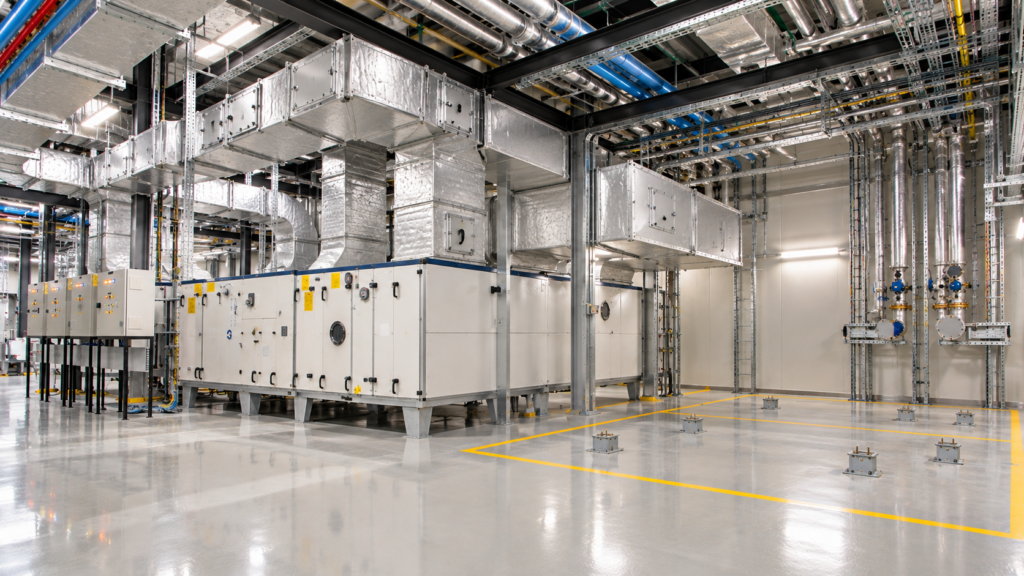
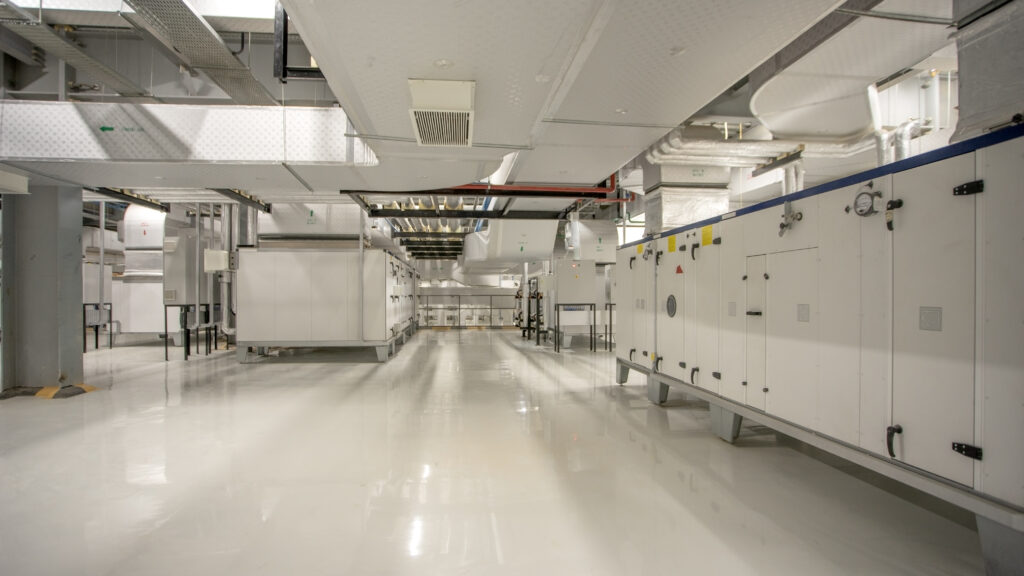
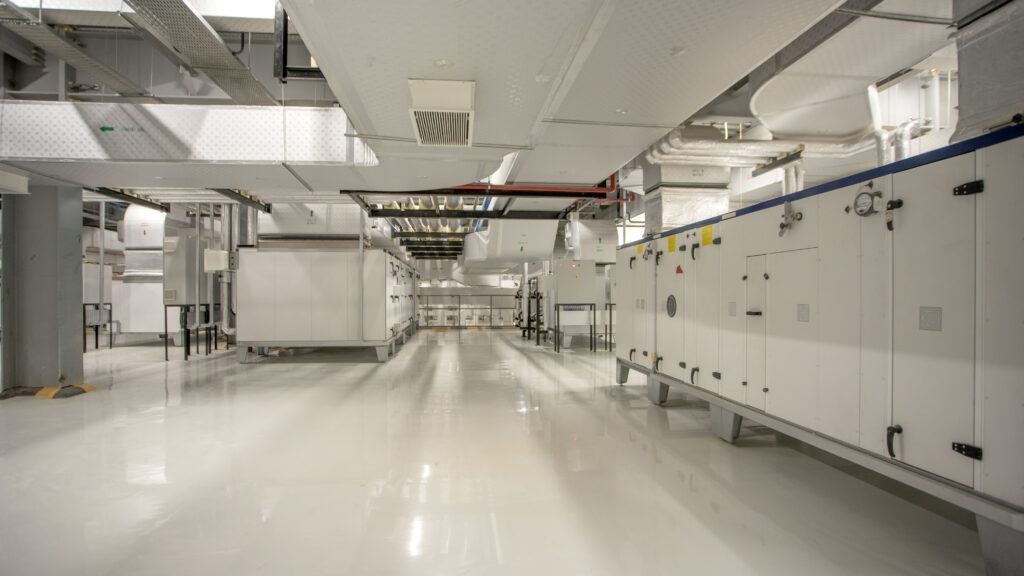
HVAC systems in pharmaceutical manufacturing facilities are not “building services.” They are process-critical systems that answer the question of whether a cleanroom can maintain its classification; whether temperature and humidity conditions are stable enough to ensure product quality; and whether pressure differentials between adjacent “cleanrooms” or “zones” stay within validated limits 100% of the time. Pharmaceutical cleanrooms can use significantly more energy than typical commercial buildings, and HVAC systems account for over 50% of the electricity consumed. 

Qualification of HVAC systems including HEPA filter integrity testing, air flow volume and velocity mapping, room pressure differential confirmations, temperature and humidity control and monitoring, and ISO particle counts should be performed, documented, and approved before any manufacturing activity begins, and trended at scheduled intervals throughout product manufacture. While 21 CFR 211.42 does not prescribe a specific HVAC qualification protocol, it requires facilities to be designed and operated to prevent contamination and mix-ups. In practice, this makes HVAC design, qualification, monitoring, and documentation critical parts of GMP compliance. 

When inspectors review HVAC systems, they specifically look for HVAC validation records, environmental monitoring trends, and HVAC deviation investigations. Sites that cannot provide a complete HVAC qualification dossier may face regulatory observations or delays during approval. 

Pharma engineering services groups tasked with designing HVAC systems for drug manufacturing facilities should understand the regulations and qualification process as well as the operating parameters: energy costs, required redundancies, maintenance access, and future expansion. 

What Separates Strong Pharma Facility Design Companies from the Rest

Compliance Embedded from Day One

The single biggest factor when choosing between pharma facility design firms is whether they view regulatory compliance as a design input or design output. When compliance is treated as an output, facilities may face late-stage documentation gaps, redesign work, and qualification challenges.

When compliance is treated as an input, every decision—room layout, routing of utilities, machine and equipment placement, specification of surfaces, and sizing of airlocks—is made with one question in mind: does this support the qualification process and the inspection outcome the manufacturer needs? Qualification documentation created throughout engineering and construction becomes your inspection ready foundation, rather than a separate project done in panic weeks before the FDA shows up.

This is known in the industry as commissioning, qualification and validation focused design or CQV for short. CQV requirements are designed into the engineering so that the physical facility and documentation package are developed hand in hand. 

Quality by Design Applied to the Facility

ICH Q8(R2) defines Quality by Design (QbD) as an approach to pharmaceutical development where the quality of the product is built into the design of the product and its manufacturing process. Although ICH Q8(R2) focuses on pharmaceutical development, the same principle is highly relevant to facility design.

When QbD principles are applied to facility engineering, the critical quality attributes (attributes of the manufactured product that must be maintained to ensure product safety and efficacy) are linked to facility design decisions that control them. Air classification, pressure differentials, temperature control ranges, and contamination barrier designs are selected and documented based on the risks to product quality, rather than because they were included in the last facility your designer worked on.

Facility design solutions that start with QbD create facilities that are easier to validate, easier to operate within specification, and stand up better to regulatory scrutiny because there is a clearly documented reason for every decision that relates back to product quality. 

The Turnkey Advantage: Coordinated Delivery Across All Disciplines

Conventional pharma plant construction divides the scope among an architect, process engineer, MEP contractor, equipment supplier, validation team. They each design from their scope, hand off to the next player, and may not always carry full accountability for how their discipline interfaces with the others. The consequence is mismatched interfaces, rework, validation delays, and schedule headaches.

Turnkey solutions bring unity to the project by placing responsibility under one delivery partner. Design, procurement, construction, installation, commissioning, qualification, and validation are executed under one coordinated plan. Integration of process engineering, cleanroom design, HVAC, electrical, utilities, and automation is coordinated from the start in the engineering stage, preventing delays and conflicts during construction and validation.

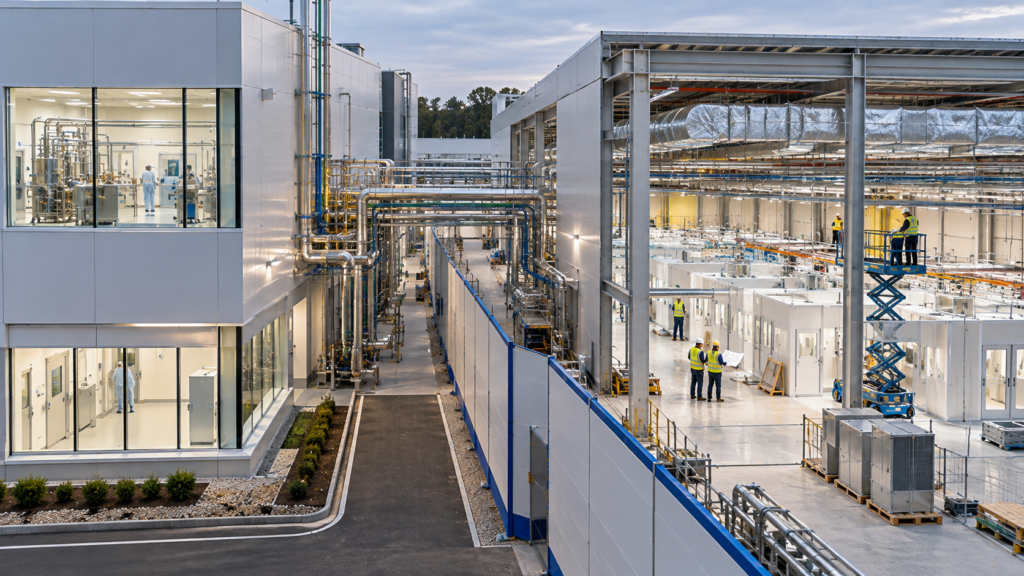
The advantages turn into tangible value. Prefabricated cleanroom systems and modular construction methods can reduce on-site work by shifting fabrication, integration, and quality checks into a controlled factory environment. Turnkey partners who use well-planned modular approaches can help shorten project timelines when site readiness, regulatory scope, and engineering coordination are aligned. When speed to market is a pharmaceutical manufacturer’s need to meet competitive or regulatory demands for new capacity, every month matters. 

What to Look For in a Pharmaceutical Facility Design Partner

ENGINEERING – what differentiates a true pharmaceutical facility design partner from your run-of-the-mill engineering firm that “does pharma work”:

  • Experience with multiple dosage forms: Cross-pollination between projects for sterile injectable facilities, biotech plants, oral solid dosage facilities and API facilities breeds a knowledge base that narrow-focused specialists will never match. Lessons learned from contamination control in a biotech suite will influence your airlock designs in an OSD facility. Experience with utility systems in an API plant will define the envelope of what can be achieved when designing a future sterile expansion project.
  • Design that incorporates CQV: Your qualification documentation should be a designed deliverable, not something your engineers “figure out” later. Inquire specifically if the design engineers and qualification specialists are working together from the URS stage forward.
  • International regulatory knowledge: A facility designed to meet regulatory requirements in one country will face hurdles when seeking approvals in the US, EU, or any regulated market outside their native region. FDA 21 CFR Parts 210 & 211, EU GMP Annex 1, WHO-GMP, PIC/S…they are all written differently, yet each contains unique facility design expectations that should be addressed during engineering.
  • Prefabrication expertise: The capability to build cleanroom modules, utility skids, and process equipment off-site while civil and structural work is performed on-site is a project delivery expertise that translates into tangible schedule and cost savings.

Pharma Access is that unique combination of skills applied to pharmaceutical facilities. “We’ve been around for 25 years, completed over 100 projects and have facilities in 18 countries,” says Kumar Advani, President and Founder of Pharma Access. “We provide full engineering design, procurement, construction, installation, commissioning, qualification and validation. 

We do it all.” Pharma Access’ experience includes biotechnology facilities, sterile manufacturing facilities, oral solid dosage (OSD) facilities, oral liquid dosage (OLD) facilities, and API facilities. Across these manufacturing formats, Pharma Access brings integrated design-and-build experience for complex pharmaceutical environments.

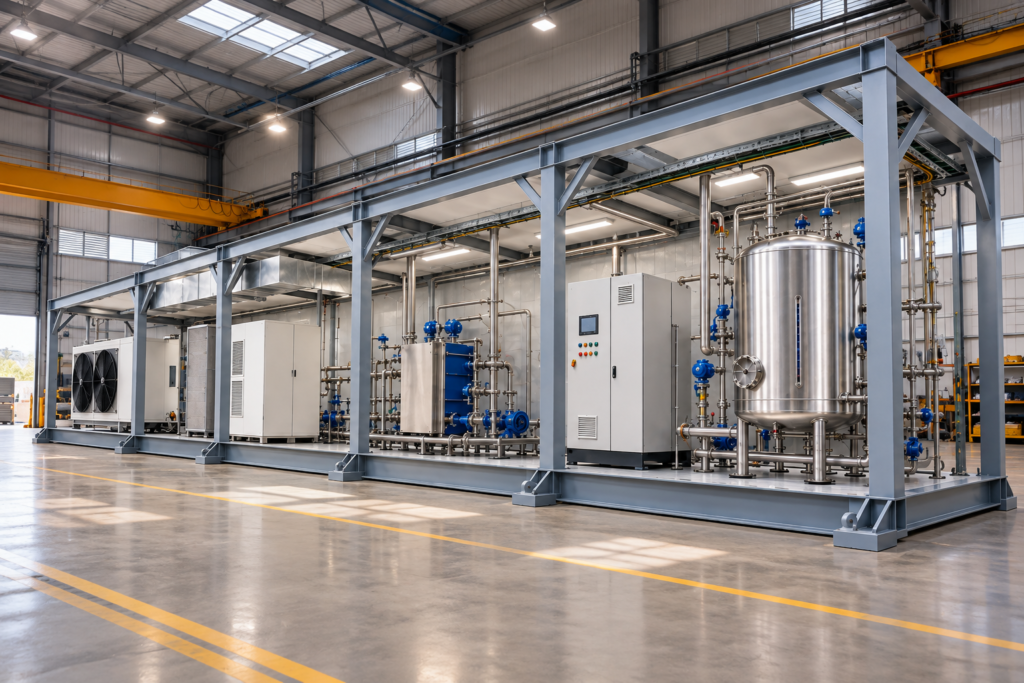
Pharma Access has now combined that turnkey expertise with prefabricated construction methods through their Modular Mobile Facility (MMF) platform. The MMF platform allows Pharma Access to apply the efficiencies of factory controlled construction to drastically reduce on-site assembly time while limiting CO2 emissions and maximizing the engineering required for GMP compliance.

FAQs: Pharmaceutical Facility Design Solutions

Q1: What is included in pharmaceutical facility design solutions? 

Pharmaceutical facility design solutions cover the full scope of engineering required to deliver a GMP-compliant manufacturing plant. This includes process design, cleanroom layout and classification, HVAC and MEP systems design, utility systems such as water for injection, clean steam, purified water, and compressed air where applicable, civil and structural design, automation and building management systems, and commissioning, qualification, and validation planning and execution.

Q2: How do pharma facility design companies decide what cleanroom classification a room needs? 

Cleanroom classification is determined by the product being manufactured and the operations taking place in the room. Sterile fill/finish operations typically require ISO Class 5 environments at the point of critical operation, supported by appropriate background classifications depending on the process and regulatory expectation. . Support areas may be classified at ISO Class 7 or ISO Class 8. The design firm works from the User Requirement Specification to map each room’s function to the appropriate ISO 14644-1 class, then designs HVAC, filtration, and monitoring systems to maintain that class.

Q3: What is a turnkey pharmaceutical plant solution and how does it differ from conventional project delivery? 

A turnkey pharmaceutical plant solution places complete project responsibility design, procurement, construction, qualification, and validation with a single partner. Conventional delivery splits these responsibilities across multiple contractors. The turnkey model eliminates interface risk between disciplines, produces more consistent documentation, and typically delivers faster completion timelines with better alignment between facility design and regulatory requirements.

Q4: How does cleanroom design for pharmaceuticals differ from cleanroom design in other industries? 

Pharmaceutical cleanroom design must meet both ISO 14644-1 particle classification standards and GMP regulatory requirements covering microbiological limits, pressure differentials, environmental monitoring, gowning procedures, and qualification documentation. The FDA and EU GMP authorities inspect these systems and review qualification records. Non-pharmaceutical cleanrooms are typically focused more heavily on particle control, while pharmaceutical cleanrooms must also address product safety, contamination control, patient risk, and GMP documentation.

Q5: Why does HVAC design matter so much in pharmaceutical plant design services? 

HVAC systems directly determine whether a cleanroom holds its ISO classification, whether temperature and humidity conditions protect product stability, and whether pressure differentials between zones prevent contamination migration. HVAC qualification is a key GMP expectation linked to contamination control and facility performance, and HVAC records are reviewed in FDA inspections. An undersized, poorly designed, or inadequately qualified HVAC system can render an otherwise compliant facility unable to pass inspection.

Challenges in Setting Up Pharmaceutical Plants in Saudi Arabia

pharmaceutical plants in Saudi Arabia

Saudi Arabia boasts the largest pharmaceutical market in the Middle East and North Africa region. Despite this, the Kingdom imports most of its medicines. All that is set to change – Vision 2030 is striving to localize pharmaceutical production. Saudi Arabia wants to increase local pharmaceutical manufacturing from an estimated 20% to 40% of the market supply. To support local production, the Kingdom allocated USD 65 billion to improve its healthcare system.

This signals a significant and urgent opportunity for business. However, there are some significant and urgent challenges any business will face when constructing a pharmaceutical plant in Saudi Arabia. Here are some things to know beforehand. 

SFDA Compliance Is Demanding

The Regulatory Hurdle: SFDA Compliance Is Demanding

The first hurdle that greets any plant developer is the Saudi Food and Drug Authority (SFDA). Created in 2003 it regulates drug registration, pricing, manufacturing licenses, facility inspections and key stages of the pharmaceutical value chain, from API production to distribution. Manufacturers must adhere to GMP rules based on WHO and PIC/S guidance. The SFDA will perform its own inspections as needed but may accept certification by another trusted regulatory body. Drug registration is completed through the Drug Registration System via the Common Technical Document (CTD) format and follows ICH guidelines. Products cannot be sold without valid approval from the SFDA.

This is typically the step that creates delays for many projects. The approval process is lengthy if you’re submitting a new product or generic to enter the market for the first time. Requirements for API manufacture are extensive and variations between Saudi local norms vs. international expectations create gaps that slow down product approval timing.

As of January 2025, SFDA has made new economic evaluation requirements  applicable. Full economic evaluations were enforced starting July of 2025. Essentially this requires manufacturers to produce clinical and economic data relevant to the Saudi population in support of your submission. This factor alone significantly increases both cost and timing for getting a new build facility ready for market.

The easiest way to overcome these challenges is by partnering with knowledgeable pharma GMP consulting experts in Saudi Arabia at the outset of your project, not after construction has completed.

Cleanroom Design in a Desert Climate

Cleanroom Design in a Desert Climate

Pharma manufacturing by its nature is conducted in highly controlled environments. Oral solid dosage, sterile injectable and biologics cleanrooms run precise temperature, humidity and particulate controls 24/7.

That’s easy to say, but Saudi Arabia is hot, with summer temperatures often reaching above 45°C and windy. Sand and dust are a year-round contamination concern. HVAC engineers building pharmaceutical facilities in Saudi Arabia have some of the toughest make-up air conditions in the world. They are managing extreme heat, dust exposure, and demanding outdoor air conditions while trying to maintain ISO room pressurization, air change per hour (ACH) rates and temperature ranges.

There are pharmaceutical specific manufacturing districts being built by MODON (Saudi Authority for Industrial Cities and Technology Zones) with full infrastructure; cleanroom facilities, QA labs, warehousing designed to support international GMP expectations. The MEP design and engineering of these facilities is up to the individual project teams.

Specification of the correct cleanroom materials, AHUs and redundant systems should be engineered by a team with experience in the region. region-specific HVAC, filtration, and GMP design expertise.

Sourcing Qualified Contractors and Skilled Workforce

Saudi Arabia enforces a Saudization mandate (locally known as Nitaqat), which specifies minimum percentages of Saudi nationals that make up the workforce of any company. Pharmaceutical manufacturing requires specialist knowledge at all levels, from process engineers and validation specialists down to QC analysts and cleanroom technicians. The challenge of finding qualified Saudi nationals to staff these roles is very real, and programs to train people up will take time.

Similarly, recruiting and keeping international pharma engineers with experience in plant setup projects is not without its challenges of work visas, expat housing, and project timelines.

The local contractor market for pharma-ready construction is also somewhat shallow compared to seasoned manufacturing destinations like India or Europe. While there are vendors familiar with cleanroom panel systems, pharma HVAC specs, GMP documentation requirements, etc., picking the right ones and managing the supply chain demands competent project management from teams with pharma-sector experience.

Partnering with a Saudi Arabia-focused pharma turnkey solutions provider early, before the process of contractor selection begins, allows the project team to qualify local vendors, determine gap areas, and plan for technology transfer where necessary.

Sourcing Qualified Contractors and Skilled Workforce

Technology Transfer and Local Content Requirements

Vision 2030 doesn’t just want pharmaceutical plants constructed in Saudi Arabia. Vision 2030 wants technology transfer, localization of capabilities, and contributions to long-term national self-sufficiency. This places tremendous pressure on foreign investors and international manufacturers to shape joint ventures, training programs, and procurements through local suppliers.

The National Unified Procurement Company, or NUPCO, has been a dominating force in the Saudi Pharma supply chain since 2009. The government conglomerate currently holds procurement sway over much of the public sector. Finding product pipeline alignment with NUPCO’s procurement needs is a strategic move that should be decided upon well before your plant is registered, not after.

Technology transfer considerations for biologics and vaccine manufacturers will be even more nuanced. The domestic manufacturing capability for biologics within the Kingdom is currently still developing compared with mature global manufacturing hubs. Vision 2030 has publicly made this sector a target for growth. The KSA has taken action through the launch of the Saudi Vaccine and Biologics Manufacturing Company, as well as international partnerships with CDMOs. Investors looking to break into this sector should expect a longer timeline and more intricate technical transfer process.

Infrastructure and Site Selection Constraints

Site selection is typically driven by the availability of land. Facility viability is impacted by reliable water sources, stable power grids, logistical access and access to cold-chain infrastructure. Saudi Arabia has several industrial cities with robust infrastructure, logistical network and municipality utilities supported by MODON. Sudair, around 120 kilometres north of Riyadh is one such city. It is emerging as an important location for pharma-grade manufacturing facilities.

The timeline to market for a vaccine or injectable manufacturing plant in Saudi Arabia is generally between 24-36 months. This includes time to select a site, complete design, construct and validate the facility. Each step in the process has its own potential setbacks be it delayed regulatory approval, construction delays, or commissioning delays of machinery and equipment. These setbacks are cumulative and impact the total project costs as well as time to revenue.

Pharma turnkey solution contracts are becoming more popular in Saudi Arabia. This methodology uses one team to design, procure, construct and commission the facility under one contract.

GMP Documentation and Validation

GMP Documentation and Validation

Constructing a pharma plant is only part of the equation. Before that first production batch rolls off line at a Saudi plant, the facility itself must pass SFDA GMP inspection, and every process system from HVAC to water for injection to process equipment must be qualified and validated according to defined criteria and procedures.

The SFDA has been enhancing its pharmacovigilance capabilities in recent years, as well as putting into place risk-based inspection frameworks. It has also increased the number of GMP inspectors qualified to inspect both local and foreign facilities. The country became a member of the Pharmaceutical Inspection Co-operation Scheme, or PIC/S, in 2023, strengthening alignment with international inspection standards.

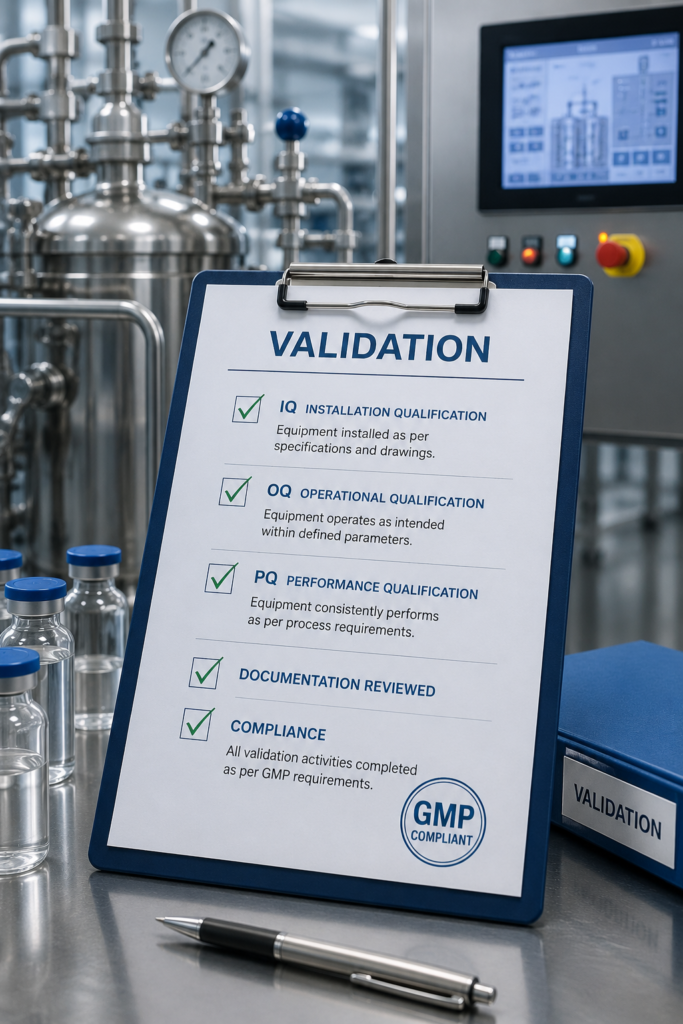
That means documentation requirements are increasing. URSs, FAT, IQ, OQ, and PQ protocols must all be created, executed, and archived in a manner that passes SFDA muster. Incomplete documentation is one of the most frequent causes for inspection delays.

Pharma Access (pharmaaccess.net) provides Commissioning, Qualification, and Validation (CQV) as part of its portfolio of pharma turnkey engineering services. Incorporating that knowledge into the project plan from day one eliminates the expensive remediation that comes from approaching validation as a step to be considered at the end of construction.

Bringing It Together: What Successful Projects Have in Common

Projects that are delivered on time and pass SFDA inspection “right of first review” tend to have a couple things in common. They hire pharma consulting Saudi Arabia and pharmaceutical engineering services Saudi Arabia early. They select pharma turnkey solutions partners with actual GMP facility experience in-country. They approach regulatory strategy, cleanroom design, and workforce development as integrated efforts.

Pharma Access has 25+ years of experience completing projects in 18+ countries, including experience in the MENA region. With experts in Pharma engineering design, design/build, project management, and CQV, Pharma Access has what it takes to assist your company’s next pharmaceutical manufacturing investment in Saudi Arabia.

There is a real opportunity in Saudi Arabia. So are the challenges that must be addressed with the right expertise. However, with the right team advising you day one, the difference between a streamlined project versus one that costs you time and money becomes self-evident.

FAQs

Q1: What regulatory approval is needed to manufacture pharmaceuticals in Saudi Arabia? 

Any pharmaceutical manufacturer operating in Saudi Arabia must obtain a manufacturing license from the Saudi Food and Drug Authority (SFDA). Products must also be registered using the CTD format through the SFDA’s Drug Registration System. Manufacturers must meet GMP guidelines based on WHO and PIC/S standards, and be prepared for SFDA facility inspections before and after commercial operations begin.

Q2: How long does it take to set up a pharmaceutical manufacturing facility in Saudi Arabia? 

A typical pharmaceutical manufacturing facility in Saudi Arabia, from site acquisition through design, construction, and validation, takes approximately two to three years to complete. Biologics and sterile injectable facilities may take longer due to greater technical complexity and more demanding qualification requirements. Early planning and experienced project teams reduce the risk of delays.

Q3: What are the cleanroom design challenges specific to Saudi Arabia? 

Saudi Arabia’s extreme summer heat and persistent desert dust create demanding conditions for cleanroom HVAC systems. Air handling units must maintain GMP-compliant temperature, humidity, and pressure conditions while working against outdoor ambient temperatures exceeding 45°C. Redundant systems and robust filter management are not optional in this climate.

Q4: Does Vision 2030 offer any benefits for pharmaceutical manufacturers in Saudi Arabia? 

Vision 2030 supports pharmaceutical manufacturers through incentives including streamlined approvals for locally produced products, tax and customs exemptions in some cases, and access to MODON-administered industrial zones with purpose-built GMP infrastructure. The program actively encourages technology transfer, joint ventures, and local workforce development, creating a range of partnership opportunities for international manufacturers.

Q5: Why should I use a pharma turnkey solutions partner for a Saudi Arabia project? 

A pharma turnkey solutions Saudi Arabia partner manages engineering design, procurement, construction, and commissioning as one coordinated effort. This reduces interface risk between contractors, keeps documentation aligned with SFDA requirements throughout the project, and brings specialized GMP and cleanroom design experience that generalist construction firms do not have. It also puts responsibility for delivery on one accountable team.

Advanced Engineering Solutions for US Pharmaceutical Facilities

Advanced Engineering Solutions for US Pharmaceutical Facilities

Why Engineering Is the Backbone of Every US Pharma Facility

In 2024, the U.S. pharmaceutical market was estimated at $634 billion and is growing at around 5.72% annually. It’s expected to surpass $884 billion by 2030. All that production relies on one thing more than anything: engineered correctly from the start. 

Every medication that ends up in a patient’s hands begins inside of a facility. A facility that must adhere to some of the strictest engineering standards on the planet. If facility engineering is not planned and executed correctly, manufacturers can face product quality failures, FDA observations, warning letters, recalls, or even facility shutdowns.  Do it right? You create a compliant, reliable platform that supports safe, effective medication manufacturing for years to come. 

Here’s why U.S. pharmaceutical engineering matters more than ever. 

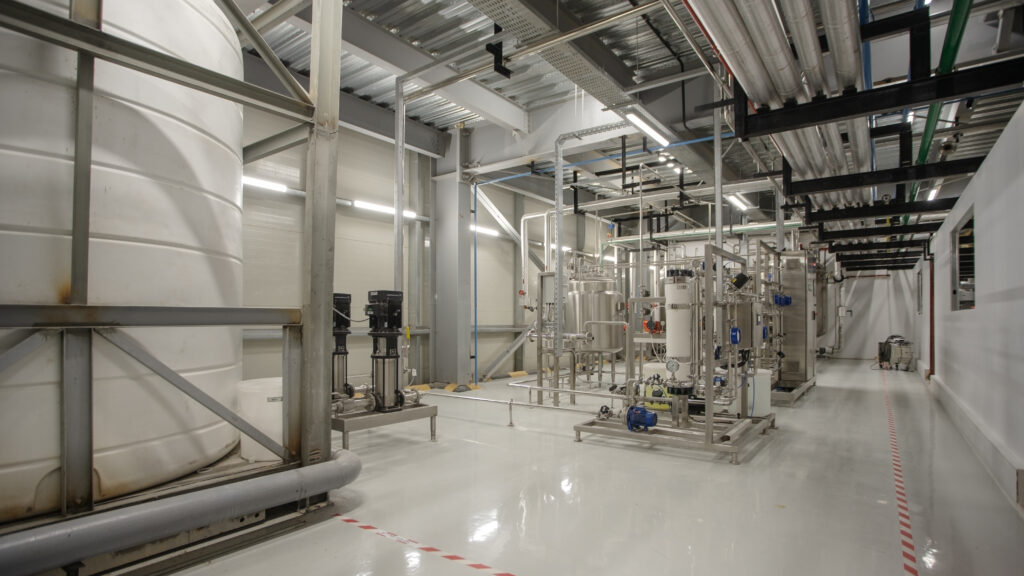
Industrial biotech process room interior

The Regulatory Foundation: FDA cGMP and What It Demands from Facilities

At the regulatory level, the foundation begins with FDA cGMP requirements. The FDA’s 21 CFR Parts 210 and 211 Current Good Manufacturing Practice regulations establish the legal baseline for the design, construction and operation of pharmaceutical manufacturing facilities. They cover everything from the layout of manufacturing areas to equipment qualification and employee training.

FDA inspectors may make sure companies meet these requirements during facility inspections. They’ll scrutinize the facility, the equipment, the processes and procedures, and records. Violations can result in Form 483s, warning letters, product recalls, etc. The FDA has been explicit that if your drug is made in a facility that doesn’t meet 21 CFR Part 210/211, your drug is considered “adulterated” by law even if the drug passes every quality test with flying colors.

In other words, manufacturing facility engineering isn’t some back-room issue. It’s at the forefront of every regulatory decision your pharmaceutical company makes in the US.

In addition to 21 CFR Parts 210 and 211, sterile product manufacturers also have to comply with the FDA’s 2004 guidance on sterile processing. This references the ISO 14644-1 cleanroom classification standards. The ISO classifications range from ISO Class 1 through ISO Class 9, depending on the maximum number of particles allowed per cubic meter of air. For example, an ISO Class 5 environment, which is typically where sterile fill/finish operations are conducted, allows less than 3,520 particles that are 0.5 microns or larger in volume per cubic meter.

Achieving and maintaining those numbers isn’t as simple as popping in a few filters. It requires careful engineering of HVAC design, airflow patterns, pressure differentials, surfaces and more. 

What Does GMP Facility Engineering Actually Cover?

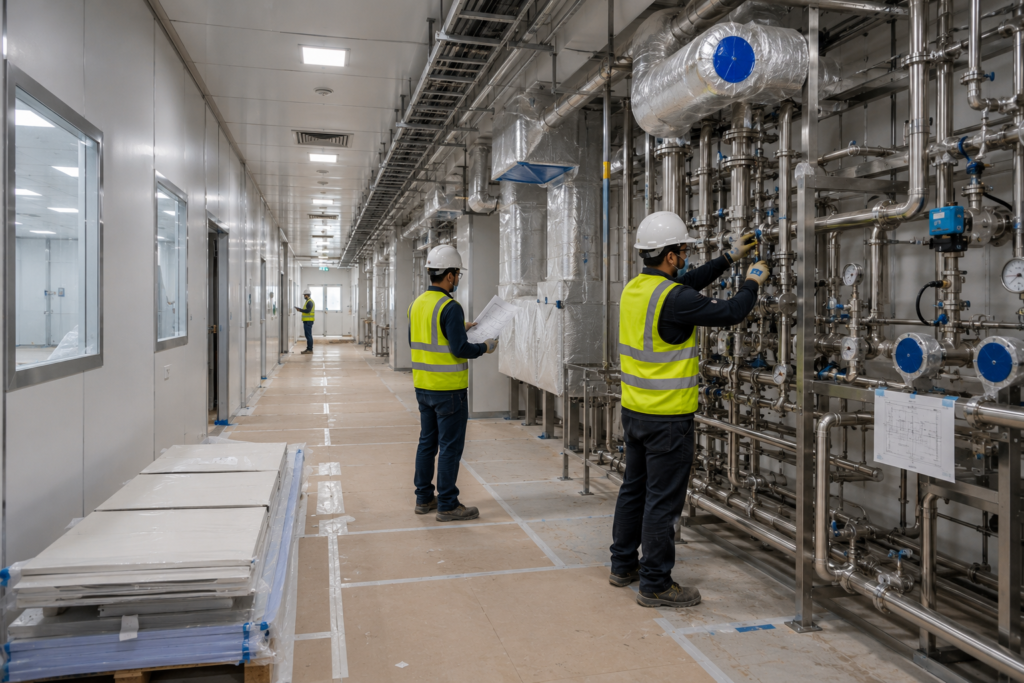
Modular cleanroom assembly in progress

Here is a breakdown of the core engineering disciplines involved in bringing a compliant US pharma facility to life.

Cleanroom Design for US Pharma Facilities

Cleanroom design tends to be the most science-driven aspect when engineering GMP facilities. The classification will define your air change rates, filtration needs, as well as acceptable contamination standards. For example, ISO Class 5 rooms are often designed with high air change rates, commonly in the range of 240-480 air changes per hour. ISO Class 7 spaces are generally operated at 30-60 air changes per hour. HEPA filters, and in select applications ULPA filters,  are placed into the HVAC system to continuously filter particulates out of recirculated air.

Equally important is proper zoning of your spaces. The highest classification rooms should be located within protected clean zones  and surrounded by lower classification buffers. Along with pressure cascading, this will help ensure that contaminated air does not flow into cleaner areas. Positive pressure will ensure that outside contaminants do not enter your manufacturing areas. If you work with potent compounds or biologics that should not escape, negative pressure containment or appropriate barrier-based containment strategies  should be used. 

Pharma HVAC Systems in the USA

HVAC engineering cannot be overlooked when discussing cleanroom performance. Pharmaceutical cleanrooms can use up to 15 times more energy than traditional commercial facilities, with over 50% of electricity going towards powering HVAC. This is why engineering today extends past just meeting regulations. Pharma HVAC designers are implementing ISO 14644-16 guidelines regarding energy conservation by utilizing variable air volume units, computational fluid dynamics, and reviewing air change rate with data-driven decision making to name a few methods that reduce energy usage while maintaining clean air quality. Pressure differential monitoring is typically integrated with automated monitoring and alarm notifications  if the reading falls out of desired ranges. Temperature and humidity are also tightly controlled within ranges specific to the product type/dosage form being produced whether it be oral solid dosage all the way to lyophilized injectables. 

MEP, Utilities, and Process Engineering

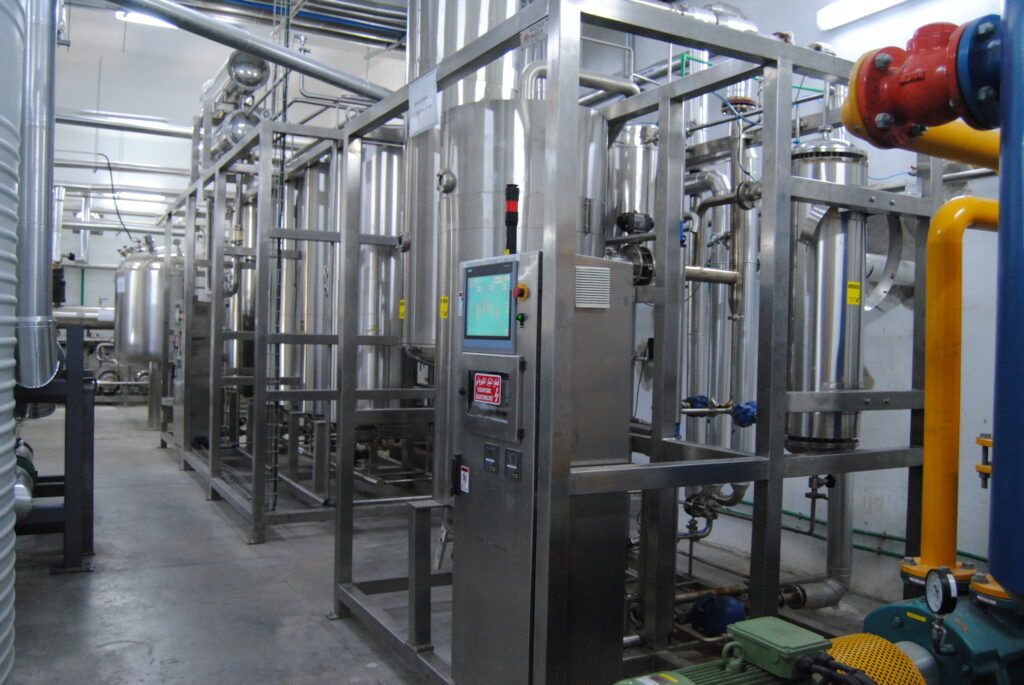
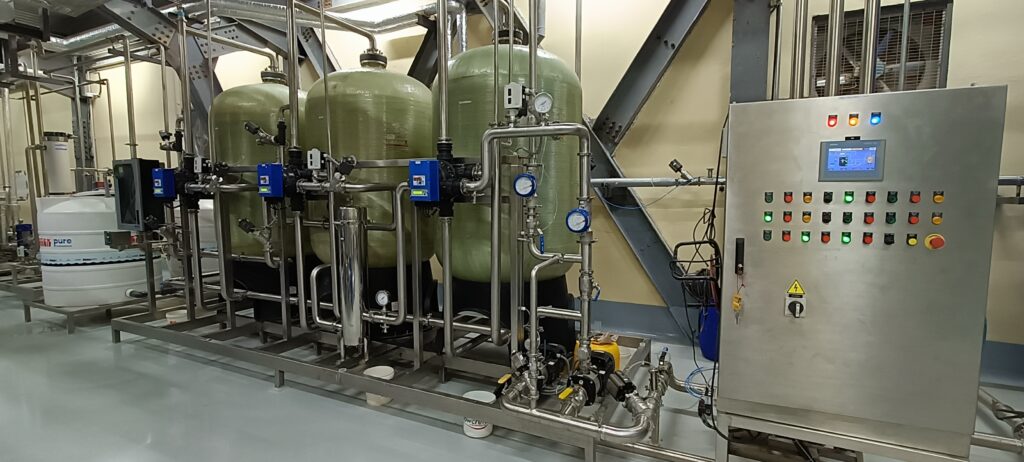
Mechanical, electrical, and plumbing systems are critical to pharmaceutical facility performance and compliance. These utility systems have potential hazards that are unique when compared to typical construction. PW and WFI systems are designed so as not to promote microbial growth and must be validated to produce water that meets USP specifications. Compressed gases must meet pharmaceutical specifications for purity. Electrical systems must be able to deliver power reliably, with redundancy or backup strategies for critical manufacturing and support systems where required by risk assessment.  Process engineering ties the building shell to the manufacturing process. Whether the facility will produce sterile injectables, oral solid dosage forms, APIs, or biologics/products requires engineering that is designed with the unique contamination concerns, material flows and equipment needs of that product type. 

The US Investment Wave and What It Means for Engineering Demand

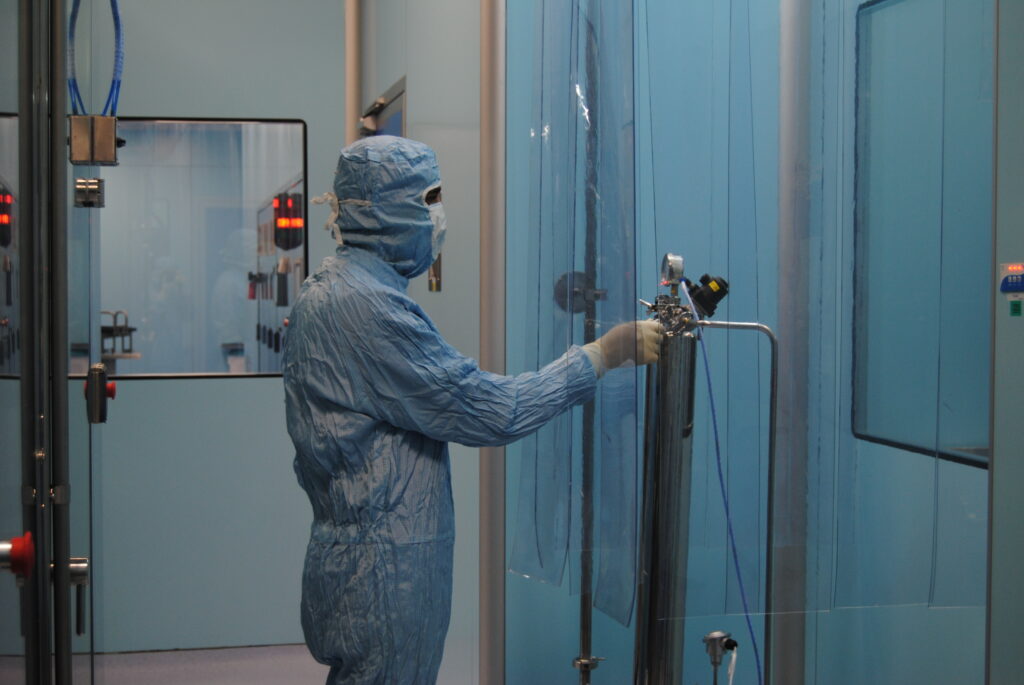
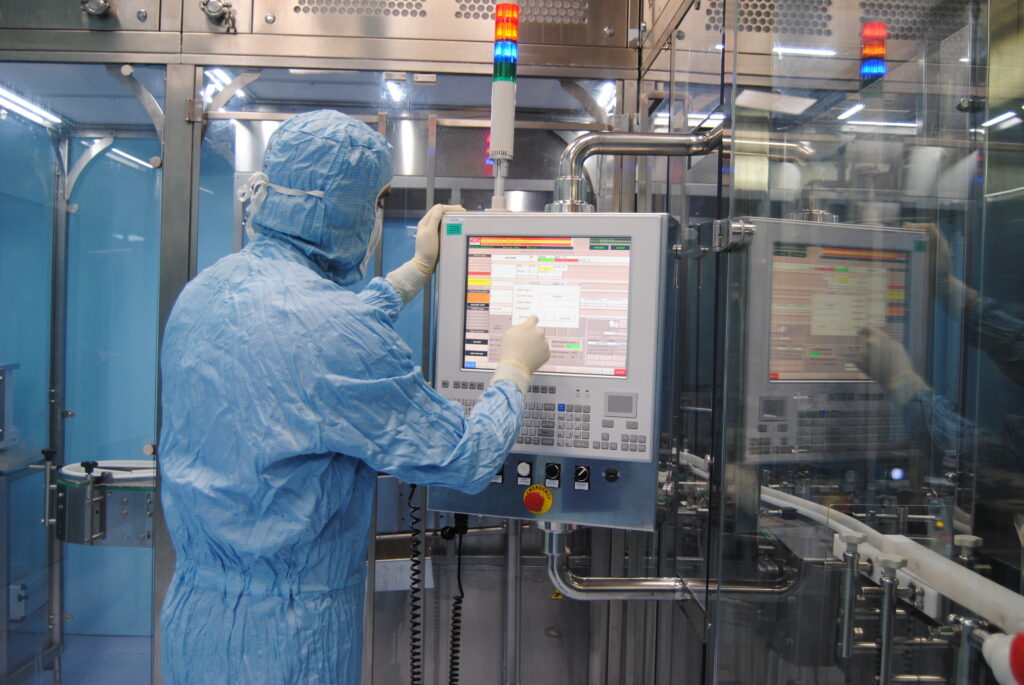
Sterile industrial cleanroom with technicians

The magnitude of investment activity occurring in US pharmaceutical manufacturing today is hard to overstate. Between all the announcements, US manufacturing capacity commitments for the next four to ten years exceed $480 billion. Since 2020, Eli Lilly has announced more than $50 billion of US facility expansion. Merck broke ground on a $3 billion manufacturing center of excellence in late 2025 in Elkton, Virginia . Novo Nordisk is constructing a second fill-finish facility in North Carolina, which will provide 1.4 million square feet of aseptic space. GSK unveiled a five-year, $30 billion US investment plan.

With all of this reshoring comes a tidal wave of demand for GMP facility engineering across the US. Whether it’s a greenfield build, brownfield expansion, or existing operating facility upgrades – teams with deep regulatory knowledge and engineering expertise unique to each dosage form are in high demand.

Here’s the straight dope: building a sterile injectable facility is NOT like building an oral solid dosage facility. And a biotech facility manufacturing monoclonal antibodies isn’t designed like a cephalosporin API plant. Product dictates engineering. 

Quality by Design: Engineering That Starts at the Drawing Board

A significant positive change in pharmaceutical engineering designs solutions happening in the USA over the last decade has been a shift in mindset toward Quality by Design (QbD). Instead of testing quality into your finished drug product, QbD principles involve designing quality into the process and facility from the beginning.

That means facility engineers must translate critical quality attributes all the way back to the design of the physical facility. Placement of air handling units, equipment layouts, material flow paths and even containment strategies are optimized to minimize risk of contamination, cross contamination and process variation. Commissioning, Qualification and Validation (CQV) activities are then used to confirm the facility will perform as designed before manufacturing a single commercial batch.

Simulation-based engineering is now standard practice when designing state-of-the-art pharma facilities. Computational fluid dynamics is used to model airflow in cleanrooms before they are built. Process simulations show how equipment will operate under varying conditions. Utilizing these tools helps minimize expensive design changes after the fact and helps accelerate time to regulatory approval. 

Modular cleanroom assembly in progress

Modular and Turnkey Approaches to Pharma Facility Delivery

Speed to market is a tangible competitive advantage in the world of pharmaceutical manufacturing. That’s part of the reason modular facility construction has become so popular with companies hoping to build compliant manufacturing capacity more quickly. Modular pharmaceutical facilities are constructed using pre-engineered, pre-fabricated units that are built elsewhere and assembled on-site. In addition to accelerating build times, they reduce on-site labor hours and can help lower the overall environmental impact depending on project design, logistics, and materials.  Modules also undergo testing before they arrive on-site, so integration is more rapid and predictable.

Turnkey engineering consultants like Pharma Access streamline the design, procurement, construction, and validation process by putting it all under one roof. With 24 years of experience working on over 100 projects across 18 countries, Pharma Access has the cross-disciplinary experience that pharmaceutical facility engineering requires. We’ve worked in biotechnology, sterile manufacturing, oral solid dosage, oral liquid dosage, and API facilities. We understand the unique considerations of every type of pharmaceutical manufacturing environment. 

FAQs

Q1: What are the main engineering systems required in a GMP pharmaceutical facility in the USA? 

A GMP facility in the USA requires cleanroom HVAC systems, purified water and WFI systems, compressed gas systems, electrical infrastructure, mechanical and process equipment, and a building management system that monitors and controls all critical environmental parameters. Each must be designed, installed, and validated to FDA cGMP standards under 21 CFR Parts 210 and 211.

Q2: How is a pharmaceutical cleanroom classified in the USA? 

US pharmaceutical cleanrooms follow ISO 14644-1 classification, which ranks environments from ISO Class 1 (strictest) to ISO Class 9 (least restrictive) based on allowable airborne particle counts per cubic meter. Sterile fill/finish operations typically require ISO Class 5 or an ISO Class 5 critical zone within a suitable surrounding cleanroom environment. The FDA references these ISO standards in its guidance on aseptic processing for sterile drug products.

Q3: What does pharma HVAC engineering involve for a US facility? 

Pharma HVAC design for US facilities covers air change rate calculations, HEPA filtration selection, pressure differential mapping between cleanroom zones, temperature and humidity control, and energy management. The system must maintain ISO classification and cGMP compliance continuously, with automated monitoring and alarm systems for deviations.

Q4: What is the difference between a greenfield and brownfield pharma facility project? 

A greenfield project builds a pharmaceutical facility on a new site from the ground up, giving engineers full control over layout and design. A brownfield project expands or upgrades an existing facility, which introduces constraints around existing structures, utilities, and ongoing production that must be managed carefully to avoid disrupting live operations and compliance status.

Q5: Why is commissioning, qualification, and validation (CQV) a separate engineering discipline in pharma? 

CQV confirms that a facility’s systems and equipment perform as designed before commercial manufacturing begins. It includes installation qualification (IQ), operational qualification (OQ), and performance qualification (PQ). The FDA expects this documentation to be in place before a facility receives approval. CQV is not a formality, it is the evidence that the engineering works.

Building Smart Pharmaceutical Facilities with Integrated Building Management Systems

Today’s pharma facilities aren’t meant to be stagnant operations. They’re highly controlled, data-driven environments powered by data and made up of several interconnected systems working together to ensure product quality, regulatory compliance (cGMP, US FDA, EU GMP), and operational efficiency. 

HVAC performance. Energy management. Environmental monitoring. To operate at their best, these systems require visibility and control in real time.

That’s where an integrated Building Management System (BMS) can help.

A modern building management system does more than monitor your facility. Maintain validated operating conditions, enable data-driven decision-making, reduce operational risk, and ensure repeatable, compliant performance. 

The Shift Toward Smart Pharma Facilities

HVAC, utilities and environmental monitoring systems are used to function in silos. While they got the job done, inefficiencies existed and visibility was low.

Pharmaceutical facilities are transitioning to systems that allow information to flow freely between platforms.

This shift is driven by the need to:

  • Maintain tighter environmental control across classified cleanroom zones (Grade A/B/C/D) 
  • Improve energy efficiency
  • Reduce manual intervention
  • Strengthen compliance and data integrity

An integrated BMS acts as the central layer that connects and manages these systems in real time.

Where Integration Makes the Biggest Difference

The real value of a BMS is not just in monitoring systems, but in how it connects them through centralized control logic, alarm management, and inter-system coordination.

Bringing HVAC Under Central Control

HVAC systems are among the most critical components in pharmaceutical facilities. They directly influence cleanroom conditions, product quality, and compliance.

When integrated with a building management system, HVAC teams gain:

  • Real-time visibility into temperature, humidity, and pressure along with air changes per hour (ACH) and airflow performance 
  • Immediate alerts for deviations
  • Better control over airflow and environmental conditions

For any HVAC design engineer, designing systems that integrate seamlessly with BMS is now a key requirement.

From Reactive to Predictive Operations

Without integration, facilities often operate reactively, responding to issues after they occur.

With BMS integration, facilities can shift toward data-driven and condition-based operations, with potential for predictive maintenance when integrated with advanced analytics systems (EMS/SCADA/IoT platforms). 

This means:

  • Identifying trends before they become problems
  • Scheduling maintenance proactively
  • Reducing unplanned downtime

This level of insight significantly improves operational efficiency.

Improving Compliance Through Data Integrity

In regulated environments, data integrity is critical.

An integrated BMS ensures:

  • Continuous monitoring and recording of environmental parameters
  • Secure data storage with audit trails
  • Easy access to historical data during audits

For HVAC consultants and compliance teams, this reduces the effort required to demonstrate regulatory adherence.

Designing Facilities with BMS in Mind

One of the biggest mistakes in facility design is treating BMS as an add-on rather than an integrated system.

To fully leverage its benefits, BMS must be considered during the design stage as part of the overall automation and control architecture (PLC/SCADA/BMS hierarchy) 

This involves:

  • Aligning HVAC design with BMS requirements
  • Ensuring compatibility with sensors and control systems across utilities, cleanrooms, and process areas 
  • Planning data flow and system architecture early to support validation and integration 

When BMS is integrated from the beginning, facilities operate more efficiently and require fewer adjustments later.

The Role of HVAC in Smart Facilities

HVAC systems form the backbone of controlled environments.

In smart facilities, their role expands beyond maintaining conditions to becoming part of  a fully integrated contamination control and environmental management system. 

A well-integrated HVAC system:

  • Responds dynamically to process requirements
  • Maintains stable environmental conditions
  • Optimizes energy consumption

This is why collaboration between HVAC design engineers and automation teams is critical during the design phase.

Breaking the Silos in Facility Operations

One of the biggest limitations of traditional facilities is the lack of coordination between systems.

HVAC, utilities, and monitoring systems often operate in isolation, leading to inefficiencies and delayed responses.

An integrated BMS eliminates these silos by:

  • Connecting all critical systems into a single platform
  • Providing centralized control and visibility across facility operations 
  • Enabling faster and more informed decision-making

This integration transforms how facilities are operated and managed.

Delivering Smarter, More Efficient Facilities

Smart pharmaceutical facilities are not defined by the number of systems they have, but by how well those systems work together.

To achieve this, engineering teams must:

  • Design systems with integration in mind
  • Align HVAC, automation, and monitoring strategies
  • Ensure scalability for future expansion
  • Focus on both compliance and operational efficiency through validated systems and lifecycle planning 

This approach creates facilities that are not only compliant but also optimized for performance.

How Pharma Access Approaches Smart Facility Design

At Pharma Access, facility design goes beyond individual systems. We focus on how systems interact to deliver validated, reliable, and efficient performance across the facility lifecycle (design to CQV to operation). 

By integrating building management system HVAC solutions with advanced engineering and execution, we design facilities that offer:

  • Real-time control and monitoring
  • Improved compliance readiness
  • Enhanced operational efficiency

This ensures that facilities are not only built for today but are ready for future demands.

Conclusion

Constructing intelligent pharmaceutical buildings takes more than technology. It takes integration. 

An efficient BMS ties your HVAC, utilities, and monitoring systems together into one platform for greater control, efficiency, and compliance while supporting validated and audit-ready operations.

Intelligent control is the new standard for pharmaceutical manufacturing.

FAQs

1. What is a Building Management System (BMS)?

It is a system that monitors and controls building operations such as HVAC, lighting, and utilities through centralized automation and control architecture

2. How does BMS support HVAC systems?

It provides real-time monitoring, control, and optimization of environmental conditions.

3. Why is BMS important in pharma facilities?

It ensures compliance, improves efficiency, and enhances data integrity.

4. What role do HVAC engineers play in BMS integration?

They design systems that can be effectively controlled and monitored through BMS while meeting GMP and cleanroom requirements.

5. Can BMS improve energy efficiency?

Yes, by optimizing system performance and reducing unnecessary energy consumption without compromising compliance or environmental control

Designing Pharmaceutical Facilities for Regulatory Compliance and Operational Efficiency

Pharma facility design and compliance

Pharmaceutical manufacturing is entering an era defined by lean production, zero-defect expectations, and just-in-time delivery models. At the same time, regulatory scrutiny from agencies such as USFDA, EU GMP, and WHO continues to intensify.

Facility design is one method to help gain and maintain this delicate balance. The way a facility is laid out impacts how well the plant runs and how well it can perform to regulatory standards years down the road.

That’s where pharmaceutical facility engineering can make all the difference. The choices you make during design will impact everything else.

The Balancing Act: Compliance vs. Efficiency

There has long been a misconception that compliance and efficiency are at odds with one another. One requires checks, controls, and documentation aligned with cGMP guidelines. The other requires agility, throughput, and operational continuity.

But the best pharmaceutical facilities have both, built into their architecture from day one.

By designing compliance into the fabric of the facility, operational friction is minimized. By designing efficiency into the facility, the operational overhead of compliance is minimized.

The art is doing both right from the beginning.

Where Facilities Typically Fall Short

Many facilities are designed with a primary focus on meeting immediate regulatory requirements. While this ensures initial compliance, it often introduces inefficiencies that surface later during operations.

Common issues include:

  • Over-engineered cleanroom spaces exceeding required ISO/GMP classifications, increasing capital and operational costs
  • Complex workflows that slow down production
  • Systems that meet compliance but lack flexibility
  • Difficulty in scaling or adapting to new products

These are not failures of compliance. There are gaps in how design decisions are made.

Facility Design

Rethinking Facility Design as a System

A pharmaceutical plant does not operate as a series of silos. It operates as a system. Layout, utilities, equipment, and processes all must work in unison.

Good pharmaceutical engineering services understand this. 

We don’t design and optimize each system independently. We optimize how systems work together. This includes considering: 

  • Facility layout with process flow
  • Utilities with equipment requirements
  • Automation with operational needs
  • Compliance strategy with execution

When these elements are aligned early, facilities perform more predictably and efficiently.

Design Decisions That Drive Long-Term Performance

Designing for both compliance and efficiency requires a shift in how key decisions are approached.

Layout as a Driver of Efficiency

The layout is more than a spatial arrangement. It defines how people and materials move, how processes are executed, and how contamination risks are controlled in line with GMP zoning principles.

A well-designed layout:

  • Minimizes unnecessary movement
  • Supports logical process sequencing
  • Reduces cross-contamination risks

Poor layout decisions, on the other hand, create inefficiencies that persist throughout the lifecycle of the facility.

compliance

Utilities and Infrastructure as Enablers

Utilities such as water systems, and clean utilities are often viewed as support systems. In reality, they are critical systems that directly impact product quality, compliance, and operational stability.

Designing these systems requires:

  • Alignment with process requirements
  • Scalability for future expansion
  • Energy-efficient configurations

When utilities are overdesigned, operating costs increase. When underdesigned, compliance risks emerge.

Equipment Integration and Flexibility

Equipment should not be selected in isolation. It must be integrated into the facility in a way that hat supports process efficiency, cleanability, and regulatory compliance.

This involves:

  • Aligning equipment with process flow
  • Ensuring accessibility for maintenance and cleaning
  • Supporting flexibility for different batch sizes

Leading pharmaceutical plant design consultants increasingly prioritize flexible and modular approaches to equipment integration.

Automation and Data-Driven Operations

Automation is no longer optional in modern pharmaceutical facilities. It plays a key role in maintaining consistency, ensuring data integrity, and improving efficiency.

A well-designed automation strategy:

  • Reduces manual intervention
  • Improves process visibility
  • Supports regulatory compliance

The focus is not just on implementing automation, but on integrating it effectively into the overall facility design.

Designing for Future Adaptability

One of the most important shifts in pharmaceutical facility design is the move toward adaptability.

Facilities are no longer built for a single product or process. They must support changing portfolios, new technologies, and evolving regulatory requirements.

This requires:

  • Scalable infrastructure and utilities
  • Flexible layouts and zoning strategies
  • Modular design approaches for faster modification

Future-ready facilities are not defined by their size, but by their ability to adapt without major disruption.

Integrated engineering

The Role of Integrated Engineering

Traditional project models often separate design, execution, and validation. This creates gaps that become visible during later stages of the project.

Integrated approaches, on the other hand, bring together engineering, quality, and execution teams from the beginning.

This alignment ensures that:

  • Compliance is built into design decisions
  • Systems are easier to qualify and validate
  • Projects move forward with fewer delays

This is where strong pharmaceutical facility engineering capabilities create a measurable impact.

How Pharma Access Approaches Facility Design

At Pharma Access, facility design is approached as a balance between compliance, efficiency, and long-term performance, aligned with global regulatory expectations and practical execution realities.

By combining advanced pharmaceutical engineering services with execution expertise, facilities are designed to:

  • Meet regulatory expectations from day one
  • Operate efficiently under real conditions
  • Adapt to future requirements without major redesign

This integrated approach ensures that projects are delivered with greater predictability and performance.

Conclusion

Pharma plant design isn’t just about designing to comply anymore. Today’s leaders are looking for facilities that will operate reliably, efficiently, and effectively year after year.

Exceptional facilities don’t just barely comply at the lowest cost. They build compliance into the design and efficiency into the execution.

Facility design has evolved from being a purely engineering endeavor to a business strategy that defines the pharmaceutical organization.

FAQs

1. What is pharmaceutical facility engineering?

It involves designing and developing pharmaceutical manufacturing facilities that meet regulatory (cGMP, USFDA, EU GMP) and operational requirements.

2. Why is facility design important in pharma manufacturing?

It directly impacts efficiency, compliance, scalability, and long-term performance.

3. What role do pharmaceutical plant design consultants play?

They help design facilities that balance regulatory requirements with operational efficiency and future adaptability while ensuring smooth execution and validation.

4. How can facilities achieve both compliance and efficiency?

By integrating compliance into design decisions and aligning all systems from the beginning.

5. What is the key to future-ready pharma facilities?

Flexibility, scalability, and integrated engineering ligned with evolving regulatory expectations.

The Importance of HVAC Validation in Pharmaceutical Manufacturing Facilities

Hvac validation

Cleanrooms for pharmaceutical production are more complex, highly regulated, and performance-focused than ever before. Not only do facilities need to maintain product quality standards, but they also need to ensure compliance under rigid timelines.

HVAC systems are no longer just operational components of your facility: They’re critical to your products’ quality, contamination issues and overall compliance.

HVAC validation is the process that guarantees your pharmaceutical HVAC systems will perform when it matters most. Without validation, even the most well-engineered systems can fall out of compliance.

If HVAC Systems Are Not Properly Validated…

Many projects focus heavily on HVAC design and installation, but underestimate the importance of validation.

As a result, systems that appear compliant during design may not perform as expected during actual operations.

This can lead to:

  • Inconsistent cleanroom conditions
  • Failure to maintain pressure differentials
  • Airflow imbalances affecting contamination control
  • Delays in commissioning and qualification

HVAC systems are not proven to be compliant by design alone. They are proven through validation.

if hvac not properly validated

Why HVAC Validation Matters More Than You Think

HVAC systems in pharmaceutical facilities are responsible for maintaining controlled environments across cleanrooms, production areas, and support spaces.

These systems directly influence:

  • Particulate and microbial control
  • Temperature and humidity conditions
  • Pressure cascades between rooms

In pharmaceutical HVAC systems, even small deviations can impact product quality and regulatory compliance.

For example:

  • Incorrect airflow can lead to contamination risks
  • Poor pressure control can disrupt cleanroom integrity
  • Temperature fluctuations can affect sensitive processes

Validation ensures that HVAC systems perform as intended, consistently and reliably in line with cGMP expectations.

Critical Aspects of HVAC Validation

HVAC validation is not a single activity; it is a structured process that verifies system performance across multiple parameters and typically includes Design Qualification (DQ), Installation Qualification (IQ), Operational Qualification (OQ), and Performance Qualification (PQ).

  • Airflow and Air Change Rates

Airflow is one of the most critical parameters in cleanroom environments.

Validation ensures that:

  • Air change rates are sufficient to support required cleanroom classifications as per ISO 14644 and GMP guidelines.
  • Airflow patterns support contamination control
  • Air distribution is uniform across the space

Improper airflow can compromise the entire controlled environment.

  • Pressure Differential Verification

Maintaining correct pressure differentials between rooms is essential to prevent cross-contamination.

During validation, teams must confirm:

  • Pressure cascades are maintained consistently from higher-grade (cleaner) areas to lower-grade areas
  • Transitions between rooms function as designed  
  • Any pressure loss is quickly detected and controlled

This is a key requirement in maintaining GMP compliance.

  • Temperature and Humidity Control

Temperature and humidity are critical for both product stability and process consistency.

Validation ensures that:

  • Environmental conditions remain within specified limits
  • Systems respond effectively to load variations
  • Seasonal changes do not impact performance

Uncontrolled environmental conditions can directly affect product quality.

  • HEPA Filter Integrity Testing

HEPA filters play a vital role in removing particulate contamination.

Validation includes:

  • Leak testing of filters using PAO (or DOP) methods
  • Verification of filtration efficiency
  • Ensuring proper installation and sealing

Any failure in filtration can compromise the entire cleanroom environment.

  • System Integration and Controls

Modern HVAC systems are integrated with automation and monitoring platforms, such as Building Management Systems (BMS) or Environmental Monitoring Systems (EMS).

Validation ensures:

  • Systems are properly integrated and responsive
  • Data is accurately captured and recorded
  • Alarms and controls function correctly

This integration is essential for maintaining compliance and operational visibility.

  • Equipment Qualification

HVAC consists of multiple subsystems, such as air handling units, ductwork, filters, and sensors.

Validation that all HVAC equipment and subsystems operate correctly under actual operating conditions and function as an integrated system.

Each subsystem should work properly within the system.

  • Documentation and Compliance

Validation is only complete when it is properly documented.

This includes:

  • Test results and performance data
  • Deviations and corrective actions
  • Alignment with regulatory requirements such as US FDA, EU GMP, and WHO guidelines

Robust documentation supports audits, inspections, and long-term compliance.

HVAC Validation and Manufacturing Efficiency

There is a common assumption that validation is only about compliance. In reality, it plays a significant role in operational efficiency.

When HVAC systems are properly validated:

  • Cleanroom conditions remain stable
  • Production interruptions are minimized
  • Maintenance issues are reduced
  • Energy usage is optimized

Efficient HVAC performance directly contributes to consistent manufacturing output.

Why Traditional Approaches Fall Short

In many projects, HVAC validation is treated as a final step after installation.

This creates challenges such as:

  • Late discovery of system performance issues
  • Delays in commissioning and qualification
  • Increased rework and cost

Without early alignment between design, installation, and validation teams, HVAC systems may not perform as intended.

Modern pharmaceutical projects require validation to be considered throughout the design and execution phases.

Delivering Validated HVAC Systems from Day One

To ensure reliable performance, HVAC validation must be integrated into the project lifecycle.

Engineering teams should:

  • Align design with validation requirements from the beginning
  • Involve CQV teams early in the project
  • Ensure integration with automation and monitoring systems
  • Validate systems under real operating conditions

This approach reduces risk and improves both compliance and efficiency.

How Pharma Access Approaches HVAC Validation


HVAC validation at Pharma Access is approached as part of the overall project execution plan.

Engineering HVAC pharmaceutical systems with CQV considerations from the design stage enables systems to be qualified and validated for performance, operability, and regulatory compliance.

This approach minimizes rework, reduces commissioning delays, and supports stable operations from the start.

Conclusion

HVAC systems are central to pharmaceutical manufacturing facilities. Product quality, compliance, and operational efficiencies depend on HVAC performance.

Validating your HVAC ensures they perform as required under real operating conditions.

You can have the best-designed system in the world, and without validation, it will fall short. With validation, facilities can run steadily, compliantly, and efficiently.

HVAC validation in pharmaceutical manufacturing is no longer optional. It is a fundamental requirement.

FAQ

  • What is HVAC validation in pharmaceutical facilities?

It is the process of verifying that HVAC systems perform as intended under actual operating conditions.

  • Why is HVAC validation important?

It ensures controlled environments, supports compliance, and maintains product quality.

  • What parameters are checked during HVAC validation?

Airflow, pressure differentials, temperature, humidity, and filtration efficiency.

  • What role does HVAC play in pharma manufacturing?

It maintains cleanroom conditions and prevents contamination.

  • How does HVAC validation impact efficiency?

It reduces downtime, improves stability, and ensures consistent production conditions.


How Engineering Consultants Help Reduce Risk in Pharmaceutical Facility Projects

engineering consultants

Pharmaceutical facility projects are among the most complex engineering initiatives in the industrial sector. From strict regulatory expectations to highly controlled manufacturing environments, even small design errors can lead to costly delays, compliance issues, or operational inefficiencies. This is where engineering consulting services play a critical role. Experienced engineering consultants bring specialized expertise, structured project methodologies, and regulatory knowledge that significantly reduce risk across the entire facility lifecycle. For pharmaceutical companies planning new manufacturing plants, laboratory facilities, or expansion projects, working with professional engineering consultants in Mumbai and globally can help ensure projects are delivered on time, within budget, and fully compliant with regulatory standards.

In this article, we explore how engineering consultants help reduce risk in pharmaceutical facility projects and why their involvement is essential for successful project delivery.

Understanding Risk in Pharmaceutical Facility Projects

Pharmaceutical projects face several layers of risk that do not typically exist in other industrial facilities. These risks can arise during planning, design, construction, or validation phases. Common risks include:

  • Regulatory compliance failures
  • Facility design issues affecting product quality
  • Poor integration of utilities and process systems
  • Construction delays due to incomplete engineering packages
  • Cost overruns due to scope gaps
  • Inefficient facility layouts affecting operational performance

Engineering consultants help address these risks through structured planning, specialized design expertise, and integrated engineering coordination.

Early Engineering Planning Reduces Project Uncertainty

process flow diagram

One of the most important ways engineering consulting services reduce risk is through early-stage project planning. During conceptual and front-end engineering phases, consultants help define:

  • Process flow strategies
  • Facility layouts and space allocation
  • Material and personnel flow
  • Utility demand and infrastructure requirements
  • Capital expenditure estimates

This structured planning process, often referred to as front-end engineering design (FEED), provides clarity around project scope, timelines, and costs before major investments are made. Without proper front-end engineering, projects often face scope changes, budget escalation, and schedule delays later in the project lifecycle.

Regulatory Compliance Built into the Design

Pharmaceutical facilities must comply with strict global regulations such as:

  • US FDA regulations (including 21 CFR Part 11)
  • EU GMP Annex 1
  • WHO GMP guidelines
  • PIC/S standards
  • ICH Q8, Q9, and Q10 (Quality by Design)

Engineering consultants also align projects with industry best practices and engineering standards such as:

  • ISPE guidelines
  • ASHRAE (HVAC systems)
  • NFPA (fire and life safety)
  • ISO standards (including ISO 14644 for cleanrooms)

To ensure compliance is built into the design, engineering consultants integrate:

  • contamination control strategies
  • environmental control systems
  • validated utility systems
  • risk-based engineering design
  • Quality by Design (QbD) principles

By embedding these requirements early in the engineering process, consultants help minimize compliance risks, avoid costly redesigns, and ensure smoother regulatory inspections.

Specialized Process Engineering Expertise

Pharmaceutical manufacturing facilities depend heavily on well-designed process systems. Engineering consultants provide specialized pharma manufacturing process services, including:

  • Process Flow Diagrams (PFD)
  • Piping and Instrumentation Diagrams (P&ID)
  • Equipment selection and sizing
  • Process simulation and optimization
  • automation strategy development

These deliverables ensure the facility supports safe, efficient, and compliant manufacturing operations. Without experienced engineering input, process integration issues can arise during commissioning or production, leading to operational disruptions.

Reliable Facility and Utility System Design

Utilities are the backbone of pharmaceutical manufacturing. Engineering consultants design integrated utility systems such as:

  • HVAC systems for controlled environments
  • Water for Injection (WFI) and purified water systems
  • clean steam generation
  • compressed air and process gases
  • electrical distribution systems
  • building management and monitoring systems

Properly engineered utility systems ensure stable facility operations and maintain the environmental conditions required for pharmaceutical manufacturing. Engineering consultants also evaluate system capacity, redundancy, and energy efficiency to ensure long-term operational reliability.

Improved Coordination Between Project Stakeholders

Pharmaceutical facility projects involve multiple stakeholders including:

  • Owners and project teams
  • Architects of Record (AOR)
  • EPC contractors
  • equipment vendors
  • validation teams

Without clear coordination, projects often experience communication gaps that lead to design conflicts or construction delays. Engineering consultants help bridge these gaps by providing structured project management consulting services, coordinating engineering deliverables across disciplines and ensuring alignment between stakeholders. Their role includes:

  • technical coordination with architects and contractors
  • design reviews and risk assessments
  • engineering documentation management
  • procurement engineering support
  • construction coordination

This integrated approach improves communication and helps projects progress smoothly.

Digital Engineering and Simulation Reduce Design Errors

water injection

Modern pharmaceutical engineering increasingly relies on digital engineering tools to reduce design risks. Engineering consultants use advanced tools such as:

  • Building Information Modeling (BIM)
  • airflow simulation for HVAC systems
  • process simulation software
  • electrical system modeling
  • clash detection tools

These technologies allow engineers to detect design conflicts early and optimize system performance before construction begins. By identifying issues during the design phase, companies can avoid expensive changes during construction or commissioning.

Supporting Commissioning and Validation

Pharmaceutical facilities must undergo extensive validation before they can begin production. Engineering consultants support this process through:

  • User Requirement Specifications (URS)
  • Design Qualification (DQ)
  • Installation Qualification (IQ)
  • Operational Qualification (OQ)
  • Performance Qualification (PQ)

Their engineering documentation ensures the facility meets regulatory expectations and supports successful validation. This reduces the risk of delays during regulatory approvals or operational start-up.

Why Engineering Consultants Are Essential for Pharmaceutical Projects

Pharmaceutical projects require deep expertise in process engineering, facility design, utilities, and regulatory compliance. Professional engineering consulting services bring this expertise together, helping pharmaceutical companies manage complexity and reduce risk throughout the project lifecycle. By working with experienced engineering consultants in Mumbai and internationally, companies gain access to specialized knowledge, proven engineering methodologies, and integrated project coordination. Combined with strong project management consulting services, engineering consultants help ensure pharmaceutical facilities are designed for compliance, operational efficiency, and long-term reliability.

Conclusion

Developing pharmaceutical manufacturing facilities is a high-stakes investment that requires precise engineering and careful risk management. Engineering consultants play a critical role in minimizing project risk by providing structured planning, specialized design expertise, regulatory compliance integration, and stakeholder coordination. From concept design to validation readiness, engineering consulting partners help pharmaceutical companies deliver facilities that meet regulatory expectations while supporting efficient and scalable manufacturing operations. As pharmaceutical manufacturing continues to evolve, the role of experienced engineering consultants will remain essential in delivering safe, compliant, and future-ready facilities.