Building a pharmaceutical plant is one of the most technically demanding construction projects in any industry. Every room, every pipe, and every air handling unit has a regulatory weight. Poor design decisions can cause months of rework, delay a product launch, or result in a failed pre-approval inspection.
This guide walks you through how pharma facility design and construction actually work, from early planning to commissioning, and what separates projects that go smoothly from those that don’t.
What Pharmaceutical Facility Design and Construction Actually Involves
Most people outside the industry think of a pharmaceutical factory as a clean, white building with people in lab coats. The truth is much more complex.
A pharmaceutical facility is a system of systems, such as HVAC, electrical, plumbing, process piping, cleanrooms, containment zones, water treatment, waste management, automation, and building structure. Each system must comply with current Good Manufacturing Practice (cGMP) requirements and interface with the other systems without introducing the risk of contamination or compliance gaps.
Here’s a regulatory baseline: the U.S. FDA’s 21 CFR Parts 210 and 211 establish minimum requirements for drug manufacturing facility design and construction. They cover everything from the finishes on floors and walls to the patterns of personnel flow and placement of equipment. The European counterpart, EU GMP Annex 1 (revised 2022), takes this same approach and applies it with particular depth to sterile manufacturing environments.
These are not optional, and they are not something you can retrofit after construction. “Whether a facility can be qualified and approved depends on design decisions made on day one.”
Phase 1: Concept and Feasibility
Every pharmaceutical facility project begins with a product brief.
Before any drawing is made, the project team must have clear answers to these questions:
- What dosage forms will be manufactured at the facility? (tablets, injectables, biologics, APIs)
- To which regulatory markets will the product be submitted? (FDA, EMA, WHO, CDSCO)
- How often and in what quantity will it be produced?
- Is this a new facility, an expansion of an existing facility, or an upgrade to an existing facility
- These responses are not administrative. They directly impact the facility design, cleanroom classification, containment strategy, and utility requirements.
For example, a plant producing oral solid dosage forms (tablets and capsules) for the Indian domestic market has very different HVAC, containment, and regulatory documentation requirements than a plant producing sterile injectables for FDA submission. It is a frequent and expensive mistake to treat them as the same type of project.
The feasibility phase also includes site selection, environmental impact assessment, utility availability checks, and a preliminary cost model. Skipping or rushing this phase will result in design conflicts later that are much more expensive to fix.
Phase 2: Pharmaceutical Facility Engineering and Design
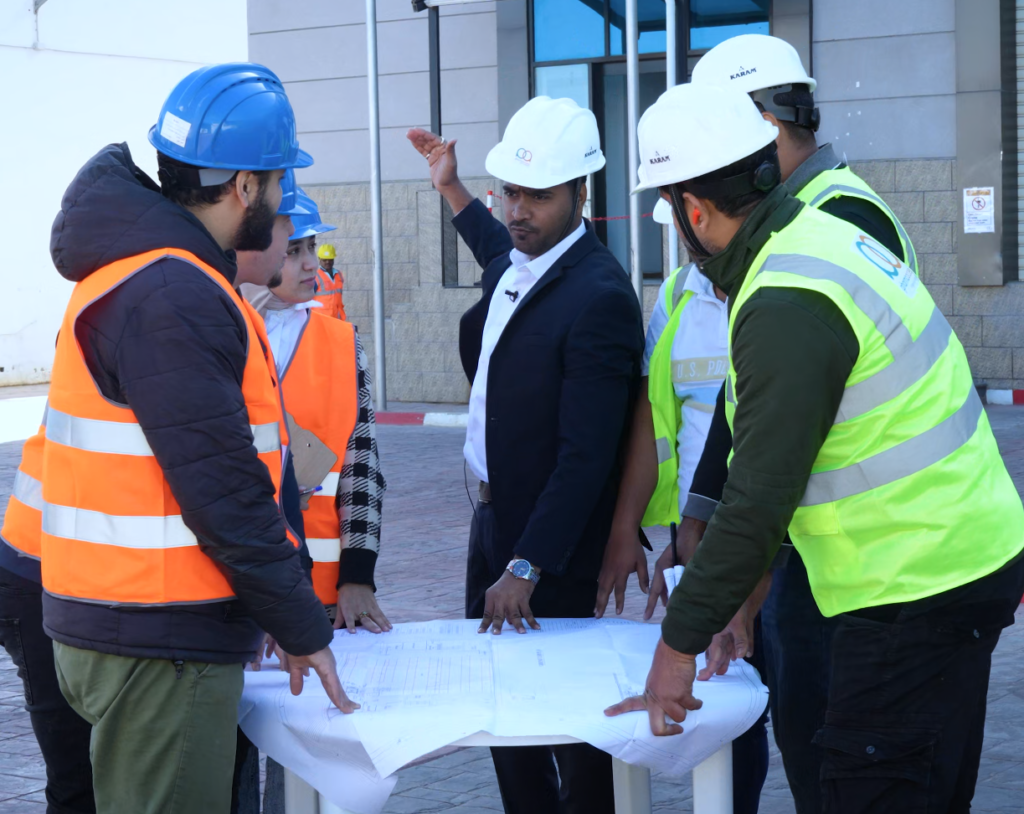
This is where the project is formed on paper, long before a shovel hits the ground. Several engineering disciplines contribute to pharmaceutical facility design.
Process Design and Room Layout
The process defines the facility, the facility should not define the process. A process flow diagram (PFD) is drawn for each step in production from the receipt of raw materials to the dispatch of the finished product. This flow then dictates the layout of the rooms, with the sequence of operations designed to minimize the risk of cross-contamination and unnecessary movement of material.
Adjacency of rooms counts. Clean and non-clean areas must be separated by airlocks, pressure differentials, or both. Personnel and material flows should be designed to minimize cross-contamination risks and avoid undesirable intersections between clean and less-clean process streams. These are not preferences; they are cGMP requirements.
HVAC and Cleanroom Design
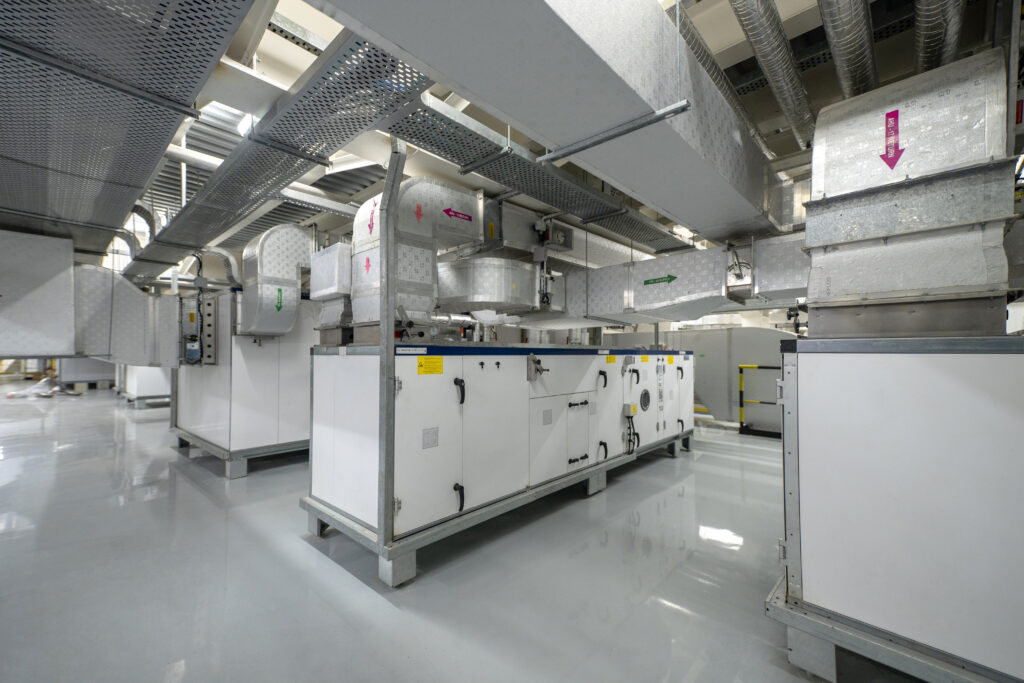
In a pharmaceutical facility, the HVAC system does much more than just control temperature.
It is responsible for:
- Controlling airborne particle levels in accordance with ISO 14644 classification standards
- Maintaining room pressure cascades to contain contaminant migration
- Providing appropriate air change rates in each classified zone
- Maintaining temperature and relative humidity within validated ranges
- Ensuring the performance of HEPA and ULPA filtration systems
The revised EU Annex 1 mandates a formal Contamination Control Strategy (CCS) document for sterile manufacturing areas linking HVAC design decisions with product contamination risk analysis. This is not a post-construction document; this is a design phase requirement.
MEP Systems: Mechanical, Electrical, and Plumbing
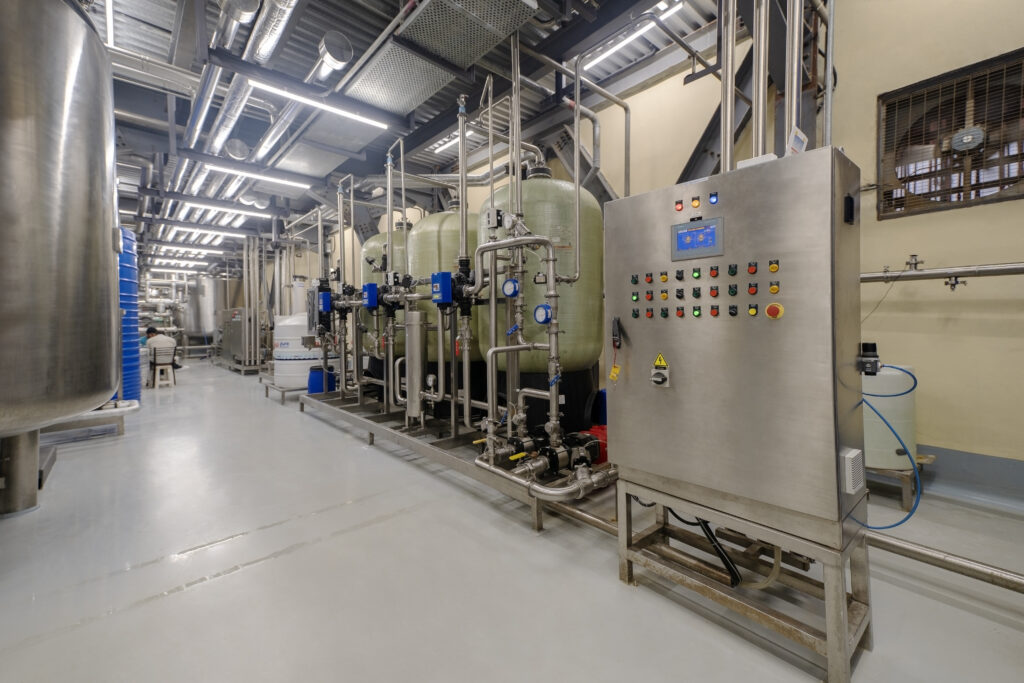
Utilities in pharmaceutical facilities have to meet standards far beyond normal commercial construction. Water for Injection (WFI), Purified Water (PW), clean steam, compressed air, and nitrogen systems all require specific material specifications, installation methods, and ongoing monitoring programs.
The ASME BPE standards define requirements for piping materials, weld quality, slope for drainability, and surface finish requirements for bioprocessing equipment.
Electrical systems must support hazardous-area classifications where applicable, emergency power for critical process equipment, and building management system (BMS) integration for environmental monitoring.
Quality by Design (QbD) in Facility Engineering
QbD is an ICH-endorsed approach that incorporates quality into design decisions instead of testing later. QbD, when used for facility design, refers to recognizing the design parameters that most influence product quality and exercising control over them from the beginning.
Pharmaceutical facility engineering consultants who design facilities using QbD find them easier to validate, quicker to qualify, and less likely to be cited in regulatory findings during inspections.
One of the most common reasons pharmaceutical projects experience delays, cost overruns, or validation challenges is the disconnect between engineering, construction, and qualification teams. Successful projects integrate facility engineering, execution, and CQV planning from the earliest stages of design to ensure continuity throughout the project lifecycle.
Phase 3: Procurement and Construction
After the design is approved and released for construction, the project moves to procurement and site execution. This is where many projects waste time and money.
That’s because pharmaceutical construction is not your run-of-the-mill commercial construction. General contractors are not equipped to handle the specialized contractors, materials traceability, and installation documentation that are needed for cleanroom panel systems, HVAC ductwork, process piping, and utility systems.
In a pharmaceutical project, procurement is not just the purchase of equipment and materials, but that process also includes vendor qualification, review of certifications, and management of factory acceptance tests (FATs) on major equipment items before they depart from the manufacturer’s facility.
Good project management at this point includes tracking design changes via a formal change control process. Any change to the approved design, even if minor, such as moving a drain, must be reviewed for its GMP impact before it is implemented. Informal ‘field changes’ that do not go through this process create gaps in the documentation that surface during validation.
Phase 4: Commissioning, Qualification, and Validation (CQV)
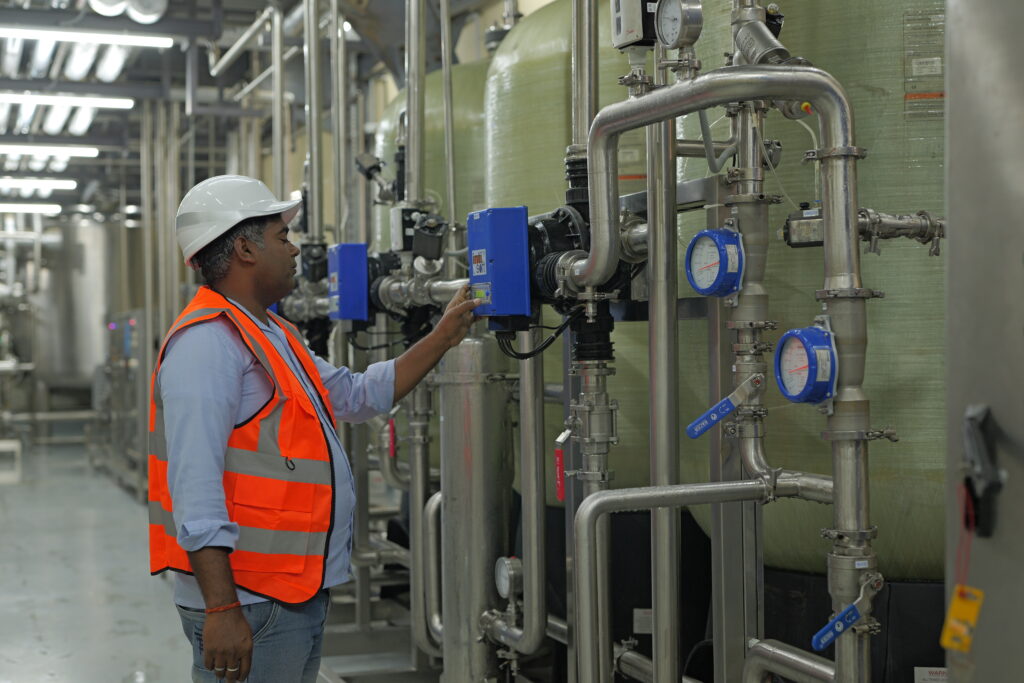
CQV is the formal process that connects construction completion to regulatory approval to manufacture.
Here’s how it works in order:
The commissioning process verifies that all systems are properly installed and functioning as the engineers intended. The result is engineering documentation, test records, and punch lists.
- Installation Qualification (IQ) is the confirmation that equipment and systems are installed according to approved specifications and vendor requirements.
- Operational Qualification (OQ) tests the ability of equipment and systems to operate correctly over the whole operating range.
- Performance Qualification (PQ) establishes that the entire manufacturing process, in this facility and with this equipment, consistently produces a product meeting its predetermined quality characteristics.
- Utilities (water systems, HVAC, and clean steam) are qualified in parallel with equipment qualification. Then comes cleaning validation and process validation.
The whole CQV package is the heart of the regulatory submission. During Pre-Approval Inspections (PAIs), this documentation is reviewed by inspectors of the FDA, EMA, or other agencies. Documentation gaps in CQV are among the most common findings during Pre-Approval Inspections (PAIs), even when the physical facility itself appears compliant.
Turnkey Pharma Facility Projects: What They Actually Deliver
A turnkey pharma facility project has one team to look after the whole scope: design, procurement, construction, and CQV. This is not like hiring a design firm, another contractor, and an independent validation consultancy and hoping they will all work together.
The turnkey model’s practical advantage is continuity. The documentation trail is unbroken when the same team that designs the HVAC system also commissions and qualifies it. Validation protocols are based directly on the design intent. The team knows where all the design decisions came from and why.
Pharma Access has completed turnkey pharmaceutical facility projects in over 18 countries, including biotech, sterile manufacturing, oral solid dosage, and API facilities. The team consists of pharmaceutical facility engineering consultants working from process design through CQV, which means clients get one accountable team and not a broken chain of vendors pointing fingers at each other when things go wrong.
Greenfield vs. Brownfield: Which Is Right for Your Project?
- Greenfield projects are built on new land without any existing structure. They allow the most design freedom but also take the most time. You need to do site preparation, civil works, and construction sequentially before you can start manufacturing.
- Brownfield projects are expansions or upgrades to existing facilities. They speed things up but bring limitations: existing column grids, ceiling heights, utility entry points, and the need to keep ongoing manufacturing operations running during construction.
- The decision depends on the timeline, budget, site availability, and whether existing infrastructure can meet the technical requirements of the new project. During the feasibility period, pharmaceutical facility engineering consultants review both options and recommend the one most consistent with the client’s production schedule and capital budget.
FAQs
1. How long does pharmaceutical facility design and construction take from start to finish?
A typical greenfield pharmaceutical facility will take three to five years from concept approval to first product batch. This includes design (6-12 months), construction (12-24 months), and CQV (12-18 months). Under good conditions, modular construction approaches can shorten this timeline by twelve to eighteen months.
2. What is the difference between GMP design and standard commercial construction?
GMP design translates regulatory requirements into the physical aspects of each facility, including room finishes, airlock design, pressure differentials, utility systems, and personnel flows. Standard commercial construction meets the building codes but has no equivalent documentation, traceability, or validation requirements.
3. What cleanroom classification does my pharmaceutical facility need?
That depends on the product and the manufacturing step. Oral solid dosage facilities often operate in controlled but non-aseptic environments, Aseptic fill-finish operations require an ISO Class 5 (Grade A) at the point of exposure within an ISO Class 7 (Grade B) background. Your pharmaceutical facility engineering team should define classifications based on the contamination risk profile of the product and the intended regulatory market.
4. What does a pharmaceutical facility engineering consultant actually do?
Pharmaceutical Facility Engineering Consultants • Process Design • Room Layout • HVAC • MEP and Utilities Design Often combined with equipment selection, vendor management, construction supervision, and CQV. The scope depends on the project, but the best consultants will take the facility from concept drawings to regulatory approval, not hand off mid-project.
5. What is the role of pharmacy consultancy services in a facility project?
Pharmacy consultancy services offer regulatory and technical expertise for facility projects, assisting clients in making design decisions compliant with current GMP standards in their chosen markets. Good pharmacy consultancy services identify regulatory risks early, before construction locks in decisions that are costly to reverse.