The question is no longer “should AI be in pharma?” Today, pharmaceutical companies want to know how quickly they can implement AI and realize measurable value from it. AI is changing how pharma companies design, make, and deliver medicines, from the design of a facility to the discovery of a drug.
The shift is quantifiable. By 2026, the pharmaceutical industry will be spending $3 billion on AI, and analysts predict that innovations powered by AI could create $350 billion to $410 billion in annual value for the industry. That includes drug development, manufacturing, clinical trials, and commercial operations.
Here is a breakdown of the top AI solutions that have the most impact on pharma companies today.
1. Pharma Engineering Solutions with AI: Simulation-Based Facility Design
Today, AI allows engineering teams to run the entire facility virtually before construction begins.
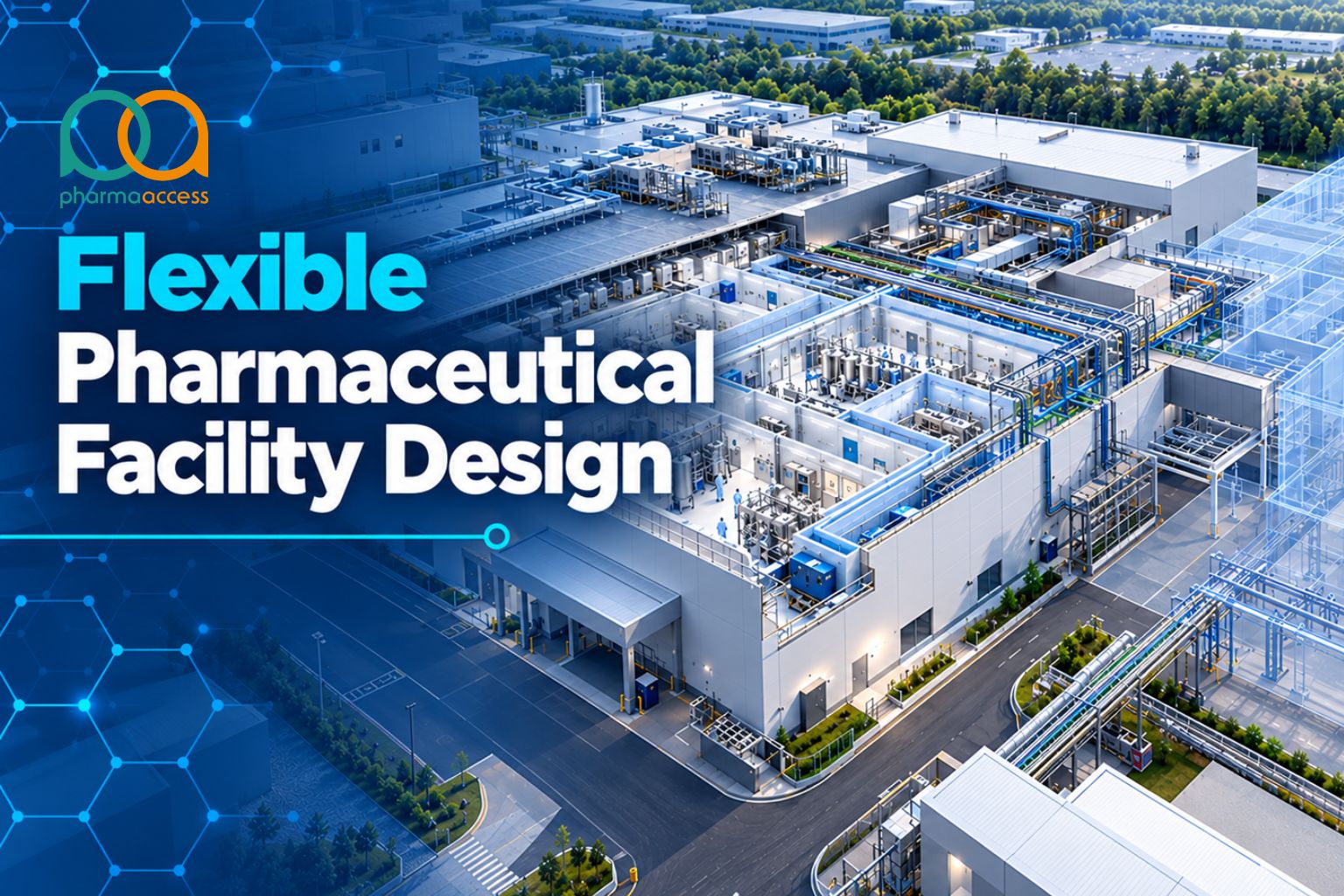
Using simulation-based engineering, AI models can test cleanroom airflow, pressure differentials, equipment layouts, and contamination control logic in a digital environment. Problems that usually come up during construction or, worse, during a regulatory inspection, can be identified and resolved at the design stage.
This is exactly what Pharma Access does. Pharma Access is headquartered in Andheri West, Mumbai. The company creates pharma engineering solutions with AI-assisted simulation at the heart of each turnkey pharmaceutical project. Before the construction period, their engineering team employed sophisticated simulation tools to model HVAC performance, room classification, and material flow paths. The concept is to incorporate GMP compliance into the design rather than attempting to retrofit compliance later in the project lifecycle.
Pharma Access brings this approach to biotech, sterile manufacturing, OSD, oral liquid dosage, and API facility categories with 25+ years of experience and 120+ projects in 18 countries.
2. Digital Twins for Real-Time Manufacturing Monitoring
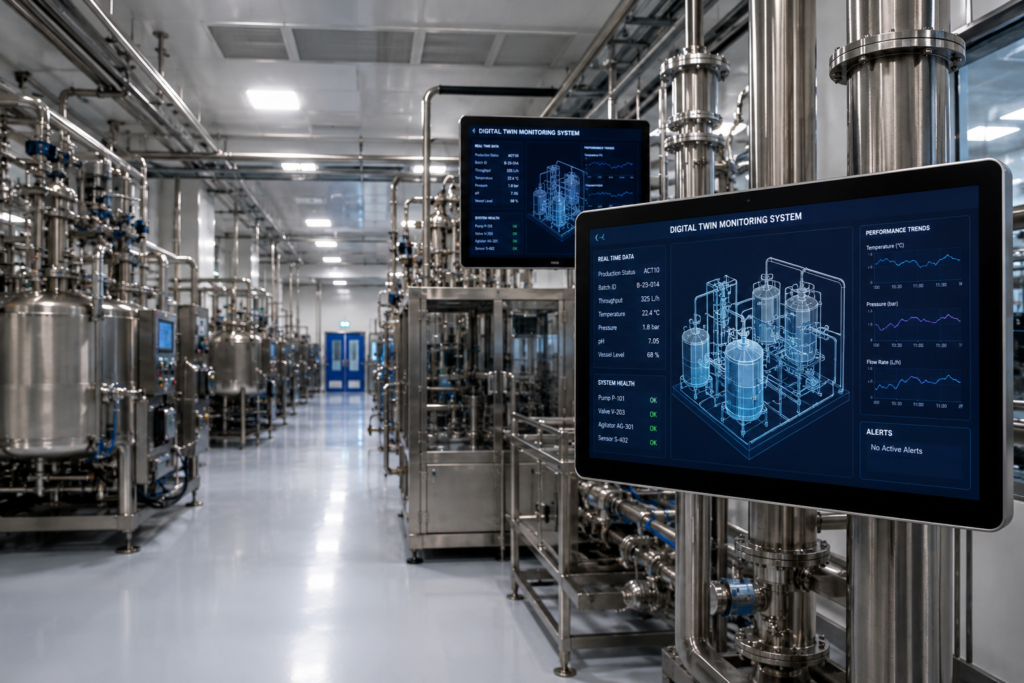
A digital twin is a real-time data-driven virtual representation of a physical manufacturing system. Feed it sensor data from your production line, and it provides real-time visibility into manufacturing performance and facility operations.
Industry estimates suggest the pharmaceutical manufacturing digital twins market is poised to expand from around $1.3 billion in 2025 to $8.5 billion by 2032, at a CAGR of approximately 30%. That growth reflects the increasing adoption of digital twin technologies across pharmaceutical manufacturing operations.
At the ARC Forum in February 2026, AstraZeneca’s process digital twins were on display, demonstrating how physics-informed models of manufacturing processes can slash material use by up to 25 kg per trial run during development, substituting virtual experiments for physical ones. In 2025, the University of Cambridge and A*STAR collaborated to develop an AI digital twin platform for production lines that automates fault detection, anomaly identification, and predictive maintenance.
Regulatory agencies are increasingly evaluating and supporting model-based approaches through risk-based validation frameworks and data-driven manufacturing initiatives.
3. Predictive Maintenance Powered by IoT and Machine Learning
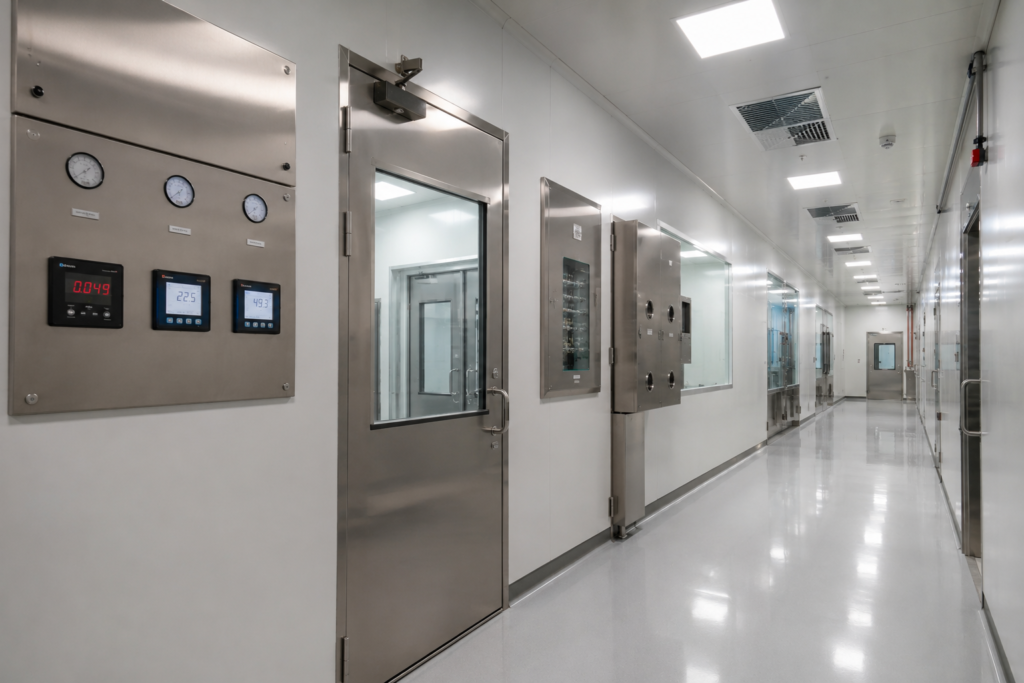
In a pharmaceutical plant, equipment failure doesn’t just generate a maintenance work order. This leads to batch rejection, a GMP deviation report, and perhaps a regulatory investigation.
Predictive maintenance changes the equation. AI-based systems ingest data from IoT sensors that monitor vibration, temperature, pressure, and flow rates on critical equipment. Machine learning algorithms identify patterns that predict failure and can warn of them days or weeks before a breakdown occurs.
The results are well documented. At a pharmaceutical manufacturer, the implementation of People10’s AI-driven predictive maintenance resulted in reducing unplanned downtime by 25-30%. Across manufacturing sectors, predictive maintenance programs report reductions in downtime of 30–50% and reductions in maintenance costs of up to 40%.
Each maintenance action must be traceable in a GMP environment. Compliant AI maintenance platforms come with audit-ready records compliant with 21 CFR Part 11, including electronic signatures and timestamped logs at each step.
The global predictive maintenance market was valued at $12.7 billion in 2024 and is projected to reach $80.6 billion by 2033, registering a CAGR of 22.8% from 2024 to 2033.
4. AI in Construction and Installation Planning for Pharma Facilities
Pharma construction and installation services have traditionally relied on sequential planning, where one team completes before the next team starts. That’s changing with AI-based project management tools.
AI models now analyze construction sequencing, identify scheduling conflicts before they occur, and highlight dependencies between engineering disciplines. This reduces rework on a typical pharmaceutical facility build, manages vendor coordination across MEP, HVAC, civil, and utility teams, and keeps the project on its GMP qualification timeline.
These tools are being used by pharma engineering consultants in Mumbai and other major pharmaceutical manufacturing hubs to manage the complexities of multi-disciplinary pharma construction projects. An end-to-end pharmaceutical project encompassing engineering design, procurement, construction, and CQV has dozens of parallel workstreams. AI-powered coordination tools consolidate all of them into one manageable view.
5. Automated Regulatory Compliance and Documentation Management
CAPA workflows, regulatory submissions, SOP updates, and audit readiness documentation all take a lot of time in any pharma operation. AI tools designed for compliance management automate the monitoring and updating of these documents.
Compliance AI systems can identify regulatory submission gaps before filing, track CAPA progress, and manage SOP version control across large organizations. The FDA’s 2025 draft guidance on AI models in manufacturing introduces a risk-based credibility assessment framework that requires companies to validate AI outputs using independent test data and documented acceptance criteria.
Automation of compliance workflows reduces human error in sterile manufacturing environments where the risks of contamination are high and the documentation requirements are most stringent, while maintaining full traceability required by regulators.
6. AI-Driven Facility Layout and Material Flow Optimization
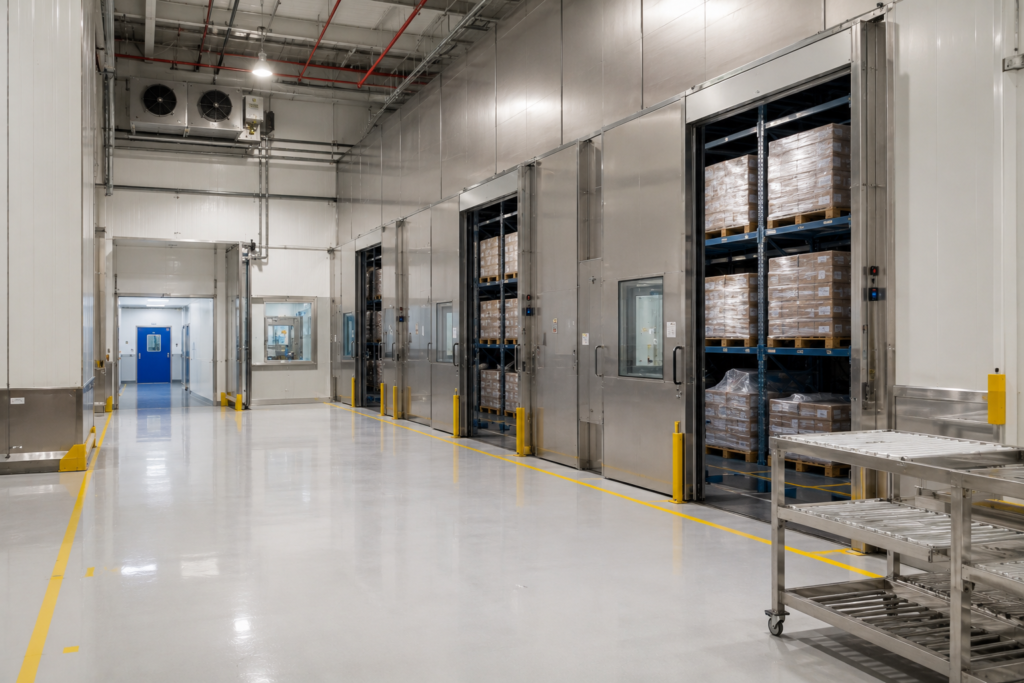
Facility layout decisions have a direct impact on operational efficiency, GMP compliance, and future scalability. AI-powered simulation tools are helping pharmaceutical companies optimize facility layouts before construction begins.
By analyzing personnel movement, material flow paths, equipment locations, and process interactions, AI models can identify bottlenecks, cross-contamination risks, and inefficient workflows during the design phase. Multiple layout scenarios can be evaluated rapidly to determine the most efficient configuration for manufacturing operations.
These technologies help engineering teams improve space utilization, reduce unnecessary movement, strengthen segregation strategies, and support regulatory compliance. For greenfield facilities and major expansions, AI-assisted layout optimization enables companies to make informed design decisions that improve operational performance throughout the facility lifecycle.
7. Supply Chain Intelligence and Demand Forecasting
Active drug shortages in the U.S. increased by 30% between 2021 and 2022, resulting in a five-year record high of 295 active shortages. In 2019, the FDA found that quality problems caused 62% of drug shortages.
AI supply chain tools help to ward off shortages through demand forecasting, real-time inventory tracking, and supplier risk modeling. They raise the flag on components at risk before they become critical. They model the impact of geopolitical disruption on the availability of raw materials and recommend sourcing alternatives in a proactive way.
Organizations that have implemented AI-enabled supply chain visibility have reported quicker responses to disruption and reduced inventory carrying costs, without compromising product availability.
8. Quality by Design (QbD) Optimisation with Machine Learning
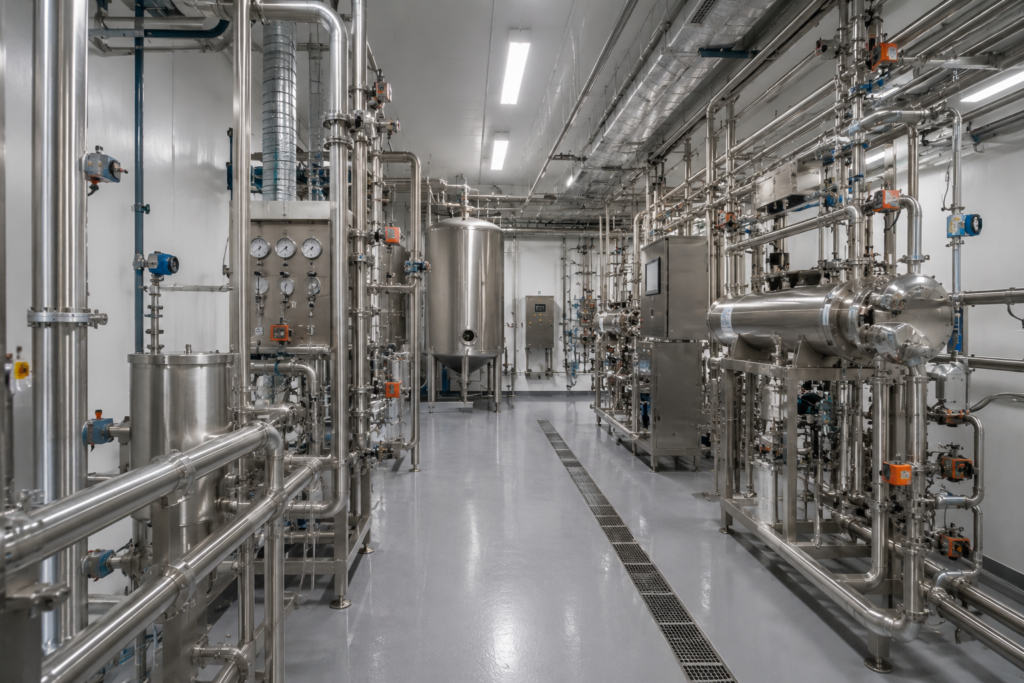
Quality by design is the FDA and ICH-supported approach to building quality in pharmaceutical products by understanding process parameters and their effect on product attributes. QbD is practical for scale with AI.
Machine learning models use historical batch data to identify the process parameters that have the most impact on product quality. This reduces the number of physical experiments required during development, reduces API consumption during trials, and results in more robust manufacturing processes that maintain the specification over production variability.
ICH Q13 provides guidance on continuous manufacturing, where QbD principles and AI-driven process control are closely intertwined.Pharma companies that are now adopting AI-assisted QbD are building the manufacturing knowledge base that will support regulatory submissions under these new guidelines.
How Automation Helps Pharma Manufacturers Stay Ahead
Automation enables pharma manufacturers to minimize manual intervention, enhance batch consistency, and maintain compliance documentation without imposing additional burden on quality teams.
Key benefits include:
- Less human error in documentation, inspection, and process control
- Monitoring in real-time rather than end-of-line testing for quicker detection of deviations
- Increased regulatory readiness with automated, audit trail-ready documentation
- Lower cost per compliant batch as predictive tools reduce failures before they occur
- Shorter product development cycles as simulation replaces physical testing
Regulatory agencies including the FDA, EMA, and WHO continue to emphasize the need for explainable, validated, and traceable AI systems in regulated manufacturing environments. The companies that adopt these tools now will be better positioned when those frameworks become mandatory requirements.
What to Look for in a Pharma Engineering Partner with AI Capabilities
Not every engineering firm provides AI-assisted design and construction. This is what you want to look for:
- Performance of testing facilities before construction using design tools based on simulation
- GMP knowledge is built into the engineering team, not added later by external consultants
- Integrated project management for engineering, procurement, construction, and CQV
- Experience with dosage forms—Biotech, Sterile, OSD, API, and Oral Liquids all have different engineering needs
- History of regulatory approvals in multiple countries and agencies
Pharma Access is one of the leading pharma engineering designs, and they bring all five to any project they undertake. The ‘Engicution’ model combines the precision of engineering design with the capability of execution. This approach combines advanced engineering, simulation technologies, and Quality by Design (QbD) principles throughout the facility development lifecycle. They have 70 engineers, 12 subject matter experts, and 8 technical project managers who work on greenfield builds, brownfield expansions, and facility upgrades.
Frequently Asked Questions
1. What are pharma engineering solutions with AI, and why do they matter in 2026?
Pharma engineering solutions using AI apply simulation, machine learning, and digital modeling to allow better design, construction, and monitoring of pharmaceutical plants. They reduce design errors, reduce the cost of GMP remediation, and improve regulatory readiness before construction is complete. They are becoming increasingly important as regulatory expectations continue to evolve and pharmaceutical facilities pursue higher levels of operational efficiency and compliance.
2. How does automation help pharma manufacturers specifically?
Automation allows pharma manufacturers to spot equipment failures before they cause batch losses, minimize manual documentation errors, facilitate real-time environmental monitoring in classified areas, and generate traceable records that meet FDA and EU GMP inspections. The result is better batch consistency, lower deviation rates, and fewer recalls.
3. What is a turnkey pharmaceutical project, and what does AI add to it?
Turnkey pharmaceutical projects offer a fully integrated manufacturing facility, from engineering design through procurement, construction, installation, and validation. AI offers simulation-based design testing, AI-assisted project scheduling, and digital twin capabilities that boost the accuracy of all steps from cleanroom modeling to construction sequencing.
4. What should I look for in pharma engineering consultants in Mumbai for AI-enabled projects?
Look for companies that have validated simulation tools, an engineering team trained in GMP, integrated procurement and construction capabilities, and project experience in the dosage form you are targeting. Just as important as technical capability is regulatory experience in the markets where the facility will operate. Ask them specifically what their design verification approach is pre-construction.
5. How do pharma construction and installation services use AI to stay GMP-compliant?
AI-powered project management tools track construction sequencing, identify clashes between MEP, HVAC, structural, and utility disciplines, and maintain documentation trails that flow directly into commissioning and qualification activities. This means less rework on site and qualification evidence built into the construction record from day one.