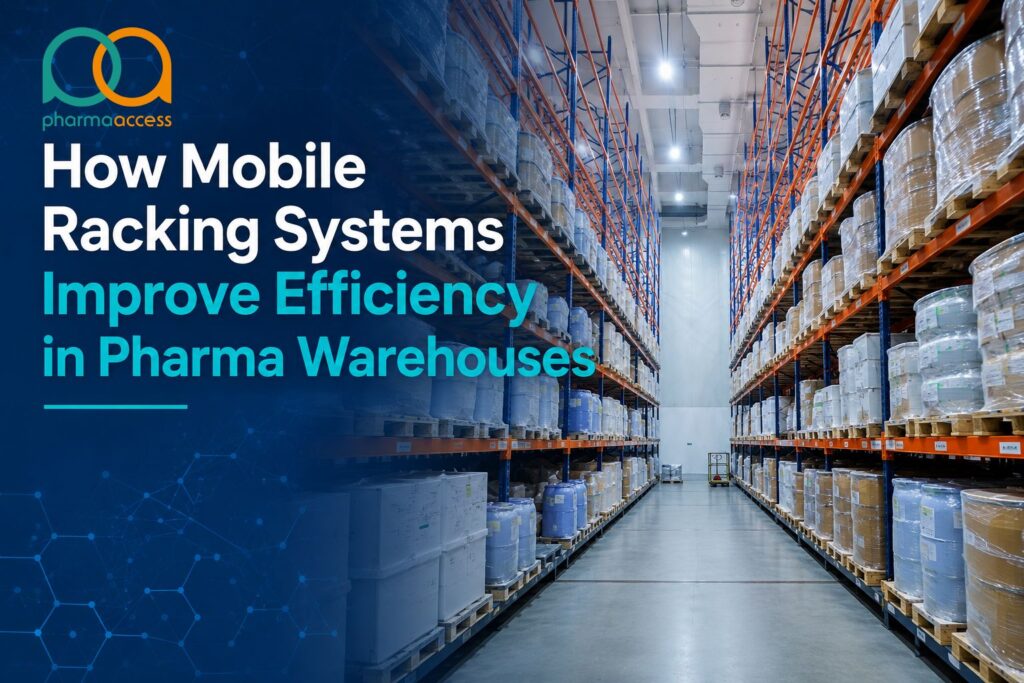
A pharmaceutical warehouse is not a storage room. It includes active ingredients, finished drug products, and temperature-sensitive biologics that have a direct effect on patient safety. Every square meter, every access point, every storage decision, is regulatory weight.
This is where mobile racking systems come in handy. These are some of the most practical ways pharmaceutical facilities can get more out of their existing warehouse footprint while remaining aligned with Good Manufacturing Practice (GMP) compliance and Good Distribution Practice (GDP) requirements.
Let’s break it down.
What Are Mobile Racking Systems?
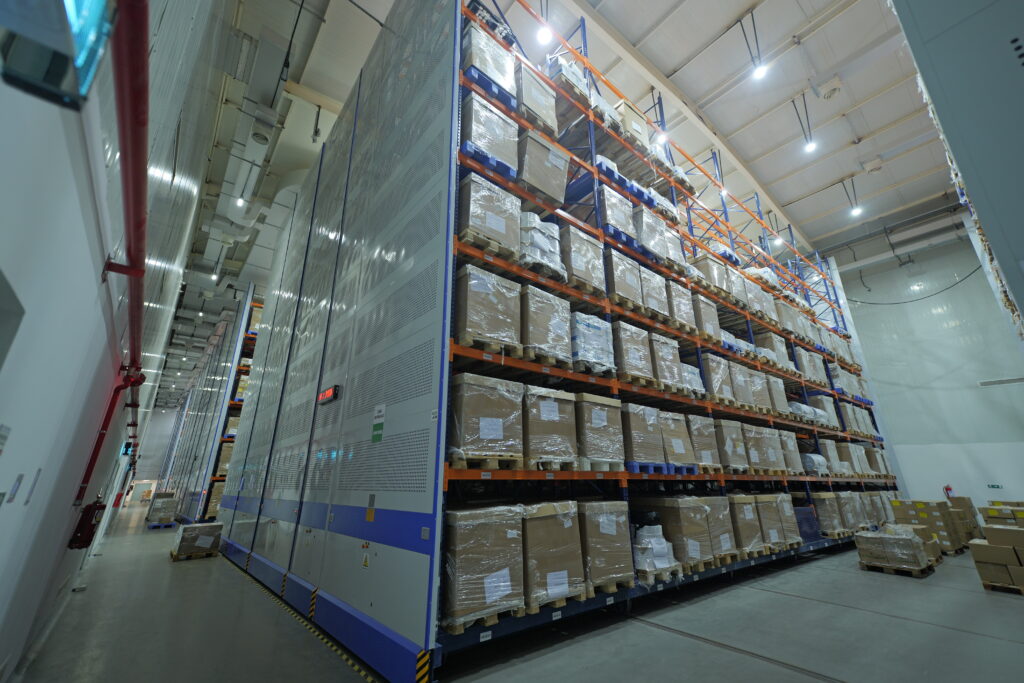
A mobile racking system is a storage system in which shelving units or pallet racks are mounted on motorized or mechanical carriages that move on rails mounted on the floor. Rather than having multiple permanent aisles running between static rows of racking, the whole bank of racks moves to create a single access aisle wherever the operator needs it.
If a worker needs to retrieve goods from a specific row, the adjacent rack units slide apart on their rails, creating an aisle on demand. Most systems open an aisle in 10-20 seconds. Control options range from simple push-button panels to integration with warehouse management systems (WMS).
This design eliminates the dead space that static racking provides. A typical warehouse can use up 50 to 60 percent of its floor space in aisle space alone without storing a single pallet. Mobile racking takes back that space.
Why Pharma Warehouses Have Unique Storage Demands
To understand what mobile racking systems can do, it is useful to know what makes pharmaceutical warehouse storage different from general industrial storage.
The challenge is that Pharmaceutical warehouses are subject to GMP and GDP rules that encompass everything from temperature control and humidity to product segregation, traceability, pest control, and documentation. The World Health Organization’s GDP guidance and the EU’s Good Distribution Practice requirements both require that medicines be stored under controlled conditions throughout the supply chain to ensure their safety and efficacy.
Which in practice means:
- Clearly separated storage areas for quarantined, released, returned, and rejected materials
- Cold chain conditions in temperature-controlled areas (typically +2 to +8°C for biologics and vaccines and +15 to +25°C for ambient pharmaceuticals)
- FEFO inventory rotation (First Expired First Out) to prevent expired stock from entering the distribution chain
- Real-time inventory traceability and accurate batch documentation
- Storage area and racking structure cleaning and housekeeping records
- Monitoring of humidity and temperature with validated equipment and documented deviations
Static shelving and fixed pallet racking can satisfy some of these needs, but they are much less space efficient and difficult to reconfigure as regulations or product lines change. Mobile racking eliminates both problems.
How Mobile Racking Systems Improve Pharma Warehouse Efficiency
1. Significant Space Gains Without New Construction
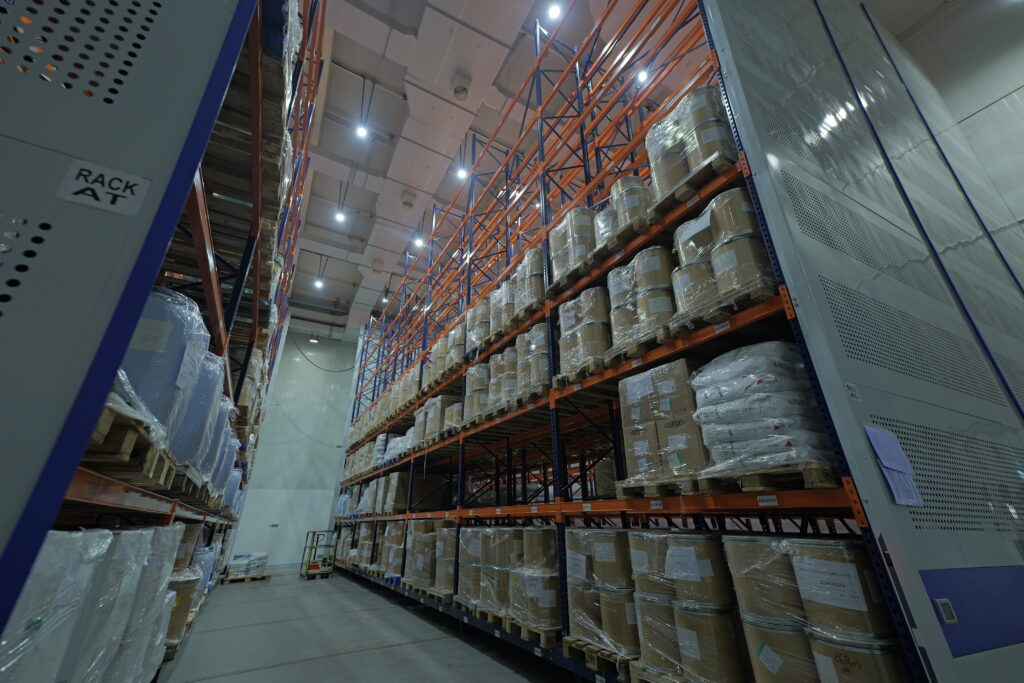
The most direct benefit is the increase in storage density. The mobile racking system can significantly increase storage density compared with conventional static racking systems, depending on the facility layout and operational requirements. Some systems remove unused aisles, increasing usable storage capacity by 50 percent or more.
This is a direct financial benefit for pharmaceutical manufacturers in urban locations, leased facilities, or temperature-controlled cold rooms where every cubic meter costs significant energy and construction. Building more warehouse space is expensive and takes a lot of time. In many facilities, expanding the building footprint is not feasible, making storage optimization within the existing envelope a more practical solution.
This is particularly true for cold storage areas. Cold rooms are some of the most expensive real estate in a pharma facility to build and operate. You can get more out of that envelope without expanding it, cutting capital and operating costs.
2. Support for FEFO and FIFO Inventory Management
GMP requires pharmaceutical warehouses to manage the flow of products in and out of storage. FEFO (First Expired, First Out) and FIFO (First In, First Out) principles are applied to ensure that the products do not stay in the storage beyond their expiry date, which is a regulatory non-compliance and patient safety issue.
Mobile racking systems support these practices by providing individual access to each row. With drive-in racking, the pallets are stored in deep aisles with only the front pallet being accessible, whereas with mobile systems, the operator can open up any aisle and access any row whenever they want. This means the warehouse team can pick stock by batch number and expiry date, without needing to work around blocked lanes or physically move pallets.
Mobile racking, when used with a warehouse management system (WMS) that tracks batch numbers and expiry dates in real time, makes FEFO compliance a practical and repeatable process, rather than a manual exercise with room for error.
3. Product Segregation and Contamination Control
The different product statuses in a warehouse need to be physically separated clearly in line with GDP guidelines. Quarantined goods should not be mixed with released stock. Dedicated and clearly identifiable storage areas are required for rejected, returned, and recalled products. Temperature-sensitive and ambient products need to be zoned.
Mobile racking systems can aid in this in a confined floor space. Color coding or lockable mobile system sections can be used to give visual cues for product status areas. Different product categories can be assigned to different carriages. The physical separation is maintained regardless of how the racks move in the course of the access operations.
For high-hygiene pharmaceutical environments, stainless steel construction may be selected due to its cleanability, corrosion resistance, and compatibility with GMP cleaning procedures. It is non-reactive, non-porous, and resistant to cleaning agents routinely used in GMP areas, allowing for easy documentation of maintenance and cleaning validation.
4. Temperature Zone Efficiency in Cold Storage
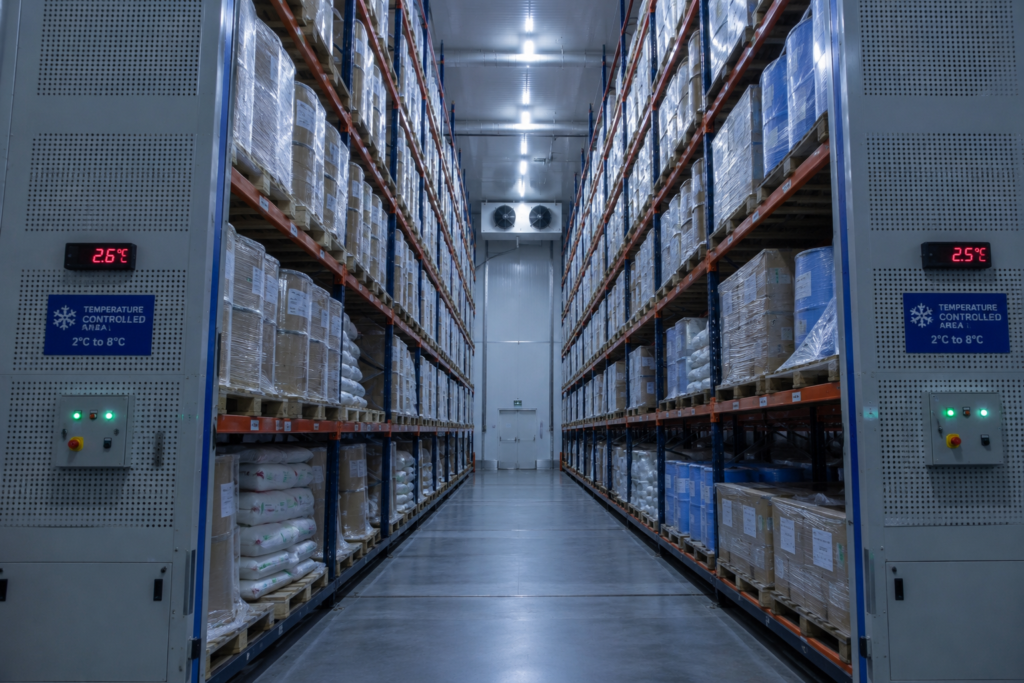
Cold chain pharmaceutical products (vaccines, biologics, insulin, and associated products) need to be maintained at +2 to +8°C and kept there uninterrupted. Any excursions that are out of range will be subject to documented investigation and may result in batch rejection or recall.
Mobile racking systems are ideal for cold room and freezer environments with configurations rated for operation down to -20°C. The system reduces non-productive storage space within the cold room by minimizing permanent aisles, allowing better utilization of the refrigerated volume. Lower air volumes to condition imply better temperature distribution and less energy consumption by refrigeration equipment.
WHO GDP guidelines require cold storage areas to have backup power systems, temperature mapping that has been validated, and continuous monitoring with documented deviation responses. When properly designed and qualified, a mobile racking system can support more efficient airflow management and temperature distribution within cold storage environments, helping maintain compliance during temperature mapping and qualification activities.
5. Adaptability for Pharma Manufacturing Automation
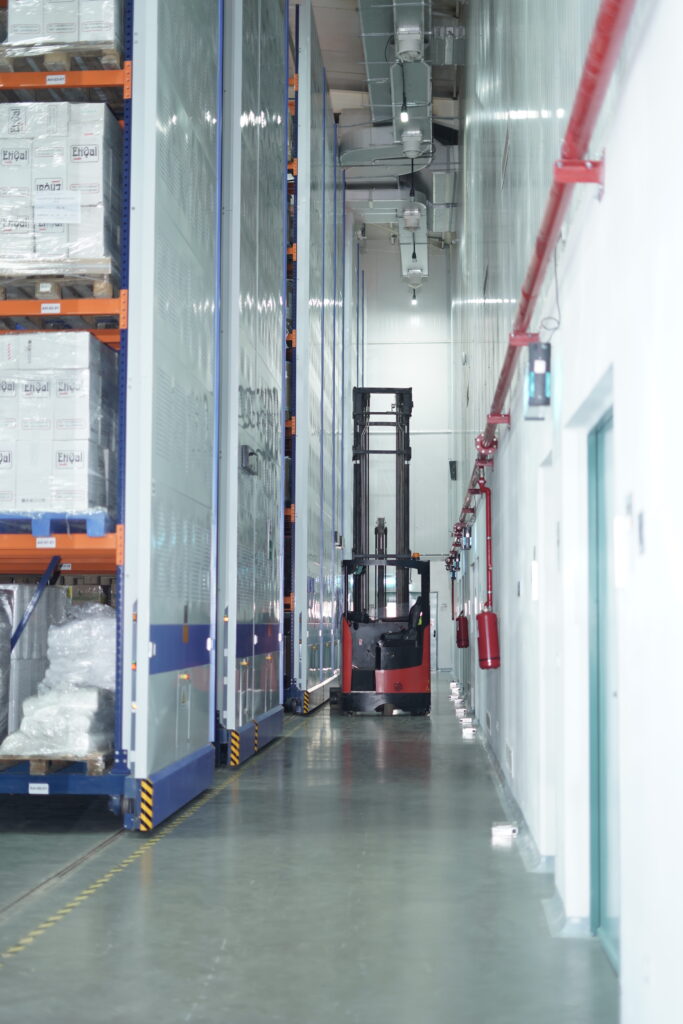
The pharmaceutical industry is moving toward more pharma manufacturing automation in production and warehouse operations. Mobile racking systems are a natural fit for this direction, since they are designed to integrate with modern warehouse management tools.
Push-button controls, barcode-triggered aisle opening, and WMS integrations all allow the racking system to function within an automated or semi-automated warehouse without the full investment of an automated storage and retrieval system (AS/RS). For companies still operating at mid-scale, this is a practical middle ground between fully manual static storage and high-capital robotic systems.
With the growth of operations, mobile racking can be further expanded by increasing the number of carriage units, changing the rail configurations, or adding additional shelving levels without dismantling the core structure. This modular cleanrooms pharmacy design enables the facility to adapt to changing product portfolios and regulatory requirements over time.
Pharma Equipment and Manufacturing Process Design: Where Storage Fits
Warehouse design is often an afterthought in the planning of pharmaceutical facilities. The movement of raw materials, intermediates, and finished goods through the warehouse actually has a direct impact on production scheduling, batch traceability, and GMP audit readiness.
That is why when pharma equipment and manufacturing process design are done properly, warehouse layout is part of the engineering scope, not a separate procurement decision after the manufacturing areas are built. Facility design from the beginning must include racking type, aisle widths, zone designations, cleaning access, and temperature mapping points.
“Warehouse and storage design is an integrated part of the facility engineering scope,” says Pharma Access, which has over 25+ years of experience working on more than 100 pharmaceutical projects in the biotech, sterile, OSD, and API facility categories. Their end-to-end services include engineering design, procurement of pharmaceutical equipment and manufacturing infrastructure, construction and installation, and CQV (commissioning, qualification, and validation). When rack decisions are made in this broader context, the storage system meets the facility’s regulatory and operational requirements from day one, rather than being retrofitted later.
Validation and Qualification Considerations
Mobile racking systems installed in GMP-regulated facilities should be included within the overall facility qualification strategy. Depending on the warehouse classification and intended use, qualification activities may include installation verification, load testing, operational checks, cleaning procedures, maintenance requirements, and integration verification with warehouse management systems (WMS).
Proper documentation of the racking system, including load ratings, maintenance procedures, cleaning records, and qualification reports, helps support inspection readiness and long-term regulatory compliance. Incorporating these considerations during the facility design phase can reduce qualification challenges and support smoother project execution.
Considerations Before Choosing a Mobile Racking System
Mobile racking is not a must for every pharmaceutical warehouse. Here’s an easy way to figure out if it makes sense for a given facility:
Mobile racking is a great fit when:
- Inventory volume exceeds floor space available
- Cold room or freezer space is costly to build and operate
- Several product categories require separate storage areas
- FEFO compliance is hard to manage with the current static racking.
- The facility wants to broaden its product portfolio without broadening floor space.
- Static racking is suitable where:
- Very high throughput. Need to access multiple aisles at the same time, all the time
- Few SKUs are handled by the warehouse with simple rotation requirements
- Budget considerations favor low initial capital costs
The structure of the floor also matters. Mobile racking passes concentrated loads via the carriage bases to the concrete floor. So, it is necessary to check the structural load capacity and floor levelness prior to installation. Fire suppression system layouts may also require modifications to maintain sprinkler coverage over mobile rack configurations, and should be reviewed in accordance with applicable local fire safety codes and insurance requirements..
The Role of Pharmaceutical Engineering Consultants in India
India is one of the largest exporters of finished pharmaceutical products and APIs in the world, with a plethora of facilities operating in regulatory jurisdictions like the US FDA, EU GMP, WHO, and CDSCO. In these facilities, storage and warehouse design must adhere to many overlapping sets of guidelines at the same time.
The practical advantage of this process is that there are pharmaceutical consultants in India who specialize in turnkey facility design, such as Pharma Access, based in Mumbai. They understand the local regulatory environment, have relationships with qualified equipment and racking vendors, and have documented experience with warehouse qualification to international inspection standards.
It is far more cost-effective for a manufacturer facing an EU GMP or WHO pre-qualification audit to have the warehouse racking and zone segregation design reviewed by an experienced consulting team before construction than to have to remediate after an inspection observation. Documentation packages for mobile racking must be included in the qualification file from day one and must contain load calculations, cleaning validation protocols, and GDP segregation zone maps.
Frequently Asked Questions
1. What is a mobile racking system, and how does it differ from static racking?
Mobile racking systems have shelving or pallet racks installed on motorized carriages running on rails on the floor. Aisles open on demand rather than remaining permanently available between every row. This leads to a dramatic increase in storage density, with some systems providing up to three times more pallet positions in the same floor space as static configurations.
2. Are mobile racking systems compliant with GMP and GDP warehouse requirements?
Yes, if properly specified. Mobile racking systems can be color-coded or lockable to meet GMP and GDP segregation requirements for products. Stainless steel options meet pharmaceutical surface cleanliness requirements. In addition, the facility design documentation shall address load capacity, floor strength, and fire suppression layout requirements for the system.
3. Can mobile racking systems be used in pharmaceutical cold rooms?
Yes. Mobile racking is very suitable for cold room and freezer applications, with some systems able to operate down to -20°C. Mobile racking reduces the unnecessary aisle air volume in the cold room, which contributes to a more uniform temperature distribution, thereby facilitating GDP temperature mapping and monitoring compliance.
4. How does mobile racking support FEFO inventory management in a pharma warehouse?
Mobile racking means that operators can open the required aisle on demand to access any row at any time. Unlike deep-lane drive-in racking, there is no need to move pallets to reach a particular batch number or expiry date. When using a warehouse management system that tracks expiry dates and batch numbers, FEFO rotation becomes a reliable and auditable process, rather than a manual workaround.
5. When should pharmaceutical companies involve consultants in warehouse racking decisions?
The sooner the better. The way you rack has implications for floor load calculations, fire suppression layouts, GDP zone segregation design, temperature mapping protocols, and the qualification documentation package. Having experienced pharmaceutical consultants in India or internationally involved during the facility engineering design stage and not post-construction avoids expensive design changes and helps to ensure that the storage system is inspection-ready from day one of operation.