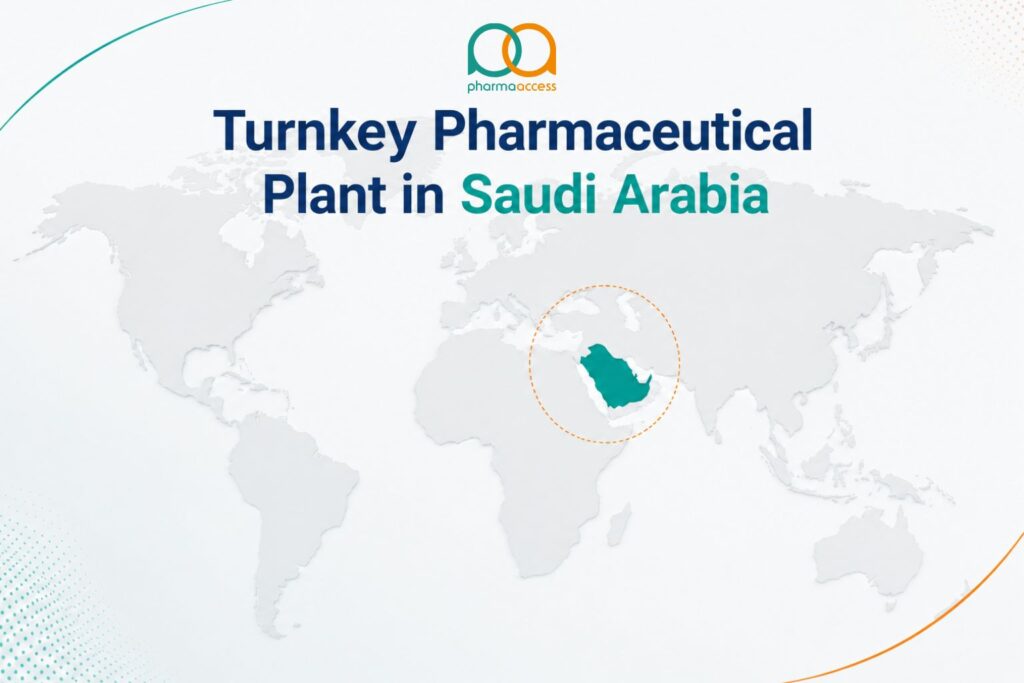
Turnkey Pharmaceutical Plant in Saudi Arabia projects are becoming increasingly important as Saudi Arabia develops one of the most ambitious pharmaceutical industries in the Middle East. The Kingdom’s pharmaceutical market reached a value of about USD 11.6 billion in 2024. Around 30% of pharmaceutical products are manufactured locally, according to official Saudi investment material. That figure has a clear target under Vision 2030: to localise 40% of the market value in the pharmaceutical industry through domestic manufacturing investment, industrial zone development, and technology transfer partnerships.
Pharma companies looking to enter or expand in the Saudi market often find themselves asking one question early on: what does it actually mean to set up a compliant, production-ready plant? For most projects, the answer is a Pharma Turnkey Solutions in Saudi Arabia, an integrated project-delivery model that covers all stages from initial design to qualified and documented handover.
Here’s a look at what’s in that model, why it matters in the Saudi context, and what investors and manufacturers need to know before they begin the project.
1. Why Saudi Arabia Demands a Turnkey Approach
Building a pharmaceutical facility is not the same as building a typical industrial warehouse.
The Saudi Food and Drug Authority (SFDA) GMP Guidelines aligned with internationally recognised GMP principles, including applicable PIC/S guidance.
All room classifications, airflow patterns, surface finishes and drainage points must be designed according to the dosage form, process and contamination-control requirements. The SFDA conducts site inspections, with the duration depending on the facility scope and complexity, and can issue non-compliance findings that can delay licensing, GMP certification or related regulatory activities.
With a turnkey approach, one engineering partner handles the full scope: design, procurement, construction, installation, commissioning, and qualification and validation (CQV). That one point of responsibility reduces the gaps in coordination that happen when you have more than one contractor working separately. When all disciplines report to one team, compliance is designed from day one, not corrected at the end.
Vision 2030 aims to localise 40% of the market value in the pharmaceutical industry. Companies that can quickly and compliantly commission facilities will be best positioned to capture that growth.
2. Pre-Project Feasibility and Site Assessment
Every turnkey pharmaceutical plant in Saudi Arabia starts a long way before the first brick is laid.
The feasibility phase includes the following:
- Site assessment – evaluating availability of land, classification of industrial zone, proximity to utilities, site-access requirements and capacity of local infrastructure
- Regulatory mapping – what SFDA licensing and registration pathways https://www.sfda.gov.sa/en/news/88414 are relevant for the product type (e.g., oral solid dosage, sterile injectables, biologics, API, etc.)
- Production capacity planning – determining batch sizes, room requirements, equipment capacities and throughput demands from market forecasts
- Budget framework — preparing a capital expenditure estimate prior to detailed design
A typical greenfield pharmaceutical facility, from concept approval to first product batch, may take 3 to 5 years. This may include design (6-12 months), construction (12-24 months), and CQV (12-18 months) although activities may overlap and timelines depend on project complexity, equipment lead times and regulatory requirements.Modular construction approaches can reduce selected project phases when design standardisation, site readiness, approvals and logistics are properly coordinated.
A detailed upfront feasibility assessment helps keep the timeline on track and avoids costly redesigns down the line.
3. Engineering Design — the Foundation of GMP Compliance
The principle is straightforward.
Good manufacturing practice is not something you tick off at the end of the day. It is a core design consideration. Every choice in the engineering phase, from room pressure differentials to floor drain placement, either helps or hurts the regulatory outcome.
A full pharma engineering solution package in Saudi Arabia comprises the following:
- Process design — setting up production workflows, room adjacencies, and personnel, material, product and waste-flow paths to prevent cross-contamination
- Architectural and structural design – selection of wall systems, types of ceilings, floor coatings, and door specifications to meet cleanroom requirements;
- HVAC design — engineering heating, ventilation, and air conditioning systems to maintain the required cleanroom grades or controlled environmental conditions, temperature, humidity, and differential pressure
- MEP systems – mechanical, electrical, and plumbing design, including compressed air, nitrogen, clean steam, and Water for Injection where required by the process.
- Automation and IT – Building Management Systems (BMS), Environmental Monitoring Systems (EMS), and SCADA Integration
- ELV systems – access control, CCTV, and fire and life safety systems
- Quality control laboratory – a dedicated, appropriately controlled QC laboratory for in-process testing and batch release
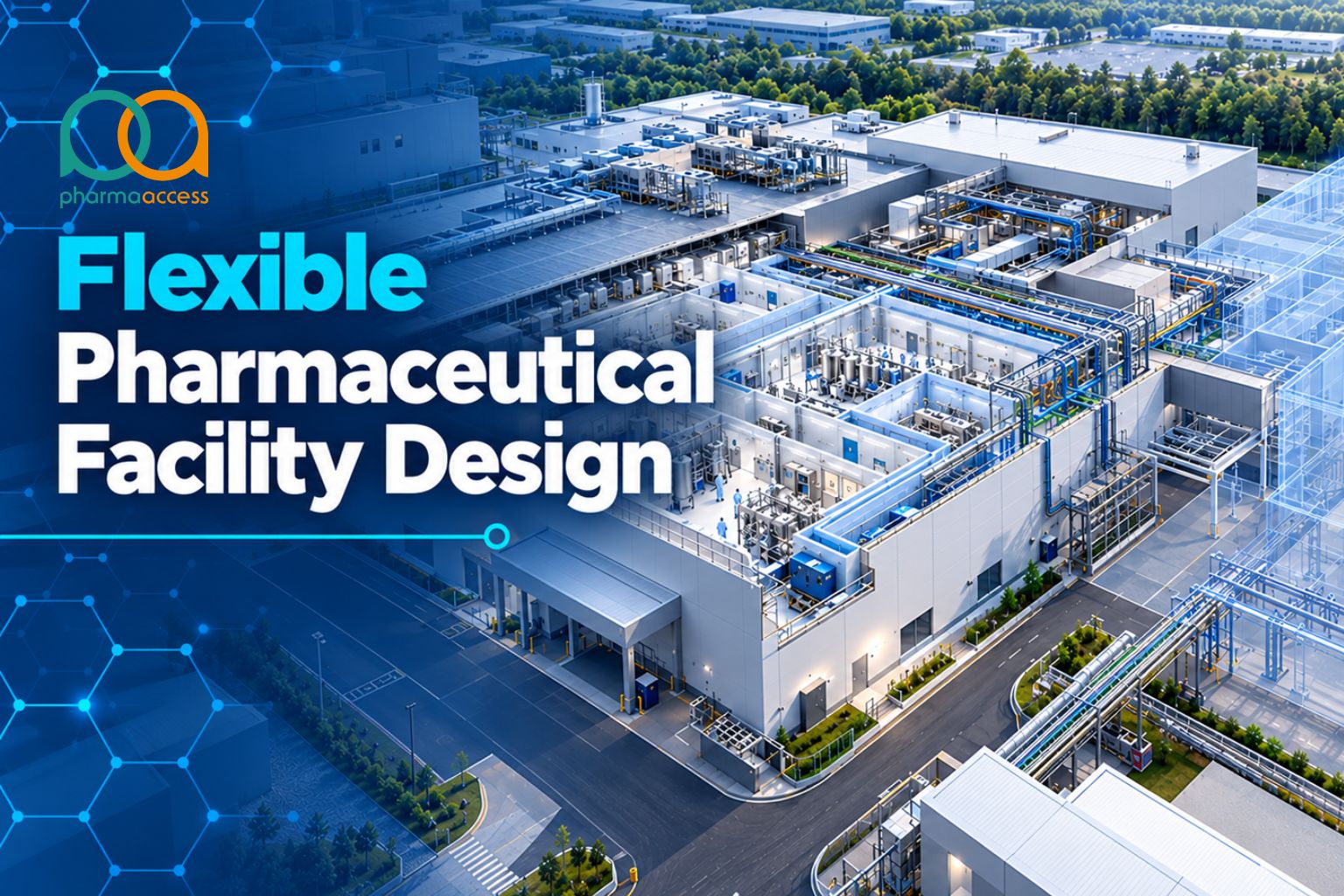
Today, pharmaceutical engineering solutions utilise simulation-based tools before the construction phase. GMP compliance is designed into the project rather than retrofitted into the project later in the project lifecycle, with more sophisticated simulation tools to model HVAC performance, room classification, and material flow paths by engineering teams.
Digital-twin technology is also being evaluated in pharmaceutical manufacturing projects. Turnkey companies may develop these simulation models as part of the design package, giving the client a virtual facility to stress-test before a single beam is put up.
4. Procurement and Supply Chain Management
Pharmaceutical process equipment is not a ready-to-use item. The tablet press machines, isolators, autoclaves, WFI generation systems, and cleanroom air handling units all come from specialised suppliers with different technical capabilities, documentation standards and delivery timelines. Mistakes in procurement, such as purchasing equipment that does not meet the approved User Requirement Specification or cannot support documented qualification, can cost months of delay.
A turnkey project covers procurement for the following:
- Manufacturing process equipment (granulators, coaters, fillers, capsule filling machines, lyophilisers, etc., depending on the dosage form)
- Utility equipment (water purification systems, clean steam generators, compressed gas systems)
- Cleanroom panels, doors, and pass-through systems
- HVAC air handling units and filtration
- Analytical equipment and laboratory instruments
- Automation Equipment (PLCs, SCADA, DCS)
In turnkey pharmaceutical projects, the procurement process favours the use of technically evaluated and qualified suppliers and equipment with a history of success in the pharmaceutical sector and documentation that supports GMP qualification.
Procurement for a turnkey pharmaceutical plant in Saudi Arabia also involves customs documentation, clearance through the Zakat, Tax and Customs Authority (ZATCA), and liaison with local freight agents. Part of the scope is an experienced turnkey partner who handles all of this in accordance with the agreed procurement and logistics responsibilities.
5. Construction and Installation
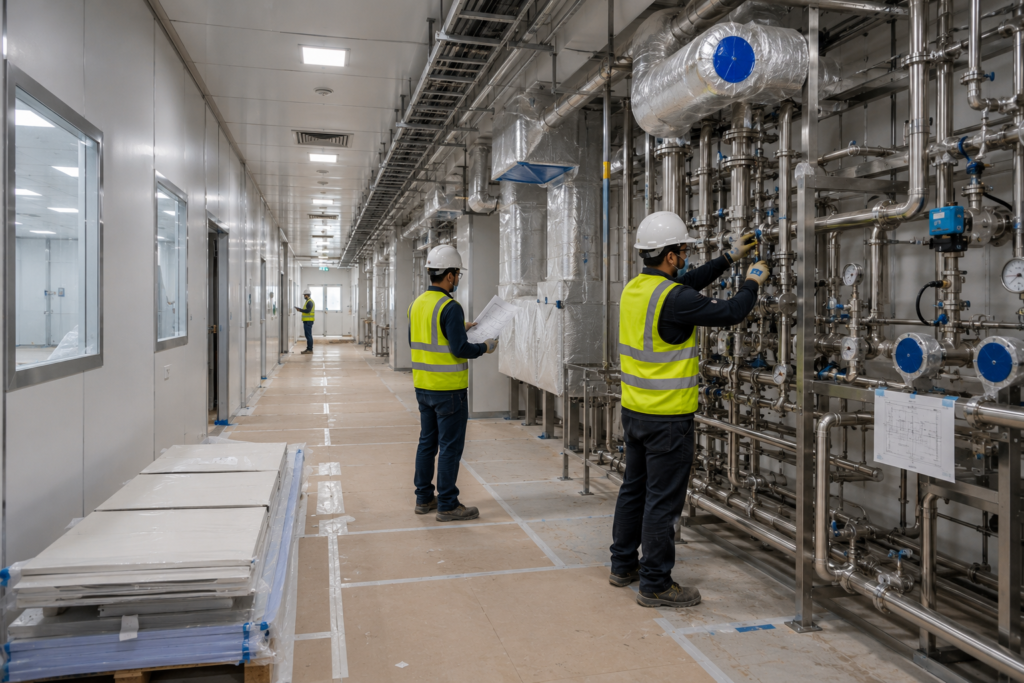
GMP facility construction is unlike your typical civil construction in several ways. 1. Materials must be traceable. Cleanroom panels need to be installed in a controlled sequence. HVAC ductwork must be protected from contamination and internally clean before installation. Any change from the approved design must be handled through a formal change-control process.
The construction phase consists of:
- Civil, Structural & Foundation Works
- Installation of cleanroom wall, ceiling, and floor
- HVAC ductwork fabrication and installation
- Piping and plumbing of process and utility services
- Installation of lighting and electricity
- Fire suppression and life safety systems
- Site infrastructure and landscaping
During the construction phase, strict quality assurance practices are followed to ensure the integrity of the cleanroom and the traceability of the materials. The construction teams also work closely with engineering and validation units to maintain quality checkpoints such as material inspections, installation checks, duct-cleanliness inspections, pressure testing and punch-point closure.
In Saudi Arabia, construction must also adhere to applicable Saudi Building Code requirements, SASO standards, and coordinate with municipal authorities for permits and inspections.
6. Pharma Effluent Treatment and Waste Management
“Here is an area that investors sometimes underestimate until it becomes a project or environmental-compliance issue.
One of the most important requirements for pharmaceutical factories in the Kingdom of Saudi Arabia is an approved wastewater-management strategy appropriate to the effluent characteristics and site conditions. Active pharmaceutical ingredients (APIs), solvents, and cleaning agents present in the wastewater must be treated to acceptable concentrations before discharge to the drainage system, in accordance with the applicable permit and discharge limits.
Depending on the industrial zone, available infrastructure and wastewater characteristics, this may involve on-site treatment, pretreatment before discharge or connection to an authorised central treatment system.
A typical pharmaceutical effluent-treatment system may include the following:
- Pre-treatment (pH neutralization, solids removal)
- Biological treatment (activated sludge, MBBR, or MBR technology)
- Tertiary treatment (filtration, disinfection)
- Re-use options for treated water (cooling systems, irrigation, cleaning)
Advanced membrane bioreactor (MBR) technology provides high-quality treated water without chemicals and produces clear, low-suspension output that is suitable for reuse in cleaning, cooling, and landscaping applications. These systems are ideal for new pharma plants or upgrades to existing facilities in Saudi Arabia and the UAE.
A properly designed system for treating the effluent is necessary where required by the environmental permit and discharge conditions. It is not a universal standalone condition of the SFDA manufacturing licence, although the facility must comply with all applicable environmental and industrial-zone requirements.
7. Commissioning, Qualification, and Validation (CQV)
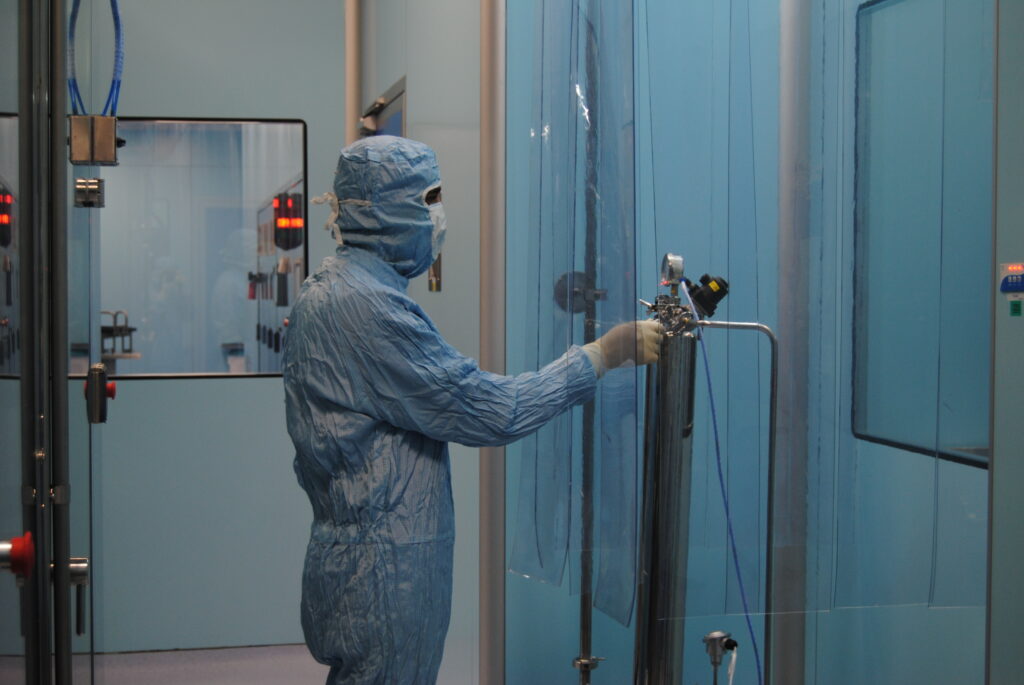
This is the point at which documented evidence is generated to support the facility’s GMP readiness. CQV is a systematic process to demonstrate that all systems, rooms, and equipment operate as required, within the limits necessary for drug production.
Let’s break it down into three stages:
- Commissioning – Ensuring all systems are installed properly and functioning as specified by the engineering team.
- Qualification – the four-step GMP check sequence:
- Design Qualification (DQ): confirms that the design fulfills approved User Requirement Specification and applicable GMP requirements
- IQ (Installation Qualification): Equipment is installed and configured according to approved drawings, specifications and manufacturer requirements
- Operational Qualification (OQ): confirms equipment functions properly across defined operating ranges and control functions.
- Performance Qualification (PQ): confirms that the equipment can consistently deliver results under normal manufacturing conditions
- Validation – Process validation, cleaning validation, and computer system validation (CSV) of any software-controlled equipment or systems.
In the pharmaceutical industry, turnkey solutions are typically handled via EPC (Engineering, Procurement, Construction) or EPCM contracts.
These are different delivery models. Under EPCM, the provider manages engineering, procurement and construction activities on behalf of the owner rather than acting as the construction contractor.
In the EPC turnkey model, the provider assumes the responsibilities and risks allocated in the contract, and GMP-compliant validation support may form part of the turnkey handover, depending on the agreed scope. In technical commissioning, a clear distinction is made between the Factory Acceptance Test (FAT) at the manufacturer’s plant and the Site Acceptance Test (SAT) at the final location. FAT and SAT records may support qualification but do not automatically replace IQ or OQ unless this approach is justified and documented.
The documentation package produced by the CQV process is what the SFDA inspectors review during a GMP inspection. It supports the regulatory readiness of the facility.
8. Regulatory Readiness and SFDA Licence Preparation
Setting up a turnkey pharmaceutical plant in Saudi Arabia requires working with the SFDA at every step, not just at the end.
Manufacturers in Saudi Arabia must be licensed by the SFDA. Facilities are regularly audited for GMPs and inspected by regulatory agencies. Domestic and foreign manufacturers are required to comply with the SFDA’s GMP Guidelines, which are aligned with internationally recognised GMP principles and applicable PIC/S guidance. Depending on the manufacturer’s legal structure and registration pathway, a Saudi entity, authorised agent or local representative may be required for specific regulatory activities.
The SFDA inspection team may visit the site to conduct a comprehensive GMP evaluation of relevant production lines, utilities, quality systems and supporting operations. Manufacturing sites can expect a tough three- to five-day assessment.
A turnkey partner with experience in the MENA region can prepare the regulatory documentation of the facility in parallel with the construction so that GMP dossiers are ready when the building is ready.
9. Project Management Across the Full Lifecycle
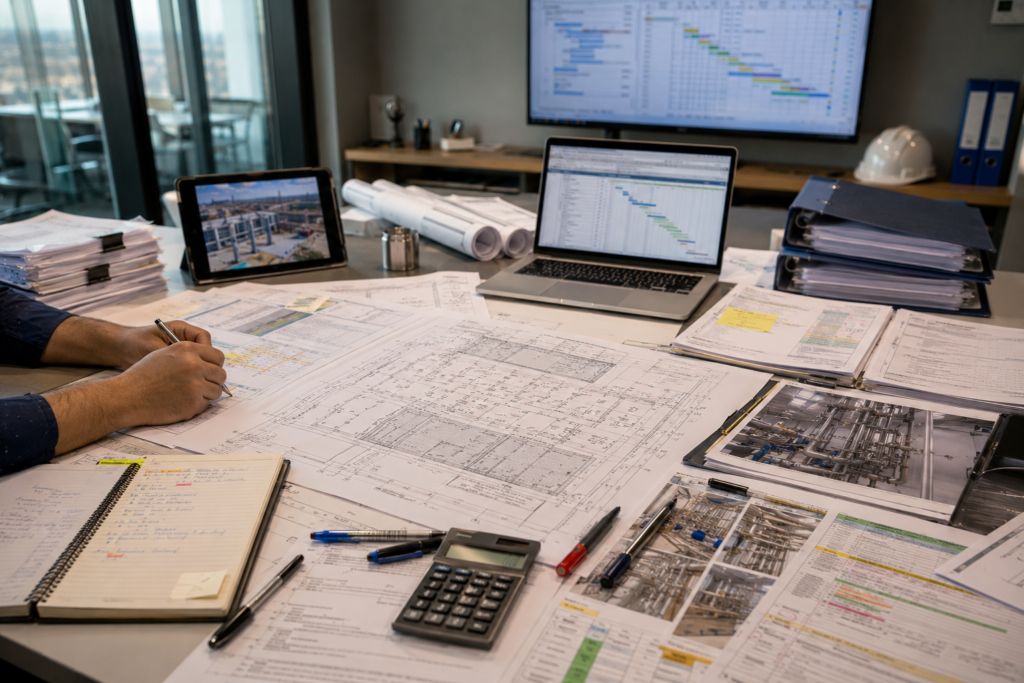
A turnkey pharmaceutical plant is not a construction contract. It is a programme management exercise that spans years and involves dozens of specialist disciplines.
Pharma turnkey solutions include dedicated project management covering the following:
- Master programme planning and schedule control
- Cost management and change control
- Risk tracking and mitigation planning
- Vendor and subcontractor management
- Document control and regulatory correspondence
- Commissioning and handover coordination
One central team manages architecture, mechanical systems, and specific process workflows under a single point of responsibility for the entire build. This centralised structure minimises technical errors and prevents costly redesign loops. Engineering teams communicate directly with equipment manufacturers to ensure technical coordination across equipment, utilities and facility interfaces.
Pharma Access, with 25+ years of experience and more than 120 projects across 18+ countries, including projects in Saudi Arabia and other MENA markets, uses this integrated project-management model to support schedule, cost and execution control across complex pharmaceutical projects.
10. What the Turnkey Handover Actually Looks Like
At the end of a well-executed turnkey project, the client receives much more than a set of building keys.
A full turnkey package for a pharmaceutical plant in Saudi Arabia comprises:
- A fully commissioned facility with systems qualified within the agreed CQV scope and supporting documentation.
- Complete set of as-built engineering drawings.
- Maintenance schedules, spare-parts lists and equipment manuals.
- Facility operating SOPs, where included in the agreed project scope.
- Qualification and validation protocols and reports according to the agreed project responsibilities.
- Staff training records for the equipment, utilities and systems covered by the provider.
- A GMP-compliant regulatory-readiness documentation package.
Thereafter, the client can complete the remaining SFDA manufacturing-licence, GMP-certification, product-registration, technology-transfer and operational-readiness activities. Commercial manufacturing can begin after the required approvals, quality systems, validated processes and product authorisations are in place.
Frequently Asked Questions
What is a turnkey pharmaceutical plant in Saudi Arabia?
A turnkey pharmaceutical plant in Saudi Arabia is a contract for the complete facility setup, where one company is responsible for the design, procurement, construction, installation, and validation. The client receives a facility ready for SFDA GMP inspection and commercial production at handover, without having to deal with multiple independent contractors.
How long does it take to set up a pharmaceutical manufacturing plant in Saudi Arabia?
In a greenfield pharmaceutical plant, it usually takes three to five years from concept to the first batch of production. These include 6-12 months of design, 12-24 months of construction, and 12-18 months of commissioning, qualification, and validation. Although these phases may overlap and the schedule depends on the project scope.
What does SFDA require for pharmaceutical manufacturing approval in Saudi Arabia?
All sites for the manufacture of pharmaceuticals require a GMP licence from the SFDA. Manufacturers are required to adhere to the SFDA GMP Guidelines based on the WHO and PIC/S standards, submit a Common Technical Document (CTD) dossier for each product, and pass a site inspection, including facility design, equipment qualification, documentation systems, and review of the live production line.
Do pharmaceutical plants in Saudi Arabia need effluent treatment systems?
Yes. Pharmaceutical manufacturers must have an approved wastewater-management approach that meets the applicable environmental, industrial-zone and discharge requirements.The facility setup may require on-site treatment, pretreatment before discharge or connection to an authorised central treatment system, depending on the wastewater characteristics and site infrastructure.In the Kingdom, membrane bioreactor technology is one of several treatment technologies that may be considered, depending on the effluent composition, treatment objectives and permitted discharge or reuse conditions.
How does pharma engineering with simulation tools improve a turnkey project?
The project team can model HVAC performance, cleanroom pressure differentials, and material flow paths before construction by using simulation-based engineering. This allows design problems to be found early, when they are easier and less costly to fix, rather than during construction or CQV, when they are expensive and time-consuming to correct.Simulation-based engineering forms part of Pharma Access’s approach to pharmaceutical-facility design and integrated project delivery.