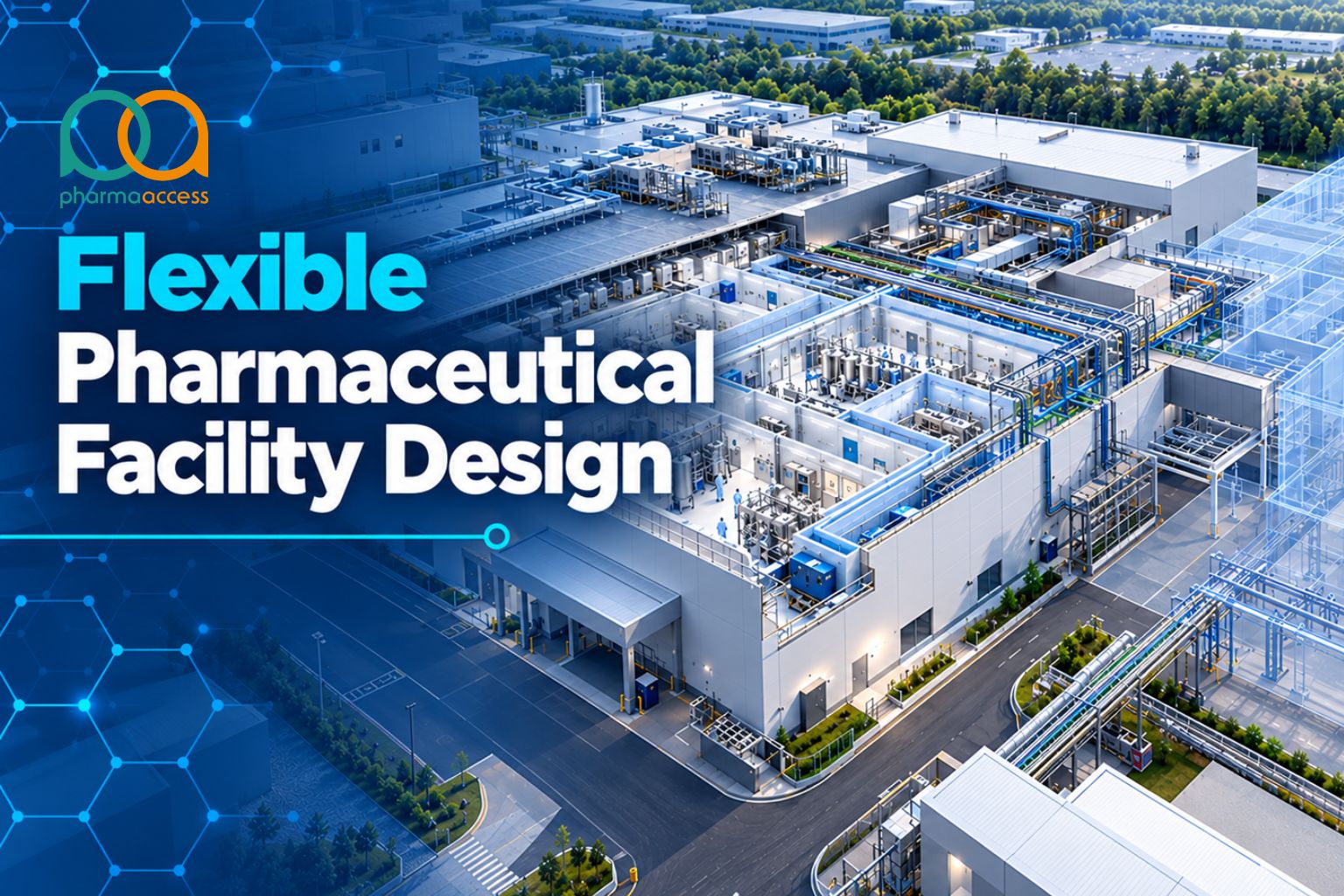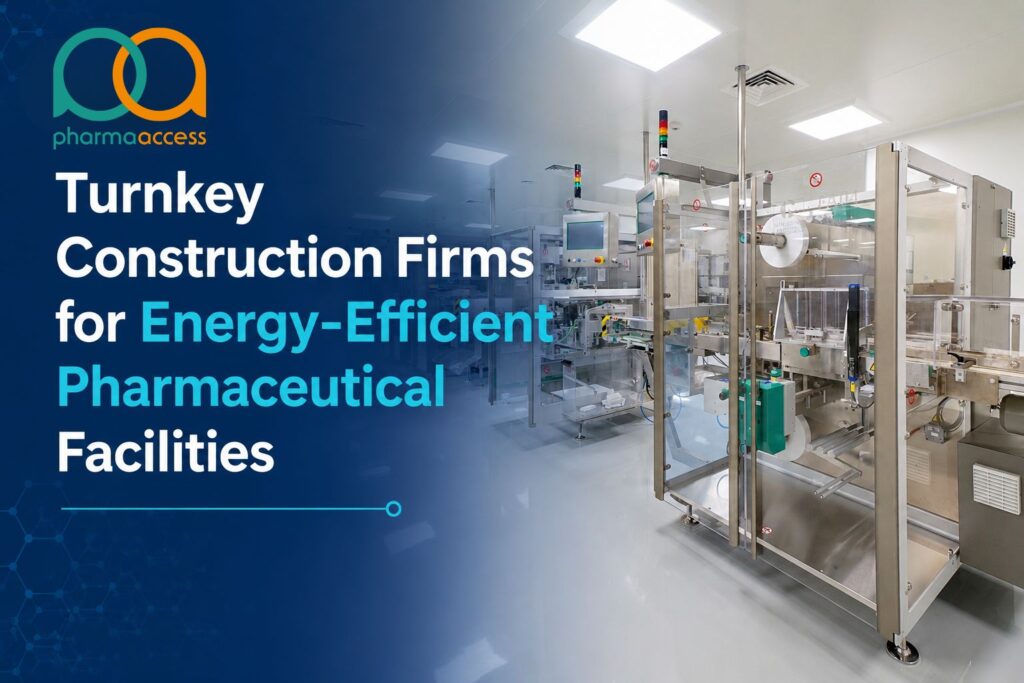
A pharmaceutical factory does not operate like a normal factory. Cleanrooms require controlled filtered airflow, defined temperature and humidity ranges, and pressure regimes appropriate to the product, process and containment strategy. That kind of precision comes at a cost. Research published in the Journal of the International Society for Pharmaceutical Engineering, found that HVAC systems can account for between 36% and 67% of total facility energy consumption, depending on the process, cleanroom classification and operating conditions.
That single number is why so many pharma companies now evaluate their turnkey construction firms on energy performance, not just square footage and timelines. So let’s examine it. What’s driving these costs? What does a turnkey partner actually do? And how do you choose one that builds in efficiency from day one, introducing it through later-stage modifications?
What’s Driving Modern Pharma Facility Energy Costs
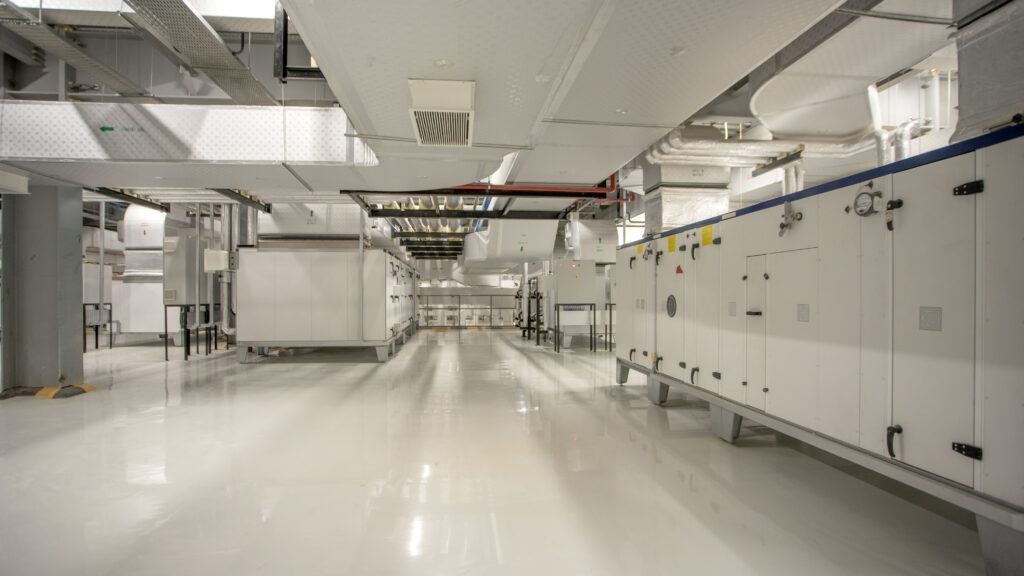
Pharma plants are significantly more energy-intensive than most buildings. As a consulting-specifying engineer summarised in 2019, “The average energy use intensity of a typical commercial office built after 2000 is roughly 81.4 kBtu per square foot per year, while the average pharmaceutical plant is around 1,210 kBtu per square foot per year.”That gap is from cleanroom conditioning, process equipment, and utility generation operating for extended periods. These figures represent a broad US comparison, and actual energy performance can vary substantially by process, climate, classification and operating schedule.
This is why HVAC takes so much of that load. The fans, filters, chillers, and dehumidifiers that do that job may operate continuously or for extended periods, depending on the area and manufacturing schedule, and cleanrooms need controlled ventilation to maintain specified environmental conditions and airborne-particle limits. Cleanroom energy benchmarking research has found that HVAC use in cleanrooms accounts for between 36% and 67% of the total facility energy, depending on the process. When a construction partner discusses modern pharma facility energy costs, the conversation will usually begin with air-handling design.
The good news is that high energy use is not entirely fixed as an unavoidable cost of doing business. For example, in a case where Roche and Genentech reduced air change rates in an existing facility using a multidisciplinary, risk-based assessment, the project reduced airflow volume and resulted in a 14% reduction in energy use and greenhouse-gas emissions, with annual savings of more than $678,000. Such results can be supported by making the right design choices at the construction stage while also reviewing existing systems through risk assessment, monitoring, change control and requalification where required, which is precisely where experienced turnkey partners can add value.
What Turnkey Construction Firms Actually Do
Turnkey companies may take a pharma project from concept development to a qualified, operating facility. In practice, that means five phases, generally:
- Engineering design – process flow, cleanroom classification, HVAC, and utility layout specific to dosage form.
- Procurement – purchase of manufacturing equipment, machinery, and building materials.
- Construction and installation – civil, structural, mechanical, electrical, and plumbing work on site
- Commissioning, qualification, and validation (CQV) – confirming that systems function as intended, providing documented evidence that facilities, utilities and equipment meet approved requirements, and supporting applicable process-validation activities.
- Project management – keeping the budget, schedule, and all moving contractors on track.
FDA guidance describes process validation as a lifecycle activity that establishes scientific evidence that a manufacturing process can consistently deliver quality products. Qualification of facilities, utilities and equipment forms part of that lifecycle, but responsibility for product quality and the validated state remains with the manufacturer and its Quality Unit.
The attraction is simple. The owner gets a single point of accountability for pharmaceutical facility design and construction from concept to handover rather than dealing with a design firm, builder, equipment vendor, and validation consultant separately.
How to Choose the Right Partner
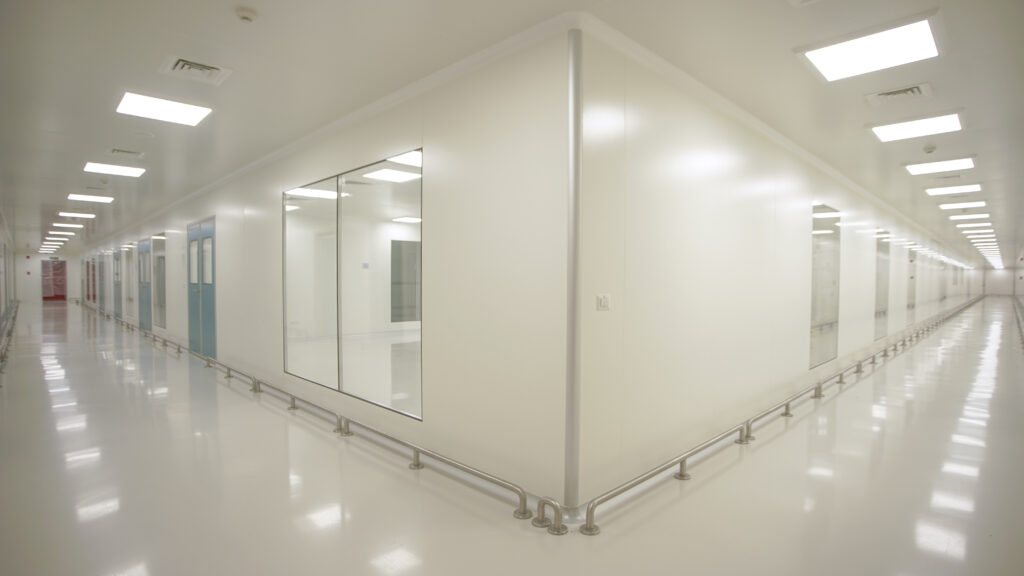
Not all construction companies offering “turnkey” delivery demonstrate the same capability in energy-performance design. This is what really distinguishes the ones that do from the ones that cannot demonstrate it through documented project evidence.
Track record across dosage forms
Biotech, sterile injectables, oral solids, and API plants have different cleanroom classifications, process risks, containment strategies and HVAC requirements. A company that has only built oral solid dosage plants may not have the airflow modelling experience needed for a sterile injectable facility. Request for project references related to your specific dosage form and scale.
ISO 14644-1 classifies cleanrooms by airborne-particle concentration, while the wider contamination-control, process and regulatory requirements determine how the facility and its HVAC systems should be designed and operated.
In-house engineering, not just subcontracted labor
Companies that have in-house HVAC, process, and MEP (mechanical, electrical, and plumbing) engineering usually catch energy waste earlier, at design, when it’s cheapest to fix. Concrete is expensive to change once it is poured, and an oversized air handling unit is no exception.
Sustainability built into design, not added later
Ask how the firm deals with validated airflow-setback strategies in suitable areas, variable-speed drives on fans and risk-based air-change rates instead of relying on worst-case assumptions. This is consistent with the WHO’s technical guidance on HVAC in non-sterile pharmaceutical manufacturing, which recommends a comprehensive science- and risk-based approach across the HVAC lifecycle, beginning at the initial design stage. Oversized systems can increase capital and operating energy without necessarily improving contamination control.
A real compliance and validation history
An energy-efficient design is of limited value if it does not support applicable regulatory and quality requirements. Look for companies with proven experience across cGMP-focused and regulated-market projects, as well as relevant organisational ISO certifications, established quality systems and documented CQV procedures.
FDA does not generally certify pharmaceutical engineering companies, and GMP should not be presented as a personal certification held by an engineering team. Organisational certifications such as ISO 9001, ISO 14001 and ISO 45001 relate respectively to quality, environmental, and occupational-health-and-safety management systems. Pharma Access states that it holds these three management-system certifications.
The Role of AI for Predictive Maintenance in Pharma Plants
Building is only the beginning. Once a facility is up and running, equipment reliability is the next lever on both energy usage and product quality. A worn pump or drifting compressor is not merely a downtime risk. destabilise environmental or process control and contribute to a deviation.
This is where AI for predictive maintenance in pharma plants has begun to improve maintenance planning. According to industrial predictive-maintenance research, combining AI or analytical models with IoT-enabled sensor data can help teams identify developing equipment faults before failure, supporting planned maintenance and improved operational reliability. The benefits depend on sensor coverage, data quality, equipment criticality, system integration and the engineering and financial suitability of the application.
So the bottom line for a facility owner is to ask your construction partner if the building is being designed for sensor infrastructure and appropriate BMS, EMS, equipment-control, historian and maintenance-system integration from day one. Retrofitting monitoring hardware into finished cleanrooms is a far more disruptive process than wiring it in during construction. Network-based access to real-time manufacturing-system data can also support maintenance and troubleshooting, subject to appropriate access control, cybersecurity and GxP data-governance requirements.
Where Engineering Consulting Services Fit In
Not every project requires a full turnkey contract. Some owners engage engineering consulting services for a more limited scope, such as HVAC optimisation, cleanroom layout review, or a feasibility study, before committing to a full build. This path is well-suited for brownfield expansions or facilities that require only targeted upgrades rather than ground-up construction.
The price is coordinated. The owner would still have to separately manage the builder, equipment vendors, and the validation team with only consulting support. A turnkey model rolls all of that under one contract, which tends to reduce the number of handoffs where miscommunication (and cost overruns) creep in.
A Look at How This Plays Out in Practice
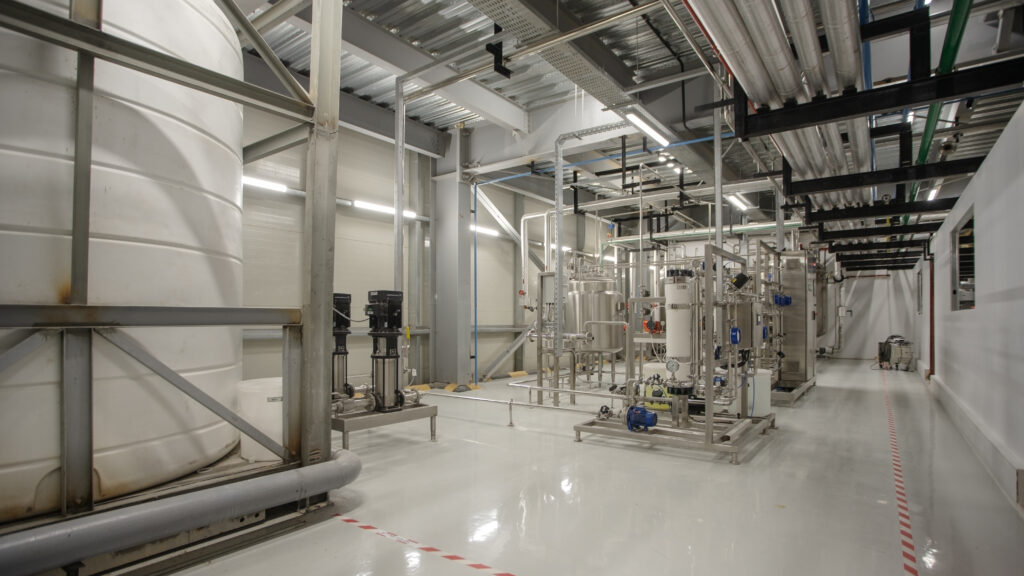
Pharma Access is a Mumbai-based pharmaceutical engineering and turnkey construction company that has been working on biotech, sterile manufacturing, oral solid dosage and API projects for more than 25 years. Its service offering covers the entire chain: engineering design, procurement, construction and installation, CQV and project management, all under one roof. The firm has also developed a Modular Mobile Facility approach, designed to support controlled off-site fabrication, parallel execution, faster site installation and scalable facility delivery compared with fully site-built approaches, where suitable for the project. Pharma Access currently states that it has completed more than 120 projects for over 100 clients across 18+ countries.
The point is there is more than one firm to choose from. It’s the delivery capability that counts, not the marketing. Compare Pharma Access with other qualified project partners and ask the same questions. Who does the HVAC modelling? Who supports CQV delivery, and how are responsibilities divided between the partner, owner and Quality Unit? And what about the design plan for energy use during the next twenty years, not just at initial project handover?
Questions to Ask Before You Sign
- Do you have energy modelling data from a previous similar project?
- How do you determine and justify airflow quantities and air-change rates for our particular process, room classification and contamination-control requirements?
- Does the base design incorporate predictive maintenance infrastructure, or is it added later at extra cost?
- What organisational ISO certifications, regulated-market project experience and quality systems do you have, and can we see supporting evidence?
- Who supports CQV activities? Is it an internal team or outsourced?
Next steps: Choose two or three firms to be your finalists, ask for references on your dosage form, and compare their answers to the side-by-side questions above. Usually, the difference between a good answer and a vague one tells you everything you need to know.
Frequently Asked Questions
What makes a construction firm “turnkey” in pharma projects?
A turnkey company manages an integrated project scope that may include engineering design and procurement through construction, CQV support and project management under one contract. The owner has one primary accountable project partner, instead of coordinating separate vendors for each phase, although the precise responsibilities must be defined in the contract.
Why do pharmaceutical facilities use so much more energy than office buildings?
Cleanrooms require controlled volumes of filtered air, defined temperature and humidity conditions, and pressure differentials between selected rooms to control contamination or provide containment. This keeps HVAC systems running for extended periods and, in some critical areas, continuously, which is why pharma plants use far more energy per square foot than standard commercial buildings.
How does AI-based predictive maintenance actually save money in pharma plants?
Sensors monitor the condition of equipment in real time and signal the first signs of wear or abnormal performance. This allows teams to plan repairs before a functional failure occurs, helping to reduce the risk of unplanned downtime, emergency repairs, process disruption and associated deviations. The value depends on equipment criticality, sensor selection, data quality and the maturity of the maintenance system.
Should I hire a turnkey firm or separate engineering consulting services?
It depends on the scope. For a full new build, a turnkey contract may be more suitable when the owner wants integrated coordination across multiple disciplines. Standalone engineering consulting services often work well for a targeted upgrade, such as an HVAC retrofit, or when the owner has the internal capability to manage the remaining contractors and vendors.
How long does a turnkey pharmaceutical facility project typically take?
For example, a targeted upgrade may take several months, whereas a large greenfield biotech plant could take several years. These timelines can vary considerably depending on facility size, dosage form, regulatory region, site readiness, long-lead equipment, owner approvals and CQV scope. In some cases, selected design, fabrication and installation activities can be reduced with modular construction procedures.