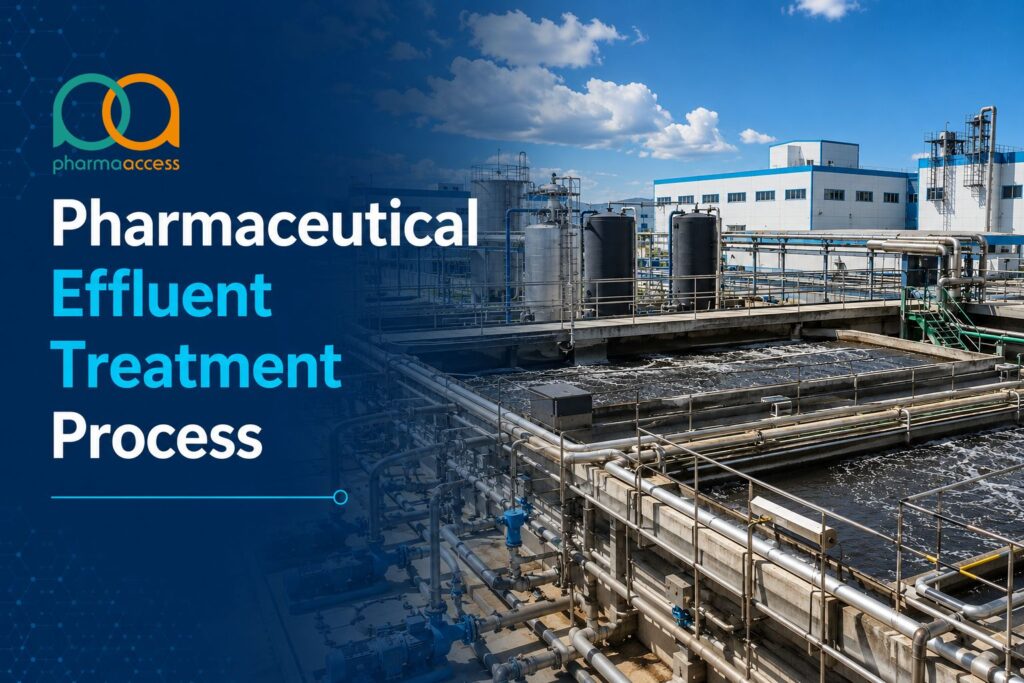
Pharmaceutical manufacturing facilities generate wastewater through production, equipment cleaning, laboratory activities and utility operations. Wastewater generated during manufacturing contains solvents, active pharmaceutical ingredients, cleaning agents, and residues of antibiotics. If that water is released from the site untreated, it can harm aquatic life and contribute to antibiotic resistance in the environment at large. That’s why pharma effluent treatment solutions exist. The World Health Organization identifies pollution from antibiotic manufacturing as a factor that can contribute to resistance development and potentially undermine the effectiveness of antibiotics.
That is why pharma effluent treatment solutions are designed to reduce pollutant loads before wastewater is discharged or reused. Environmental regulators in India and the United States establish discharge limits, permit conditions and pretreatment requirements rather than prescribing one identical treatment system for every pharmaceutical facility.
Let’s go through the pharmaceutical effluent treatment process step by stage so you know exactly what happens between the drain and the discharge point.
Why Pharma Wastewater Needs Special Handling
Domestic wastewater is mainly organic matter, which degrades over time. The pharmaceutical industry produces a different type of wastewater. It has a mixture of:
- Reactor, vessel and equipment wash water containing unreacted raw materials, intermediates and solvents
- Residues of active pharmaceutical ingredients
- High chemical oxygen demand (COD) and biological oxygen demand (BOD)
- Disinfectants and cleaning agents
- Acids, alkalis, dissolved salts and suspended solids
- Oils, process residues and compounds that may inhibit biological treatment
- Poorly biodegradable or potentially hazardous contaminants
Traditional municipal wastewater-treatment systems are generally designed to remove conventional pollutants such as suspended solids and biodegradable organic matter. Although they may incidentally remove some pharmaceutical compounds, many pharmaceuticals can pass through because these systems were not specifically designed for their removal.
In India, the Environment (Protection) Rules establish standards for the discharge of environmental pollutants, while the Central Pollution Control Board or relevant State Pollution Control Board may impose more stringent requirements based on the industry, location and receiving environment. https://moef.gov.in/uploads/2018/03/THE_ENVIRONMENT.pdf
Chemical sludge and certain residues generated during pharmaceutical effluent treatment may also require management under the applicable Hazardous and Other Wastes rules and the facility’s hazardous-waste authorisation. Their classification, storage, transportation and disposal should be confirmed with the relevant regulatory authority rather than assumed solely from the source of the sludge.
In the United States, the EPA has Pharmaceutical Manufacturing Effluent Guidelines under 40 CFR Part 439, first issued in 1976 and amended in 1983, 1998 and 2003. These guidelines cover fermentation, extraction, chemical synthesis, mixing, compounding, formulation and certain pharmaceutical research activities. They apply through NPDES permits for direct dischargers and pretreatment permits or other control mechanisms for facilities that discharge to a publicly owned treatment works.
In either case, the conclusion is the same: pharmaceutical wastewater requires a treatment system designed around its actual composition, discharge route and applicable regulatory conditions.
An Effluent Treatment Plant in the Pharmaceutical Industry: The Four Main Stages
A well-designed effluent treatment plant in the pharmaceutical industry involves the wastewater moving through four stages. However, wastewater characterisation, source segregation and pollution prevention must take place before those four stages begin.
The facility should first identify where each wastewater stream originates and assess parameters such as flow, pH, COD, BOD, total dissolved solids, suspended solids, solvents, APIs and potential biological toxicity. High-strength, solvent-bearing, antibiotic-containing or high-TDS streams may require separate collection, recovery or pretreatment before entering the main ETP.
This step prevents incompatible streams from being mixed too early and helps ensure that the main treatment plant is designed for the actual hydraulic and pollutant load. WHO guidance for antibiotic manufacturing similarly recommends mapping production systems and waste flows, identifying release hazards and verifying the effectiveness of existing controls.
1. Preliminary Treatment
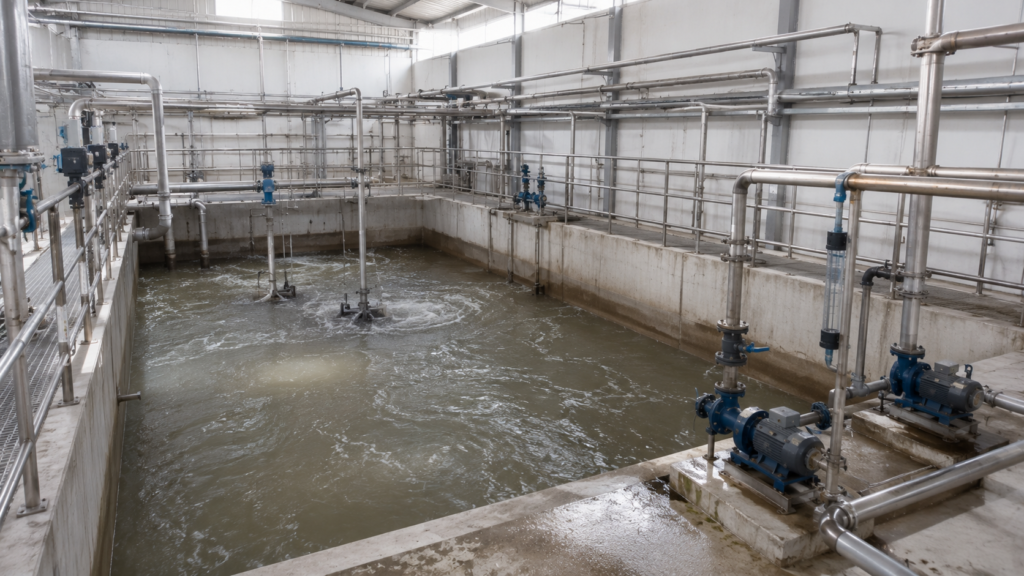
The wastewater first passes through screens or strainers and, where required, grit-removal systems, which take out large debris, plastic, packaging material, sand and other materials that could damage pumps or obstruct downstream equipment.
Batch manufacturing results in wastewater being sent to the drainage system in uneven bursts rather than as a steady stream, so an equalisation tank is used to even out the flow rate and pollutant concentration. The tank may also include mixing or aeration to prevent solids from settling, minimise odour formation and maintain a more uniform wastewater composition.
If this step is omitted or inadequately designed, equipment downstream can experience hydraulic or pollutant shock loading, and the performance of the entire treatment system can be disrupted. EPA’s preliminary-treatment guidance includes screening, grit removal and flow equalisation among the principal preliminary-treatment operations.
2. Primary Treatment
Then comes chemical dosing. Depending on the wastewater characteristics, coagulants, flocculants and pH-adjustment chemicals are added to destabilise fine suspended and colloidal particles so that they form larger, removable flocs.
Acids, alkalis, lime, caustic soda or other chemicals may be selected for pH adjustment based on the wastewater chemistry and the required downstream treatment conditions. The solids can then settle in a clarifier or sedimentation tank or be separated using another suitable physical process.
At this stage, oil and grease separation may also be included where the wastewater profile requires it to protect downstream biological systems. At the end of primary treatment, most of the visible solids and a significant portion of the suspended load have been removed.
Chemical dosing should not be treated as a standard formula. Jar testing or treatability studies are normally required to determine the appropriate chemical type, dosage, pH range and settling performance.
3. Secondary (Biological) Treatment
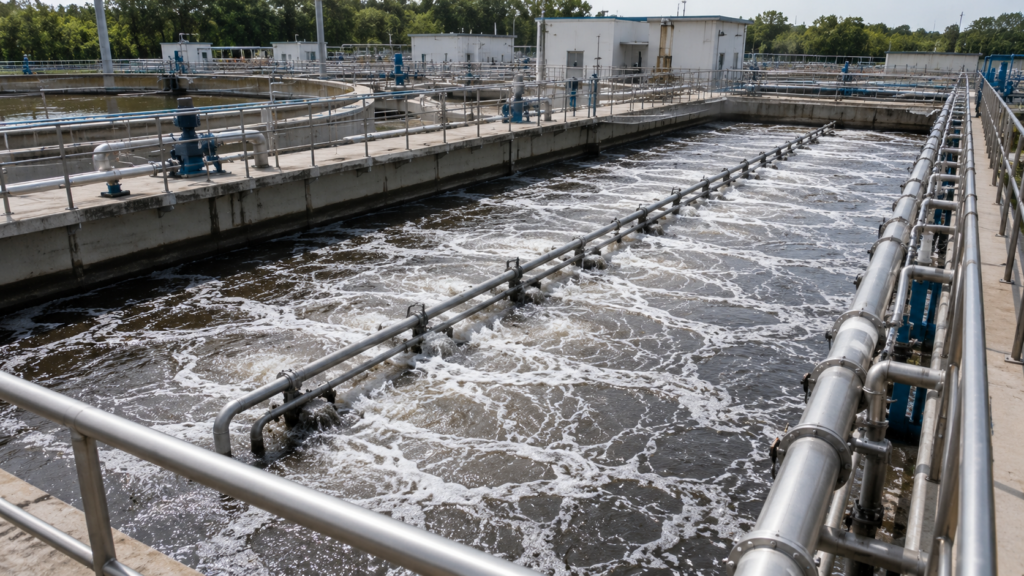
This is where most of the biodegradable dissolved organic pollution is removed. Biodegradable compounds are degraded by microorganisms using one of several common methods:
- Activated Sludge Process (ASP): Microorganisms metabolise biodegradable organic matter in aerated tanks, after which the biomass is separated from the treated water in a secondary clarifier.
- Moving Bed Biofilm Reactor (MBBR): Microorganisms grow as a biofilm on mobile carrier media suspended within the reactor, allowing biological treatment within a relatively compact system.
- Sequencing Batch Reactor (SBR): Filling, aeration, biological reaction, settling and decanting occur in timed cycles within the same basin. Read more
An SBR is a fill-and-draw activated-sludge process in which equalisation, aeration and clarification can take place through a predetermined sequence of operations.
Depending on the wastewater strength and biodegradability, the biological stage may use aerobic treatment, anaerobic treatment or a combination of both. Nutrient addition may also be necessary where the wastewater does not contain the balanced nutrients required to maintain biological activity.
The biological stage has to be correctly sized because pharmaceutical effluent often has higher or more variable BOD and COD levels than domestic wastewater. Solvents, disinfectants, antibiotics, extreme pH conditions and sudden increases in pollutant concentration can also inhibit or damage the biological population.
If the system is underdesigned or receives uncontrolled shock loads, the outlet quality can fall below the discharge-permit requirements.
4. Tertiary Treatment
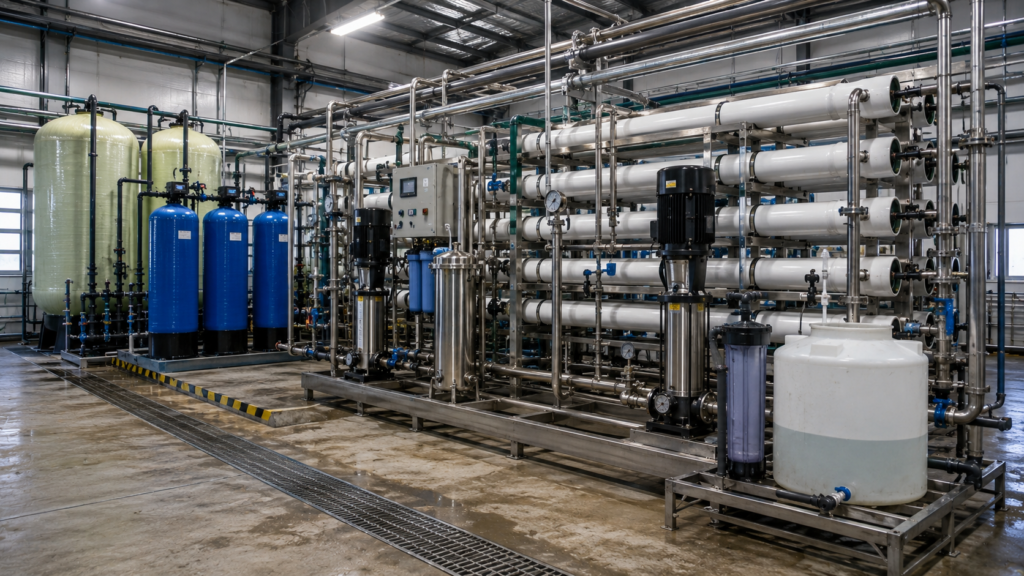
The final polishing step takes out what biological treatment cannot reliably remove, including remaining suspended solids, dissolved salts, selected trace organic contaminants, residual colour and pathogens.
Common tertiary and advanced-treatment methods are:
- Sand or multimedia filtration for remaining suspended solids
- Activated-carbon adsorption for selected dissolved organic compounds
- Ultrafiltration or reverse osmosis
- UV disinfection or chlorination for pathogen control
- Ozonation or another advanced oxidation process for selected persistent organic contaminants
These technologies do not all perform the same function. Sand filtration primarily removes suspended particles, while activated carbon adsorbs selected dissolved compounds. Ultrafiltration removes fine solids and microorganisms, whereas reverse osmosis separates dissolved salts and selected contaminants into a treated permeate stream and a concentrated reject stream.
UV and chlorination are commonly used for disinfection, but routine disinfection doses should not be assumed to remove all APIs. Advanced oxidation requires process-specific dosing and contact conditions that are different from conventional disinfection.
No single tertiary technology removes every pharmaceutical compound. Treatment performance depends on the chemical properties of the target compound, the wastewater matrix and the selected technology. EPA guidance notes that removal efficiency varies between compounds and that reverse osmosis or nanofiltration produces a concentrated waste stream that must be treated or disposed of appropriately.
At this point, many plants add a separate advanced-treatment or high-TDS management line where zero liquid discharge is required. Advanced oxidation may be used for selected persistent organic compounds, while a multiple-effect evaporator is normally used to concentrate high-TDS wastewater or reverse-osmosis reject. These processes should not be treated as interchangeable.
Within a ZLD system, membrane treatment may be followed by thermal evaporation and, where required, further concentration or crystallisation. The process produces recovered water as well as concentrated salts or residues that require proper handling. Indian government documentation describes ZLD as a system that recycles treated permeate and converts dissolved organic and inorganic material into concentrated or solid residue through concentration and thermal evaporation.
Water that passes through tertiary treatment either meets the required standard for discharge or is sent back through the plant for approved reuse. Depending on the achieved water quality, treated water may be reused for cooling-tower make-up, flushing, gardening, floor cleaning or selected utility applications.
Use as boiler make-up generally requires additional polishing, hardness control, demineralisation, degassing or chemical conditioning according to the boiler and steam-system specifications.
The treatment process also generates biological sludge, chemical sludge, spent carbon, membrane concentrate and evaporator residues. These residual streams must be quantified, dewatered where appropriate, stored safely and sent for authorised recovery, treatment or disposal.
How This Connects to the Rest of a Pharma Facility
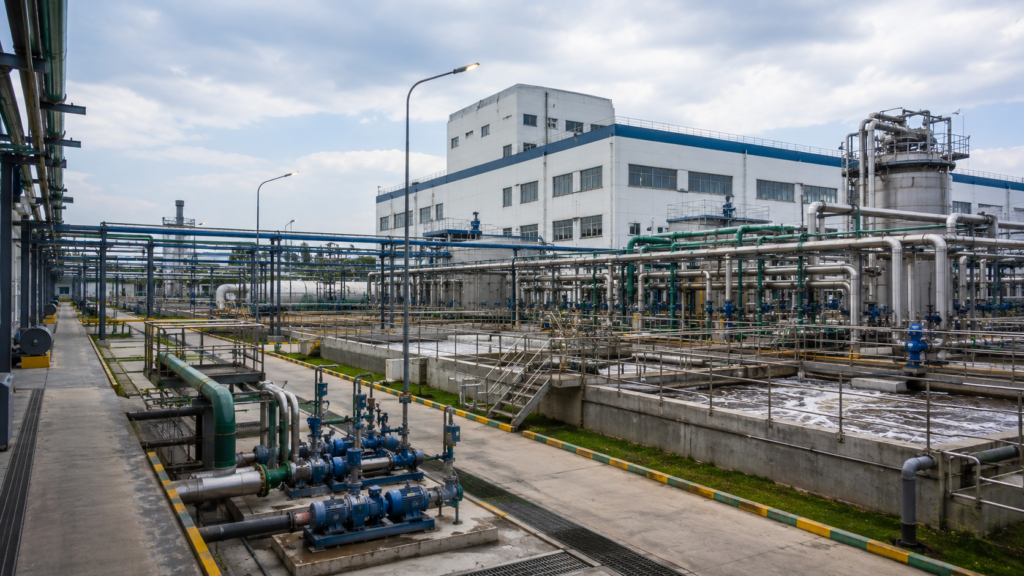
Effluent treatment is not in a corner by itself. The water a facility recovers and reuses often supports other parts of the operation, and the same engineering team that designs an ETP usually has to coordinate with the teams planning process areas, R&D laboratories, cleanroom design, utilities and facility drainage.
Production areas and cleanroom-associated operations generate wastewater through equipment washing, CIP systems, wash areas, laboratory sinks, utility blowdown and controlled floor drains. R&D laboratories discharge small-batch effluent with a different pollutant profile from full-scale manufacturing.
If you want the ETP to be properly sized and routed, you need to understand how water flows throughout the entire site, not just the production floor. The design must also identify which drains can be combined, which streams require separate collection and where sampling, monitoring and pretreatment points should be located.
This is one of the reasons that facilities are increasingly bringing in engineering consulting services rather than thinking of effluent treatment as a stand-alone equipment purchase. A consultant who also handles cleanroom design, R&D facility layout, utilities and process planning can flag where a wastewater stream will need separate pretreatment before it reaches the main ETP, saving a redesign later.
Early coordination can also establish:
- Separate drainage networks for compatible and incompatible streams
- Gravity-flow and pumping requirements
- Locations for sampling and online monitoring
- Solvent-recovery and source-specific pretreatment requirements
- Chemical-storage and dosing areas
- Sludge and concentrate storage requirements
- Utility demands for RO, evaporation and biological systems
Maintenance access and future-expansion space
Choosing the Right Pharma Effluent Treatment Solutions
There are a few factors that will help determine the right treatment configuration for a particular facility.
- Volume and flow pattern of effluent. Batch discharges require higher equalisation capacity than continuous processes, and the design should consider average flow, peak hourly flow and maximum batch-discharge volume.
- Pollutant load and biodegradability. Different segregation, pretreatment and biological-treatment strategies are required for high-COD streams from chemical synthesis, saline wastewater, formulation wash water and streams containing inhibitory compounds.
- Wastewater composition. The presence of solvents, APIs, antibiotics, salts, oils, cleaning chemicals or poorly biodegradable materials determines whether a stream can enter the main biological system or needs separate recovery or pretreatment.
- Point of discharge. Direct discharge to a water body, discharge to a municipal sewer, connection to a common effluent treatment plant or a zero liquid discharge requirement each has different design and monitoring requirements.
- Local regulatory norms. The applicable requirements can vary according to CPCB standards, SPCB or Pollution Control Committee conditions, the facility’s Consent to Establish and Consent to Operate, the discharge route and whether the industry is connected to a CETP. The Environment (Protection) Rules also allow the Central or State Board to prescribe more stringent standards for a specific industry or location.
- Objectives for reuse. Facilities that want to recycle water for cooling, cleaning or selected utility uses need to build the required tertiary and advanced treatment into the project from the beginning rather than adding it as an afterthought.
- Treatability and pilot studies. Laboratory or pilot testing may be needed to confirm biodegradability, chemical dosage, biological inhibition, membrane recovery and advanced-treatment performance.
- Sludge and concentrate management. The design must consider the volume, characteristics, storage and final disposal route of biological sludge, chemical sludge, RO reject and evaporator residues.
- Future production capacity. Additional products, production lines and batch sizes can change the wastewater flow and pollutant profile, so expansion requirements should be considered during the initial design.
Pharma Access evaluates these requirements as part of its pharmaceutical engineering consulting services. The difference between a system that works smoothly and one that needs constant rework is often getting effluent treatment right at the design stage rather than retrofitting it after construction.
Common Mistakes That Cause ETP Failures
- Inadequate sizing of the equalisation tank results in unbalanced hydraulic and pollutant surges reaching biological treatment.
- Designing the ETP around average daily flow while ignoring peak batch discharge and maximum pollutant load
- Combining high-strength, solvent-bearing or high-TDS streams with low-strength wastewater too early
- Not recovering recoverable solvents or products, which increases the COD load unnecessarily
- Skipping a pilot or treatability study for effluent with a different chemical profile
- Selecting biological treatment without assessing whether the wastewater contains inhibitory or toxic compounds
- The ETP design is developed separately from the facility design, leading to drainage, pipe-routing and utility conflicts that are discovered during construction
- Underestimating sludge-handling requirements, as chemical sludge and certain pharmaceutical ETP residues may require controlled storage, transportation and authorised disposal
- Assuming that tertiary treatment automatically removes every API or pharmaceutical compound
- Failing to plan for RO reject, evaporator concentrate, salts and spent-treatment media
- Providing inadequate sampling points, laboratory testing and online monitoring
- Failing to allow space and hydraulic capacity for future facility expansion
Wrapping Up
Pharma effluent treatment solutions follow a consistent four-stage path: preliminary screening and equalisation, primary physicochemical treatment, secondary biological treatment and tertiary polishing.
However, a reliable pharmaceutical effluent treatment process begins before those four stages with wastewater characterisation, source segregation, pollution prevention and the separate management of incompatible or high-strength streams.
What sets apart a system that meets CPCB, SPCB, EPA or other applicable requirements year after year from one that repeatedly experiences compliance problems is making sure that each phase of the system is designed around the plant’s actual flow, pollutant load, wastewater chemistry and discharge conditions.
The ETP must also be coordinated with process equipment, cleanroom drainage, R&D laboratories, utilities, water-reuse systems and residual-waste management rather than being designed in isolation.
Pharma Access supports this coordination through its engineering consulting services, bringing together process, utility, modular cleanroom, piping, environmental and facility-planning requirements. This integrated approach helps identify treatment, routing, capacity and maintenance risks before they become expensive changes during construction or operation.
Frequently Asked Questions
What is the main purpose of an effluent treatment plant in the pharmaceutical industry?
An ETP is used to remove or reduce suspended solids, biodegradable organic pollution, chemicals, salts, selected pharmaceutical residues and other contaminants from pharmaceutical wastewater so that the water can meet the applicable standards for discharge or approved reuse.The exact treatment objective depends on whether the treated water will be discharged to a water body, municipal sewer or CETP, or reused within the facility.
How long does pharmaceutical wastewater take to treat?
The treatment time varies according to the pollutant load, wastewater composition, equalisation requirement and technology used.The overall hydraulic-retention time can range from several hours to several days, particularly where extended biological treatment, sequencing batch cycles, membrane processing or evaporation is required. There is no single standard treatment time that applies to every pharmaceutical ETP.
Can treated pharma effluent be reused on site?
Yes. Depending on the achieved water quality and local approvals, tertiary-treated water may be reused for cooling-tower make-up, flushing, gardening, floor cleaning or other non-product-contact applications.Reverse-osmosis permeate may also support selected utility applications, but boiler make-up normally requires additional polishing and confirmation that the water meets the boiler and steam-system specifications.
What happens to the sludge from a pharmaceutical ETP?
Sludge from pharmaceutical wastewater treatment is thickened and dewatered to reduce its volume before storage and disposal.Its regulatory classification depends on its source, composition and the applicable hazardous-waste authorisation. Chemical sludge and other controlled residues should be stored in a designated area and transferred to an authorised recovery, treatment, co-processing or disposal facility rather than being mixed with ordinary waste.
Do all pharmaceutical facilities need a zero liquid discharge system?
No. ZLD is not required for every pharmaceutical facility.It may be required through local regulations, industrial-cluster conditions, site-specific consent requirements, water-scarcity considerations or the facility’s water-recovery strategy.The decision should consider wastewater composition, TDS load, water balance, energy consumption, evaporator capacity, residual-salt management and lifecycle cost. ZLD should not be treated as a substitute for source control, stream segregation or effective wastewater treatment.