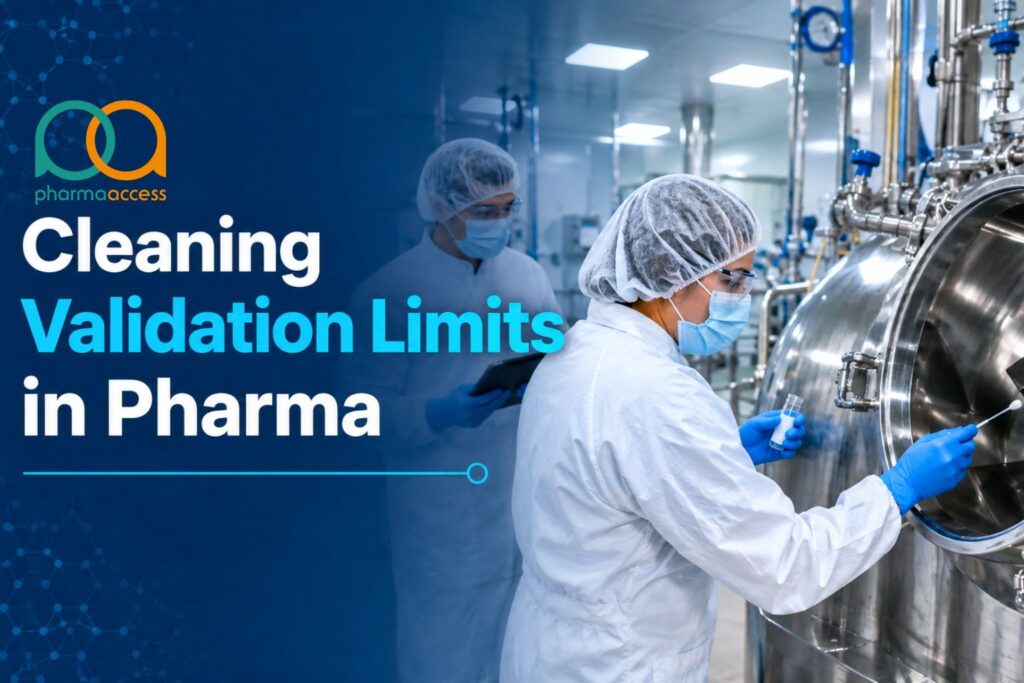
Not so long ago, much of pharma cleaning validation was based on a simple rule of thumb: 10 ppm, or one-thousandth of the minimum therapeutic dose, and call it a day. The industry has since moved away from relying on these fixed criteria as the sole scientific basis for establishing cleaning limits. HBEL- and PDE-based science now provides the scientific foundation for establishing residue limits, particularly for products manufactured in shared facilities.
In this post, we’re going to peel back the layers of what HBEL and PDE actually mean, how they feed into the MACO calculation that determines your real-world cleaning limits, and what all of this means for facility design. We’ll keep things simple and avoid the heavy toxicology maths when we can.
Why Cleaning Validation Limits Changed
Cleaning validation is done to show that the equipment used to make one product does not pass significant residue on to the next product made on the same line. For decades, the industry has applied arbitrary cut-offs like the 10 ppm rule or the 1/1000th minimum therapeutic dose method. These were easy to use but were not based on the real toxicology of the substance in question and could just as easily overestimate the risk for one compound and underestimate it for another.
Regulatory expectations have moved away from relying on that approach alone. The EMA published its guideline on the setting of health-based exposure limits for shared facilities in 2014, and since then, PIC/S and WHO guidance has also incorporated science- and risk-based approaches to establishing health-based and carryover limits. That change is why HBEL and PDE are now central to the scientific basis used for establishing cleaning-validation limits in shared pharmaceutical facilities.
What Is HBEL Pharmaceutical Guidance Actually Asking For?
HBEL stands for Health-Based Exposure Limit. HBEL pharmaceutical guidance requires that for each relevant medicinal product or residue that may result in cross-contamination, a scientifically based exposure limit be determined for the specific toxicological profile of the compound in question, and not a general formula applied equally to all.
The usual way to get an HBEL is to first determine an appropriate toxicological point of departure, such as a NOAEL (No Observed Adverse Effect Level), where applicable, for the key toxicological effect of a substance, then apply appropriate adjustment factors to take into account the differences between the conditions of the test and real-life human exposure. And this is no trivial desk calculation. This requires real toxicological expertise, and the underlying data needs to be reassessed periodically and when relevant new safety information becomes available the life cycle of a product.
PDE Cleaning Validation: The Practical Output of HBEL
Once an HBEL has been established, it is set out in a defined, usable form.In pharmaceutical manufacturing, a commonly used form of HBEL is the Permitted Daily Exposure (PDE) value, while Acceptable Daily Exposure (ADE) is another term used within industry for a health-based exposure limit. The PDE cleaning validation work is limited to the Permitted Daily Exposure value, which is sometimes known as the Acceptable Daily Exposure (ADE) depending on the terminology a company prefers to use. The PDE is the maximum daily exposure to a residual substance that is considered to be without adverse health effects over a lifetime of exposure.
The PDE value is used by cleaning validation specialists for decision-making. It defines a health-based daily exposure value for the residual substance; it does not, by itself, define how much residue may remain on equipment. The PDE is subsequently used with manufacturing and dosing information to derive a carryover limit such as MACO.
From PDE to MACO: How the Numbers Actually Work
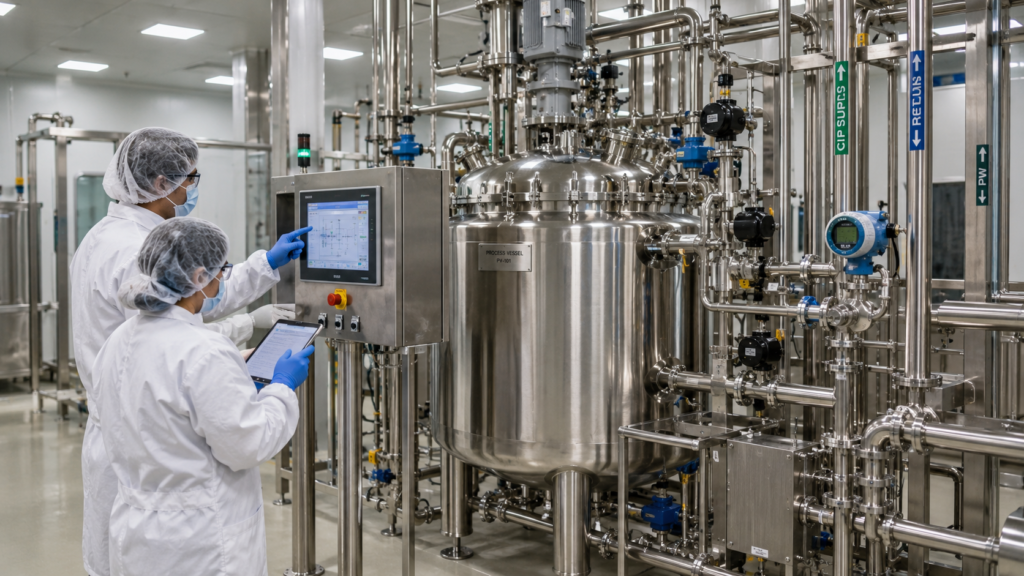
This is where the science becomes a real cleaning limit a technician can test to. The pharma teams take the PDE and relevant manufacturing parameters to calculate the Maximum Allowable Carryover, which represents the highest allowable residue level from one product that can carry over into the next product under the defined manufacturing scenario without exceeding the established health-based exposure limit.
Often the calculation is done with a version like this:
MACO = (PDE of prev product X smallest batch size of next product) / largest daily dose of next product
Put simply, the formula looks like this: Given a health-based exposure limit of the previous product residue and the maximum dose of the next product a patient could potentially receive in a day, what is the maximum residue that could theoretically remain on the equipment before exceeding the established health-based exposure threshold? Once MACO is established in terms of total mass, it is typically translated to more practical, testable numbers, such as mg/cm² of equipment surface or a concentration limit in a rinse sample. This conversion should account for factors such as shared product-contact surface area, sampling area, rinse volume and sampling recovery, as applicable.
MACO represents a calculated health-based carryover limit for a defined manufacturing scenario. Routine cleaning acceptance or alert limits may be established at lower levels based on process capability, validated cleaning performance and Quality Risk Management rather than routinely operating at the MACO boundary.
If the shared facility makes more than one dosage form (e.g., oral, topical, or ophthalmic products), then the PDE derivation must consider the relevant routes of patient exposure, and route-specific HBELs or scientifically justified route-to-route extrapolation may be required where appropriate for the MACO calculation. That science- and risk-based approach helps ensure that the selected exposure limit remains protective for the relevant route of patient exposure.
HPAPI Cleaning Validation: Where the Stakes Get Higher
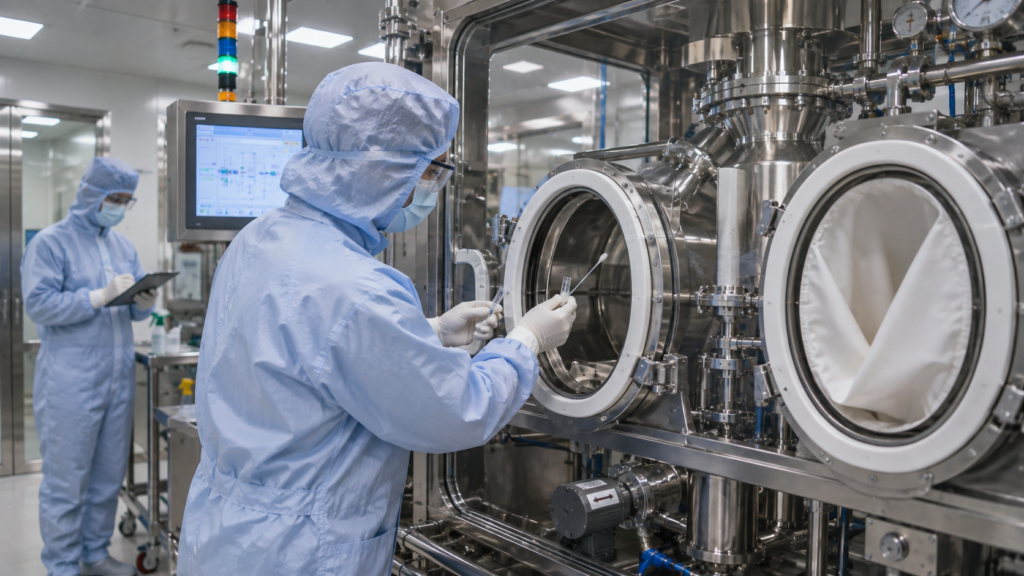
With highly potent compounds, this science is nowhere more important. The margins for HPAPI cleaning validation are much tighter than for standard cleaning work because highly potent active pharmaceutical ingredients can cause harmful effects at very low levels of exposure. The PDE of an HPAPI might be in the microgram or even nanogram range, leaving little to no margin for error in the resultant MACO limit.
This narrower margin has direct implications for the way a facility is built and run. The stringency of the PDE and associated MACO values will directly impact decisions on HPAPI facility design, including dedicated vs. shared equipment, containment strategy, and cleaning method selection. The HPAPI facility design done right the first time means the containment strategy and the cleaning validation strategy are solved together and not added on to each other at a later stage. In some cases, an HBEL assessment combined with Quality Risk Management may demonstrate that shared equipment cannot provide adequate and reliable control of carryover for a specific compound, leading to dedicated equipment, segregated processing or other appropriate technical and organisational controls.
Cleaning Method Selection Follows the Numbers
The establishment of MACO limits directly impacts the selection of cleaning methods and the degree of validation required for a facility.
- Manual cleaning may be acceptable where the cleaning process can be adequately controlled and validated, but generally demands careful consideration of operator variability and other factors influencing cleaning effectiveness.
- Automated Clean-in-Place (CIP) systems provide more consistent and repeatable cleaning performance, and this can become particularly important where stringent cleaning limits must be consistently achieved.
- Where an HBEL and cleaning-risk assessment indicates that shared equipment cannot reliably achieve the required carryover control, dedicated equipment or other appropriate measures may be required.
- For verification techniques such as swab sampling and rinse sampling, the analytical method must have sufficient sensitivity for the acceptance limit being tested. Total Organic Carbon (TOC) may also be used as a representative, non-specific parameter where scientifically justified and sufficiently sensitive; very low residue limits may require an appropriately sensitive substance-specific analytical method.
Brownfield Pharma Upgrades and Cleaning Validation
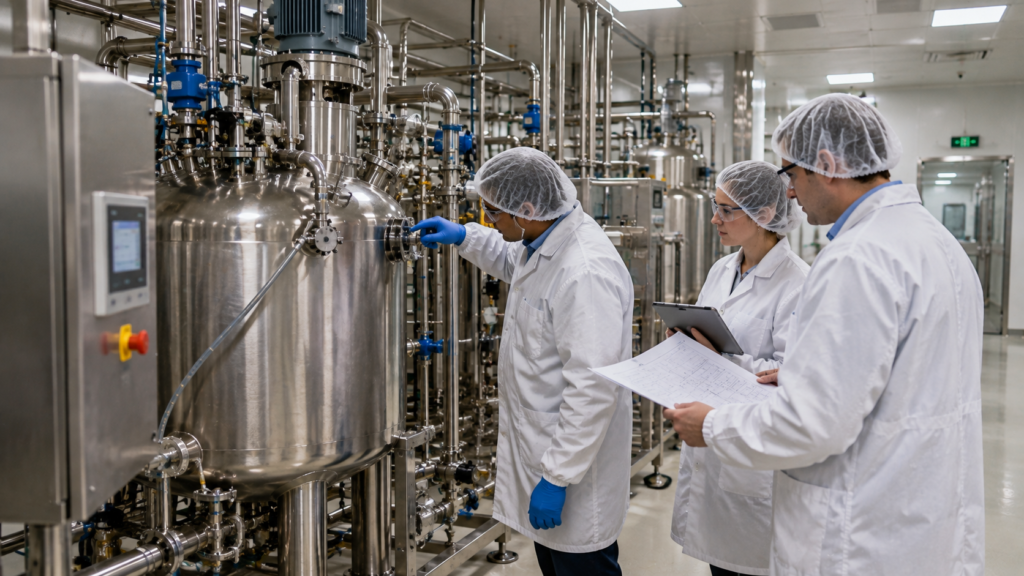
These limits are not just a new-build issue. Brownfield Pharma upgrades that add a new product to an existing shared facility must trigger a change-control and risk-based impact assessment of the existing HBEL, product/equipment matrix, MACO and cleaning-validation strategy for the products sharing that equipment, not only the new product being introduced. Adding a highly potent compound to a facility that was only handling conventional products can introduce a new worst-case product and significantly tighten the relevant product-to-product carryover limits, sometimes necessitating a switch to dedicated equipment or additional containment measures not originally part of the facility design.
This is one of the reasons why brownfield projects require careful upfront risk assessment prior to the start of construction. For example, a new product may have an HBEL and risk profile that, following Quality Risk Management, indicates a need for equipment dedication that the existing facility layout does not allow. Discovering this mid-project results in expensive redesign work that a thorough HBEL review at the planning stage would have caught early.
Building Cleaning Validation Into Facility Design From the Start
What this all shows most clearly is that cleaning validation is not something you figure out once you build a facility. HBEL, PDE, and MACO decisions influence the selection of equipment, the layout of rooms, and the containment approach long before the first validation protocol is written.
At Pharma Access, our engineering and CQV teams integrate approved cleaning-validation, containment and operational requirements into facility design from the concept stage, whether that’s specifying dedicated equipment for a highly potent product line or designing a shared facility layout that can support the CIP systems needed to hit tight MACO limits reliably. When these requirements are addressed correctly from the start, facilities can avoid expensive equipment changes and layout modifications that may otherwise arise when cleaning-validation gaps are identified after construction has begun. You can read more about our approach on the Pharma Access about page.
Wrapping Up
Modern cleaning validation approaches based on HBELs and PDEs are far beyond arbitrary rules of thumb. HBEL and PDE bring real toxicological science into the process, and the resulting MACO calculation provides facilities with a defensible, patient-safety-based carryover limit for a defined manufacturing scenario that they can validate against. But for very highly potent compounds and brownfield projects adding new products to shared equipment, getting the science right early in the design phase is typically more cost-effective than identifying a gap after construction is finished.
FAQs
What is the difference between HBEL and PDE?
HBEL is a more generic term for health-based exposure limits. PDE (Permitted Daily Exposure) is a type of health-based exposure limit derived through a structured scientific evaluation of pharmacological and toxicological data that defines a daily exposure considered unlikely to cause adverse health effects.
How is MACO calculated from a PDE value?
A common formula is to multiply the PDE of the previous product by the smallest batch size of the next product and divide by the largest daily dose of the next product to give the maximum carryover in mass terms.
Why do HPAPIs need stricter cleaning validation limits?
Highly potent compounds can cause adverse effects at very low levels of exposure. The PDE values of highly potent compounds are often very low. This results in a very strict MACO limit, leaving little margin of error in the methods of cleaning and detection.
Does adding a new product to an existing facility require redoing cleaning validation?
Introducing a new product to shared equipment should trigger a documented change-control and risk-based assessment of its potential impact on the existing cleaning-validation programme. HBEL information, worst-case product selection, relevant MACO calculations and the existing cleaning strategy should be reviewed as applicable rather than assuming that one lowest limit automatically applies to the entire line.
Can shared equipment always be used if the MACO limit is met on paper?
Not necessarily. While a calculated MACO limit may be technically achievable, the acceptability of shared equipment must also consider Quality Risk Management, cleanability, containment, equipment design, analytical capability and the ability of the validated cleaning process to consistently control carryover. Where adequate control cannot be demonstrated, dedicated equipment, segregation or other appropriate measures may be required.
Technical References
1. European Medicines Agency (EMA) — Guideline on setting health-based exposure limits for use in risk identification in the manufacture of different medicinal products in shared facilities.
Official EMA Guideline
2. European Medicines Agency (EMA) — Questions and Answers on implementation of risk-based prevention of cross-contamination and Health-Based Exposure Limits.
Official EMA Q&A
3. World Health Organization (WHO), Technical Report Series No. 1033, Annex 2 — Points to consider when including Health-Based Exposure Limits (HBELs) in cleaning validation.
Official WHO Technical Document
4. PIC/S GMP Guide PE 009-17, Annex 15 — Qualification and Validation, Section 10: Cleaning Validation.
Official PIC/S Annexes