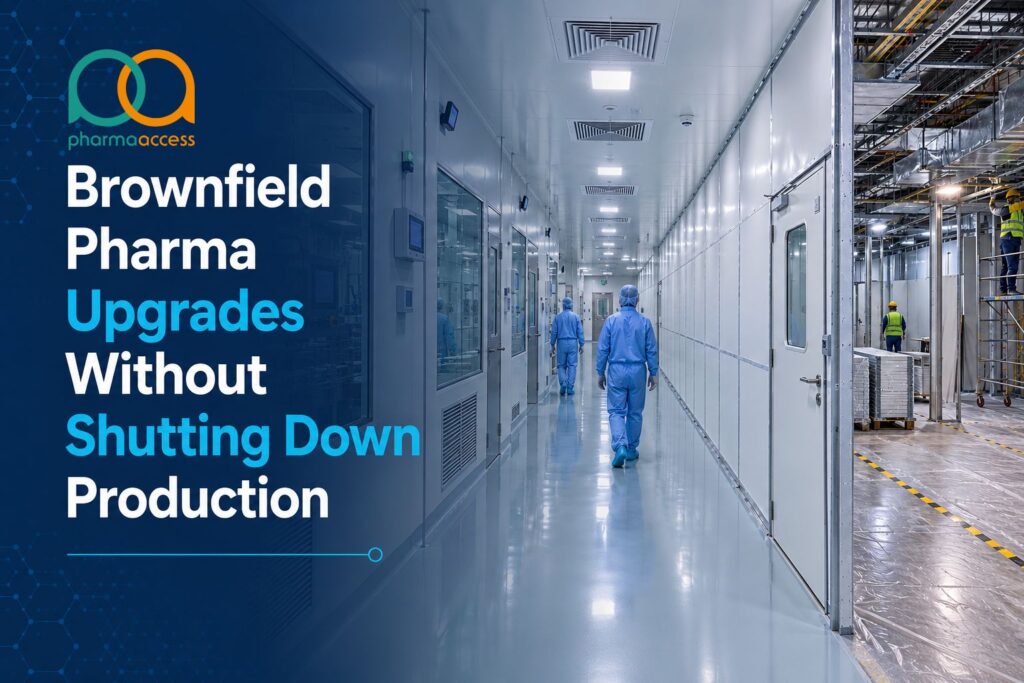
“Most manufacturers can’t afford to shut down a pharma plant for months. Every day of lost production is lost revenue, extended production interruptions can also affect medicine supply continuity. But older facilities still need new cleanrooms, upgraded HVAC, increased capacity, and equipment and systems aligned with current GMP requirements. That tension is precisely what brownfield pharma upgrades are meant to solve, upgrading a live facility while keeping unaffected operations running wherever technically and GMP-feasible.
In this post, we’ll look at how that actually happens, from planning through construction, in plain language.
What is a Brownfield Pharma Project?
Brownfield projects are projects to expand, renovate, or upgrade an existing facility, often an already in-production facility. This isn’t like a greenfield project, where a new facility is developed without having to retrofit around an existing operating process or facility infrastructure.
There are real constraints to working on the brownfield facility. You are dealing with existing column grids, fixed ceiling heights, and utility entry points that were put in place years ago for a different process. Plus, the site usually needs to continue making products and maintaining GMP control and inspection readiness while the construction crew is there.
Why Keeping the Plant Running Is So Hard
There are a couple of things that make this particularly challenging:
- Increased risk of contamination: Dust, vibration, and open construction zones near a cleanroom can jeopardise product quality if not carefully managed.
- Personnel and material flow must remain controlled: Operators still have to go through the building, and materials still have to reach the production areas through controlled and appropriately segregated routes without uncontrolled crossover with construction activities. FDA 21 CFR 211.42 requires material and component flows through pharmaceutical buildings to be designed to prevent contamination.
- Shared utilities create critical interfaces: Power, compressed air, water systems, and HVAC often feed both the operating area and the area being upgraded, so a mistake in one can impact the other.
- Regulatory documentation must be kept current: As the facility changes, even if it is still operating, change control, affected qualification and validation documentation, SOPs, and the Site Master File where applicable and where the changes affect its contents need to be updated. EU GMP Annex 15 requires planned changes that may affect product quality to be formally documented and their impact on the validated status or control strategy assessed. PIC/S also states that a Site Master File should be regularly reviewed so that it remains representative of current activities. https://health.ec.europa.eu/document/download/7c6c5b3c-4902-46ea-b7ab-7608682fb68d_en
These are not new issues for experienced project teams, but they do call for a different playbook than starting with a blank slate.
How to Plan Brownfield Upgrades Without Shutting Down
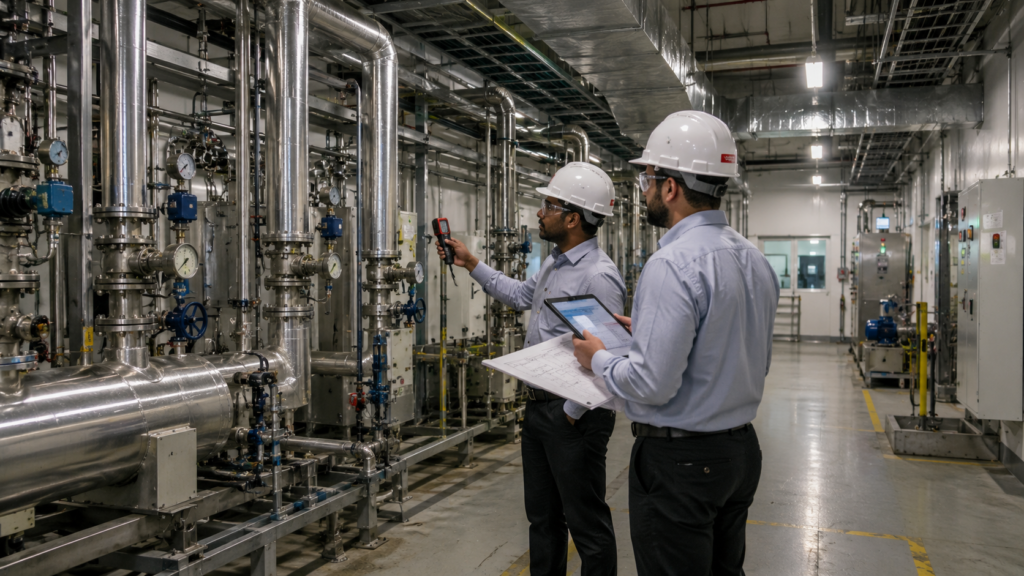
Here is a practical order to keep production running during a brownfield project:
- First, do a full facility audit: Assess the building structure, existing utility capacity, cleanroom classifications, and current validation status before any design work begins. Existing drawings, HVAC zoning and pressure relationships, personnel and material flows, equipment interfaces, and available shutdown windows should also be verified where relevant. Where the proposed change may affect product quality or the validated state, it should be formally assessed through change control and Quality Risk Management. This is the foundation for all subsequent decisions.”
- Divide the project into phases: Break the work into sections that can be done one at a time instead of doing one large renovation so that only a small part of the plant is offline at any one time.
- Keep construction and production areas physically separated: Temporary walls, sealed barriers, and dedicated construction corridors keep dust and people away from live manufacturing areas.
- Arrange utility tie-ins during planned downtime: Critical tie-ins to shared power, water, HVAC, compressed air or other GMP-supporting utilities should be executed during approved shutdown, maintenance or controlled cutover windows where required, with appropriate isolation, sequencing and contingency planning. Not every tie-in requires the entire facility to stop production; the extent of shutdown should depend on the affected system, available redundancy, segregation and documented risk assessment. EU GMP Annex 15 requires planned facility and utility changes that may affect quality to be documented and assessed using a risk-based approach.
- Update documentation along the way: As construction proceeds, change control records, SOPs, and affected qualification and validation documents are updated through controlled procedures, rather than being retrospectively corrected after execution. Significant changes to an approved qualification or validation protocol during execution should be documented, scientifically justified and handled through the applicable deviation or change procedure. EU GMP Annex 15 specifically requires qualification and validation documentation to be approved and significant changes to approved protocols during execution to be documented and justified.
- Re-qualify affected systems before returning them to GMP use: When a section is finished, the affected facilities, utilities, equipment and systems undergo the required commissioning, qualification and/or validation activities before production resumes there. The extent of requalification should be based on the change-impact assessment and Quality Risk Management, rather than assuming that every system requires the same level of requalification. Properly segregated work on another phase may continue where the documented risk controls allow it. EU GMP Annex 15 states that qualification and validation scope should be based on justified and documented risk assessment and recognises requalification where applicable.
For sterile manufacturing areas, brownfield modifications should also be assessed against the facility’s Contamination Control Strategy (CCS), including potential impacts on premises, HVAC, airflow, pressure relationships, utilities, personnel and material movement, cleaning, monitoring and qualification. EU GMP Annex 1 requires a facility-wide CCS and states that changes to contamination-control systems should be assessed for their impact on that strategy.
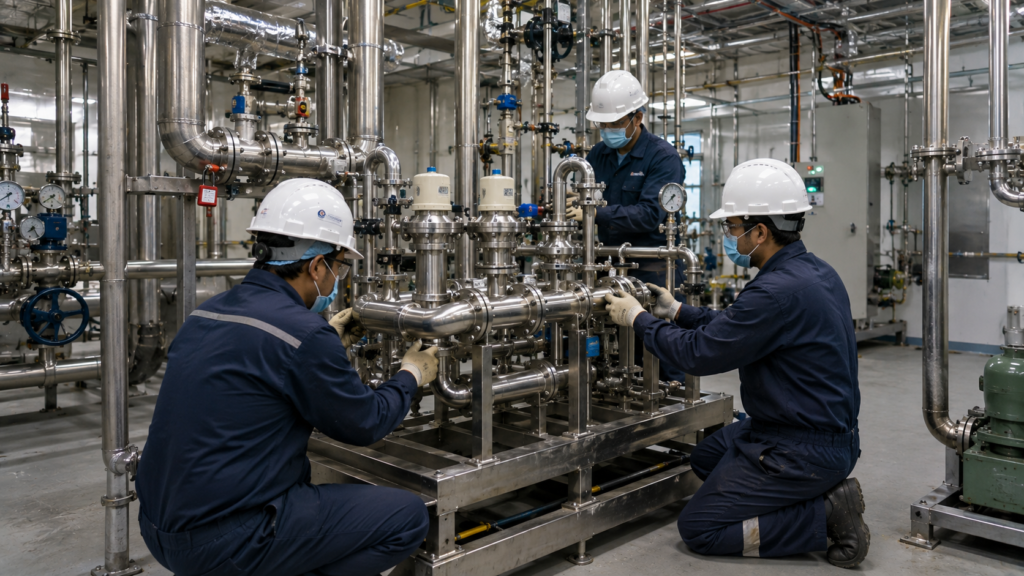
Techniques That Keep Production Running
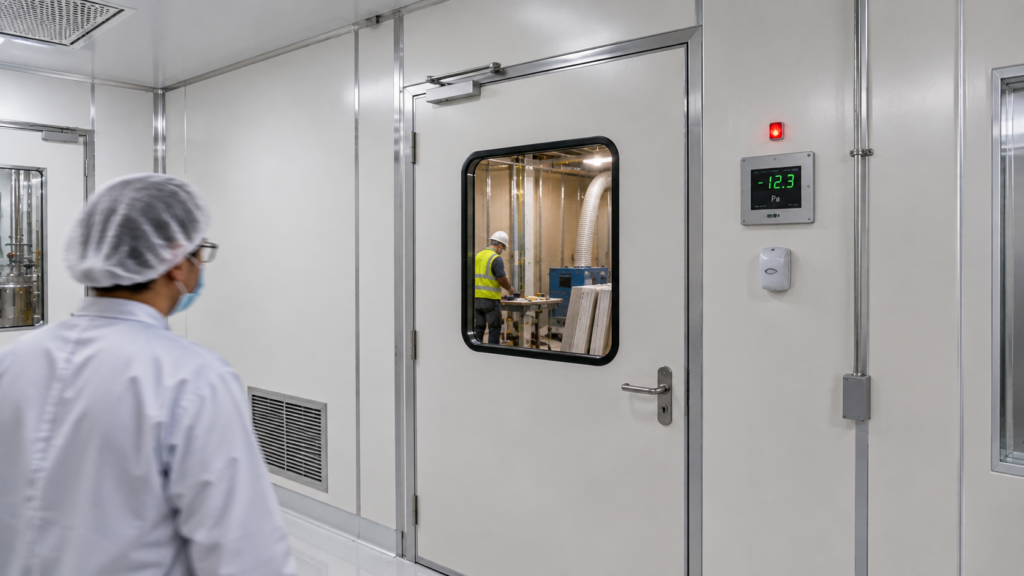
Some particular methods are consistently useful on well-planned brownfield jobs:
- Construction in segments or phases: The plant doesn’t have to shut down entirely, only part by part, by breaking the project into phases.
- Temporary containment barriers: Partitions are sealed, and where justified by the contamination-control strategy and pressure design, construction areas may be maintained at a lower pressure relative to adjacent controlled areas to help contain dust and particles, provided this does not compromise the established cleanroom pressure cascade or airflow pattern. FDA GMP requires appropriate control of air pressure and dust where relevant, while EU GMP Annex 1 makes pressure relationships dependent on facility design, contamination risk and containment requirements rather than prescribing negative pressure universally.
- Separate construction access ways: Contractors and materials are provided with a separate entry and exit path so that they do not cross paths with production staff wherever practicable .
- Weekend and off-hours working windows: Loud or otherwise disruptive work, such as cutting into walls or running new ductwork, is often scheduled outside of normal production shifts.
- Modular or pre-fabricated components: By building pre-fabricated utility assemblies, ductwork sections, cleanroom components or skid-mounted equipment off-site and then quickly installing them on site, construction crews spend less time inside the operating facility.
Common Risks During Live Facility Upgrades
Some risks are so frequent that they deserve planning attention from day one:
- Underestimating utility capabilities: New equipment or line expansions often require more power, compressed air, or water than the existing system was designed to provide.
- Poor phase-to-phase sequencing: If an upgraded area is returned to GMP use before the required commissioning, qualification, validation and applicable quality release activities are complete, you can create compliance gaps that become difficult to resolve later. EU GMP Annex 15 requires qualification and validation activities to follow planned and approved stages and allows formal release to subsequent qualification stages based on documented assessment.
- Poor communication with production teams: Construction schedules that do not reflect actual production runs cause conflicts and delays on both sides.
- Incomplete as-built documentation: In older facilities, the drawings may be obsolete, and planning gets bogged down until a new survey fills in the blanks.
- Treating contamination control as an add-on in construction: Any short-term disturbance of dust or airflow in the vicinity of a live cleanroom can threaten the controlled environment and potentially product quality. GMP requirements emphasise control of contamination, dust, ventilation and airflow within pharmaceutical manufacturing environments.
Pharma Construction and Installation Services That Support This Work
Brownfield projects require construction teams who know how to work in a live GMP environment, not just how to build.” Pharma construction and installation services focused on this type of work typically have experience with phased scheduling, containment barriers, and working around active production, rather than treating each project as a greenfield build.
Pharma Access supports greenfield and brownfield pharmaceutical projects through integrated engineering, procurement, construction and installation, project management, commissioning, qualification and validation capabilities. Coordinating engineering design and construction within an integrated project team can help keep the phasing plan, utility tie-ins and qualification schedule aligned instead of treating these as separate interfaces when the plant cannot accommodate a prolonged shutdown.
Pharma Access’s construction and CQV capabilities cover pharmaceutical HVAC, utilities, cleanrooms, mechanical, electrical and piping installations together with qualification and validation support.
Why Brownfield Projects Need Integrated Pharmaceutical Engineering
Brownfield projects often involve more live interfaces and simultaneous disciplines than a comparable greenfield build, because the plan has to take the existing structure, live operations, and updated regulatory expectations all into account together. An experienced pharmaceutical engineering team that has done this type of project before knows what to look for in the audit phase and where older facilities tend to have issues, be it aging HVAC, limited utility capacity, or gaps in the existing qualification and validation status.
For a pharmaceutical manufacturer, the choice between a plant upgrade and a greenfield project is often driven by factors such as time, budget, available utility capacity, future expansion requirements, production-disruption risk, and the ability of the existing site to meet the technical needs of the new process. An engineering partner who has done greenfield and brownfield work can clearly lay out that comparison before construction locks in decisions that are costly to change later.
Wrapping Up
Production can often continue in unaffected areas while critical interventions are confined to planned shutdown or cutover windows. First, audit the facility; break the project into phases; keep construction physically separate from live areas; and qualify affected systems before they are returned to GMP use.
This way, a plant can add capacity, meet new GMP standards, or modernise ageing systems while reducing the duration and extent of shutdowns rather than assuming that every brownfield project can proceed with zero interruption. EU GMP Annex 15 supports a lifecycle and risk-based approach to qualification, validation and facility design changes, while FDA GMP requirements focus on protecting manufacturing operations from contamination and maintaining appropriate environmental controls.
Frequently Asked Questions
What does brownfield mean in pharma manufacturing?
‘Brownfield’ means taking an existing pharmaceutical facility and either growing it, renovating it, or upgrading it, often one that is still operational. That’s unlike Greenfield construction, where a new facility is developed without having to work around an existing operational manufacturing facility and its installed systems.
Can a pharma plant stay operational during a brownfield upgrade?
In many brownfield projects, unaffected areas of the plant can remain operational. This usually involves phased construction, physical separation of the work and production areas, and scheduling utility hook-ups around active manufacturing. Whether production can continue depends on the scope of work, shared utilities, contamination risks, existing facility configuration and the ability to maintain adequate segregation and environmental control.
How long does a brownfield pharma project usually take?
There is no standard duration. A targeted brownfield upgrade may be shorter than a greenfield build because existing infrastructure can sometimes be reused, but heavily phased work in a live GMP facility can also require a longer execution period because the work has to be coordinated around production schedules, shutdown windows, system cutovers and qualification activities.
What is the biggest risk in a brownfield pharma upgrade?
One of the biggest concerns is the risk of contamination from construction activity near live production areas, as well as underestimating the capacity of utilities and poor sequencing between project phases. For sterile manufacturing, impacts on airflow, pressure relationships and the site’s Contamination Control Strategy also require careful assessment.
Should a pharma company choose brownfield or greenfield for expansion?
It depends on the timeline, budget, existing utility capacity, facility constraints, future expansion requirements, production-disruption risk, and whether the existing site can support the new process technically. A facility engineering consultant can evaluate both options against your production schedule before you commit.