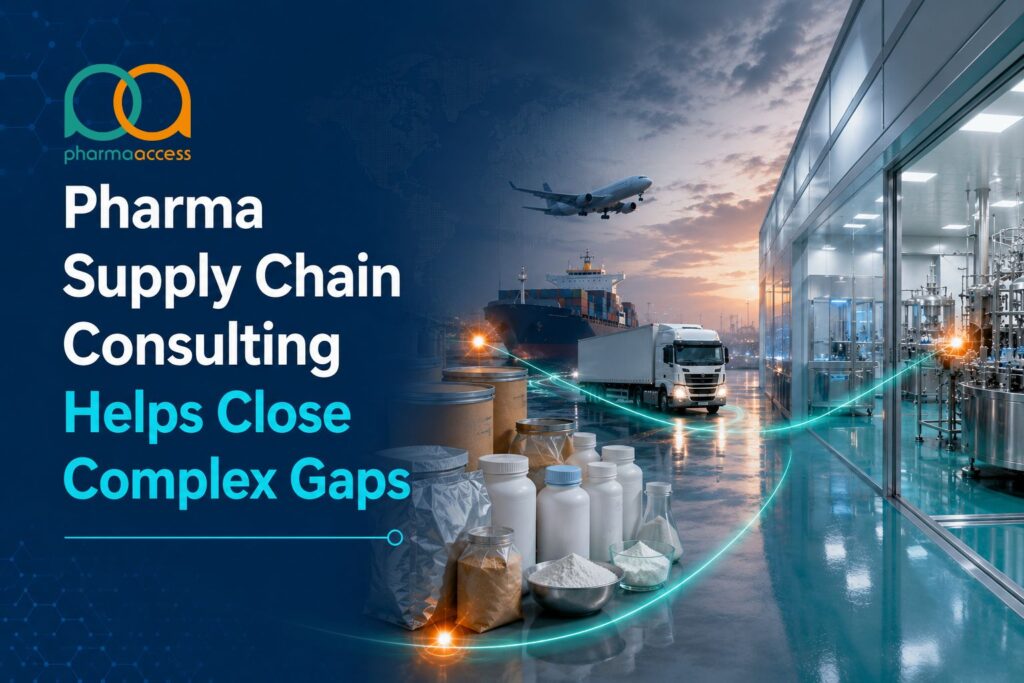
The average duration of an active drug shortage had grown to more than five years, according to the United States Pharmacopeia’s 2026 Annual Drug Shortages Report, which assessed shortages active at the end of 2025. That number alone tells you something has changed. Drug shortages may begin with a plant closure, manufacturing-quality issue, production delay or shortfall in a critical raw material. Many now persist for years because the causes are more complex than a single supplier, manufacturing site or country.
This is the environment that pharma supply chain consulting is designed to address. This article breaks down where the gaps really come from, what a consulting partner does about them, and why the solution often extends to how pharmaceutical manufacturing capacity is planned and built in the first place.
Where the Gaps Actually Show Up
Most pharmaceutical supply chains look good on paper until one link breaks. Research published by USP in 2026 found that 44% of drugs in shortage had at least one key starting material, or KSM, manufactured solely in a single country, typically China or India. This sort of concentration implies that a single export restriction, plant inspection failure, or natural disaster can affect all manufacturers relying on that one source simultaneously.
Add tariff and trade-policy volatility to that risk. A survey conducted in February 2025 by the Biotechnology Innovation Organization found that nearly 90 per cent of U.S. biotech companies relied on imported components for at least half of their FDA-approved products. For affected manufacturers, changes in trade policy can alter material costs, lead times and the commercial viability of established sourcing models.
And most companies don’t plan for this ahead of time. A 2026 Operations Outlook survey from Argon & Co surveyed more than 800 senior executives across major global markets and found that only 22% of global pharmaceutical companies were actively performing risk assessments for geopolitical threats at the end of 2025. Here’s why that matters: Supply chain gaps seldom announce themselves early. When it shows up as a stockout, the company is already reacting, not strategising.
What Pharma Supply Chain Consulting Actually Does
A good consulting partner follows a fairly consistent sequence, whether the client is a small biotech or a large manufacturer:
- Follow the supply chain down to the raw material level. This means examining not only API suppliers, but also the key starting materials and critical intermediates behind them, as that is often where concentration risk lies.
- Evaluate suppliers based on risk, not just cost. This includes single-source dependencies, geographic concentration, quality history, capacity, lead times and financial stability.
- Develop dual- or multiple-sourcing plans for the highest-risk inputs, supported by realistic timelines for auditing, testing, qualification and regulatory implementation.
- Model safety-stock requirements against working-capital constraints. Holding several months of API inventory may reduce exposure, but it can also tie up capital and introduce shelf-life, storage and material-release considerations.
- Link supply chain decisions to manufacturing capacity and determine whether existing facilities, expanded capacity or new facilities will be required to support diversified sourcing.
For regulated products, qualifying an alternate API source may also require an assessment of impurity profiles, physical properties, process performance, stability data and the applicable regulatory reporting pathway. An alternate supplier cannot always be introduced through a procurement decision alone.
That last point is where supply chain consulting and facility strategy start to overlap, and it’s worth spending some time on it
Connecting Supply Chain Strategy to Custom Pharma Facility Design
The strength of a diversified sourcing plan is only as strong as the manufacturing capacity and quality systems behind it. If a company qualifies a second API supplier and its equipment, process or facility cannot accommodate the material characteristics or associated manufacturing requirements, the diversification plan may be delayed or require additional investment.
That’s what flexible pharmaceutical facility design helps address. A facility built around one process line, with no flexibility to do another formulation or a new dosage form, forces a company to be tied to its existing supplier relationships, whether it wants to be or not. A facility with modular process suites, expandable utility capacity, appropriate containment, spare electrical and automation capacity, and planned space
This link is often overlooked. The supply chain teams build the sourcing plan. Facility teams build the manufacturing infrastructure. If the two don’t talk early, the physical facility is the constraint that keeps a good sourcing strategy from working.
Why Turnkey Construction Firms Matter to Supply Continuity
When a company determines that it needs new or expanded capacity to support supply chain resilience, speed and accountability are both important. That’s where pharmaceutical turnkey construction partners come in.
One accountable partner for scale-up
With one company coordinating design, procurement, construction, installation and CQV within an integrated project scope, you remove the handoff gaps that can slow a project down. A fragmented project team with unclear ownership can add project-delivery risk at a time when a supply disruption is already affecting production, inventory or commercial commitments.
Faster time to qualified capacity
Off-site modular construction methods available through selected pharmaceutical turnkey partners can compress parts of the project schedule by allowing module fabrication, site preparation and infrastructure work to progress in parallel. If you’re a company racing to qualify a new supplier and establish the manufacturing capacity required to support it, schedule coordination can affect whether additional qualified capacity is available when it is needed.
The final time to operational readiness will still depend on equipment lead times, technology transfer, site conditions, commissioning, qualification, process validation and regulatory requirements.
Energy Resilience in Modern Pharma Facilities: A Hidden Supply Chain Risk
Risk in the supply chain doesn’t stop with raw materials. Energy is part of the chain too, and it’s often overlooked. Energy-price volatility, utility interruptions and disruptions to fuel or transport networks can increase manufacturing costs, affect temperature-controlled logistics and delay pharmaceutical production.
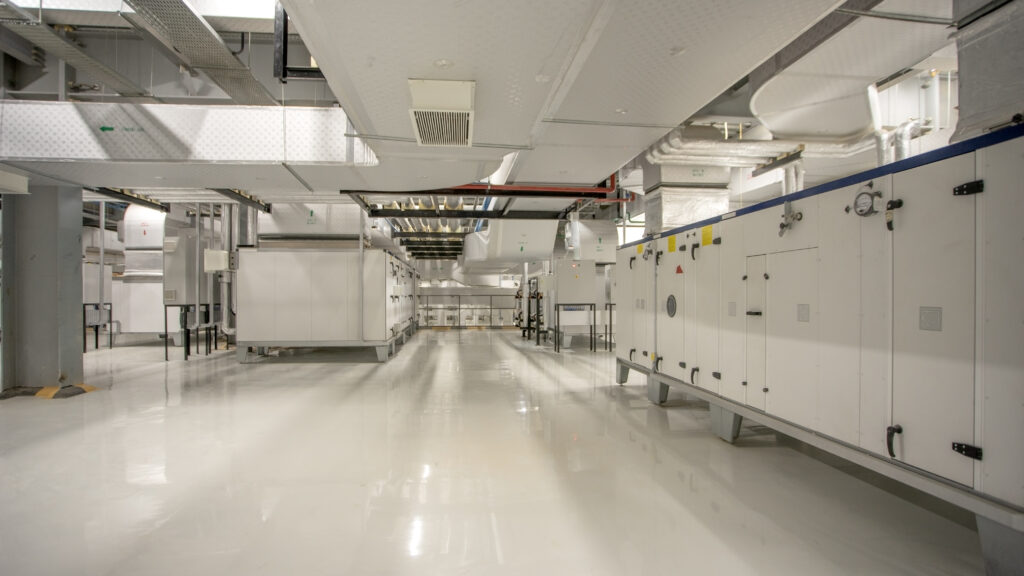
This fact should be directly included in the energy-planning strategy for a modern pharmaceutical facility. Facilities that are fully reliant on a single power source or utility configuration may carry an operational-continuity risk that resembles other forms of supply concentration. Backup generation,UPS support for critical systems, resilient utility design, on-site energy monitoring and efficient HVAC systems all provide additional protection against the types of disruption that can affect production continuity.
HVAC systems in pharmaceutical cleanrooms can be highly energy intensive because they must maintain controlled airflow, filtration, temperature, humidity and pressure relationships. However, the exact energy profile will depend on the process, cleanroom classification, utility systems and facility design.
What to Look for in Pharma Turnkey Consultants
Not all consultants or construction partners link supply chain thinking with facility planning. distinguishes partners that take an integrated approach.
- They ask you about your sourcing strategy and future capacity requirements before they draw a single floor plan.
- Instead of a single, fixed line, plan flexible process capacity, expandable utilities and future equipment interfaces where the business case supports them.
- They design energy resilience from the start, not as an afterthought.
- They have documented experience in multiple dosage forms and geographies.
- They can demonstrate experience through previous projects where facility design supported a capacity, expansion or operational-continuity requirement.
Pharma turnkey consultants who treat facility design and supply strategy as one conversation, rather than two separate ones, are better positioned to deliver facilities that support the resilience objectives established by business and operations leadership.
Where Pharma Access Fits Into This Picture
Pharma Access, headquartered in Mumbai, provides pharmaceutical engineering design, procurement and supplies, construction and installation, CQV and project management services for pharmaceutical and biotechnology facilities. The company integrates engineering and execution within a coordinated project-delivery model, allowing capacity, process flexibility, utility resilience and future expansion requirements to be considered alongside facility planning.
Its Modular Mobile Facility approach also gives companies an off-site modular option for adding or developing manufacturing capacity where speed, phased expansion or constrained site conditions are important project considerations. Project suitability will depend on the dosage form, production scale, site conditions, regulatory pathway and geography.
Pharma Access does not need to replace the specialist pharma supply chain consultant in this process. Its role is to translate sourcing, capacity and resilience requirements into coordinated pharmaceutical engineering and execution strategies.
Steps to Close the Gaps
- Trace your supply chain back to key starting materials, not just finished API suppliers.
- Perform a geopolitical and tariff risk assessment at least annually.
- Create a facility design brief that considers future sourcing changes, not only current production.
- Compare pharmaceutical turnkey partners not only on price, but also on flexibility, technical capability, CQV integration, project accountability and speed.
- And don’t think of energy resilience as just another utility item within your supply chain risk plan.
Frequently Asked Questions
What is pharma supply chain consulting?
It’s advisory work that charts sourcing risk across API, key starting material, supplier, manufacturing-capacity and logistics networks and then develops diversification, inventory, and facility strategies to lower the risk of a disruption turning into a shortage.
Why do drug shortages keep lasting longer even as their total number declines?
Many shortages are now driven by structural problems, such as geographic concentration in key starting materials, manufacturing-quality issues, limited production capacity, product discontinuations and thin profit margins that limit investment in resilience, rather than one-off events that resolve quickly once fixed.
How does facility design affect supply chain resilience?
A facility with flexible process capacity enables a company to take advantage of a diversified sourcing plan. A rigid, single-line facility can tie a business to existing processes, equipment configurations and capacity limitations even after new ones are qualified.
Do small biotech companies need supply chain consulting, or is it only for large manufacturers?
Small biotechs can be particularly exposed because they may operate with tighter working-capital limits and depend on a small number of suppliers, CDMOs or logistics routes. Consulting helps them prioritise which risks to address first without overspending on unaffordable safety stock or unnecessary infrastructure.
How does energy volatility connect to pharmaceutical supply chains?
Pharmaceutical production is an energy-intensive process, and local energy interruptions or price volatility can increase production costs, disrupt critical utilities, affect cold-chain operations and delay output. This risk is reduced for facilities with backup power, resilient utility systems, energy monitoring and efficient HVAC design.