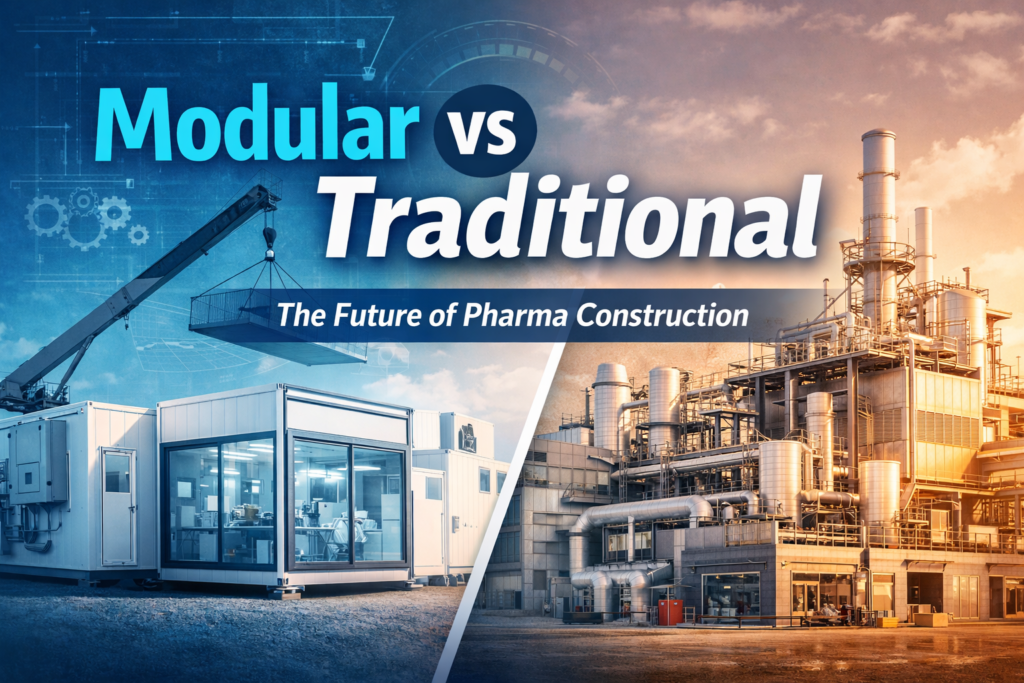
The pharmaceutical industry is operating in an increasingly high-pressure environment. Becoming more stringent, Product lifecycles are shortening. There is an increasing focus on biologics and specialty therapies. Investors want faster commercialization and higher returns. Constructing a manufacturing plant in this setting is not a construction project. It is a strategic capital choice which influences valuation, scalability and long term competitiveness. To pharma investors, new company founders, CMOs, and expansion-oriented leadership teams, time-to-market, risk exposure and prospective returns on investment directly depend on the decision to build in a modular or traditional way. This paper compares the two models using a strategic and financial approach to enable decision-makers to consider what really matters.
Understanding Traditional Pharma Facility Construction
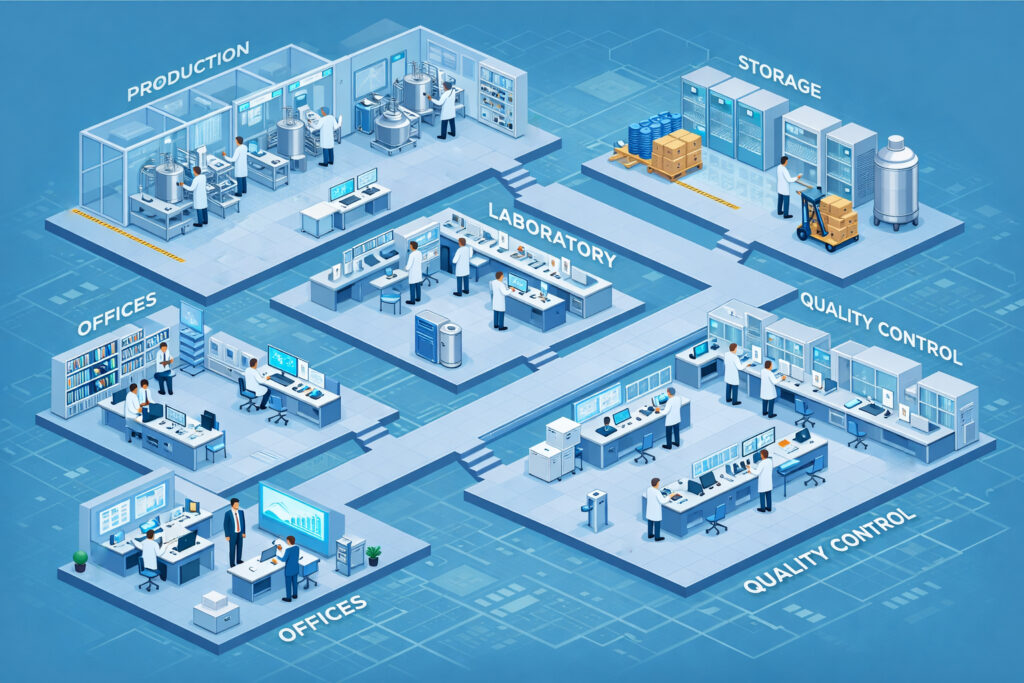
The conventional pharmaceutical building process follows a sequential execution model. The whole facility is constructed on site. begin only after the previous stage is completed.
The typical stages include:
- Civil work and land development
- Structural construction
- Cleanroom installation
- Integration of the HVAC systems and utilities
- Process equipment setup
- Validation and regulatory compliance
This has been the dominant approach to pharmaceutical facility development for decades. decades. It is highly customised and flexible. It is however both time and capital intensive.
Typical Timelines
The average time to construct a GMP-compliant pharmaceutical facility using traditional methods takes 18 to 36 months. In the case of complex sterile and biologics plants, the schedule may run even longer. Revenue generation is postponed in this period and capital remains tied up.
Key Challenges in Traditional Construction
- Sequential dependency
A delay in one stage automatically delays the following stages.
- Risks in contractor coordination.
There can be several contractors working simultaneously and this can result in gaps in communication and duplication of work..
- Design modifications during implementation
In case of regulatory feedback or process variation occurs in the middle of the project, the changes may be costly and time consuming.
- Supply chain exposure
Global material shortages or supply chain disruptions can halt project progress.
- Validation overlap risk
Commissioning and qualification are also initiated later in the project cycle, which extends the timeline before commercial operations can begin.
Investment Risks
In the perspective of an investor, the risks in the traditional construction are primarily three:
- Delays in Recovery of Investments.
Revenue starts only after the facility is completed and validated.. A six-month delay can significantly affect projected cash flows..
- Capital Lock-In
High initial investment levels reduce financial capacity and increase the vulnerability if market conditions change.
- Raise in Change Management Costs.
Any late-stage design revisions , changes in regulations or process changes are very expensive.
When Traditional Construction Makes Sense
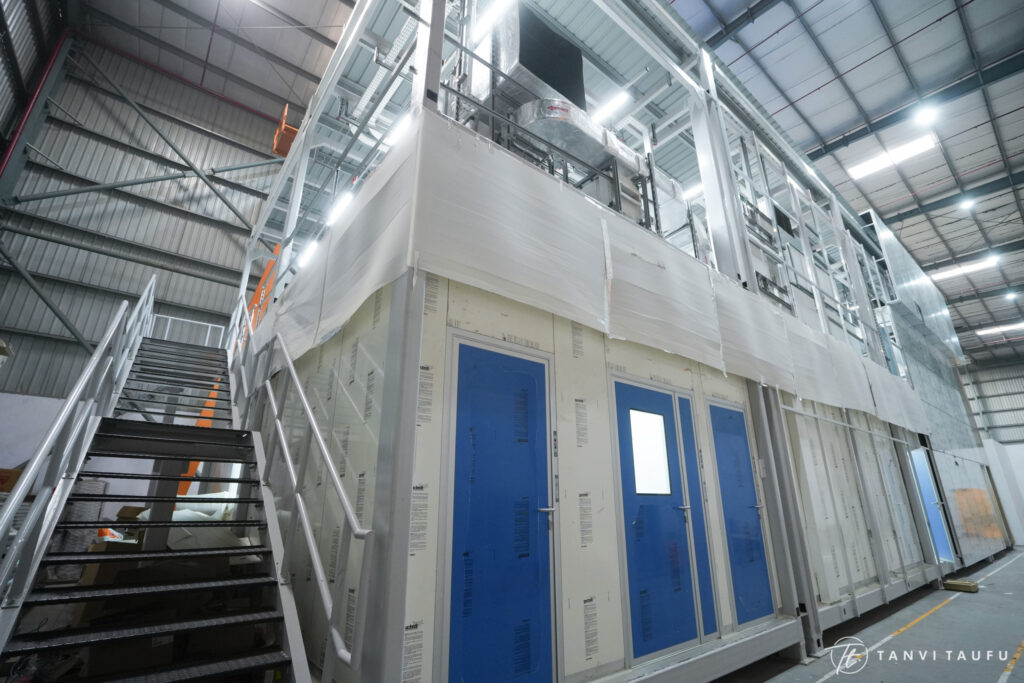
Regardless of such risks, traditional construction is suitable when:
- Very large, long-term production facilities are required
- Installation of large or highly complex fixed process equipment is necessary
- Demand is predictable and manufacturing volumes are high
- Customer engineering requirements exceed modular design capabilities
Traditional builds can still be useful for established pharmaceutical companies with stable capacity planning.
What Is Modular Pharma Construction?
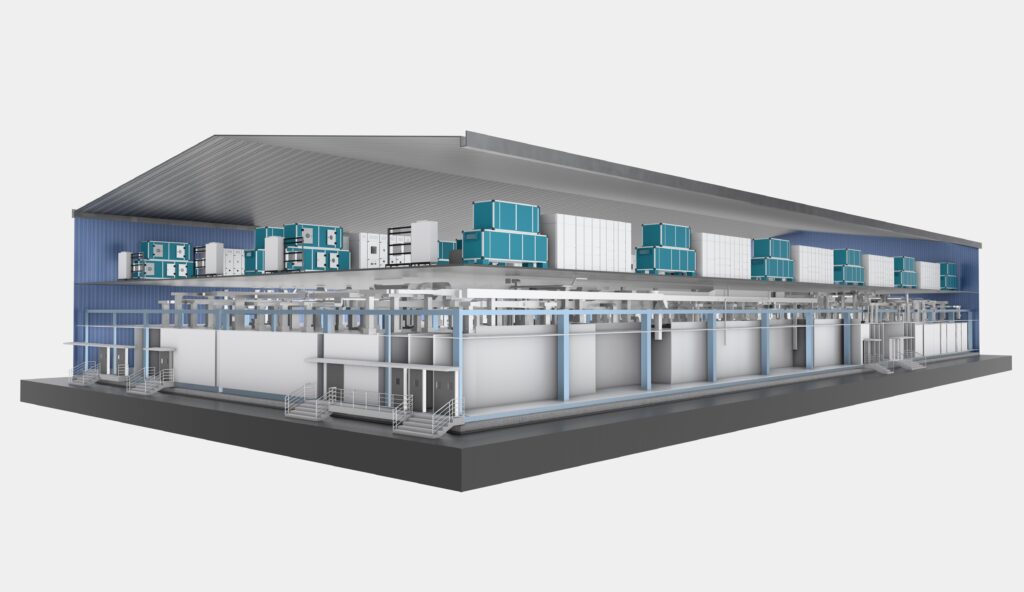
Modular construction significantly changes the traditional execution model. Components (especially large and routine parts) are assembled in a controlled factory environment rather than being constructed entirely on site in a sequential process. These modules are later delivered and assembled at the project site.
Modules may include:
- Cleanroom pods
- Utility skids
- Process equipment rooms
- Mechanical and electrical modules
- Ready-prepared laboratory rooms
The distinguishing benefit is a parallel execution. Site preparation, foundation work occur simultaneously with off-site module fabrication, reducing the overall project timeline.
- Timeline Advantage
Modular strategies can be used to deliver a facility that would otherwise normally require 24 months. The effect of the reduction of 8 to 12 months is of significant impact. Complete sooner implies complete regulatory filing, complete production and complete revenue generation.
Quality and Control
The consistency is enhanced in those factory-controlled conditions. The modules are assembled in a standardized manner and thus eliminate variation and rework Time losses caused by weather are reduced. TWorkforce productivity in controlled manufacturing settings is generally higher than productivity on open construction sites.
Strategic Advantages of Modular Construction for Investors
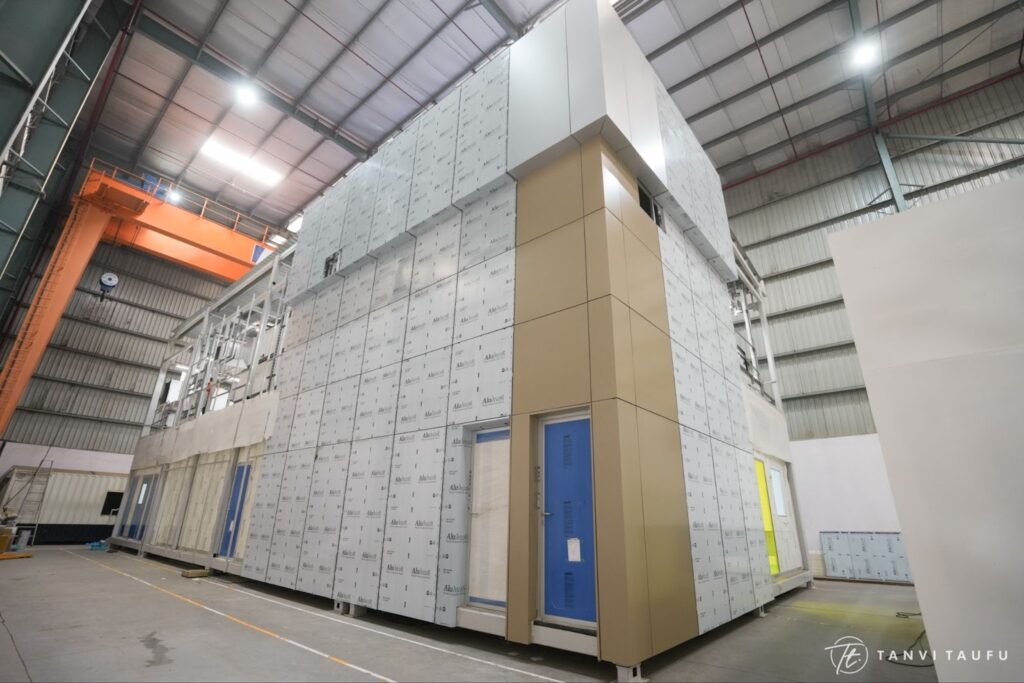
1. Faster Time-to-Market
In pharmaceutical manufacturing, time is directly proportional to the revenue. In most cases, parallel execution saves up to 40-50 percent of the total project time. Prior experience in operations will result in faster commercialization and a better net present value of the project.
2. Improved Cost Predictability
Costs can be controlled better in factory production environments.. Exposures to weather, congestion of the site and labor inefficiencies are minimized. It makes the budget forecasting more reliable thus enhancing investor confidence.
3. Phased Capital Deployment
Building modular facilities can be done in stages. Companies do not need to develop full capacity at the beginning but can increase capacity as demand grows. This will minimize overbuilding and will safeguard capital whenever there are uncertainties in markets.
4. Reduced Compliance Risk
Documentation, traceability and standardization are supported by controlled module fabrication environments. This eases validation and GMP compliance. A lesser number of uncertainties on site results in smoothly conducting inspections and has less regulatory risk.
5. Expansion Without Major Disruption
In brownfield projects, the units may be modularized and installed with minimal or no interruption to the current production. This safeguards the continued revenue streams.
Situations Where Modular May Not Be Ideal
Modular construction is not always the best. It may not be optimal when:
- Large-scale process equipment that is heavy cannot be transported
- Highly customized engineering requirements exceed modular design flexibility
- Module transportation is complicated by site logistics
- Not planning for integration poses interface problems
Modular planned construction can only succeed with an experienced EPCM planning and feasibility assessment in its initial stages.
Capital Strategy Perspective
The real distinction between traditional and modular construction lies in capital strategy. Conventional building involves a massive capital investment. Investors have to wait longer to make returns and face greater schedule uncertainty. Modular construction allows more agile project execution. Capital deployment can occur in stages. Revenue can begin earlier, and risk exposure is reduced due to more predictable schedules. This flexibility may enhance valuation and investor attractiveness tfor emerging pharma companies and CMOs operating in competitive markets.
Industry Evolution Toward Flexible Manufacturing
The drug market is shifting to small and specialized manufacturing. Requirements of biologics, cell and gene therapies and personalized medicine require:
- Flexible production lines
- Smaller batch sizes
- Quick reconfiguration of the system
- Adaptive infrastructure
Large, inflexible facilities designed for decades-long production cycles may be less compatible with the pace of pharmaceutical innovation today. Modular construction supports flexibility and adaptability, making it attractive for growing companies.
Comparative Overview
| Parameter | Traditional Construction | Modular Construction |
| Timeline | 18 to 36 months | 10 to 14 months |
| Capital Commitment | Large upfront | Phased investment |
| Flexibility | Limited post-build | High scalability |
| Change Cost | Expensive | More manageable |
| Risk Exposure | Higher schedule risk | Controlled execution risk |
| ROI Speed | Slower | Faster |
Key Questions Investors Should Ask
The decision-makers need to consider:
- What is the volatility of expected market demand?
- Is speed to commercialization critical?
- Is it possible to deploy capital in stages?
- How customized must the facility design be?
- What level of schedule risk is acceptable?
These questions help determine which model aligns best with the company’s growth strategy.
Final Perspective
The choice between the modular and traditional pharma construction is not about the possibility of finding a better method. It is about alignment.
- Alignment with capital strategy.
- Alignment with development schedules.
- Alignment to regulatory objectives.
- Alignment with risk appetite.
In the case of large, stable, long-term capacity projects, traditional construction may still work. Modular construction will be particularly strategic to the investor who wants to achieve agility, rapid time-to-market, and gradual scalability. The construction of facilities is no longer an engineering decision in the competitive pharmaceutical environment today. It is a financial decision which forms the basis of profitability, valuation, and long-lasting resilience. The actual dilemma is not as to which of the methods is superior. The real question is which model best supports growth while protecting capital in a rapidly evolving industry.