A pharmaceutical facility is more than a construction project. Process equipment, cleanrooms, HVAC, utilities, automation, material and personnel flows, commissioning and qualification must ultimately function as one integrated system.
This makes the choice of pharmaceutical project delivery model an important early project decision.
When comparing EPC vs EPCM in a pharmaceutical project, the key difference is not simply who performs engineering or construction. The selected model determines contractual responsibility, owner involvement, procurement control, interface management, commercial risk, schedule accountability and the integration of commissioning and qualification.
EPC, EPCM, EPCMV and turnkey models can all be appropriate. The right choice depends on project scope, complexity, internal capabilities, desired level of control and risk allocation.
For organizations evaluating these routes, Pharma Access supports pharmaceutical projects from engineering and design through procurement, construction and installation, project management and CQV, allowing the delivery strategy to be developed around the requirements of the project rather than a single predefined model.
EPC in Pharmaceutical Projects
EPC stands for Engineering, Procurement and Construction.
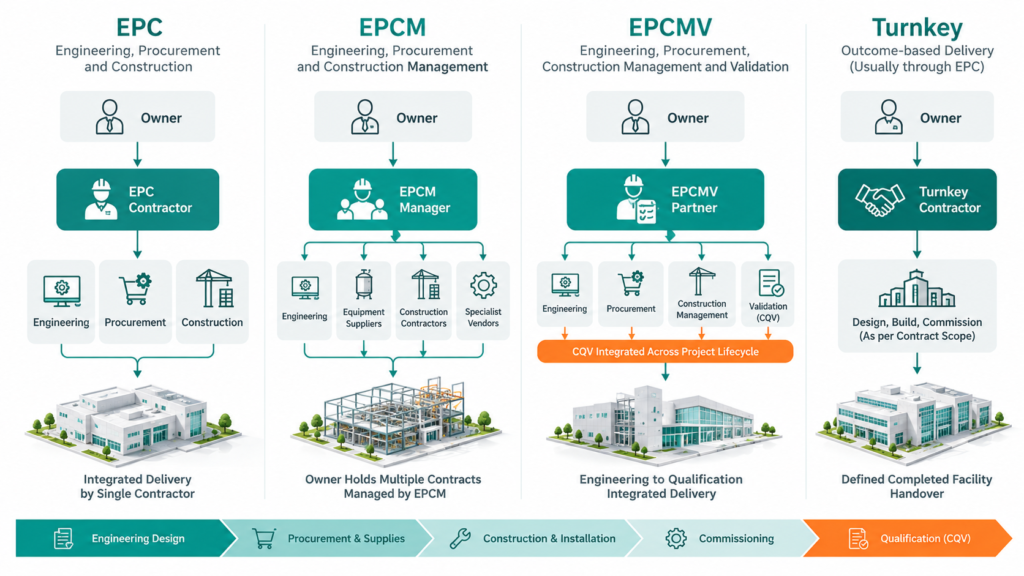
Under an EPC structure, the owner appoints a principal contractor to execute the defined engineering, procurement and construction scope. The EPC contractor typically manages its suppliers and subcontractors and serves as the primary contractual interface for the agreed scope.
A key advantage is the concentration of responsibility. This can simplify coordination and provide stronger single-point accountability for delivery.
However, EPC does not mean every project risk automatically transfers to the contractor. The actual allocation depends on the contract. Owner changes, incomplete requirements, site conditions, permits, access constraints and defined relief events can still affect cost and schedule.
EPC is generally better suited to projects where:
- Scope and process requirements are relatively mature
- Major equipment and facility interfaces are understood
- Performance requirements can be clearly defined
- The owner wants fewer contractual interfaces
- Greater delivery accountability is preferred
In pharmaceutical projects, requirements such as production capacity, GMP zoning, cleanroom classification, utilities, equipment interfaces and automation philosophy should therefore be sufficiently developed before major EPC commitments are made.
EPCM in Pharma
EPCM stands for Engineering, Procurement and Construction Management.
Under an EPCM model, the EPCM organization performs or manages engineering and procurement while managing construction on behalf of the owner.
The key distinction from EPC is usually the contractual structure. In a typical EPCM arrangement, the owner holds contracts directly with equipment suppliers, construction contractors and specialist vendors, while the EPCM partner coordinates the packages and manages their technical and schedule interfaces.
This can provide greater owner control over:
- Vendor selection
- Equipment procurement
- Package strategy
- Design development
- Project changes
EPCM can also support fast-track execution. Long-lead equipment or selected construction packages may be released once the relevant engineering has reached sufficient maturity, rather than waiting for every element of detailed design to be completed.
The trade-off is greater owner involvement and greater exposure to interfaces between the individual packages.
EPCM is therefore often appropriate when the owner has an experienced project team, wants direct procurement control or is managing a complex brownfield project where design and operating interfaces continue to evolve.
EPCMV in Pharmaceutical Projects
EPCMV stands for Engineering, Procurement, Construction Management and Validation.
This model is particularly relevant to pharmaceutical and biotechnology projects because project completion does not end with construction.
Facilities, utilities and equipment must ultimately be commissioned and qualified for their intended use, while validation requirements must be addressed within the manufacturer’s quality system.
The value of EPCMV is therefore not simply adding validation activities at the end of a project. It is about considering commissioning and qualification requirements while engineering and procurement decisions are still being made.
For example, selection of a process equipment package may need to consider not only capacity, price and delivery but also:
- Materials of construction
- Instrumentation and calibration
- Automation requirements
- Vendor documentation
- FAT and SAT requirements
- Traceability
- Qualification documentation
EPCMV is not one universal contract form. Commercial responsibility for suppliers, construction contractors, schedule, CQV and final handover can differ between projects.
These responsibilities should therefore be clearly established at the start.
Turnkey in Pharmaceutical Projects
EPC and turnkey are often used together, but they describe slightly different concepts.
EPC describes the scope of Engineering, Procurement and Construction.
Turnkey describes the intended delivery outcome, where a contractor is expected to hand over the project at an agreed stage of completion.
For pharmaceutical projects, that handover point needs to be clearly defined.
Construction Complete → Mechanical Completion → Commissioning → Qualification → Manufacturing Readiness
These are not interchangeable milestones.
A turnkey contract may include construction and commissioning, while another may extend into qualification support, training and documentation turnover.
The important question is therefore not simply whether a project is described as turnkey, but what the contract defines as the completed outcome.
EPC vs EPCM vs EPCMV vs Turnkey: Decision Matrix
| Decision Factor | EPC | EPCM | EPCMV | Turnkey |
| Primary structure | Engineering, procurement and construction under a principal contractor | Engineering and procurement with construction management on behalf of owner | EPCM-type delivery integrated with validation/CQ activities | Delivery against a defined completed outcome |
| Owner involvement | Generally lower | Higher | Moderate to high | Generally lower |
| Procurement control | Primarily contractor-led | Greater owner control | Depends on contract | Primarily contractor-led |
| Direct vendor contracts | Usually contractor-held | Often owner-held | Can vary | Usually contractor-held |
| Cost visibility | Can be greater where scope is mature | Develops as packages are awarded | Depends on commercial model | Can be greater where outcome is clearly defined |
| Flexibility for changes | Lower after award | Higher | Moderate to high | Usually lower |
| Interface management | Concentrated with EPC contractor | Managed across multiple packages | Integrated across project and CQV interfaces | Concentrated with turnkey contractor |
| CQV integration | Must be specifically included | Can be included separately | Core consideration | Must be clearly defined |
| Best fit | Mature scope and consolidated responsibility | Greater flexibility and owner control | Regulated projects requiring early CQV integration | Clearly defined final delivery outcome |
How to Choose the Right Model
There is no universally superior project implementation strategy in pharma. The decision should be based on the characteristics of the project.
Scope Maturity
A mature scope with defined capacity, process requirements and interfaces can support EPC or turnkey delivery.
Where significant design development is expected during execution, EPCM may provide greater flexibility.
Owner Capability
EPCM requires greater owner participation. The owner may need internal resources capable of technical decision-making, procurement oversight and commercial management.
Organizations seeking fewer contractual interfaces may prefer EPC or turnkey arrangements.
Procurement Strategy
Pharmaceutical manufacturers may want direct involvement in the selection of critical equipment such as filling lines, isolators, lyophilizers, bioprocess equipment, utility systems and automation platforms.
The delivery model should reflect how much procurement control the owner wants to retain.
Risk and Interfaces
Project risk should be allocated to the party best positioned to manage it.
This includes risks associated with long-lead equipment, vendor delays, scope changes, brownfield shutdowns, utility limitations, construction interfaces and qualification documentation.
Schedule
Fast-track projects frequently require engineering, procurement and construction activities to overlap.
The chosen model should support early package release while maintaining adequate design maturity, interface control and change management.
How Pharma Access Supports Pharmaceutical Project Delivery
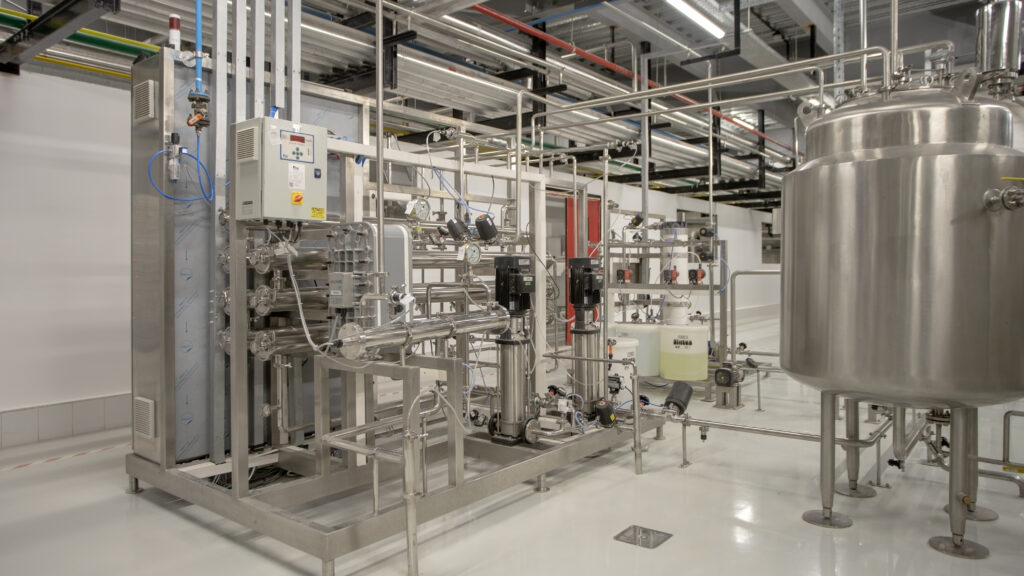
We approach project delivery as an integrated engineering and execution process rather than treating design, construction and CQV as isolated phases.
Depending on project scope and delivery strategy, our capabilities cover:
Engineering Design
Concept, basic and detailed engineering across process, cleanrooms, HVAC, mechanical and utility systems, electrical systems, automation and associated facility infrastructure.
Procurement & Supplies
Technical specifications, vendor coordination, bid evaluation, procurement support and management of equipment and project packages.
Construction & Installation
Coordination and execution of facility systems, cleanrooms, utilities, mechanical, electrical and associated installation works.
Project Management & Control
Planning, scheduling, coordination, cost and progress monitoring, interface management and project controls across disciplines and contractors.
Commissioning, Qualification & Validation
CQV planning and execution support, including requirements and risk assessments, FAT/SAT strategy, commissioning, qualification and documentation.
This allows us to support projects from concept and engineering through execution and CQV, while defining the delivery structure around project requirements, owner capabilities and the required level of responsibility.
The objective is not to apply EPC, EPCM or EPCMV simply as a label. It is to establish a project structure in which engineering decisions, procurement packages, construction interfaces and qualification requirements remain connected throughout delivery.
CQV Considerations

For regulated pharmaceutical facilities, CQV should influence project planning from the beginning.
EU GMP Annex 15 establishes a qualification lifecycle that can include:
URS → DQ → FAT/SAT → IQ → OQ → PQ, where applicable
Engineering and procurement decisions made early in the project can therefore affect qualification later.
If CQV requirements are introduced only near construction completion, projects may encounter missing vendor documentation, unclear acceptance criteria, incomplete testing records or systems that require additional work before qualification.
This does not mean every pharmaceutical project must use EPCMV. It means that whichever delivery model is selected should establish clear interfaces between engineering, procurement, construction, commissioning and qualification.
The manufacturer’s Quality Unit also retains its responsibilities within the pharmaceutical quality system. These responsibilities cannot simply be transferred to an EPC or EPCMV partner.
Conclusion
EPC, EPCM, EPCMV and turnkey are not competing labels where one model is always better than the others.
They represent different approaches to responsibility, control, contractual interfaces and risk allocation.
EPC can consolidate delivery responsibility. EPCM can provide greater owner control and flexibility. EPCMV can bring CQV considerations into project delivery earlier. Turnkey can provide a clearly defined delivery outcome when the handover criteria are established properly.
At Pharma Access, the focus is on aligning the project delivery strategy with the manufacturing requirement, technical complexity, owner organization and route to operational readiness.
The right question is therefore not:
Which delivery model is better?
It is:
Which delivery model places each project responsibility and interface with the party best positioned to manage it?
Frequently Asked Questions
1. What is the main difference between EPC and EPCM in a pharmaceutical project?
Under EPC, a principal contractor typically takes responsibility for engineering, procurement and construction of the agreed scope. Under EPCM, the EPCM organization manages these activities on behalf of the owner, while the owner often retains direct contracts with vendors and contractors.
2. Is EPC always a fixed-price contract?
No. EPC is often associated with lump-sum or defined-price contracts, but the term describes the delivery scope rather than one mandatory commercial structure. Pricing and risk allocation depend on the individual contract.
3. What is the difference between EPCM and EPCMV?
EPCM covers Engineering, Procurement and Construction Management. EPCMV integrates validation and CQV considerations more directly into project delivery, which can be particularly relevant to regulated pharmaceutical and biotechnology facilities.
4. Does turnkey mean a pharmaceutical facility is ready for commercial manufacturing?
Not necessarily. The turnkey handover point must be defined contractually. It may cover mechanical completion, commissioning, qualification support or another agreed stage. Commercial manufacturing can require additional quality, process-validation and regulatory activities.
5. What project delivery models can Pharma Access support?
Pharma Access supports pharmaceutical projects across engineering design, procurement and supplies, construction and installation, project management and CQV. The appropriate delivery approach is developed according to scope maturity, project complexity, owner involvement, procurement strategy and the required level of integration.