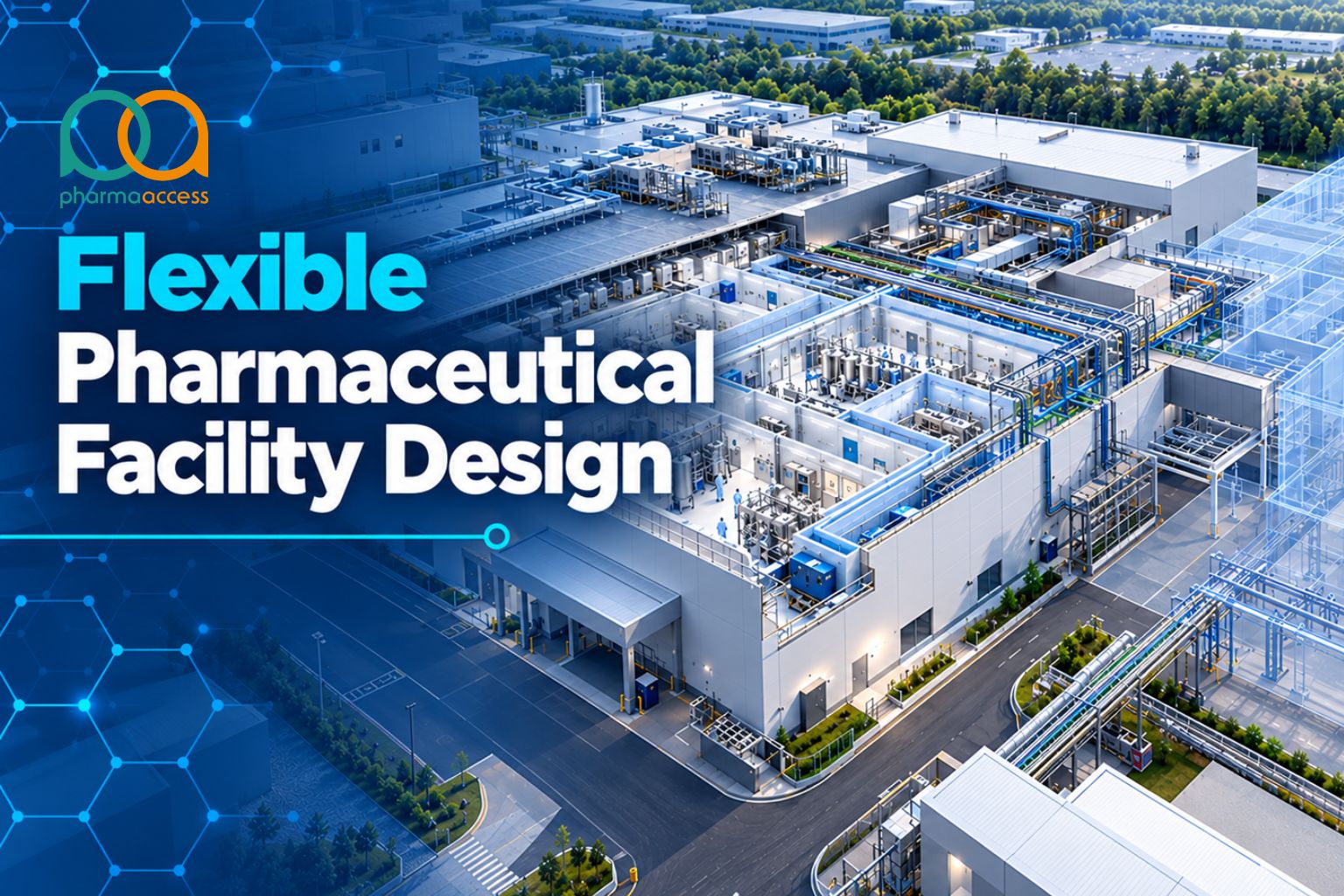
If your plant is moving from batch production to continuous manufacturing, the facility design itself may need to change, not just the equipment inside it. ICH Q13 is the guideline that sets out the scientific and regulatory considerations for how continuous manufacturing (CM) should be developed, implemented, operated, and managed over its lifecycle. For anyone planning a new facility or converting part of an existing one, these principles can influence decisions long before the first piece of equipment gets installed.
This post breaks down ICH Q13 in plain terms and walks through what it actually means for facility layout, automation, and day-to-day operation.
What Is Continuous Manufacturing?
In a batch process, you make a defined quantity of product and move it through manufacturing steps as a batch. Continuous manufacturing works differently. Materials are continuously fed into the process, transformed as they move through it, and output material is removed while the process is operating.
The guideline describes CM as the continuous feeding of input materials, transformation of in-process materials, and simultaneous removal of output materials from the manufacturing process. That single concept explains why facility design changes so much under CM. The facility is no longer planned only around a series of isolated processing steps. It’s planned around how connected operations interact and how material moves through the system.
Importantly, ICH Q13 makes clear that continuous manufacturing can apply to some or all unit operations. A manufacturing process can therefore combine batch operations with directly connected continuous operations rather than requiring the entire process to operate continuously.
What Is ICH Q13?
ICH Q13 is a guideline from the International Council for Harmonisation that covers the science and regulatory expectations behind continuous manufacturing of drug substances and drug products. Work on it began in 2018, a draft was endorsed for public consultation in July 2021, and the final Step 4 guideline was adopted on November 16, 2022. In the EU, the guideline became legally effective on July 10, 2023. The FDA issued its final Q13 guidance for industry in March 2023.
The guideline builds on earlier ICH quality guidelines such as Q8 (Pharmaceutical Development), Q9 (Quality Risk Management), Q10 (Pharmaceutical Quality System), and Q11 (Development and Manufacture of Drug Substances). It also includes a dedicated section, Annex III, that covers continuous manufacturing of therapeutic protein drug substances. The guideline also notes that its broader principles may apply to other biological and biotechnological entities.
At its core, the guideline addresses process development, control strategy, process dynamics, equipment design and system integration, process monitoring and control, process validation, and lifecycle management, all under one connected approach.
How ICH Q13 Shapes Facility Design
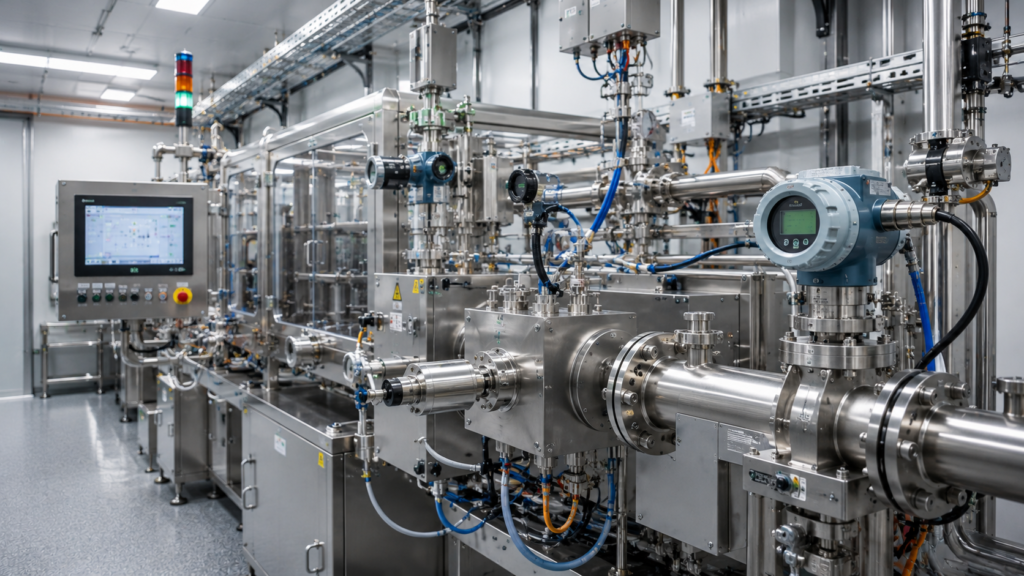
Here is where the guideline turns into real construction and layout decisions.
- Equipment footprint can shrink, but connections multiply: CM system design can enable process simplification or intensification and, in some cases, reduce the number or size of unit operations, although a smaller facility footprint is not guaranteed. Integrated equipment also has to connect and interact as a system, which means piping, transfer interfaces, instrumentation, sensors, control cabling, and maintenance access need careful planning from the start.
- Process monitoring becomes part of the room design: Where Process Analytical Technology (PAT), in-line, on-line, or other process measurements are used, the facility needs suitable instrument locations, power, data connectivity, sampling access, and maintenance access built in rather than added later. PAT is well suited to CM under ICH Q13, but it is not a universal requirement for every continuous process.
- Material diversion needs a physical path: When the monitoring and control strategy identifies potentially non-conforming material, the system may need to divert that material away from acceptable product according to predefined criteria. That diversion path is a design decision, not just a software setting.
- Process dynamics influence physical configuration: Residence Time Distribution (RTD) describes how long material spends moving through a process and is influenced by factors such as equipment design and configuration. Understanding RTD and process dynamics supports material tracking and helps determine appropriate sampling and diversion strategies, making equipment arrangement and connections important engineering considerations.
- Utilities need to support the planned operating profile: Compressed air, nitrogen, process water, power, and other required utilities need to be evaluated against the intended run duration, simultaneous demand, operating range, and required system reliability rather than automatically being sized for round-the-clock operation.
- Automation and control infrastructure take on a bigger role: With CM, the control system tracks the process in real time, so automation architecture, operator interfaces, control-panel locations, and data infrastructure become core parts of the facility design alongside the process room itself.
Steps to Plan a Facility Around ICH Q13
Here is a simple order of operations for teams starting a CM project:
- Define the process train early: Know which unit operations will run in a connected line and which, if any, will remain in batch mode before you sketch the room layout.
- Map monitoring and sensor locations. Decide where the process needs real-time monitoring, including PAT where appropriate, then design power and data access around those points.
- Plan the material diversion and collection path: Build a physical route for potentially non-conforming material that keeps it separate from acceptable products and supports the defined material-disposition strategy.
- Size utilities for the planned operating profile: Confirm that compressed air, nitrogen, process utilities, and power supply can handle the intended run duration, simultaneous loads, and required reliability.
- Design the automation infrastructure alongside the process room: Treat data infrastructure, control panels, operator interfaces, and cable routing as core parts of the layout, not an add-on.
- Build in a validation strategy that supports the state of control: CM can use traditional process validation or continuous process verification, depending on the process and justification. The facility, automation, and monitoring systems therefore need to support the data collection required for the selected validation approach throughout the manufacturing run.
- Train operators for a connected process: Running a CM line calls for a different skill set than managing discrete batch steps, so training plans should reflect that.
ICH Q13 also treats start-up, shutdown, pauses, restarts, and unplanned disturbances as important transient events. Their impact on material quality and process dynamics should therefore be understood when developing the operating and control strategy.
Building Pharma Facilities Around Automation
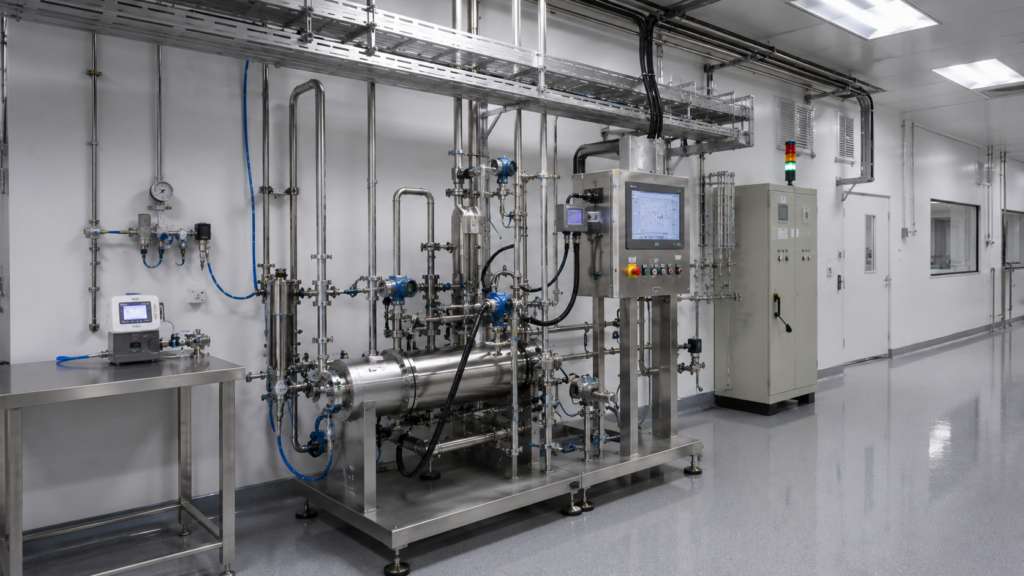
Moving to continuous manufacturing usually means moving toward higher levels of integrated automation around the CM process, rather than simply automating individual pieces of equipment. This is where pharma manufacturing automation and facility design have to work together from day one. A control system that can manage real-time diversion, batch definition, and data capture only works if the physical layout supports it, with the right cabling paths, panel locations, and access for maintenance.
Companies offering pharma engineering solutions increasingly build this thinking into early-stage design rather than treating automation as a later add-on. Pharma Access brings process design, automation, utilities, facility engineering, and CQV considerations together during engineering development across its pharmaceutical projects, so the systems can be coordinated before construction starts.
Common Mistakes in ICH Q13-Aligned Facility Design
A few issues show up often when teams move to CM without planning the building around it:
- Treating automation as a bolt-on: Retrofitting sensors, cabling, and control panels into a finished room can create avoidable rework and integration complexity compared with designing them into the facility from the start.
- Underestimating utility demand: Longer CM runs can create sustained equipment and utility loads, and supporting systems designed only around intermittent batch operating profiles may not suit the intended CM run duration or operating range.
- Skipping the diversion path in early layouts: Without a planned route for potentially non-conforming material, teams end up improvising later, which can complicate operation, qualification, and the material-diversion strategy.
- Ignoring process dynamics and RTD: Changing equipment arrangement, connections, or hold-up volumes without understanding their effect on material movement can affect traceability, sampling, and diversion decisions.
- Forgetting operator training needs: A connected line runs differently than a batch process, and operators need to understand the new failure points.
- Designing the process room without the automation infrastructure in mind:Data infrastructure, operator interfaces, controls, and equipment connections have to develop alongside the process rather than being squeezed in afterward.
Why Work With Pharma Turnkey Consultants
CM projects bring process engineering, equipment integration, automation, utilities, facility design, and validation together at the same time which is a lot to coordinate without a single team managing the full picture. That is where pharma turnkey consultants add real value, since they carry a project from early engineering design through construction, procurement, and commissioning under one plan instead of handing it off between separate vendors at each stage.
Pharma Access works this way across its projects, offering engineering design services for pharma clients alongside construction, procurement, and commissioning, qualification, and validation (CQV) support. For a CM project, having one team track the process design, the automation plan, and the physical build together helps catch conflicts early, before they turn into rework.
Wrapping Up
ICH Q13 gives the industry a shared set of expectations for continuous manufacturing, but meeting those expectations comes down to how well the facility is built around the process. Map the process train early, plan for real-time monitoring and material diversion, understand process dynamics and RTD, size utilities around the intended operating profile, and treat automation and data infrastructure as part of the core layout. Get that sequence right, and the facility supports the process instead of working against it.
Frequently Asked Questions
What is ICH Q13?
ICH Q13 is a guideline that sets scientific and regulatory expectations for continuous manufacturing of drug substances and drug products. It covers process development, control strategy,process dynamics, equipment design and system integration, process monitoring and control, process validation, and lifecycle management under one connected approach.
When did ICH Q13 become effective?
The final guideline was adopted on November 16, 2022, and it became legally effective in the EU on July 10, 2023. The FDA issued its final Q13 guidance in March 2023. Different regions have their own timelines for adopting ICH guidelines into local regulation.
How is continuous manufacturing different from batch manufacturing?
In batch manufacturing, product moves through manufacturing steps as defined batches. In continuous manufacturing, materials are continuously fed, transformed, and removed while the process operates. ICH Q13 also allows some unit operations to remain in batch mode while other directly connected operations run continuously.
Does ICH Q13 apply to biologics?
Yes. ICH Q13 applies to continuous manufacturing of chemical entities and therapeutic proteins. Annex III specifically addresses continuous manufacturing of therapeutic protein drug substances, while the guideline notes that its principles may also apply to other biological and biotechnological entities.
What facility changes does continuous manufacturing usually require?
Plants may need integrated equipment arrangements, defined material-transfer interfaces, suitable monitoring and sampling locations, material-diversion and collection points, automation and data infrastructure, utilities matched to the intended operating profile, and sufficient access for operation and maintenance. The exact facility changes depend on the process and CM configuration.
Does ICH Q13 require Process Analytical Technology (PAT)?
No. ICH Q13 states that PAT is well suited to continuous manufacturing and provides examples of its use for process monitoring and control, but it does not make PAT a universal requirement for every CM process. The monitoring strategy should be appropriate to the process and its control strategy.
Does continuous manufacturing eliminate pharmaceutical batches?
No. ICH Q13 retains the concept of a batch for continuous manufacturing. Batch size can be defined by the quantity of output material, quantity of input material, run time at a defined mass flow rate, or another scientifically justified approach, and it can also be established as a range.