A March 2026 Pharmaceutical Online review found that the FDA issued 303 warning letters relating to drugs and biologics in fiscal year 2025, a 59% increase from 190 the year before. However, only 135 of these warning letters were inspection-based, while others resulted from website, labelling, promotional, remote-records, registration and listing reviews. Drug-program Form 483 observations also reached a five-year high. That trend alone is why so many pharma companies are rethinking who they trust for compliance guidance.
This is why it matters beyond the headline number. It’s the same handful of citations appearing year after year. Failure to follow written quality unit procedures, 21 CFR 211.22(d), has topped the FDA’s Form 483 list for four consecutive years. Companies aren’t encountering new problems. Internal teams don’t always see what an outside reviewer would, so systemic gaps may continue to appear during subsequent inspections.
This is the gap that pharma regulatory consultants are meant to fill. So, let’s talk about what good regulatory support looks like and how to tell it apart from a firm that just fills out paperwork.
Why Pharma Regulatory Consultants Matter More in 2026
One Form 483 does not have to turn into a warning letter, and a Form 483 is not a final FDA determination of non-compliance. Research published in the International Journal of Medical and Pharmaceutical Research shows that companies that respond poorly to Form 483 have a greater than 50% chance of receiving a warning letter, especially if their response does not include a clear root cause analysis, a defined scope of investigation and evidence-based corrective actions.
The clock is important too. In its own review of enforcement data, the Food and Drug Law Institute found that warning letters are sent out an average of 124 days after an inspection closes, and companies shouldn’t take the first 30 working days of silence to mean they’re in the clear. That’s exactly when pharma regulatory consultants can provide the greatest value by helping the company investigate observations, define CAPA actions and establish a traceable documentation trail before further regulatory action occurs.
What Good Pharma Regulatory Consultants Actually Do

Strong regulatory consulting is more than just a review of a submission before it goes out the door. The work generally comprises the following:
- Gap analyses against current cGMP requirements, not only the standards a facility was originally validated against.
- Mock inspections that mirror the actual way FDA or EMA investigators evaluate manufacturing operations, quality systems, records, laboratory controls and shop-floor practices.
- Form 483 and Warning Letter Response Support – Providing root cause analysis that goes beyond surface-level fixes.
- Design a CAPA programme with clearly assigned responsibilities, defined timelines and measurable checks of effectiveness, as regulators increasingly question CAPA closures that do not result in meaningful or sustained process improvement.
- Data integrity audits of electronic records, audit trails, and lab controls, which continue to be recurring areas of concern in regulatory inspections and warning letters.
Good consultants should also make it clear that engaging an external advisor does not transfer regulatory responsibility. Executive management and the company’s quality unit remain accountable for maintaining cGMP compliance and resolving identified deficiencies.
Where Regulatory Risk Overlaps with Pharma Supply Chain Consulting
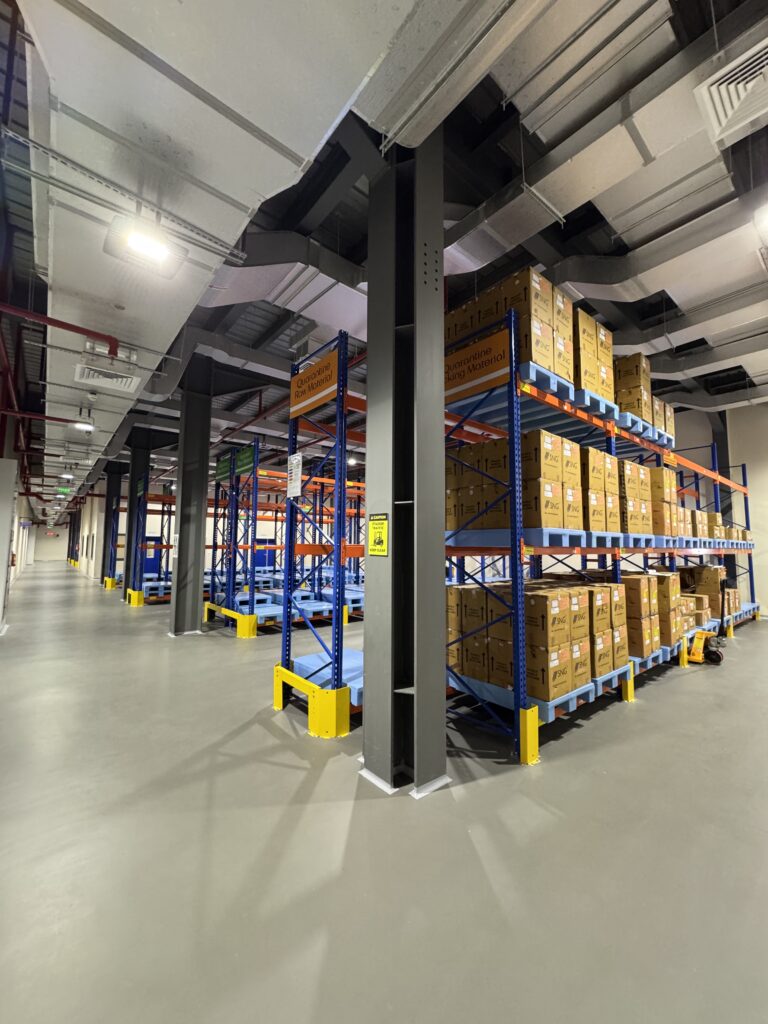
Regulatory findings and supply chain weaknesses usually go together. Weak oversight of contract manufacturers and suppliers is a recurring theme in the FDA’s own analysis of its enforcement actions, and it points to something pharma supply chain consulting is built to fix: risk-based supplier qualification, appropriate incoming material controls, supplier performance records, and clear quality agreements that define the responsibilities of each party.
A company can have a strong internal quality unit and still be cited if there are gaps in its supplier oversight. The best regulatory consultants, therefore, ask for supplier qualification records early in an engagement, rather than seeing supply chain review as a standalone project. Quality agreements should clearly define responsibilities, but they do not remove the underlying cGMP obligations of either the product owner or the contract facility.
How Facility Design Ties Into Compliance

Often, the roots of regulatory exposure are decisions made long before a product ever ships – in the equipment and facility design stage. This is where Pharma Equipment & Process Design Solutions become part of regulatory readiness.
The quality unit needs a process that can be documented, controlled and repeated reliably. Poor personnel and material flows, inaccessible instruments, difficult-to-clean equipment, inadequate segregation or unsuitable environmental controls can lead to manual workarounds, inconsistent practices and recurring documentation gaps. That kind of variability, based on manual workarounds or improvising fixes, is the kind of thing that may later appear as a manufacturing, laboratory control or quality-system observation. The equipment chosen for ease of calibration, cleaning validation, and clear audit trails reduces the documentation burden that a quality team carries for the life of the facility.Where computerized systems are involved, equipment selection should also consider data capture, access controls, electronic records, audit-trail functionality and system integration requirements.
Consultants who understand both regulatory expectations and equipment design often catch these issues before construction, when a layout change is still comparatively practical and less disruptive. If you leave a design flaw until after commissioning to fix it, you’re looking at a much more expensive retrofit as well as the risk of non-compliance.
Facility and equipment design do not make a process validated by themselves. However, they establish the physical and technical conditions needed for effective qualification, process validation and routine operational control.
Modern Pharma Facility Energy Costs and Regulatory Scrutiny
Energy performance and regulatory control should not be treated as unrelated design considerations. HVAC performance directly impacts temperature and humidity control in cleanrooms, and drift outside validated ranges is exactly the type of environmental monitoring failure inspectors look for. Managing Energy Costs in Modern Pharma Facilities may involve approaches such as demand-controlled ventilation, energy-efficient equipment and risk-based evaluation of air change rates rather than over-specification across the facility. However, these measures should only be implemented after documented engineering assessment, quality risk evaluation, qualification and continued environmental monitoring. A design that considers energy efficiency and environmental control as one problem, not two can support stable validated conditions while improving the facility’s long-term operating efficiency.
Energy-saving measures should never compromise room classification, pressure relationships, recovery performance, temperature and humidity control, or contamination-control requirements.
Pharma Engineering Solutions with AI: A Double-Edged Regulatory Tool

AI is entering pharma manufacturing at a faster pace than regulators can get the rules written for it, and that brings real risk as well as benefit. In April 2026, the agency issued its first warning letter explicitly addressing inappropriate AI use in pharmaceutical manufacturing documentation and clarified that AI-generated output used within controlled cGMP records requires adequate review and oversight by the authorised quality unit.
If used properly, Pharma Engineering Solutions with AI can build rather than threaten a quality system. Both predictive maintenance models that identify equipment drift before it causes a deviation and AI-driven trend analysis that finds systemic CAPA patterns across years of data promote the kind of proactive compliance the FDA is looking for. Whether or not a compliance asset or a compliance liability is simply a matter of a human quality reviewer signing off before AI output becomes an official record. Any regulatory consultant advising on AI adoption should be taking clients through that line explicitly.
However, human approval alone does not automatically make an AI application compliant. Depending on the intended use and associated risk, companies may also need validation or qualification, source-data verification, data-integrity controls, access management, auditability, model and version control, change control, user training and documented quality-unit oversight.
Whether AI becomes a compliance asset or a compliance liability is determined by how clearly its intended use, risks, controls and responsibilities are defined. Any regulatory consultant advising on AI adoption should be taking clients through that line explicitly.
How to Choose the Right Regulatory Consulting Partner
- Some firms offering “regulatory support” provide only limited document review rather than a complete assessment of the underlying quality system. Watch for these signs before you sign a contract.
- Track record with your particular dosage form and regulatory region, not just pharma experience.
- Willingness to do a mock inspection and not just review paper documents.
- Experience in preparing responses to Form 483s and warning letters and supporting remediation that has been accepted by regulators or verified during subsequent inspection activity.
- Ability to integrate supplier oversight, facility design, and quality systems, rather than treating them as separate, isolated areas.
- A clearly defined approach to where AI-enabled tools can support regulated activities and where their use requires additional controls or may not be appropriate.
- Relevant qualifications and practical experience aligned with the intended consulting scope.
- A clearly defined scope of work, deliverables, responsibilities, timelines and exclusions.
- An evidence-based approach that identifies systemic causes rather than relying only on template procedures and standard checklists.
Where Pharma Access Fits Into Regulatory Readiness
Based in Mumbai, Pharma Access offers end-to-end engineering design, procurement, construction, installation, and commissioning, qualification, and validation (CQV) services for pharmaceutical facilities.
Where Pharma Access is engaged under an integrated delivery model, compliance concerns such as validated process flow, cleanroom environmental control, and selection of documentation-ready equipment can be engineered into the facility from the outset instead of being addressed after an inspection exposes a deficiency.
This includes personnel and material flow, contamination control, equipment cleanability, calibration and maintenance access, clean and black utilities, environmental monitoring, qualification requirements and data-capture infrastructure. Addressing these considerations during design can reduce the risk of costly modifications after construction or commissioning.
That said, regulatory strategy and facility engineering are two different disciplines, so it’s worth confirming a firm’s specific compliance track record along with its construction portfolio before selecting a partner.
Regulatory submissions, enforcement responses and specialised compliance remediation should be delivered by professionals with relevant regulatory experience, while engineering and CQV teams ensure that the physical facility and its systems are designed to support compliant operations.
Frequently Asked Questions
What does a pharmaceutical regulatory consultant actually do?
They audit quality systems against current FDA and international standards, conduct mock inspections, help write responses to Form 483 observations, and develop CAPA programmes that will survive follow-up inspections. Good consultants also bring supplier oversight and facility design into the same review.The exact scope may vary and can also include regulatory strategy, CMC support, agency interactions, submission planning, data integrity, remediation programmes or inspection readiness.
How much does regulatory non-compliance cost a pharma company?
Costs can vary widely, but a warning letter alone can delay product launches, lead to import alerts, and damage relationships with partners and investors. Post-enforcement action to address the root quality system is almost always more costly than proactive action.The total impact may include remediation costs, production interruptions, additional testing, facility modifications, delayed approvals, product holds, consultant fees and increased regulatory oversight.
Can a Form 483 be resolved without becoming a warning letter?
Yes, but it matters how good the response is. Weak or vague responses are high risk for escalation. A response that includes a clear root cause analysis, ownership, and effectiveness checks can reduce the risk of escalation, although the FDA evaluates the complete inspection record before determining whether further regulatory action is appropriate.Companies should normally respond within 15 business days and include the scope of the problem, systemic causes, completed and planned CAPA actions, supporting evidence, timelines and effectiveness-verification plans.
Is AI safe to use in pharmaceutical quality documentation?
Artificial intelligence can help with trend analysis and predictive maintenance, but the FDA has already found unreviewed AI output in CGMP records to be a violation. Any AI-assisted documentation will need an intended-use assessment, risk-based controls, appropriate validation or qualification, data-integrity safeguards, change control, traceability and approval by authorised personnel before it becomes part of a controlled record.
How often should a facility run a mock FDA inspection?
Most consultants recommend at least once a year, more often after a change in major equipment or process. However, there is no fixed FDA requirement for conducting mock inspections annually.The frequency should be based on product and process risk, inspection history, recurring deviations, major facility or equipment changes, regulatory commitments and the maturity of the quality system. FDA itself follows a risk-based inspection schedule rather than a standard two-to-three-year cycle for every domestic facility.