In Egypt, building a pharmaceutical manufacturing facility takes more than land and equipment. Investors in pharmaceutical manufacturing must align requirements from three directions at once: the regulator, the product and the site. If one is addressed too late, it can affect cost, schedule and compliance.
This is why early decisions matter. EDA provides an optional engineering drawing review service, while final compliance is established through the applicable licensing and inspection process. This guide follows the planning sequence from product definition to future expansion.
Quick Answer: What Does It Take to Build a Licensed Pharma Factory in Egypt?
Follow this sequence:
- Define your products, dosage forms, and annual volumes
- Choose your target markets and the standards they demand.
- Lock down a site that fits your workflow and future growth.
- Consider EDA engineering drawing review early, where useful, before implementation.
- Design HVAC pharma manufacturing facility, water & power to fit the product.
- Plan CQV from design and execute commissioning, qualification and validation through installation and start-up.
- Pass the applicable licensing inspection and maintain appropriate records for subsequent modifications.
The rest of this guide describes each step.
Pharmaceutical Manufacturing Requirements Egypt Starts With Product, Capacity, and Market
Every later choice is influenced by three decisions. Define them early. Document them clearly.
Define Products and Dosage Forms.
Your dosage form determines the room requirements, environmental classifications and utilities. The building requirements for a sterile injectable line, a tablet line, and an API line are very different. The range is wide, as reflected in EDA’s published inspection information. One example covers single-dose eye drops prepared using blow-fill-seal equipment. Another covers an effervescent powder line. A third concerns biologically active ingredients produced through genetic engineering.
EDA also considers production lines as part of licensing and modification workflows. Its procedures treat the addition of a production line to an existing facility as a separate regulatory process. So list every production line required at start-up and every line expected in later phases. Certain highly sensitising, highly potent or hazardous products may require dedicated or segregated manufacturing arrangements depending on product characteristics, cross-contamination risk and applicable GMP requirements, and this choice directly affects the facility footprint.
Size the Capacity
Work from annual volume to batch size, operating shifts, equipment throughput and required room size. Add storage and hold time requirements for material and finished goods. Then define the second phase. Instead of simply oversizing operating equipment, consider future plant space, utility distribution routes, headers, electrical capacity and provisions for staged expansion from the beginning.
Pick Your Target Markets
Local supply and export markets can lead to different regulatory and documentation requirements. Official Egyptian sources continue to position local pharmaceutical manufacturing and exports as strategic priorities.
Export plans shape paperwork as well. Target markets may introduce additional dossier, inspection, stability, bioequivalence or site-compliance requirements beyond domestic licensing. Product-registration activities should therefore run in parallel with facility planning and execution where practical, so regulatory readiness develops alongside the manufacturing site.
EDA GMP Egypt: How Licensing and Inspection Work
Pharmaceutical facilities in Egypt operate under Egyptian legislation and EDA regulatory requirements. EDA adopted the PIC/S GMP Guide in 2026 and also maintains adopted WHO norms and standards for medicinal products. The regulator is also well benchmarked. WHO has rated EDA at maturity level 3 for medicines regulation through a benchmarking process completed in November 2024. The same level was achieved in 2022 for vaccines. Facility planning should therefore be prepared for comprehensive regulatory review and inspection.
The Licensing Path
EDA and IDA maintain regulatory procedures for pharmaceutical factory licensing. At a high level, the process includes the following:
- The applicable factory file and licensing application are submitted through the relevant EDA and IDA process.
- Documents are reviewed and inspections may be conducted during the facility development and licensing stages, as applicable.
- Factories under construction follow the applicable inspection and licensing pathway.
- A final technical operating inspection is conducted as required.
- Where inspection comments remain, corrective actions and any required follow-up inspection are completed before the technical operating licence is issued.
EDA also provides an engineering drawing review service through specialised committees. This service is optional and the committees act in a non-binding advisory capacity. Early review can nevertheless help identify GMP or GSP design issues before implementation and reduce avoidable rework.
What Inspectors Look At
For new factories, inspections assess whether the facility and its supporting systems are suitable for the intended pharmaceutical operations. Inspectors may review whether laboratory and production layouts support the intended operations, whether personnel and material flows are logical, and whether adequate space and environmental controls are provided. They may also assess equipment suitability, cleanliness, lighting, ventilation and other relevant production and service areas.
The regulator’s capacity affects your schedule. EDA reported 362 technical inspections and issued 64 new technical operating licences for the newly established factories in 2025. The bulk of the new licences were awarded to makers of medical devices and reagents, so build time for dossiers and inspection slots into your plan.
Site Planning and Pharmaceutical Facility Layout
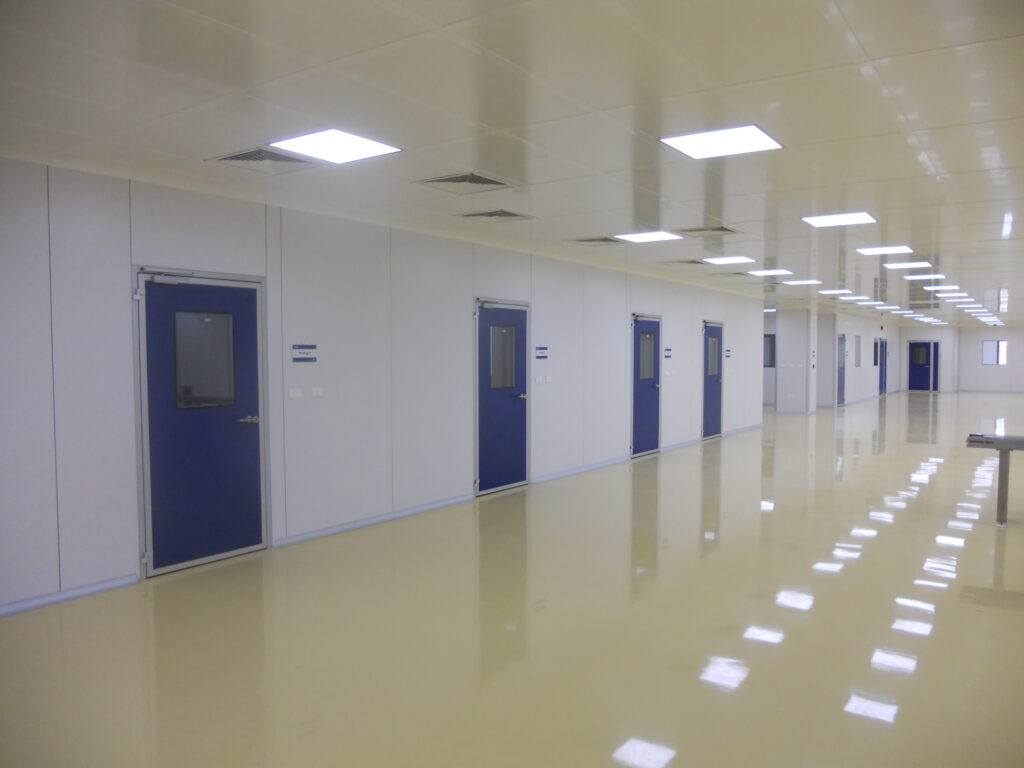
Process flows and site constraints should be assessed together during early planning. Consider zoning, logistics, utility access and future expansion before the site layout is frozen.
- Zoning and plot. Confirm industrial zoning, truck access, and room for phase two. Make sure the plot can support logical material, personnel, waste and finished-product movement without unnecessary crossover or backtracking.
- Flows: Separate people, waste, material, and product where required by the process and GMP risk assessment. Put changing rooms, airlocks, and material passes in the right places. A well-planned flow helps minimise mix-up and cross-contamination risk and supports efficient operations.
- Form building. Make production, services and warehouse functions readable. Plan plant rooms and service areas close to the spaces they serve where practical to optimise duct and pipe routing.
- Wastefulness. EDA licenses waste haulers. It registered four companies for pharmaceutical waste transportation and two for pharmaceutical waste treatment in 2025. Design waste rooms and routes for those licensed providers.
Clear zoning and logical flows should be established in the drawings before construction progresses. Where useful, use EDA’s optional engineering drawing review service early to identify comments before implementation. Resolving design issues on drawings is generally more efficient than correcting constructed work.
HVAC Design for Pharmaceutical Facilities in Egypt
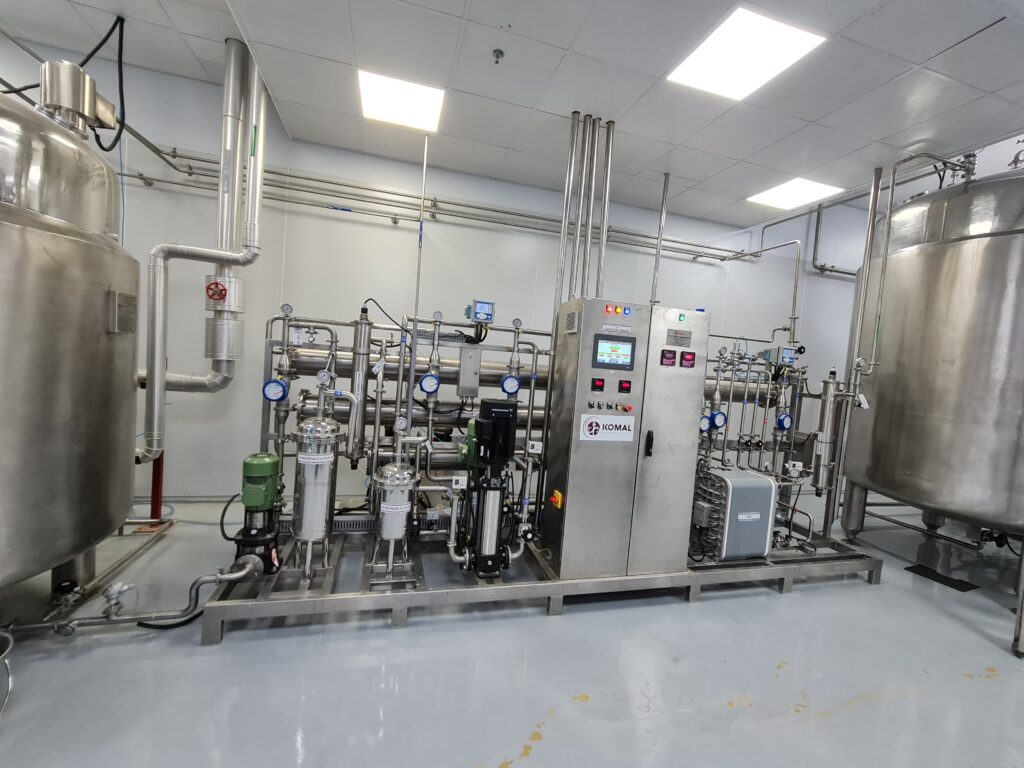
HVAC is a fundamental part of pharmaceutical facility design because it directly influences environmental control, pressure relationships, contamination control and product requirements. WHO guidance says that architectural design is affected by HVAC design.
For non-sterile products, begin with WHO’s HVAC guidance. It is focused on solid dosage forms, but most of the design principles are also applicable to liquids, creams, and ointments. Sterile manufacturing is covered by separate, more stringent guidance. Make sure the applicable requirements for the product and process are established before starting design.
A clear pressure, airflow and containment strategy is required. WHO guidance describes approaches including displacement, pressure differential and physical barrier concepts. The appropriate strategy should be selected according to the product, process, containment requirement, airflow direction and cross-contamination risk rather than assigning one concept uniformly to every room.
Egypt has a local angle. High external temperatures increase cooling demand, while external dust can increase filtration load. Humidity control is particularly important for moisture-sensitive products such as effervescent tablets and powders. Size the cooling plant using appropriate site-specific ambient design conditions. Stage filtration according to the application and external air quality. Provide dedicated or zoned dehumidification where required by the product and process rather than designing every room around the lowest humidity requirement.
Water and Clean Utilities
Water is both a cleaning agent and a product ingredient. WHO guidance on water for pharmaceutical use describes specifications, which water grade is suitable for which application, and the design, installation, and operation of water systems. The current edition is Annex 3 of WHO Technical Report Series No. 1033, 2021.
Plan these things:
- Feed water: Characterise the quality of the incoming supply and its expected variability, including seasonal variation where relevant, before selecting pretreatment.
- Purified water: Size generation, storage and distribution according to demand, peak draw and the operating strategy.
- Pure steam and water for injection. Add these only where required by the products and processes.
- Compressed air and nitrogen. Define the required quality according to intended use and product-contact risk, considering particles, moisture, oil and microbiological quality where applicable.
Design distribution systems to minimise dead legs and stagnant sections and to support effective circulation, sanitisation and representative sampling. Provide appropriately located sample points for operation and routine monitoring.
Power, Backup and Critical Utilities
Power continuity can directly affect controlled conditions, utilities, automation and product storage. Loss of critical HVAC, water circulation, temperature-controlled storage, automation or data systems can compromise operating conditions or product quality.
Create a load list and identify the systems that must remain operational or recover within a defined period, such as selected HVAC systems, water circulation pumps, cold rooms, building management systems and critical data systems. Provide emergency generation, UPS or system redundancy according to the critical-load assessment and required continuity strategy. Ask the utility for supply quality data and then design for voltage dips and short outages.
Significant modifications to a licensed facility may trigger additional regulatory review or inspection. Maintain accurate as-built electrical and equipment-load information and confirm the current EDA and IDA requirements before implementing major modifications.
Warehouses and Storage
Warehouses and affiliated storage areas form part of the regulated pharmaceutical facility scope. Storage areas should therefore be incorporated into the facility layout, operating strategy and applicable licensing requirements from the beginning.
Design for on-site storage with these zones:
- Reception and Quarantine
- Dispensing and Sampling
- Approved stores of raw materials and packaging
- Mapped ambient storage, temperature-controlled storage and cold storage
- Finished goods and shipment
- Segregated and secured rejected and returned goods
Keep dock doors and loading areas separate from clean production areas.
Equipment Sourcing
Before asking for quotes, write a user requirement specification for each major machine. Define batch size, capacity, materials of construction, cleaning requirements, utilities, controls and documentation requirements. Perform line-capacity balancing so that upstream and downstream equipment capacities, cycle times, buffers and utility requirements are appropriately coordinated.
Then guard the schedule. Check lead times, routes of import and local service support. In the purchase order, define factory acceptance testing, site acceptance testing, spare parts, training and documentation requirements. Obtain equipment utility loads and dimensional/interface information early because these directly feed into HVAC, electrical, utility and room design.
CQV: Commissioning, Qualification, and Validation
CQV checks that the building and equipment perform as the design intends. Don’t plan it after installation. Plan it from the first drawing.
- Design Qualification – documented verification that the proposed design satisfies the user requirements, intended use and applicable GMP requirements.
- Installation Qualification and Operational Qualification – verification that equipment, HVAC, water and utility systems are installed according to approved requirements and operate as intended across defined operating ranges.
- Performance Qualification and Process Validation – demonstration, where applicable, that systems and manufacturing processes perform effectively and consistently under defined operating conditions.
- Cleaning Validation – documented evidence that cleaning procedures consistently achieve defined acceptance criteria for product changeover.
HVAC qualification should be based on the facility type, classification and applicable regulatory requirements. Depending on the application, testing may include airflow volume or velocity, room pressure differentials, HEPA filter integrity where applicable, temperature, relative humidity, recovery performance and particle classification using relevant WHO, PIC/S and ISO 14644 requirements. Water systems also need start-up and commissioning records. Inspectors will tour production and service areas on the day of the inspection, so have protocols, reports, and drawings ready.
Planning for Expansion
If you plan it at the start, it costs less to expand. Regulatory procedures also treat additions and modifications as controlled changes. Planning support areas, utility routes and future capacity from the outset can reduce disruption when later phases are implemented.
Stand by.
- Structural space and floor area for new lines
- Additional utility capacity – plant space, pipe racks
- Spare electrical capacity and switchgear room
- Future-expansion footprint, utility interfaces and access provisions in the design layouts
Modular or hybrid construction is another approach that can accelerate delivery where it suits the project requirements. Pharma Access applies modular delivery through its Modular Mobile Facility concept for projects where off-site fabrication and parallel site activities provide a project advantage.
Project Delivery Considerations
The design is as important as the delivery model. A turnkey contract brings together engineering, procurement, construction and CQV in a single team. A split-contract model may provide greater package-level control, but it also creates more interfaces for the project team to manage.
Pharma Access delivers engineering design, procurement & supplies, construction & installation, CQV and project management as an integrated EPCMV and Pharma turnkey solutions in Egypt partner. That sequence is the same path in this guide, no matter which delivery model you choose.
Regardless of delivery model:
- Freeze the design basis before detailed design.
- Plan equipment lead times, regulatory activities and inspection milestones alongside the project schedule.
- Identify one owner per interface. E.g., HVAC to architecture or equipment to utilities.
- Keep a change log from day one.
Common Mistakes to Avoid
- Purchasing major equipment before the layout and design requirements are sufficiently developed
- Ignoring future expansion requirements when planning utility infrastructure
- Warehouses as an Afterthought
- Deferring CQV planning until construction is finished
- Neglecting humidity and dust in the HVAC design
- Leaving product registration until after the building is finished
Next Steps
The planning basis should start with products, dosage forms, volumes, markets, and future expansion. Then make flows and room lists. Then, where beneficial, submit the relevant drawings for EDA’s optional advisory review, address applicable comments, and progress through the required licensing and execution stages.Pharma Access has added more topics on facility planning to its blog on the website. Before confirming a schedule, always check the current EDA procedures with the authority.
Frequently Asked Questions
Which authority licenses pharmaceutical factories in Egypt?
Pharmaceutical factory licensing involves the Egyptian Drug Authority (EDA) together with the applicable industrial licensing process through the Industrial Development Authority (IDA). EDA is responsible for pharmaceutical regulatory oversight, GMP inspection and technical operating licensing activities within its jurisdiction. The applicable factory file, inspections and licensing steps should be confirmed against the current EDA and IDA procedures for the proposed facility.
Which GMP standards does EDA apply?
EDA adopted the PIC/S GMP Guide in 2026 and also maintains an adopted list of WHO norms and standards for medicinal products. Additional requirements may apply depending on the product type, dosage form and target market. Before finalising the design, confirm the current EDA requirements applicable to the proposed facility.
Does EDA review the layout before construction?
Yes, EDA provides an engineering drawing review service through specialised committees. However, the service is optional and the committees operate in a non-binding advisory capacity. Using the service early can help identify GMP or GSP design issues on drawings before they become more difficult or costly to correct during implementation.
Can I add a production line after the factory opens?
Yes. EDA has regulatory procedures for adding or modifying production lines, and additional review or inspection may be required. Existing licensed support areas such as laboratories, warehouses and utilities may support the new line where their approved scope, capacity and GMP suitability are adequate. Confirm the current EDA and IDA modification requirements before implementing the change.
Which utilities need the most planning?
HVAC, pharmaceutical water and clean utilities, process gases and power require early planning because their capacity and performance are closely linked to product and process requirements. The WHO has guidance on HVAC for non-sterile products and a water guideline in 2021. Plan Phase 1 demand together with the future expansion strategy rather than simply oversizing every system. Qualify GMP-critical systems according to the approved CQV strategy before their intended use and applicable regulatory inspection.