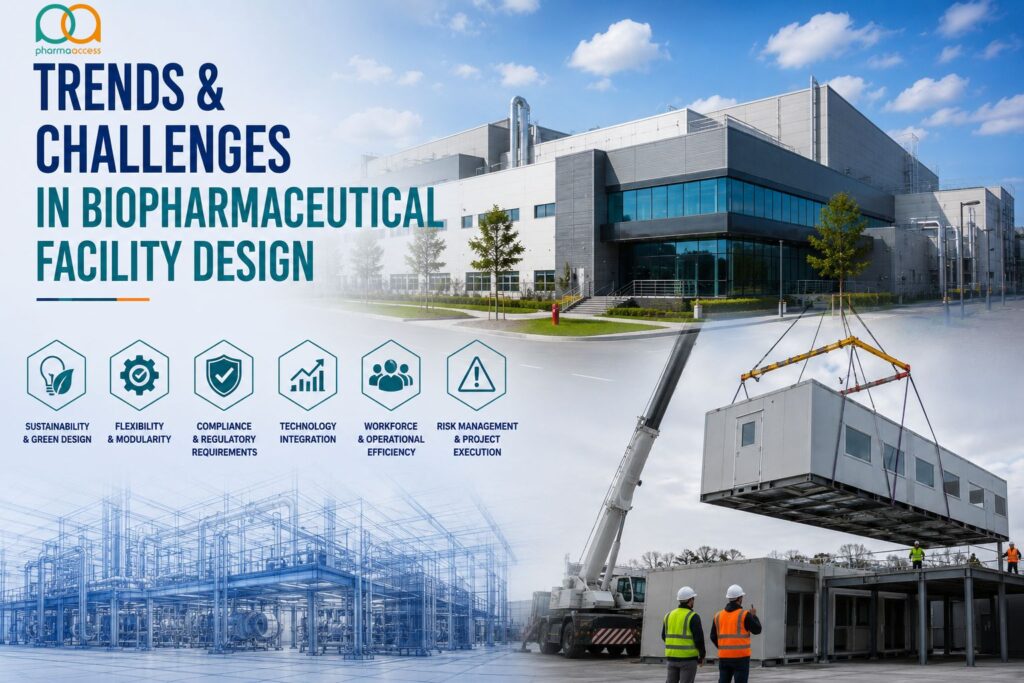
The biopharmaceutical manufacturing arena has evolved more in the last decade than in the previous three decades combined. Stricter global regulations and looming timelines are forcing facility designers, engineers, and project teams to reevaluate nearly every assumption they once took for granted, and emerging drug modalities are adding to the complexity.
This article examines the current state of biopharmaceutical facility design, what is driving the next wave of projects, and the real obstacles teams face when planning, building, and qualifying these facilities.
Why Biopharmaceutical Facility Design Is Under More Pressure Than Ever
Biologics are in increasing demand. Cell and gene therapies, monoclonal antibodies, antibody-drug conjugates (ADCs), and mRNA-based products are now making up a growing portion of clinical pipelines globally.
Here’s why this is important for facility design: Each of these product types has its own contamination risk profile, contained environment needs, and regulatory classification. In most cases, converting a monoclonal antibody facility into a cell therapy manufacturing facility requires significant redesign due to differences in process, containment, and operational requirements. If you get the design wrong from the beginning, you create downstream problems that cost a lot more to fix than they would have cost to prevent.
The U.S. FDA guidance on Current Good Manufacturing Practice (cGMP) for biologics and EMA’s Annex 1 requirements for sterile manufacturing (updated in 2022) make it clear that regulators expect facility design to be part of the quality system, not simply a construction exercise.
Key Trends Shaping Biopharmaceutical Facility Design Today
1. Modular and Prefabricated Facility Concepts
Traditional stick-builds take three to five years to complete. That timeline is a huge problem for a company racing to get a biologic from Phase III trials to commercial manufacturing.
Modular construction can fix this. Prefabricated cleanroom modules, utility skids, and process equipment assemblies are manufactured in controlled environments off-site and installed on-site in a fraction of the time. This also reduces construction variability, a direct contributor to cGMP compliance risk.
The rise of modular facility models represents a real shift in the way pharma companies view speed-to-market without sacrificing quality or regulatory standing.
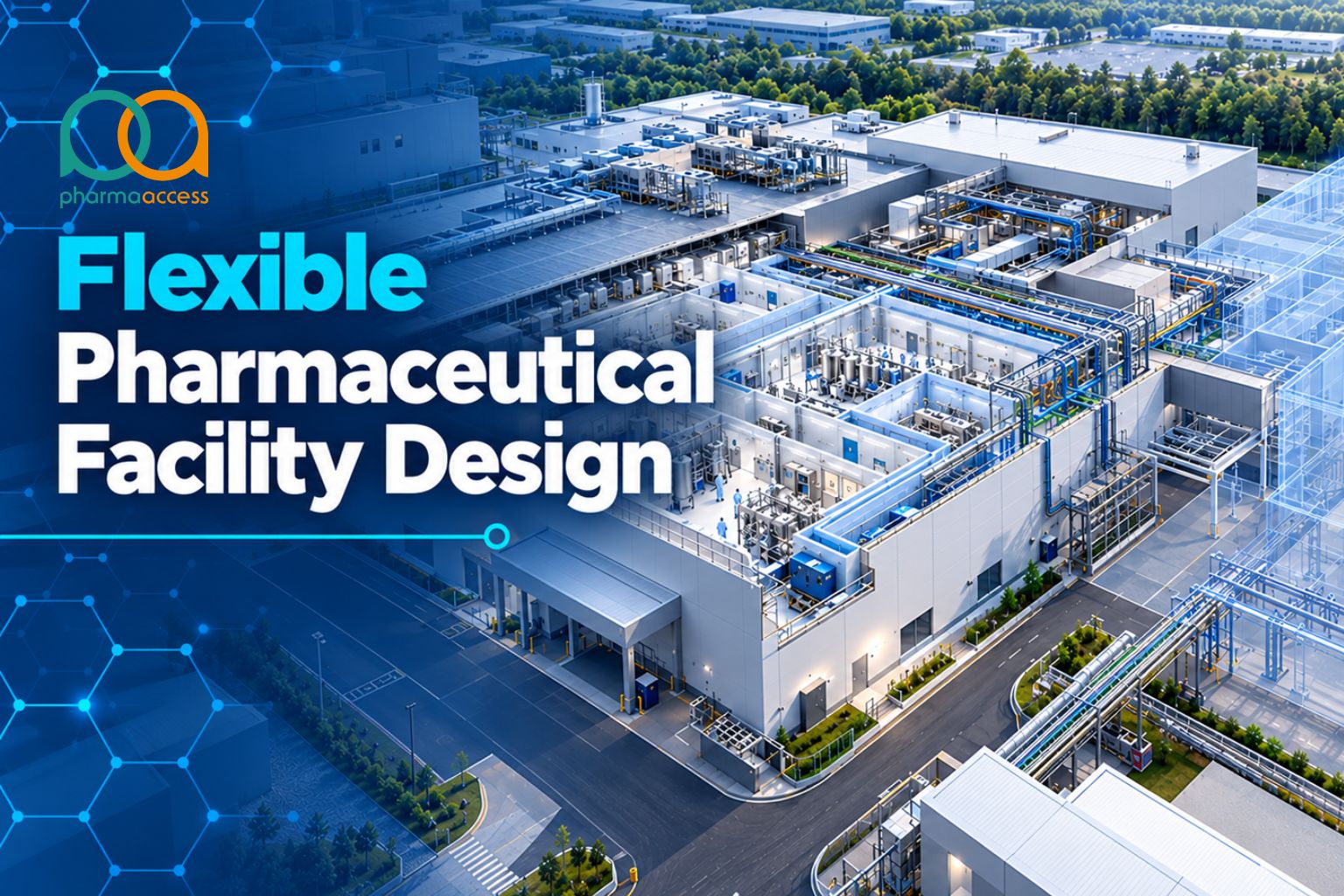
2. Flexible Multi-Product Facility Layouts
This approach made sense when demand patterns were stable and blockbuster biologics remained in production for decades. That model is increasingly being replaced by more flexible manufacturing strategies. Manufacturers now want facilities that can handle two or three products, sometimes across modalities, without full shutdowns between campaigns.
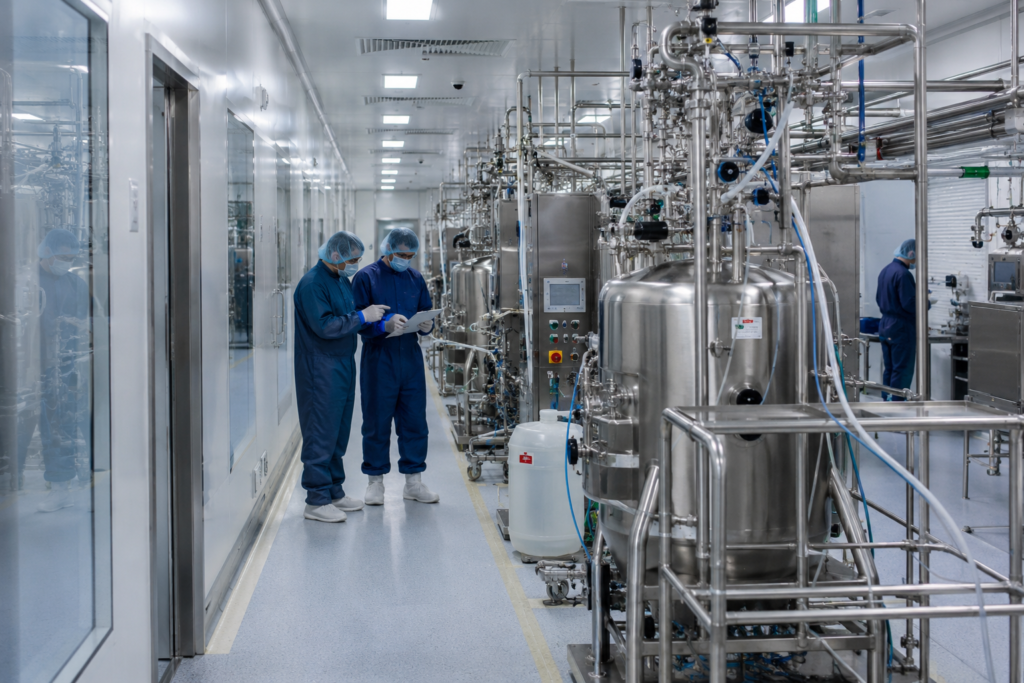
To understand this shift, consider the operational requirements. Flexible facility design means the ability to change over from one campaign to the next, closed-system processing, and equipment designed for clean-in-place and sterilize-in-place (CIP/SIP) cycles without dismantling the line.
To do this right requires early design decisions on segregation strategy, airlock placement, HVAC zoning, and cross-contamination controls. These are not afterthoughts; they are design constraints that determine the entire facility layout.
3. Closed Processing Systems and Containment
Biological products, especially those derived from living organisms or employing viral vectors, have to be strictly contained. Manufacturers need to convince regulators that their containment strategy will not allow release to the environment and will protect operators.
Closed processing systems, in which product pathways are isolated from the manufacturing environment, are becoming the rule rather than the exception. This change affects biosafety cabinet selection, transfer port design, design of single-use assemblies, and waste deactivation systems.
WHO GMP design guidelines for biological products emphasize the importance of documented containment strategies, contamination control measures, and risk-based facility design as part of an effective quality system.
4. Single-Use Technology Integration
Single-use bioreactors, bags, tubing sets, and filters have revolutionized upstream and downstream processing. They remove the cleaning and validation of stainless steel equipment from batch to batch, reducing changeover time and the risk of cross-contamination.
The problem in designing the facility is that single-use systems need careful planning for waste management. Running a 2,000-liter single-use bioreactor produces a lot of plastic waste. Waste segregation, deactivation, and disposal pathways must be incorporated into the facility design from day one. This consideration is often overlooked during early-stage facility planning.
5. Pharma 4.0 and Continuous Monitoring
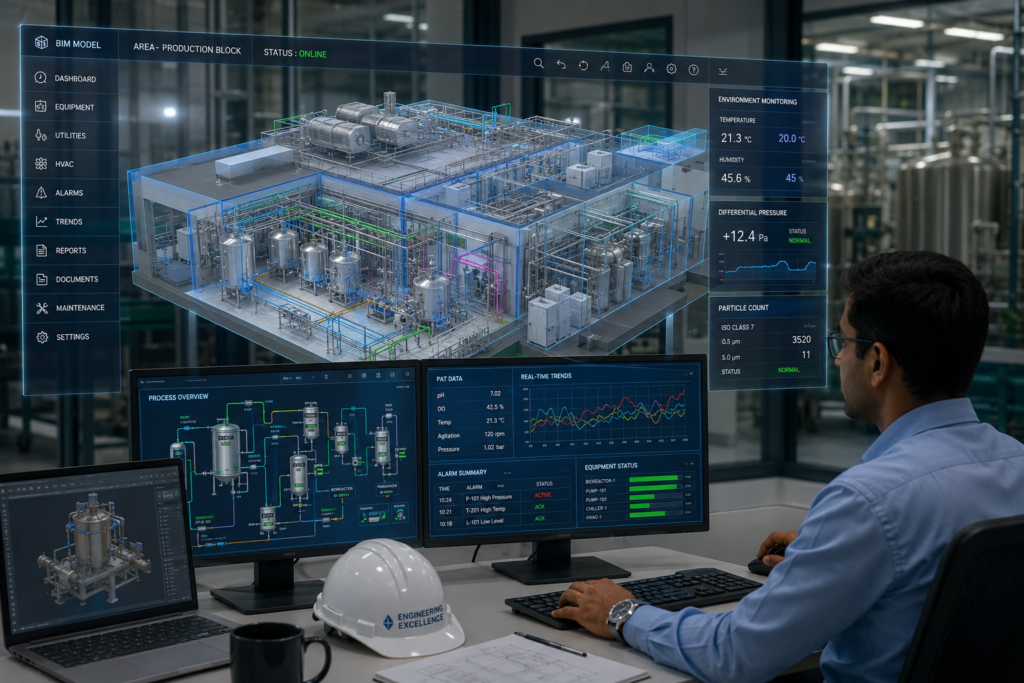
Real-time monitoring systems and more advanced automation are being adopted in newer facilities using Process Analytical Technology (PAT) frameworks. While still emerging in biologics manufacturing, continuous processing approaches are gaining interest in selected upstream and downstream bioprocessing applications.
This results in specific design requirements: sensor placement, data infrastructure, validated software systems, and the integration between the manufacturing execution system (MES) and quality management systems. These considerations influence not only software selection but also broader engineering design requirements.
The Biggest Challenges in Biopharmaceutical Facility Design
Regulatory Variability Across Markets
A facility designed for FDA approval may need substantial documentation rework to meet the requirements of EMA, PMDA (Japan), or CDSCO (India). The ICH guidelines give us a common language, but in practice, each agency has its own interpretation.
Next steps for any project team: Map target markets early in design. Facility design and regulatory strategy should be developed together from the earliest project stages.
HVAC and Cleanroom Design Complexity
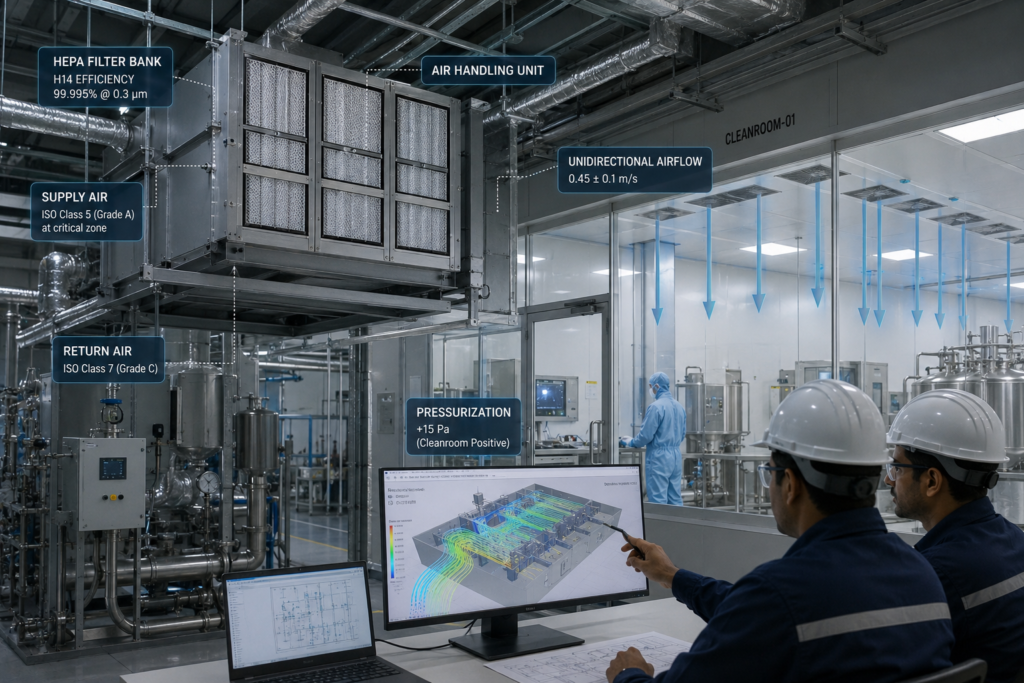
Biopharmaceutical facility HVAC systems are more than just temperature and humidity. They govern the rate of air change, differential room pressure, particle counts, and levels of microbial contamination. The updated requirements in Annex 1 have raised the bar on contamination control strategies by requiring a formal Contamination Control Strategy (CCS) document that ties HVAC design to product risk.
Designing an HVAC system to be compliant with ISO 14644 cleanroom classifications and also meet cGMP requirements for pressure cascades and segregation between different classified areas requires specialized engineering knowledge and careful computational fluid dynamics (CFD) modeling.
Skilled Workforce Shortages for Specialized Facilities
GMP manufacturing knowledge and knowledge of the specific biology of living cell products are required of engineers working in cell and gene therapy facilities. This is a rare combination. Project teams often find that there is a shortage of qualified validation engineers, commissioning specialists, and quality system experts.
And in fact, a talent shortage can be just as much of a bottleneck to a facility project as construction delays. Workforce planning should begin during the design phase, not after construction is complete.
Balancing Speed with GMP Compliance
Investors and boards want facilities up and running fast. Regulators want documentation, validation, and quality systems that take time to build correctly. These two pressures are constantly pulling in different directions.
Shortcuts in design documentation, equipment qualification, or utilities validation will cost more in the long run. Pharmaceutical industry facilities have a long history of passing construction inspections but failing pre-approval inspections because of a lack of a complete design-to-commissioning documentation trail.
Sustainability Requirements
The carbon footprint of a biopharmaceutical facility includes water-for-injection (WFI) generation, clean steam systems, and HVAC, as well as energy-intensive processes. Regulatory agencies are starting to require environmental impact assessments, and large pharma companies are developing internal sustainability goals that drive their vendor and facility selection.
Facility designers now have to think about energy recovery systems, low-GWP refrigerants for HVAC, and water recycling strategies in addition to traditional GMP requirements.
What Good Biopharmaceutical Facility Design Actually Looks Like
Good design is a product of a clear product brief. What product is being manufactured? What are target markets? What is the anticipated batch size and campaign frequency? What is the 10-year production outlook?
From those responses, a design team lays out the process flow, which defines the room adjacency diagram, which then feeds the HVAC design, utilities matrix, and equipment list. The order is important. Issues are expected when teams attempt to retrofit a product process into a building that was not designed for it.
This approach is known at Pharma Access as “Engicution,” an integration of engineering thinking with execution precision right from the earliest project stage all the way through commissioning, qualification, and validation (CQV). Our teams have delivered turnkey biopharmaceutical facilities across more than 18 countries, enabling design decisions that reflect regulatory realities across multiple markets rather than a single jurisdiction.
At this level, biotech turnkey consulting means one team owns the design, procurement, construction, and validation process. Such continuity reduces information loss between project phases, one of the most prevalent sources of compliance gaps in complex facility projects.
How Indian Pharma Consultancy Is Shaping Global Facility Projects
India has emerged as a trusted source for pharma consultancy services for biopharmaceutical projects across the world. The country’s established generics industry and its long relationship with FDA, WHO, and other global regulatory standards have created engineering and consultancy firms with real global experience.
Mumbai’s pharma consultancy in particular caters to a cluster of Indian and multinational pharma companies with manufacturing ambitions in Asia, Africa, and the Middle East. Companies working from this base frequently have experience across regulatory jurisdictions from the CDSCO to the EMA, providing a practical cross-market design perspective that single-market consultants cannot easily match.
FAQs
1. What is the difference between a GMP facility and a biopharmaceutical facility?
A GMP facility is a place where current good manufacturing practice (CGMP) regulations are followed. A biopharmaceutical manufacturing facility is a unique kind of GMP facility that is designed to manufacture biological products such as vaccines, antibodies, or cell therapies. These facilities require special containment, cleanroom design, and validation requirements beyond those in standard pharmaceutical manufacturing.
2. How long does it take to design and build a biopharmaceutical facility?
A typical biopharmaceutical facility can expect to spend three to five years from concept to the approval of the first batch. In good conditions, modular facility approaches can reduce this to two to three years. Timing depends on regulatory market targets, product type, site complexity, and readiness of the design and engineering team.
3. What cleanroom classification do biopharmaceutical facilities need?
Most aseptic biopharmaceutical manufacturing processes require Grade A (ISO Class 5 equivalent) conditions at critical processing points, supported by Grade B environments for aseptic operations. Grade C and Grade D areas may be used for less critical processing steps depending on the process design and risk assessment. The exact classification depends on the product, process, and regulatory authority requirements of the target market.
4. What is commissioning, qualification, and validation (CQV) in pharma facility design?
CQV is the process of assuring that a facility and its equipment perform as designed and meet GMP requirements. Commissioning checks that systems are operating to engineering specifications. Qualification (IQ, OQ, PQ) tests that the equipment fulfills user requirements. “Validation” means that the manufacturing process consistently produces a product that satisfies quality specifications. All three must be in place before a facility can gain regulatory approval.
5. Why should I work with a turnkey biopharmaceutical facility consultant rather than managing separate design and construction firms?
A turnkey consultant is responsible for the whole project scope. One team designs, procures, builds, and validates, so there is less information loss between stages, clearer documentation trails, and one point of accountability for meeting schedule and regulatory requirements. Fragmentation in project management is one of the most common drivers of cost overruns and regulatory delays in complex biopharmaceutical projects.