A tablet that will not disintegrate. An injectable vial that contains visible particles. Numerous sterile products have been recalled due to microbial contamination. These are not merely regulatory nightmares. They are failures in patient safety, often with one root cause: poor facility infrastructure.
The relationship between a facility’s walls, air systems, and water systems and the medicines manufactured within it is direct and well documented. If the physical environment of a manufacturing plant is compromised, the product contained within is at risk. Let’s take it in pieces.
Why Pharmaceutical Facility Design Is Not Optional
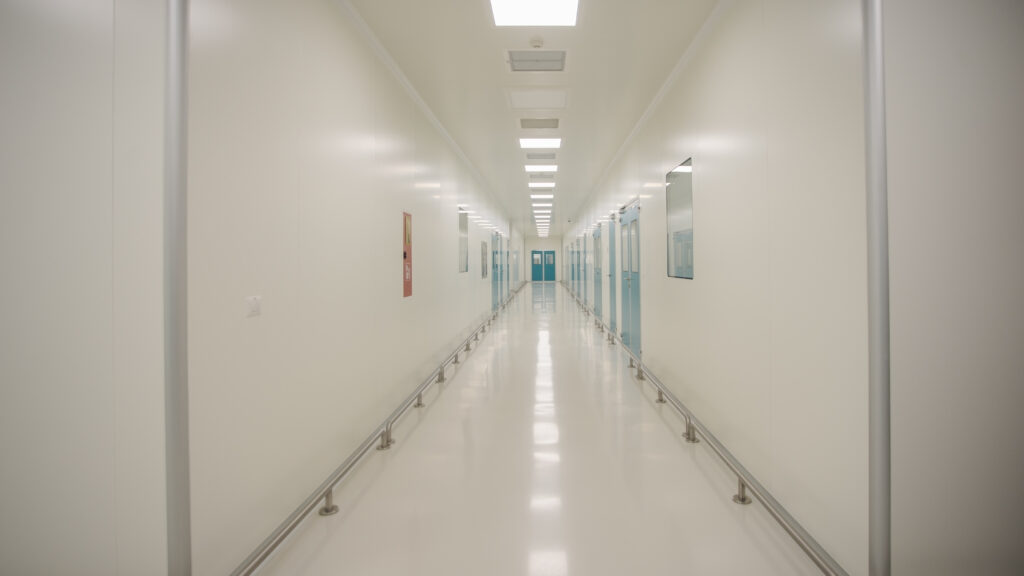
Many people think that drug quality is mainly controlled by testing. Run enough checks and catch enough failures, and you keep the bad product off the shelves. That logic sounds reasonable. It actually falls apart.
The design of the manufacturing facility is a core manufacturing control, not an afterthought, as it is treated in the U.S. Food and Drug Administration’s Current Good Manufacturing Practice (cGMP) regulations, 21 CFR Part 211. Design and construction features are required by Section 211.42. Observations related to facility design and construction requirements under 21 CFR 211.42 are consistently among the most frequently cited issues in FDA inspections.
Here’s why that matters: When FDA investigators see conditions that may violate the Food, Drug, and Cosmetic Act, they issue a Form 483. For instance, the FDA issued 561 Form 483s in the drugs sector alone in fiscal year 2024. Deficiencies in facility design and construction and failures in contamination control were among the most commonly cited issues for sterile drug manufacturers in the analysis of these inspections.
The FDA’s own State of Pharmaceutical Quality Report for FY2024 documented 11 product recalls from a single manufacturing site, traced to microbial contamination in stagnant water in a facility duct. Not a process failure. Failure of the facility infrastructure.
What bad facility design looks like in reality:
- Insufficient differences in air pressure between rooms, with contaminated air moving into clean areas
- Cross-contamination risks from poorly designed material and personnel flow paths
- Poor quality surface materials that cannot withstand repeated cleaning and disinfection
- Insufficient separation in manufacturing grades
- Aging/non-validated utility systems providing water, compressed air, and steam to production lines
The HVAC Problem: When Air Becomes a Liability
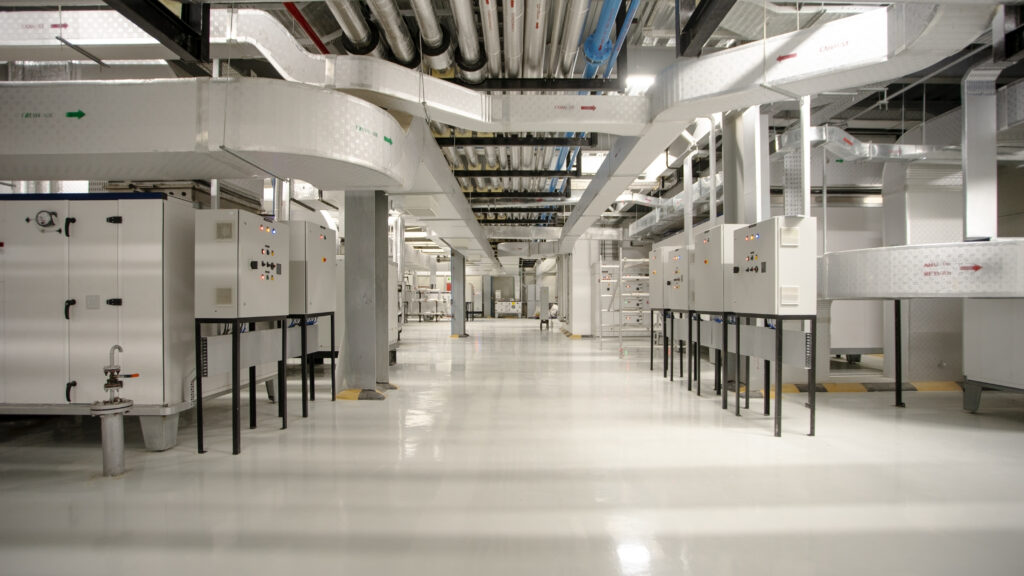
HVAC (Heating, Ventilation, and Air Conditioning) is the highest-stakes infrastructure system in the pharmaceutical plant. If it is right, it is invisible. Get it wrong, and you risk contamination events, batch failures, and regulatory action.
Here’s why. HVAC in a pharmaceutical cleanroom is not a comfort system. It is a validated manufacturing control. HVAC systems are recognized as direct impact systems under 21 CFR Part 211 and EU GMP Annex 1 and require Installation Qualification (IQ), Operational Qualification (OQ), and Performance Qualification (PQ). Every pressure differential, every air change rate, and every HEPA filter integrity reading is a GMP parameter.
Recent analyses of GMP inspection findings indicate that a significant proportion of observations in sterile manufacturing facilities relate to HVAC and environmental control deficiencies. Key issues include pressure cascade instability, HEPA filter leakage, and monitoring calibration gaps.
The consequences of getting this wrong are not abstract. A single contamination event due to an HVAC failure in pharmaceutical manufacturing can cost between $2 million and $8 million, when you include the loss of product, the regulatory response, the revalidation, and the investigation costs.
The WHO GMP Annex 8 Guidance on HVAC Systems for Pharmaceutical Facilities requires the use of risk management principles throughout the design, operation, and monitoring. The WHO document calls for specific analysis of failure modes of critical HVAC components, including the impact of fan failure and partial system shutdown. These are not recommendations. These are basic expectations for any facility that supplies medicines anywhere in the world.
Common consequences of HVAC failures include:
- Microbial contamination resulting from pressure cascade failures
- Particulate contamination in sterile production-classified cleanrooms
- Batch investigations triggered by failed environmental monitoring results
- Regulatory observations related to 21 CFR 211.42 and 211.113 requirements
- Production shutdowns and subsequent requalification activities
Water Systems: The Silent Contamination Risk
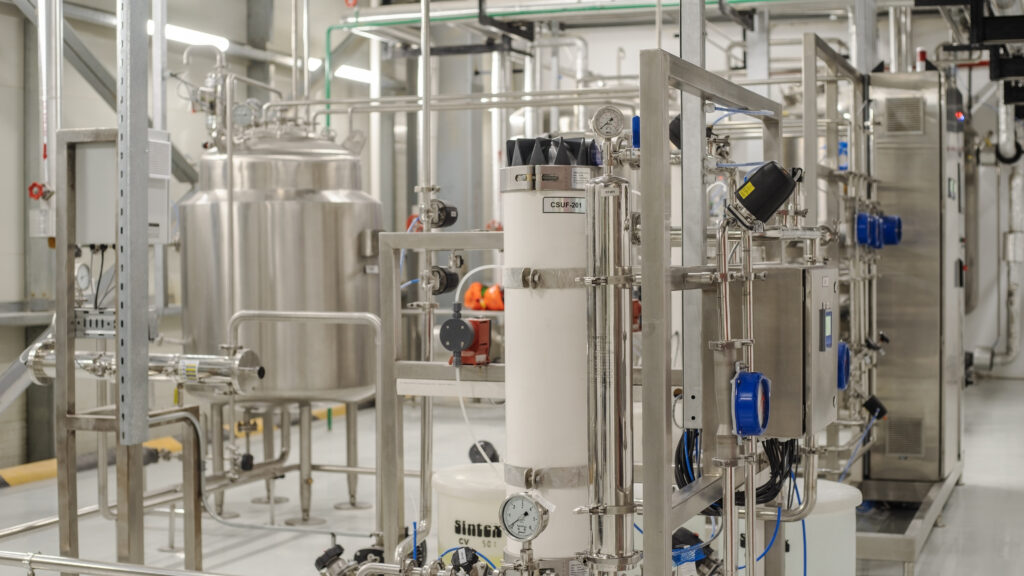
Water for pharmaceutical use (PW) and water for injection (WFI) are among the most used raw materials in the pharmaceutical industry. They are also, when the systems delivering them are poorly designed or maintained, among the most contamination-prone.
The FDA’s FY2024 Pharmaceutical Quality Report identified endotoxin contamination in facilities using non-validated purified water systems. Endotoxins are heat-stable bacterial by-products that are not removed by routine sterilization. Once they enter a product, the batch is typically rejected and may require investigation and disposal.
Water system failures don’t give you a heads-up. They quietly build up in dead legs, stagnant lines, and biofilm colonies growing inside unvalidated piping. The infrastructure design choices made during facility planning determine if these risks are controlled by design or found during an FDA inspection.
How Poor Infrastructure Drives Drug Recalls
The numbers speak for themselves. Sterility failures have consistently been among the leading causes of FDA-regulated pharmaceutical product recalls. These are not test failures, primarily. These are failures of the manufacturing environment, where a poor physical plant can allow contamination to reach a finished product.
CGMP deficiencies were responsible for approximately 50% of all drug recalls during the period of FY2020 to FY2023. That number declined in FY2024 but was still at 24%, still meaning hundreds of products were removed from shelves.
CGMP deficiencies caused more than half of all drug recalls in 2023. Thirteen percent of all recalls during the period studied were from one manufacturer that could not sustain CGMP requirements. Poor infrastructure not only leads to isolated failures. It can structurally compromise the entire site’s ability to manufacture compliant products.
The Turnkey Gap: Why Infrastructure Problems Start at the Design Stage
Many facility-related compliance issues originate during the design and planning stages.
The downstream effects are predictable when a pharmaceutical company constructs or expands a facility without qualified engineering oversight. Rooms are sized for convenience, not for classified environmental control. No drainage gradients are considered. Material flows are not mapped to contamination control logic. HVAC systems are sometimes specified without adequate consideration of ISO 14644 cleanroom standards or GMP zoning requirements.
By the time regulatory inspectors evaluate the facility, correcting these issues is often expensive and disruptive. Many times, it is much more expensive to retrofit a contamination control layout into an operating facility than to build it right the first time.
This is the power of pharmaceutical infrastructure solutions. A company with both pharmaceutical regulatory and engineering execution expertise can design contamination out of a facility from the outset rather than investigating it after production begins.
Pharma Access is a turnkey pharmaceutical engineering consultancy that supports pharmaceutical companies during the facility design phase to develop compliant, efficient, and quality-focused manufacturing environments Their approach, called “Engicution,” fuses engineering design with precision execution across disciplines from HVAC, cleanroom design, piping, utility systems, MEP, automation, and civil-structural work. They have over 24 years of experience and 120+ projects in 18 countries. They have worked on facilities for the following product categories: biotech, sterile manufacturing, oral solid dosage, oral liquid dosage, and API.
What Good Pharma Infrastructure Solutions Actually Look Like
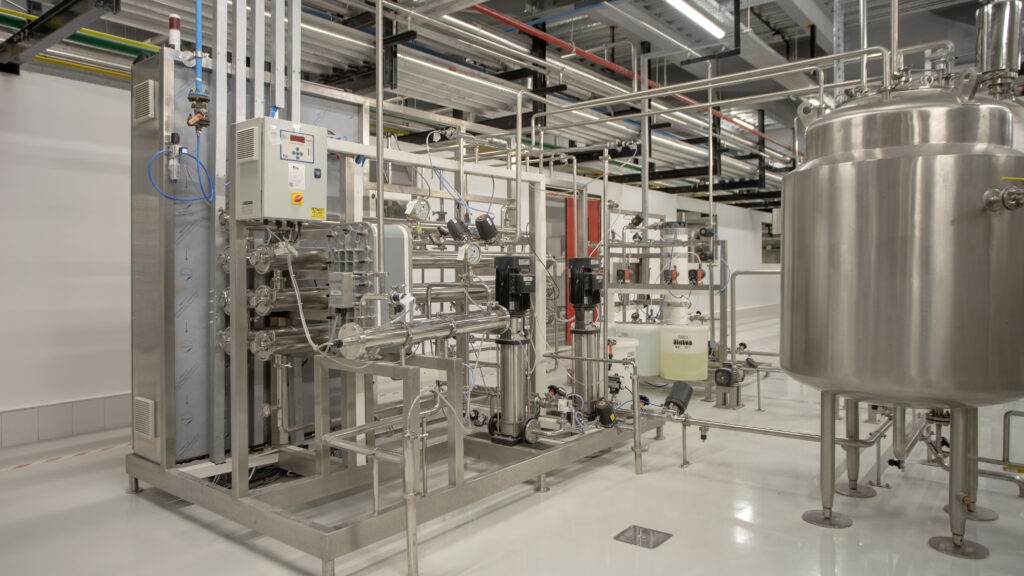
Effective pharmaceutical infrastructure planning is not about spending more—it is about investing appropriately, at the right stage, and with the right expertise.
This is what good infrastructure planning means:
- Facility layout and flow design – Track personnel, material, waste, and product flows to avoid cross-contamination from the ground up
- Cleanroom design & classification — Rooms designed to meet ISO 14644 requirements with correct air change rates, pressure cascades, and surface specifications
- HVAC system design and qualification — Full IQ/OQ/PQ lifecycle planning built into the design phase, not tacked on later
- Systems for purified water and WFI – Loop design that eliminates dead legs and supports validated sanitization cycles
- Utilities design – Compressed air, nitrogen, steam, and process gases validated with appropriate monitoring
- Modular construction options – Pre-engineered, GMP-compliant modules that reduce construction time without sacrificing compliance
Pharma Access provides consultancy services for pharma procurement consulting, including selection and supply of process equipment and machinery specific to the dosage form, regulatory environment, and production volume. If equipment procurement decisions are made incorrectly at an early stage, organizations may either under-specify operational requirements or overextend project budgets. Both create operational and compliance issues.”
The Real Cost of Getting Infrastructure Wrong
A pharmaceutical company that compromises on facility infrastructure does not simply risk a single batch.
Repeated GMP failures can lead to FDA consent decrees and other significant enforcement actions. The average enforcement period under a consent decree takes several years. In that period, companies might be barred from making or bringing drugs into regulated markets. The commercial impact of losing market access for an extended period can far exceed the investment required for compliant facility design and infrastructure.
There are patient consequences beyond regulatory consequences. Contaminated pharmaceutical products can result in serious infections, adverse events, and, in severe cases, patient fatalities. Subpotent drugs result in undertreatment of patients. Products that do not meet potency specifications can also cause significant patient harm. These results can be blamed on poorly designed, constructed, or maintained buildings, pipes, air systems, and water loops.
Next Steps for Pharma Companies Building or Upgrading Facilities
Facility infrastructure is the basis for new pharmaceutical facility planning, for expansion of an existing facility, and for evaluation of the compliance readiness of an older site.
Before you move on, ask yourself these questions:
- Has the facility layout been reviewed by a pharma-qualified engineer on contamination control logic?
- Is the HVAC engineered to cGMP and ISO 14644 with a full qualification plan?
- Are water systems designed to eliminate dead legs and validate sanitization?
- Has the utility system been mapped to the regulatory requirements for the dosage forms you are manufacturing?
- Is a Commissioning, Qualification, and Validation (CQV) plan incorporated into the construction schedule?
- These are questions that teams with pharmaceutical engineering expertise typically address before construction begins. Organizations that overlook these considerations frequently encounter them later during regulatory inspections or qualification activities.
Pharma Access is based in Andheri West, Mumbai, and provides services from facility planning to commissioning and validation, including engineering design, procurement, construction, and CQV under one coordinated engagement. Their team of 70 engineering personnel and 12 subject matter specialists, each with a focus on a specific discipline, injects regulatory knowledge into the design phase, not the compliance remediation phase.
Frequently Asked Questions
1. How does poor facility design directly affect pharmaceutical product quality?
Poor facility design creates conditions where contamination, cross-contamination, or environmental instability can reach the product. Inadequate air pressure between rooms, improper drainage, or non-validated water systems all create pathways for microbial or particulate contamination to enter finished drugs.
2. What is the most common infrastructure-related reason for FDA 483 observations?
Facility design and construction requirements are defined under 21 CFR 211.42 and remain among the most frequently cited areas during FDA inspections. In addition to this, section 211.113 for microbiological contamination control is also commonly seen. This is often the result of poor design or maintenance of HVAC and environmental control systems.
3. Why does HVAC matter so much in pharmaceutical manufacturing?
Pharmaceutical cleanroom HVAC is a validated manufacturing system, not a building utility. It regulates the number of air changes, pressure differences, temperature, humidity, and particles. Failure of any of these parameters can introduce contamination into a classified manufacturing environment and directly compromise product sterility or purity.
4. What is pharma procurement consulting, and when do you need it?
Pharma procurement consulting helps pharma companies define, evaluate, and source the right process equipment and machinery for their specific dosage form and regulatory requirements. You need it when designing a new facility, scaling production, or replacing aging equipment to avoid under-specification, vendor mismatches, or non-compliant equipment selections.
5. What is a pharma turnkey project, and how does it differ from standard construction?
A pharma turnkey project includes all aspects of delivering pharmaceutical facilities, such as engineering design, equipment procurement, civil & structural construction, HVAC & utilities installation, commissioning, qualification, and validation (CQV). The pharma turnkey approach is unlike standard construction in that it applies all GMP compliance requirements from the design stage all the way through handover, so the facility is ready to manufacture from day one.