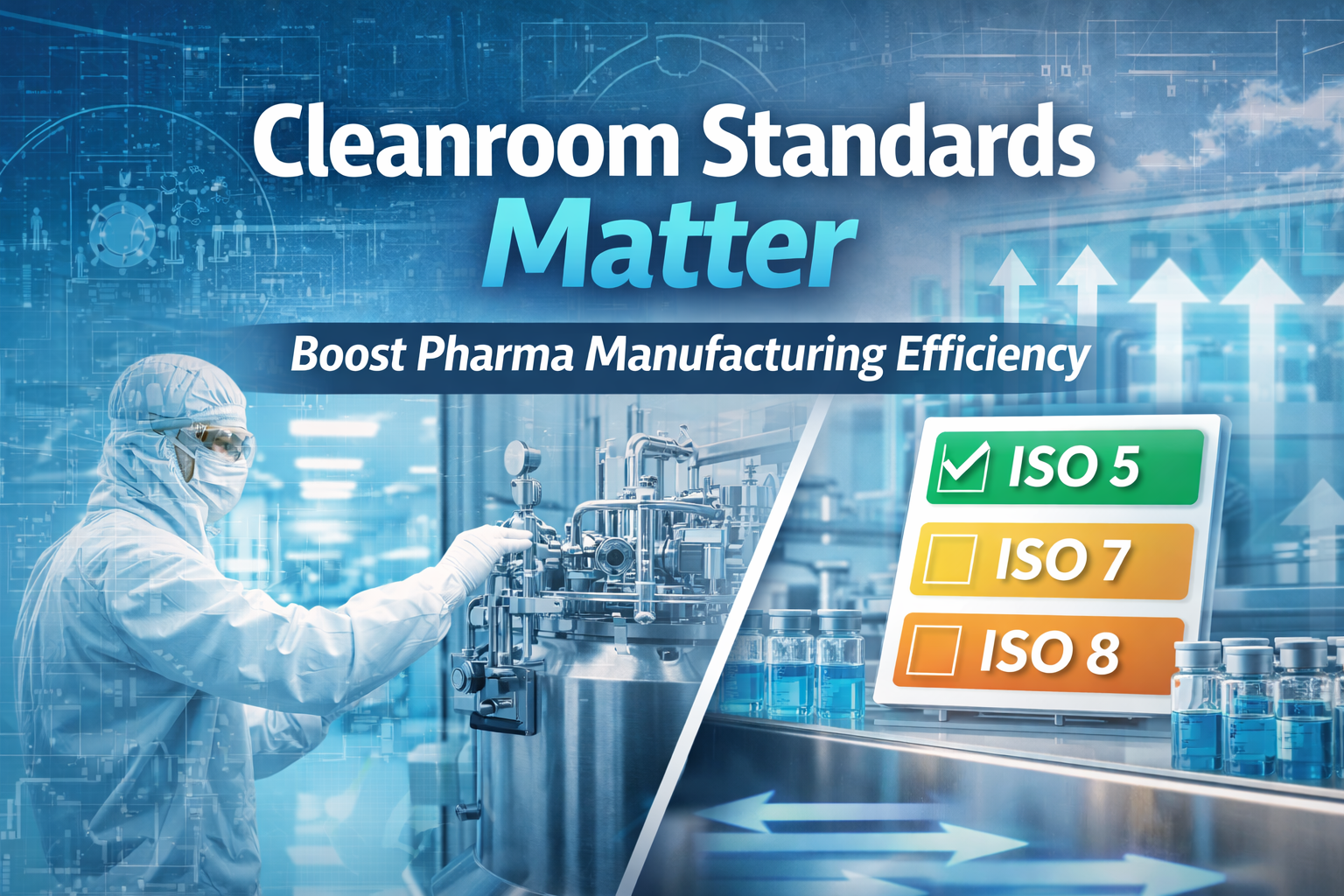
How Cleanroom Classification Impacts Pharmaceutical Manufacturing Efficiency

cleanroom standards in Pharma manufacturing

Pharma manufacturing is scaling faster than ever—but many facilities are still designed with outdated cleanroom assumptions.
As products become more complex and compliance expectations tighten, cleanroom classification is no longer just a regulatory requirement—it is a defining factor in how efficiently your facility operates.

Your cleanrooms have never just been controlled environments. They are where product quality, compliance, and operations converge.

If you want to design pharmaceutical facilities that produce consistent results without compromising compliance standards, collaborating with experienced cleanroom manufacturers and prioritizing cleanroom classification should be among the first considerations. It will affect how efficiently your facility runs, how easily it stays compliant, and how fast it can scale.
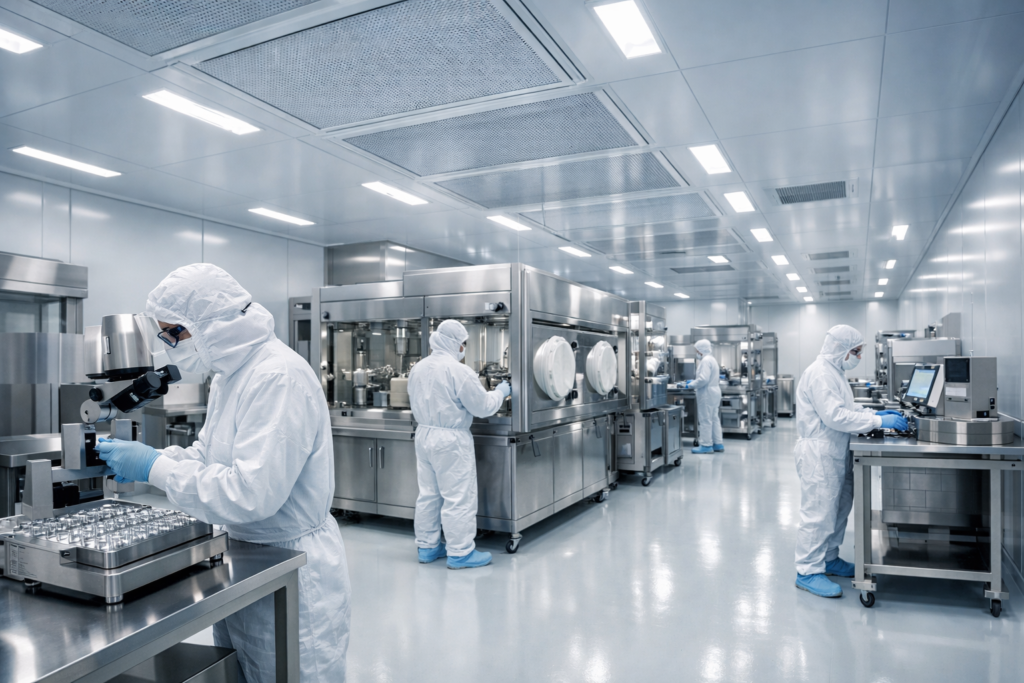
cleanroom

If Cleanroom Classification Is Not Considered Properly…

Projects often focus heavily on equipment and process design while underestimating the impact of cleanroom classification. However, incorrect classification decisions can create long-term operational inefficiencies. Facilities may appear compliant on paper, but struggle in real operations.

This typically results in:

  • Higher operating costs due to over-designed environments
  • Inefficient workflows and unnecessary restrictions
  • Increased energy consumption and maintenance effort
  • Delays during validation and regulatory approvals

Cleanroom classification is often treated as a compliance requirement. In reality, it is a core engineering decision that defines how efficiently a facility will operate.

Why Cleanroom Classification Matters More Than You Think

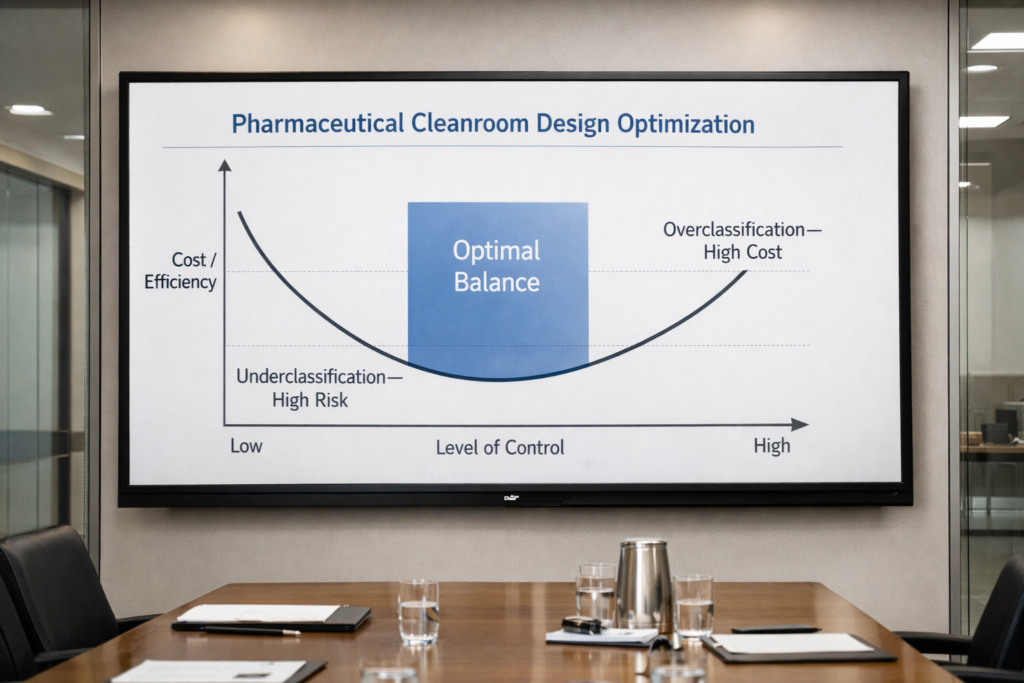
Cleanroom classifications determine the amount of particulate/microbial control necessary in different areas of the facility. Classification drives many facets of pharma engineering, such as HVAC design, material flow, personnel flow, operating procedures, etc. Classification levels that are too high result in costly facilities to operate. Too low and you risk non-compliance. 
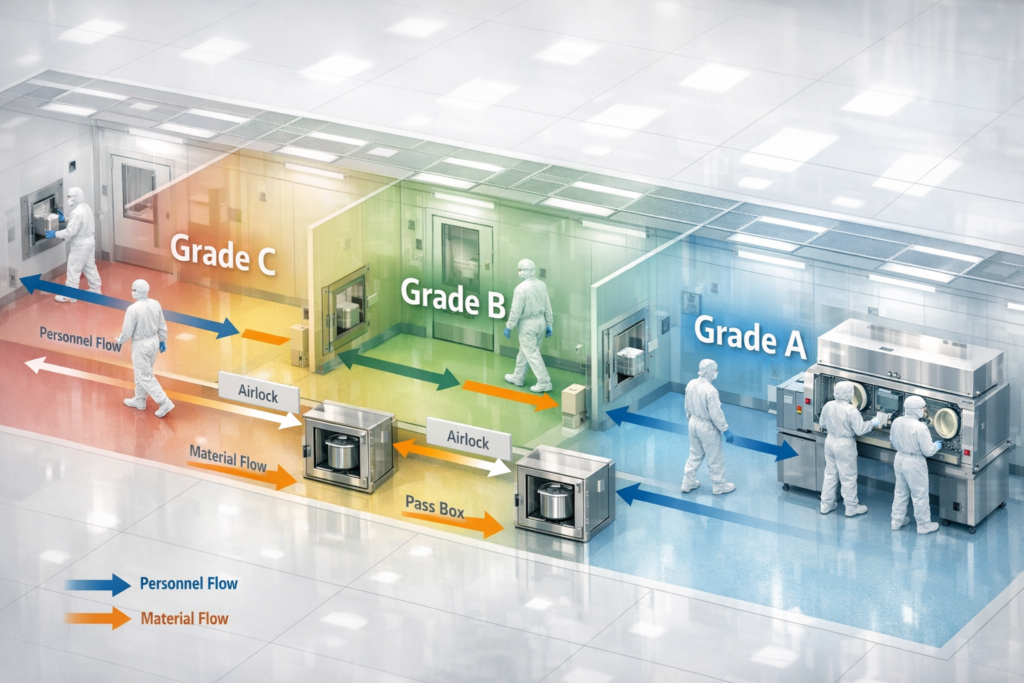
cleanroom classification

For example:

  • Overclassification leads to higher HVAC loads and increased energy consumption
  • Underclassification increases contamination risks and impacts quality control in the pharmaceutical industry
  • Poor zoning disrupts workflow and reduces productivity

Finding the right balance is critical. Cleanroom classification should align with process needs, not assumptions.

Critical Considerations for Cleanroom Classification

While cleanroom classification is driven by regulatory requirements, its real impact is seen when translated into engineering and operational decisions.

  • Aligning Classification with Process Requirements

Applying the same level of environmental control across all process steps leads to overdesign, increasing both capital investment and operational costs.

To ensure efficiency:

  • Classify spaces based on actual process risk
  • Avoid applying higher classifications where not required
  • Align cleanroom zones with process criticality

A well-balanced classification strategy improves both compliance and efficiency.

  • HVAC Design and Energy Impact

Cleanroom classification directly impacts HVAC system design.

Higher classifications require:

  • Increased air changes per hour
  • Advanced filtration systems
  • Strict pressure control

Optimized classification reduces HVAC load while maintaining GMP compliance—making it a critical lever in pharmaceutical facility design decisions.

  • Workflow and Operational Efficiency

Cleanroom classification affects how people and materials move through the facility.

Improper classification can create:

  • Unnecessary movement restrictions
  • Complex gowning procedures
  • Bottlenecks in production flow

Efficient cleanroom design ensures smooth workflow without compromising contamination control.
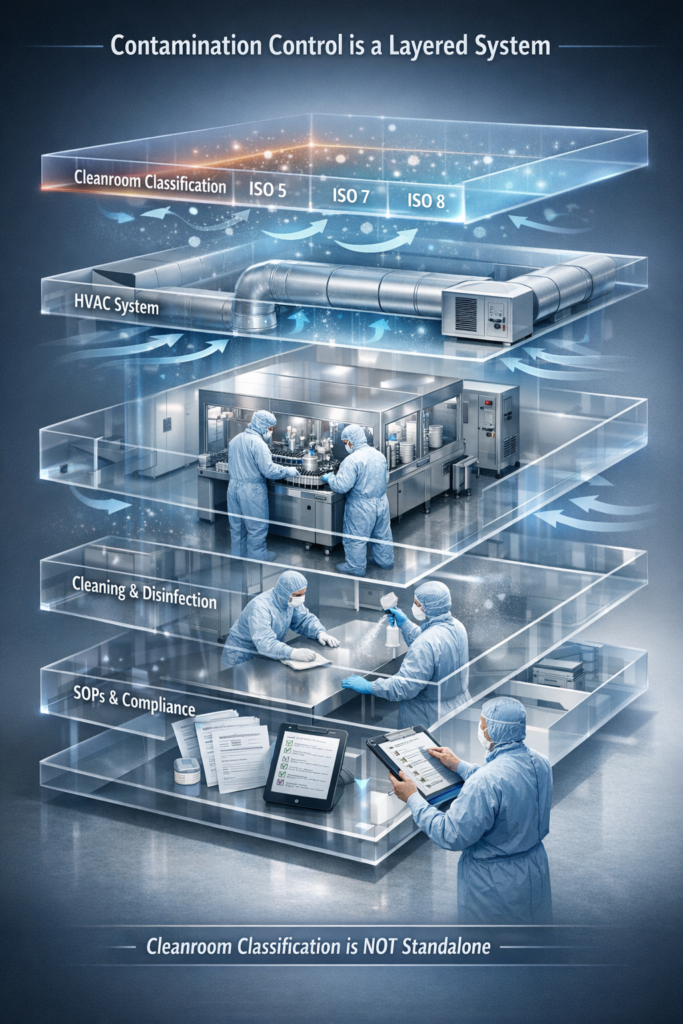
contamination control
  • Contamination Control Strategy

Cleanroom classification is a core component of contamination control, but it cannot function in isolation.

It must be aligned with:

  • Facility layout
  • HVAC airflow patterns
  • Cleaning and sanitization processes

In high-risk environments such as aseptic manufacturing, classification decisions become even more critical for maintaining product integrity.

  • Cost vs. Compliance Balance

One of the biggest challenges is balancing compliance with cost efficiency.

Overclassification leads to:

  • Higher capital investment
  • Increased operational expenses
  • More complex maintenance

Underclassification, on the other hand, risks compliance failures. A well-designed facility finds the optimal balance between cost, compliance, and performance.

  • Integration with Quality Systems

Cleanroom classification plays an important role in supporting the overall quality management system that pharma environments depend on.

It impacts:

  • Monitoring systems
  • Validation strategies
  • Standard operating procedures

Classification decisions must align with quality systems to ensure consistency and compliance.

  • Documentation and Validation

Every cleanroom classification decision must be supported by proper documentation.

This ensures:

  • Clear justification of classification levels
  • Alignment with regulatory expectations
  • Faster validation and approval processes

Strong documentation reduces delays and improves overall project efficiency.

About Efficiency vs. Compliance

There is a common assumption that higher cleanroom classifications automatically result in better compliance. In reality, efficiency is achieved when classification levels are appropriate, not excessive.

When classification is optimized:

  • HVAC systems operate more efficiently
  • Operational workflows become smoother
  • Maintenance and energy costs are reduced

Leading EPC companies understand that the goal is not to design the most stringent environment, but the most appropriate one.

Why Traditional Design Approaches Fall Short

In many projects, cleanroom classifications are driven by conservative assumptions rather than process requirements, leading to overdesigned, inefficient facilities.

This results in:

  • Higher costs without proportional benefits
  • Reduced operational flexibility
  • Increased complexity in EPC construction projects

Without early integration of process, engineering, and quality teams, cleanroom classification decisions are often made in isolation.

Modern projects require integrated approaches where classification is aligned with actual process requirements and long-term operational goals.
cost vs Control

Delivering Efficient and Compliant Cleanroom Designs

To design cleanrooms that support both compliance and efficiency, engineering teams must:

  • Define classification based on process needs, not assumptions
  • Integrate HVAC, layout, and workflow design early
  • Balance cost, compliance, and operational efficiency
  • Align the cleanroom strategy with the overall EPCM project execution

This approach ensures that facilities are not only compliant but also optimized for performance.

How Pharma Access Approaches Cleanroom Design

At Pharma Access, we see cleanroom classification as a design choice, not simply compliance-driven.

Employing Pharma Engineering best practices with seamless execution, facilities are engineered to allow you to properly balance compliance, efficiency, and scalability.

Delivering GMP-compliant facilities that “just work” for our clients day one.

Conclusion

Cleanroom classification shouldn’t just be about compliance. It should drive manufacturing efficiency. 

Doing more than what is needed wastes money. Doing less than what is needed risks non-compliance. Designing correctly creates balance. 

Cleanrooms that are properly classified to meet process needs and tied into the overall design strategy enable facilities to perform better, operate more efficiently, and scale with ease.

Efficient design in today’s pharmaceutical manufacturing isn’t about doing more. It’s about designing smarter. 

FAQs

  • What is cleanroom classification?

It defines the level of particulate and microbial control required in a controlled environment.

  • Why is cleanroom classification important in pharma manufacturing?

It ensures product quality, regulatory compliance, and efficient operations.

  • How does cleanroom classification impact efficiency?

It affects HVAC load, workflow, operational cost, and maintenance requirements.

  • What happens if cleanroom classification is too high?

It increases energy consumption, operational cost, and complexity without added benefit.

  • How is cleanroom classification linked to GMP?

It supports contamination control and is a critical part of GMP-compliant facility design.
 

GMP Compliance in Pharmaceutical Facility Design: What Engineering Teams Must Consider

GMP Compliance

Pharma manufacturing is changing faster than ever. Therapies are becoming more complex. Product lifecycles are shrinking. Regulatory expectations are intensifying—while approval timelines continue to compress.  And regulators are expecting faster approval timelines than ever. The modern pharma facility is no longer just a production space. It is a controlled environment where quality, compliance, and efficiency must work together at every step. When designing facilities that consistently manufacture quality products, compliance and speed must both be considered from the start. GMP can no longer be limited to operations and validation. It needs to be considered at the design stage itself.

When Compliance Becomes the Bottleneck

Projects today are moving quickly to build pharmaceutical manufacturing facilities. Products are expected to be commercialized faster than ever before. At the same time, regulations are becoming more rigorous. When compliance is treated as a late-stage hurdle, projects often reach commissioning phases only to discover issues that were built into the design much earlier. At that point:

  • Layouts need to be reworked
  • Systems require redesign
  • Qualification timelines start stretching significantly
    Projects are not delayed because of GMP itself—they are delayed because GMP was not integrated early enough.

Why GMP Cannot Be Retrofitted

Most EPC construction projects follow a linear approach: engineering is completed first, procurement sources materials, and construction executes the build. In many cases, compliance is only considered toward the end during commissioning and qualification. But what if GMP compliance was treated as part of the engineering scope instead of a checkbox at the end? In reality, it should be. What makes GMP unique is that once key design decisions are locked, such as facility layout, HVAC zoning, and utility routing—any modification creates cascading impact. For example:

  • Changing room classification can impact airflow and pressure cascades
  • Incorrect material flow may require major layout redesign
  • Missing utilities can delay validation and qualification
    Simply put, GMP cannot be added later. It must be built into the design from day one.

Key GMP Design Considerations

Its effectiveness depends on how well it is translated into coordinated design decisions across systems. These decisions span across multiple systems but must work together as one integrated strategy. GMP itself is a regulatory framework. It does not prescribe exact engineering solutions. However, when translated into design decisions, GMP compliance becomes more practical and structured.

  • Facility Layout and Workflow

How people, materials, and waste move through a facility defines its workflow. To ensure compliance, facilities should be designed with:

  • Unidirectional flow of personnel and materials wherever possible
  • Clear separation between clean and non-clean areas
  • Properly designed airlocks and entry/exit points

This becomes especially critical in aseptic manufacturing, where even minor contamination risks can compromise product integrity.

  • HVAC and Room Environmental Design

HVAC is one of the most critical systems in a GMP facility. It maintains controlled environmental conditions required for consistent product quality. An effective HVAC design must account for:

  • Room classifications
  • Pressure differentials between spaces
  • Airflow direction and filtration

    Any instability in environmental control can directly impact quality control in the pharmaceutical industry, making HVAC one of the most critical design elements.
  • Utility System Design and Clean Utilities

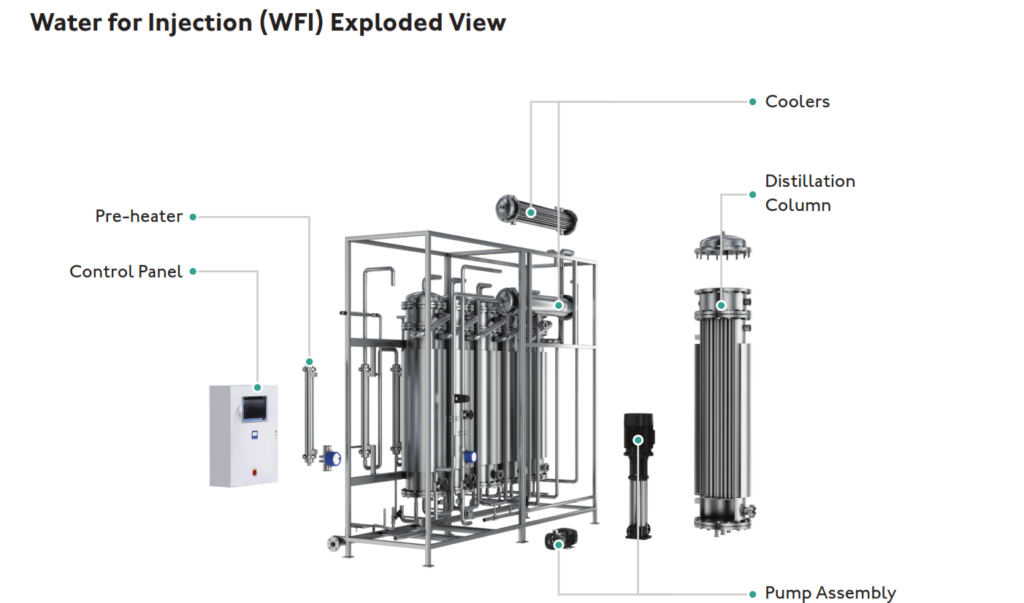
Utilities that come into contact with the product such as purified water (PW), water for injection (WFI), clean steam, and clean/process compressed air must be designed carefully. Key considerations include:

  • Hygienic storage and distribution
  • Continuous circulation to prevent stagnation
  • Ease of cleaning and validation

    These systems form a core part of the quality management system pharma facilities rely on to maintain consistency and compliance.
  • Contamination Control Strategy

Contamination control is not driven by a single system—it is the outcome of how layout, HVAC, utilities, and operations work together. Important considerations include:

  • Cross-contamination risks between products
  • Interaction between personnel and material movement
  • Cleaning and decontamination processes

    A weak contamination control strategy can compromise an otherwise well-designed facility.
  • Equipment Design and Process Flow

Equipment should not be treated as standalone assets. It must align with the overall process and facility design. Poor integration often leads to inefficiencies. Key questions to consider:

  • Does the equipment align with overall process flow?
  • Is it easily accessible for maintenance and cleaning?
  • How well is it integrated with utilities and automation systems?
  • Automation and Data Integrity Systems

Automation systems are now essential in modern pharmaceutical facilities. They not only improve operational efficiency but also support compliance. These systems support compliance by:

  • Capturing and storing reliable data
  • Maintaining audit trails and traceability
  • Restricting user access to sensitive systems
  • Documentation and Traceability

All design decisions should be traceable back to initial user requirements. Strong documentation ensures:

  • Alignment between design intent and requirements
  • Readiness for validation and audits
  • Faster and smoother CQV processes
    Documentation should not be an afterthought. It must be built into the design process.
  • Designing for Compliance and Speed

There is a common misconception that GMP compliance slows projects down. In reality, projects are delayed when compliance is addressed too late. When GMP is considered from the beginning:

  • Fewer design changes are required
  • Rework is significantly reduced
  • Commissioning and qualification timelines improve

    Leading EPC companies are now integrating engineering, quality, and execution teams early in the project lifecycle. When everyone is aligned from the start, projects move faster with fewer delays.
  • Where Traditional Delivery Models Fall Short

Traditional project delivery separates engineering, construction, and validation into different phases. While structured, this approach often creates gaps Common challenges include:

  • Late involvement of quality teams
  • Compliance efforts pushed to the end
  • Decisions made without full project visibility

    As projects become more complex, these gaps make compliance harder to achieve. This is why pharmaceutical projects increasingly require integrated, CQV-focused delivery approaches.
  • Building GMP-Ready Facilities from Day One

Clients today expect more than just regulatory compliance. They want facilities that perform efficiently, remain compliant, and adapt to future needs. To achieve this, engineers should:

  • Consider GMP at the conceptual design stage
  • Align design with qualification requirements
  • Involve engineering, quality, and operations teams early
  • Partner with experienced pharmaceutical engineering firms

How Pharma Access Integrates GMP into Design

At Pharma Access, GMP is embedded into every stage of the project from day one. By combining precision execution with an integrated design approach, we consistently deliver facilities that meet the highest standards of compliance, efficiency, and predictability.

Final Word

GMP compliance should be addressed during the design stage, not during validation. Treating GMP as an afterthought leads to delays, rework, and inefficiencies. When considered from the beginning, it enables faster execution and better outcomes. GMP is only as strong as when it is introduced into the design process.

Frequently Asked Questions (FAQs)

1. What does GMP stand for?

Good Manufacturing Practice. It is a set of guidelines and regulations that pharmaceutical manufacturers must follow.

2. Why does GMP matter during design?

If addressed late, GMP can delay projects. When considered early, it helps maintain timelines and ensures compliance.

3. What are key GMP design considerations?

Facility layout, HVAC, utilities, contamination control, equipment integration, automation, and documentation.

4. How does HVAC impact GMP?

HVAC maintains controlled environments. Poor design can affect product safety and compliance.

5. What utilities are critical in GMP design?

Utilities such as PW, WFI, clean steam, and compressed air must be hygienic and continuously circulating.

How Engineering Consultants Help Reduce Risk in Pharmaceutical Facility Projects

engineering consultants

Pharmaceutical facility projects are among the most complex engineering initiatives in the industrial sector. From strict regulatory expectations to highly controlled manufacturing environments, even small design errors can lead to costly delays, compliance issues, or operational inefficiencies. This is where engineering consulting services play a critical role. Experienced engineering consultants bring specialized expertise, structured project methodologies, and regulatory knowledge that significantly reduce risk across the entire facility lifecycle. For pharmaceutical companies planning new manufacturing plants, laboratory facilities, or expansion projects, working with professional engineering consultants in Mumbai and globally can help ensure projects are delivered on time, within budget, and fully compliant with regulatory standards.

In this article, we explore how engineering consultants help reduce risk in pharmaceutical facility projects and why their involvement is essential for successful project delivery.

Understanding Risk in Pharmaceutical Facility Projects

Pharmaceutical projects face several layers of risk that do not typically exist in other industrial facilities. These risks can arise during planning, design, construction, or validation phases. Common risks include:

  • Regulatory compliance failures
  • Facility design issues affecting product quality
  • Poor integration of utilities and process systems
  • Construction delays due to incomplete engineering packages
  • Cost overruns due to scope gaps
  • Inefficient facility layouts affecting operational performance

Engineering consultants help address these risks through structured planning, specialized design expertise, and integrated engineering coordination.

Early Engineering Planning Reduces Project Uncertainty

process flow diagram

One of the most important ways engineering consulting services reduce risk is through early-stage project planning. During conceptual and front-end engineering phases, consultants help define:

  • Process flow strategies
  • Facility layouts and space allocation
  • Material and personnel flow
  • Utility demand and infrastructure requirements
  • Capital expenditure estimates

This structured planning process, often referred to as front-end engineering design (FEED), provides clarity around project scope, timelines, and costs before major investments are made. Without proper front-end engineering, projects often face scope changes, budget escalation, and schedule delays later in the project lifecycle.

Regulatory Compliance Built into the Design

Pharmaceutical facilities must comply with strict global regulations such as:

  • US FDA regulations (including 21 CFR Part 11)
  • EU GMP Annex 1
  • WHO GMP guidelines
  • PIC/S standards
  • ICH Q8, Q9, and Q10 (Quality by Design)

Engineering consultants also align projects with industry best practices and engineering standards such as:

  • ISPE guidelines
  • ASHRAE (HVAC systems)
  • NFPA (fire and life safety)
  • ISO standards (including ISO 14644 for cleanrooms)

To ensure compliance is built into the design, engineering consultants integrate:

  • contamination control strategies
  • environmental control systems
  • validated utility systems
  • risk-based engineering design
  • Quality by Design (QbD) principles

By embedding these requirements early in the engineering process, consultants help minimize compliance risks, avoid costly redesigns, and ensure smoother regulatory inspections.

Specialized Process Engineering Expertise

Pharmaceutical manufacturing facilities depend heavily on well-designed process systems. Engineering consultants provide specialized pharma manufacturing process services, including:

  • Process Flow Diagrams (PFD)
  • Piping and Instrumentation Diagrams (P&ID)
  • Equipment selection and sizing
  • Process simulation and optimization
  • automation strategy development

These deliverables ensure the facility supports safe, efficient, and compliant manufacturing operations. Without experienced engineering input, process integration issues can arise during commissioning or production, leading to operational disruptions.

Reliable Facility and Utility System Design

Utilities are the backbone of pharmaceutical manufacturing. Engineering consultants design integrated utility systems such as:

  • HVAC systems for controlled environments
  • Water for Injection (WFI) and purified water systems
  • clean steam generation
  • compressed air and process gases
  • electrical distribution systems
  • building management and monitoring systems

Properly engineered utility systems ensure stable facility operations and maintain the environmental conditions required for pharmaceutical manufacturing. Engineering consultants also evaluate system capacity, redundancy, and energy efficiency to ensure long-term operational reliability.

Improved Coordination Between Project Stakeholders

Pharmaceutical facility projects involve multiple stakeholders including:

  • Owners and project teams
  • Architects of Record (AOR)
  • EPC contractors
  • equipment vendors
  • validation teams

Without clear coordination, projects often experience communication gaps that lead to design conflicts or construction delays. Engineering consultants help bridge these gaps by providing structured project management consulting services, coordinating engineering deliverables across disciplines and ensuring alignment between stakeholders. Their role includes:

  • technical coordination with architects and contractors
  • design reviews and risk assessments
  • engineering documentation management
  • procurement engineering support
  • construction coordination

This integrated approach improves communication and helps projects progress smoothly.

Digital Engineering and Simulation Reduce Design Errors

water injection

Modern pharmaceutical engineering increasingly relies on digital engineering tools to reduce design risks. Engineering consultants use advanced tools such as:

  • Building Information Modeling (BIM)
  • airflow simulation for HVAC systems
  • process simulation software
  • electrical system modeling
  • clash detection tools

These technologies allow engineers to detect design conflicts early and optimize system performance before construction begins. By identifying issues during the design phase, companies can avoid expensive changes during construction or commissioning.

Supporting Commissioning and Validation

Pharmaceutical facilities must undergo extensive validation before they can begin production. Engineering consultants support this process through:

  • User Requirement Specifications (URS)
  • Design Qualification (DQ)
  • Installation Qualification (IQ)
  • Operational Qualification (OQ)
  • Performance Qualification (PQ)

Their engineering documentation ensures the facility meets regulatory expectations and supports successful validation. This reduces the risk of delays during regulatory approvals or operational start-up.

Why Engineering Consultants Are Essential for Pharmaceutical Projects

Pharmaceutical projects require deep expertise in process engineering, facility design, utilities, and regulatory compliance. Professional engineering consulting services bring this expertise together, helping pharmaceutical companies manage complexity and reduce risk throughout the project lifecycle. By working with experienced engineering consultants in Mumbai and internationally, companies gain access to specialized knowledge, proven engineering methodologies, and integrated project coordination. Combined with strong project management consulting services, engineering consultants help ensure pharmaceutical facilities are designed for compliance, operational efficiency, and long-term reliability.

Conclusion

Developing pharmaceutical manufacturing facilities is a high-stakes investment that requires precise engineering and careful risk management. Engineering consultants play a critical role in minimizing project risk by providing structured planning, specialized design expertise, regulatory compliance integration, and stakeholder coordination. From concept design to validation readiness, engineering consulting partners help pharmaceutical companies deliver facilities that meet regulatory expectations while supporting efficient and scalable manufacturing operations. As pharmaceutical manufacturing continues to evolve, the role of experienced engineering consultants will remain essential in delivering safe, compliant, and future-ready facilities.

Modular vs Traditional Pharma Facility Construction: What Should Investors Really Consider?

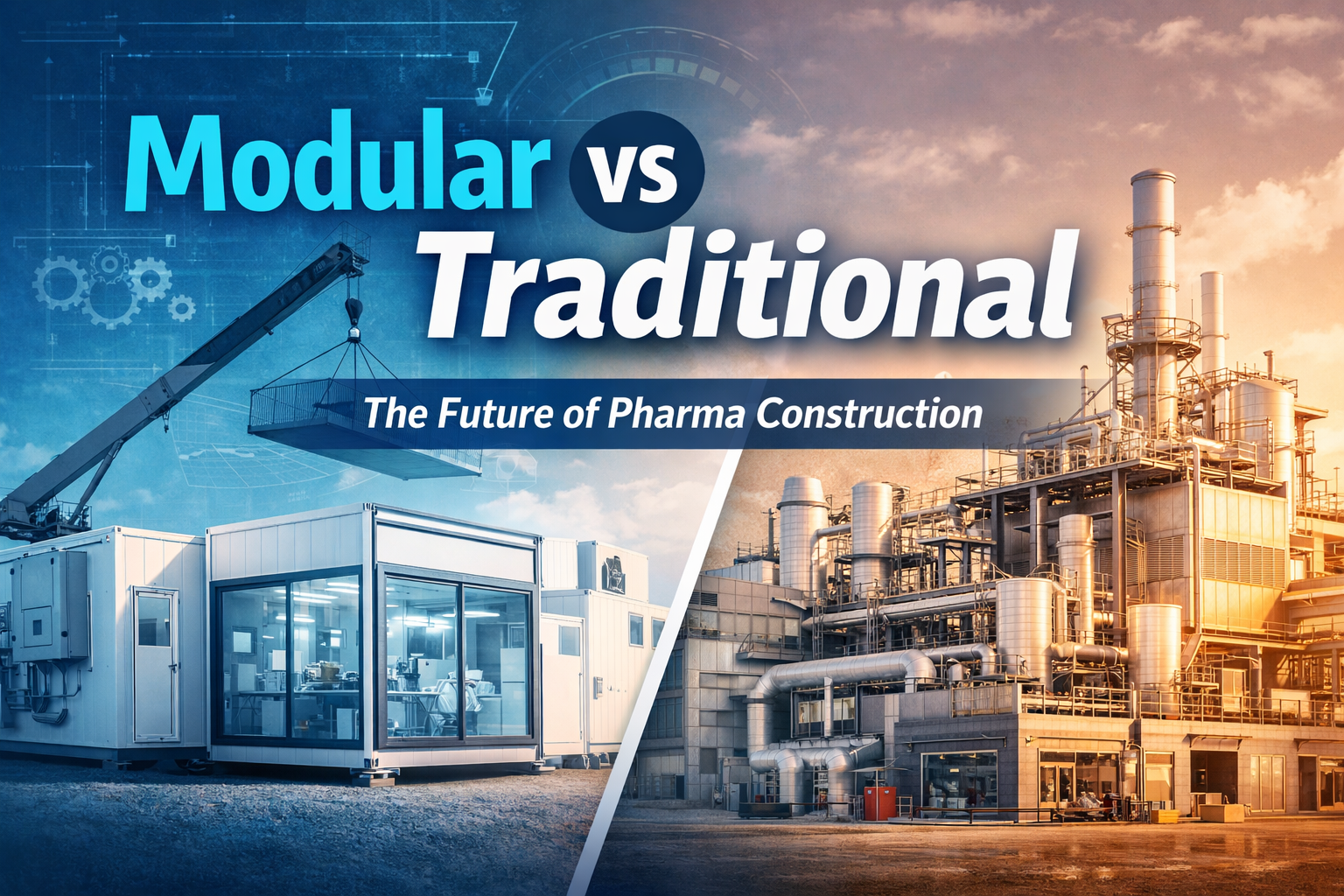
Modular vs Traditional Pharma Facility Construction

The pharmaceutical industry is operating in an increasingly high-pressure environment. Becoming more stringent, Product lifecycles are shortening. There is an increasing focus on biologics and specialty therapies. Investors want faster commercialization and higher returns. Constructing a manufacturing plant in this setting is not a construction project. It is a strategic capital choice which influences valuation, scalability and long term competitiveness. To pharma investors, new company founders, CMOs, and expansion-oriented leadership teams, time-to-market, risk exposure and prospective returns on investment directly depend on the decision to build in a modular or traditional way. This paper compares the two models using a strategic and financial approach to enable decision-makers to consider what really matters.

Understanding Traditional Pharma Facility Construction

Traditional Pharma

The conventional pharmaceutical building process follows a sequential execution model. The whole facility is constructed on site. begin only after the previous stage is completed.

The typical stages include:

  • Civil work and land development
  • Structural construction
  • Cleanroom installation
  • Integration of the HVAC systems and utilities
  • Process equipment setup
  • Validation and regulatory compliance

This has been the dominant approach to pharmaceutical facility development for decades. decades. It is highly customised and flexible. It is however both time and capital intensive.

Typical Timelines

The average time to construct a GMP-compliant pharmaceutical facility using traditional methods takes 18 to 36 months. In the case of complex sterile and biologics plants, the schedule may run even longer. Revenue generation is postponed in this period and capital remains tied up.

Key Challenges in Traditional Construction

  • Sequential dependency

A delay in one stage automatically delays the following stages.

  • Risks in contractor coordination.

There can be several contractors working simultaneously and this can result in gaps in communication and duplication of work..

  • Design modifications during implementation

In case of regulatory feedback or process variation occurs in the middle of the project, the changes may be costly and time consuming.

  • Supply chain exposure

Global material shortages or supply chain disruptions can halt project progress.

  • Validation overlap risk

Commissioning and qualification are also initiated later in the project cycle, which extends the timeline before commercial operations can begin.

Investment Risks

In the perspective of an investor, the risks in the traditional construction are primarily three:

  • Delays in Recovery of Investments.

 Revenue starts only after the facility is completed and validated.. A six-month delay can significantly affect projected cash flows..

  • Capital Lock-In

High initial investment levels reduce  financial capacity and increase the vulnerability if market conditions change.

  • Raise in Change Management Costs.

Any late-stage design revisions , changes in regulations or process changes are very expensive.

When Traditional Construction Makes Sense

Regardless of such risks, traditional construction is suitable when:

  • Very large, long-term production facilities are required
  • Installation of large or highly complex fixed process equipment is necessary
  • Demand is predictable and manufacturing volumes are high
  • Customer engineering requirements exceed modular design capabilities

Traditional builds can still be useful for established pharmaceutical companies with stable capacity planning.

What Is Modular Pharma Construction?

Modular Pharma Construction

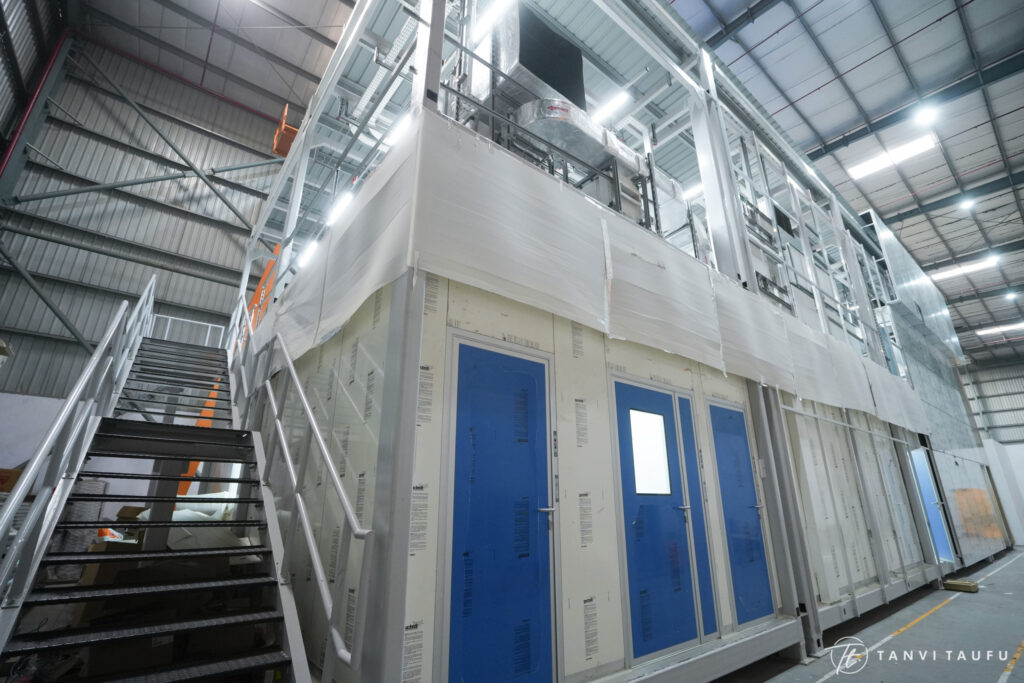
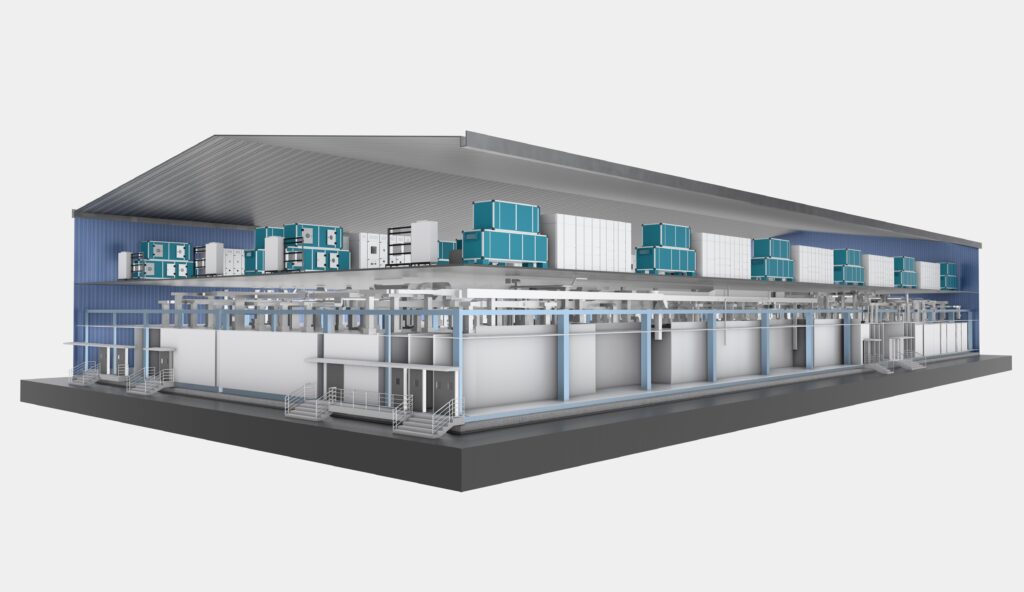
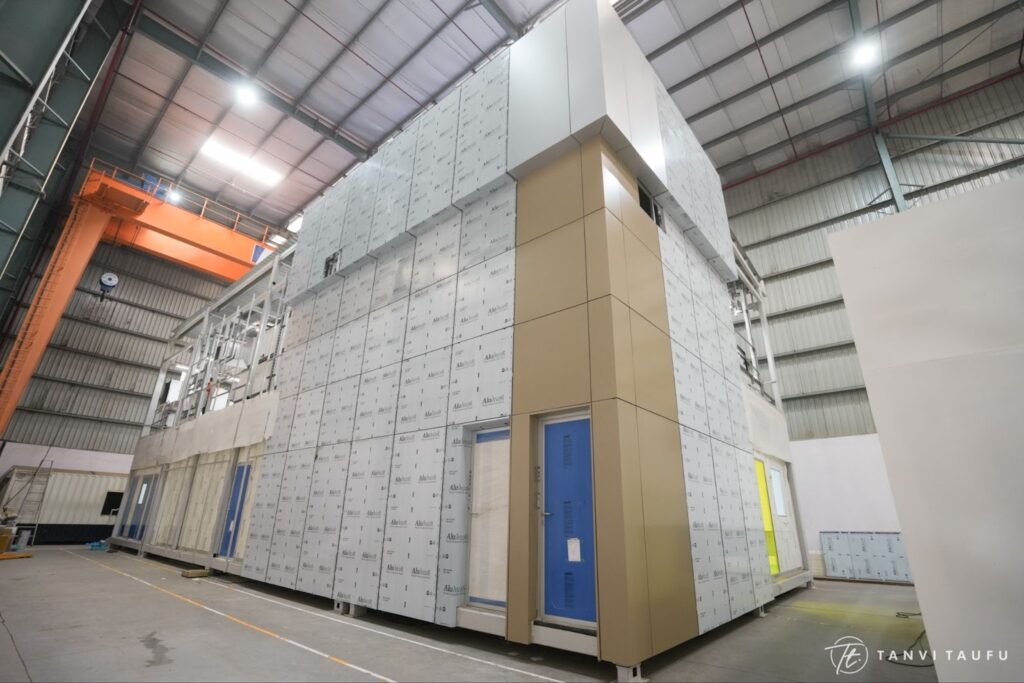
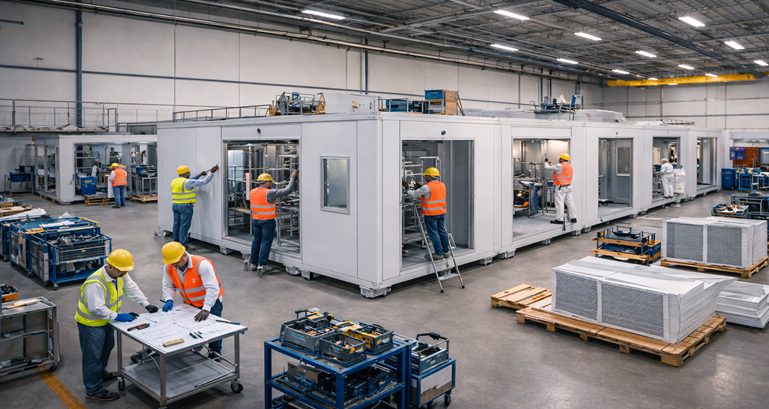
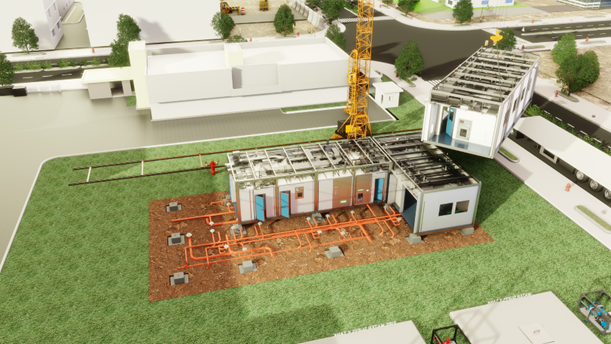
Modular construction significantly changes the traditional execution model. Components (especially large and routine parts) are assembled in a controlled factory environment  rather than  being constructed entirely on site  in a sequential process. These modules are later delivered and assembled at the project site.

Modules may include:

  • Cleanroom pods
  • Utility skids
  • Process equipment rooms
  • Mechanical and electrical modules
  • Ready-prepared laboratory rooms

The distinguishing benefit is a parallel execution. Site preparation, foundation work occur simultaneously with off-site module fabrication, reducing the overall project timeline.

  • Timeline Advantage

Modular strategies can be used to deliver a facility that would otherwise normally require 24 months. The effect of the reduction of 8 to 12 months is of significant impact. Complete sooner implies complete regulatory filing, complete production and complete revenue generation.

Quality and Control

The consistency is enhanced in those factory-controlled conditions. The modules are assembled in a standardized manner and thus eliminate variation and rework Time losses caused by weather are reduced. TWorkforce productivity in controlled manufacturing settings is generally higher than productivity on open construction sites.

Strategic Advantages of Modular Construction for Investors

1. Faster Time-to-Market

    In pharmaceutical manufacturing, time is directly proportional to the revenue. In most cases, parallel execution saves up to 40-50 percent of the total project time. Prior experience in operations will result in faster commercialization and a better net present value of the project.

    2. Improved Cost Predictability

       Costs can be controlled better in factory production environments.. Exposures to weather, congestion of the site and labor inefficiencies are minimized. It makes the budget forecasting more reliable thus enhancing investor confidence.

      3. Phased Capital Deployment

      Building modular facilities can be done in stages. Companies do not need to develop full capacity at the beginning but can increase capacity as demand grows. This will minimize overbuilding and will safeguard capital whenever there are uncertainties in markets.

      4. Reduced Compliance Risk

      Documentation, traceability and standardization are supported by controlled module fabrication environments. This eases validation and GMP compliance. A lesser number of uncertainties on site results in smoothly conducting inspections and has less regulatory risk.

      5. Expansion Without Major Disruption

      In brownfield projects, the units may be modularized and installed with minimal or no interruption to the current production. This safeguards the continued revenue streams.

      Situations Where Modular May Not Be Ideal

      Modular construction is not always the best. It may not be optimal when:

      • Large-scale process equipment that is heavy cannot be transported
      • Highly customized engineering requirements exceed modular design flexibility
      • Module transportation is complicated by site logistics
      • Not planning for integration poses interface problems

      Modular planned construction can only succeed with an experienced EPCM planning and feasibility assessment in its initial stages.

      Capital Strategy Perspective

      The real distinction between traditional and modular construction lies in capital strategy. Conventional building involves a massive capital investment. Investors have to wait longer to make returns and face greater schedule uncertainty. Modular construction allows more agile project execution. Capital deployment can occur in stages. Revenue can begin earlier, and risk exposure is reduced due to more predictable schedules. This flexibility may enhance valuation and investor attractiveness tfor emerging pharma companies and CMOs operating in competitive markets.

      Industry Evolution Toward Flexible Manufacturing

      The drug market is shifting to small and specialized manufacturing. Requirements of biologics, cell and gene therapies and personalized medicine require:

      • Flexible production lines
      • Smaller batch sizes
      • Quick reconfiguration of the system
      • Adaptive infrastructure

      Large, inflexible facilities designed for decades-long production cycles may be less compatible with the pace of pharmaceutical innovation today. Modular construction supports flexibility and adaptability, making it attractive for growing companies.

      Comparative Overview

      Parameter Traditional Construction Modular Construction
      Timeline 18 to 36 months 10 to 14 months
      Capital Commitment Large upfront Phased investment
      Flexibility Limited post-build High scalability
      Change Cost Expensive More manageable
      Risk Exposure Higher schedule risk Controlled execution risk
      ROI Speed Slower Faster

      Key Questions Investors Should Ask

      The decision-makers need to consider:

      • What is the volatility of expected market demand?
      • Is speed to commercialization critical?
      • Is it possible to deploy capital in stages?
      • How customized must the facility design be?
      • What level of schedule risk is acceptable?

      These questions help determine which model aligns best with the company’s growth strategy.

      Final Perspective

      The choice between the modular and traditional pharma construction is not about the possibility of finding a better method. It is about alignment.

      • Alignment with capital strategy.
      • Alignment with development schedules.
      • Alignment to regulatory objectives.
      • Alignment  with risk appetite.

      In the case of large, stable, long-term capacity projects, traditional construction may still work. Modular construction will be particularly strategic to the investor who wants to achieve agility, rapid time-to-market, and gradual scalability. The construction of facilities is no longer an engineering decision in the competitive pharmaceutical environment today. It is a financial decision which forms the basis of profitability, valuation, and long-lasting resilience. The actual dilemma is not as to which of the methods is superior. The real question is which model best supports growth while protecting capital in a rapidly evolving industry.


      Why Traditional Pharma Facilities Are No Longer Enough

      modular mobile facility

      When Infrastructure Becomes the Bottleneck

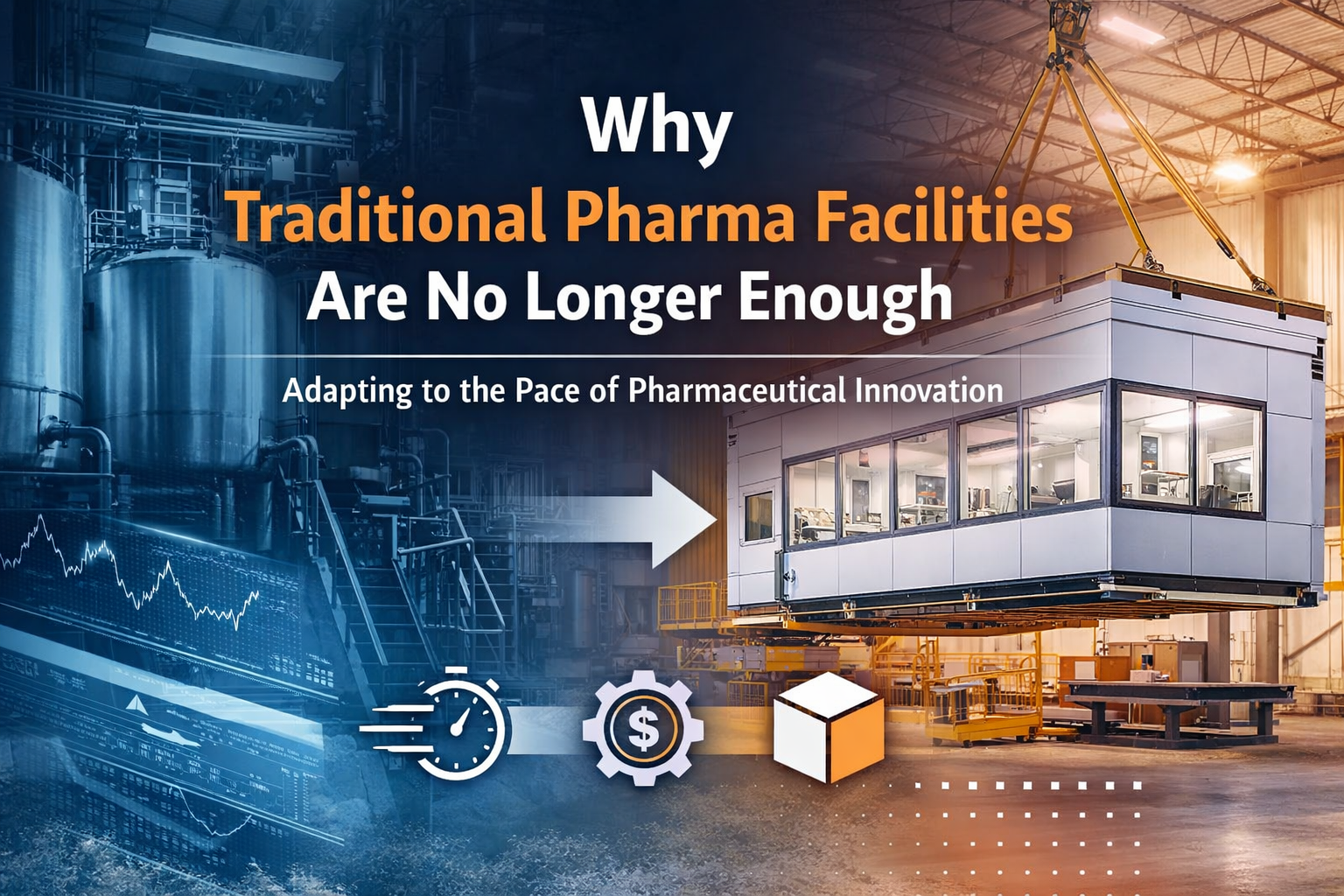
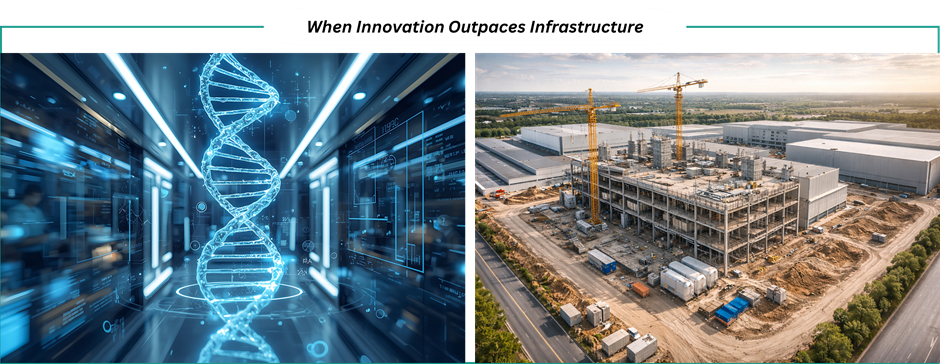
      Pharmaceutical innovation is moving so fast that, in some cases, products are approved before the facilities meant to manufacture them are ready. In many cases, traditional pharma facilities are still designed for longer development cycles and predictable demand, making it increasingly difficult for infrastructure to keep pace with Modular Pharmaceutical Facilities.

      In several recent cases, companies have invested hundreds of millions of dollars in new plants, only to face delayed integration, extended qualification timelines, or underutilized capacity when market assumptions changed. What should have been a moment of commercial momentum instead became a race against infrastructure.

      This is not a failure of science. It is a mismatch between how quickly innovation now moves and how slowly manufacturing capacity is still brought online.

      The pharmaceutical industry has entered an era defined by rapid modality shifts, compressed development timelines, and uncertain long-term demand. Yet most drug manufacturing facilities are still designed for a world where demand was predictable, portfolios changed slowly, and long-term utilization could be assumed.

      That gap is becoming increasingly difficult and increasingly costly to ignore.

      Why Traditional Facility Delivery Is Struggling to Keep Pace

      Traditional pharmaceutical manufacturing facilities are delivered through long, sequential processes, with engineering, construction, integration, and qualification largely occurring in series. This delivery model leaves limited room to absorb change once projects are underway- particularly when disciplines such as engineering design, construction and installation, and CQV are not fully aligned early in execution.

      Industry bodies acknowledge the resulting pressure. As ISPE has noted, “many projects nowadays are required to be delivered in very short and challenging timescales, increasing the risk of design and delivery errors that may compromise project and facility requirements and operation.” Late-stage design clarification and compliance alignment can therefore extend timelines disproportionately during integration and qualification.

      At the same time, traditional facilities struggle to adapt as requirements evolve. BioPhorum observes that “traditional biomanufacturing facility construction projects can be expensive to build and modify and may lack flexibility to accommodate new products.” In response, the organization argues that “moving towards more standardized, modular design and construction solutions is needed to meet the demands of the biopharmaceutical market.”

      Together, these observations point to a structural limitation. Conventional facility delivery assumes stability at a point when manufacturing requirements are still changing, making speed, flexibility, and predictability increasingly difficult to achieve.

      Rethinking Where and How Pharmaceutical Facilities Are Built

      In response to these constraints, some organizations are beginning to rethink not just how pharmaceutical facilities are built, but where critical work is performed. Rather than executing the entire project on-site, modular and prefabricated approaches shift significant portions of fabrication, integration, and testing into controlled factory environments.

      This change alters the structure of delivery. Workstreams that traditionally occur in sequence can progress in parallel, reducing dependence on site conditions and local labour availability. Equipment skids, cleanroom modules, electrical and piping systems and utility systems can be assembled and tested off-site, allowing quality activities to begin earlier and reducing the volume of late-stage rework during qualification.

      Industry groups such as ISPE and BioPhorum have increasingly highlighted modular construction as a practical response to schedule pressure and design volatility. The appeal is not limited to speed alone. Off-site fabrication offers greater repeatability, improved quality control, and earlier visibility into integration challenges.

      Importantly, modular approaches are not positioned as a universal replacement for traditional facilities. Instead, they represent an emerging option for organizations seeking to balance compliance requirements with faster deployment and greater adaptability in uncertain environments.

      Why Partial Modular Adoption Falls Short

      While modular and prefabricated elements are gaining traction, many organizations initially adopt them as add-ons to traditional delivery models. Skids, prefabricated rooms, or utility modules are inserted into otherwise sequential projects, with limited impact on overall timelines or risk profiles.

      This partial adoption often underdelivers. When modular components are treated as isolated efficiencies rather than part of a broader delivery strategy, critical constraints remain unchanged. Design decisions are still locked in early, integration is still deferred to the site, and qualification remains concentrated at the end of the project – a dynamic explored further in discussions on risk management in pharmaceutical project execution.

      The real value of modular approaches emerges only when they are used to restructure how work is sequenced and where risk is absorbed. Off-site integration, parallel execution, and earlier testing fundamentally change the delivery dynamic, reducing late-stage congestion and increasing predictability.

      This distinction matters. Modular construction is not simply about building faster. It is about changing how uncertainty is managed within the facility delivery process.

      The Business Case for Modular and Prefabricated Facilities

      Industry research reinforces why modular and prefabricated approaches are gaining traction across pharmaceutical manufacturing. Market studies focused specifically on pharma and biotechnology facilities, including analyses by ResearchAndMarkets and Roots Analysis, indicate that modular pharmaceutical plants can be delivered up to 40 percent faster than conventional stick-built facilities, significantly shortening time-to-capacity.

      The same studies associate modular construction with 25 to 30 percent reductions in overall construction costs, driven by parallel execution, off-site fabrication, and reduced site-level disruption. Additional market analysis from organizations such as GlobalInfoResearch supports these findings, noting that modular approaches improve schedule predictability and reduce delivery risk compared to traditional construction models.

      Together, these findings suggest that modular prefabrication is no longer a niche alternative, but an increasingly validated approach for organizations seeking faster deployment, improved predictability, and more disciplined capital use in pharmaceutical manufacturing – aligning closely with principles outlined in Smarter Pharma Facilities: Lean, Flexible & Future-Ready.

      Where Modular Approaches Deliver the Greatest Value

      Modular and prefabricated approaches create the greatest impact in manufacturing environments where speed, capital discipline, and sustainability objectives intersect. Their value becomes particularly clear when the benefits are viewed across execution, cost, and long-term flexibility.

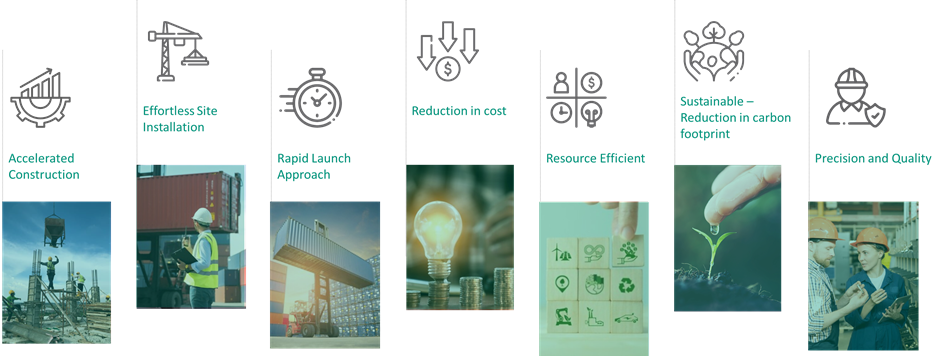
      Key benefits in practice include:

      • Faster deployment:
        By shifting fabrication and integration into controlled factory environments and enabling parallel execution, modular delivery significantly shortens time-to-capacity and reduces reliance on site conditions.
      • Improved capital efficiency:
        Standardized designs and off-site fabrication reduce rework, limit site disruption, and lower overall delivery costs -reinforcing lifecycle-focused thinking discussed in Lifecycle Costing & Capital Budgeting.
      • Greater predictability during qualification:
        Earlier integration and factory-based testing reduce late-stage congestion and improve first-time-right outcomes in GMP environments.
      • Enhanced sustainability performance:
        Modular execution typically reduces material waste, lowers concrete usage, and shortens on-site construction activity, contributing to a lower construction-phase environmental footprint.
      • Built-in expandability:
        Repeatable layouts and pre-engineered systems enable faster future expansions with less disruption to ongoing operations.

      To put these benefits into practical context, consider a 15,000 sqm pharmaceutical manufacturing facility executed using a modular prefabricated (MMF) approach and compared against a conventional site-built delivery on a like-for-like basis:

      • ~30% faster completion, driven by parallel workstreams and reduced site dependency
      • ~25–30% lower delivery costs, reflecting standardization and reduced rework
      • Substantially lower concrete usage and a material reduction in construction-phase carbon footprint
      • ~25% faster future capacity expansion due to modular layouts and pre-engineered systems

      While outcomes vary by project and context, this comparison highlights how modular prefabrication can materially improve speed, cost efficiency, and sustainability relative to traditional execution models.

      Designing Infrastructure for an Uncertain Future

      The pharmaceutical industry has always balanced innovation with regulation and long-term investment. What has changed is the pace at which those balances must now be struck. Manufacturing infrastructure decisions made today shape not only operational performance, but strategic flexibility for years to come.

      Traditional facilities will remain essential for large-scale, long-term production. However, the analysis presented here shows that they are no longer the only answer. Modular and prefabricated approaches offer a complementary way to deploy capacity faster, manage capital risk more deliberately, and reduce environmental impact, particularly in environments where demand, technology, or market access remain uncertain.

      For industry leaders, the question is no longer whether modular approaches are technically viable. It is whether infrastructure strategies are sufficiently aligned with portfolio realities and risk tolerance. Manufacturing infrastructure can no longer be treated as a static asset designed solely for scale and longevity. In today’s operating environment, facilities increasingly determine how quickly scientific progress can be translated into commercial reality – a theme also explored in What It Takes to Build Pharmaceutical Facilities from Day One.

      For organizations planning new or expanded manufacturing capacity, the following steps can help align infrastructure decisions with current operating realities:

      • Reassess infrastructure assumptions early, before design and capital commitments become irreversible.
      • Evaluate modular and prefabricated options alongside traditional builds, not as afterthoughts.
      • Model infrastructure decisions at the portfolio level, considering speed, flexibility, and sustainability in addition to capacity.
      • Engage regulatory and quality teams early to align qualification strategies with evolving delivery models.

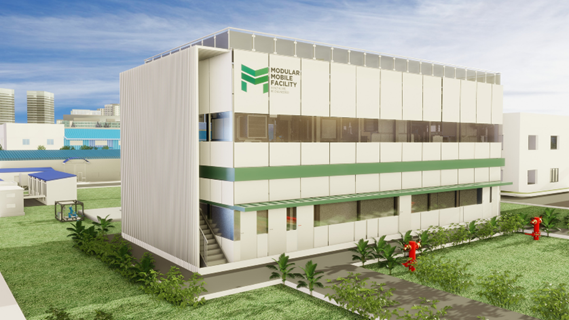
      In practice, modular and mobile facility platforms are beginning to translate these principles into deployable infrastructure. Modular Mobile Facility (MMF) offers an example of how standardized, prefabricated, and turnkey facility concepts can be applied to pharmaceutical manufacturing. Built around pre-engineered and pre-validated design platforms, MMF’s approach illustrates how modular strategies can support faster deployment, reduced execution risk, and scalable expansion in regulated environments.

      In an industry defined by uncertainty, the competitive advantage may no longer lie in building the largest or most permanent facilities. It lies in designing infrastructure that can be deployed predictably, adapted over time, and aligned with the realities of innovation itself.