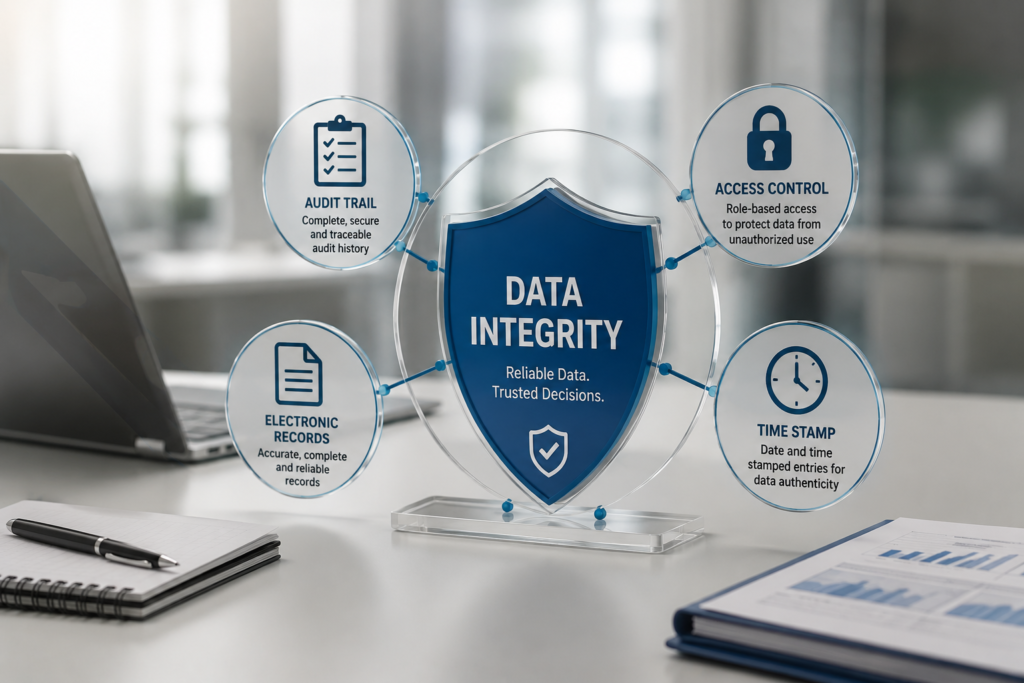
How Are Companies Using AI for Predictive Maintenance in Their New Pharma Plants?

AI for Predictive Maintenance in Pharma Plants

A tablet press breaking down at 2 a.m. doesn’t just mean a repair bill; it also means a loss of production.trigger a product-impact assessment, a deviation investigation, additional testing or a line that remains idle while the engineering and quality teams investigate. That one breakdown is why many pharma companies are now incorporating AI for predictive maintenance into their new facilities, rather than adding it later.

This piece examines what that really looks like on the ground: the sensors, the software, the personnel, and the practical challenges of operating in a GMP-regulated environment, including in a market like Mumbai.

What Predictive Maintenance in Pharma Plants Actually Means
What Predictive Maintenance in Pharma Plants Actually Means

Most older plants still run on a combination of corrective maintenance and scheduled preventive maintenance: fix it when it breaks, or service it on a fixed calendar, whether or not it needs it. Both approaches have limitations when they are used without appropriate condition monitoring. Breakdown maintenance halts the line without warning. Maintenance by calendar often replaces parts that still have life left in them or misses a problem that shows up between two scheduled visits.

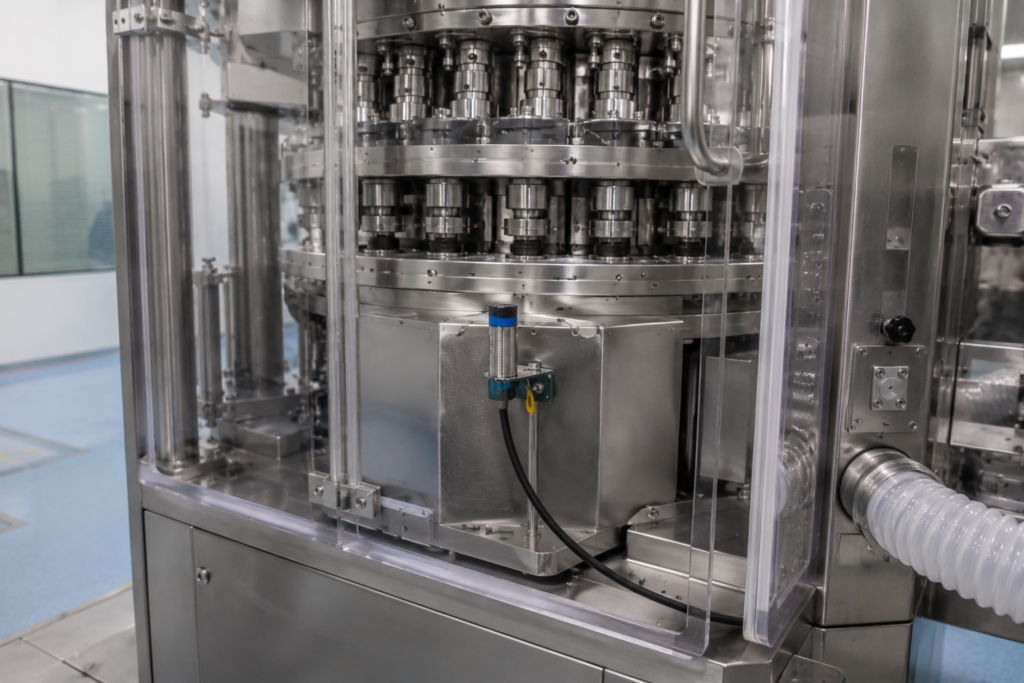
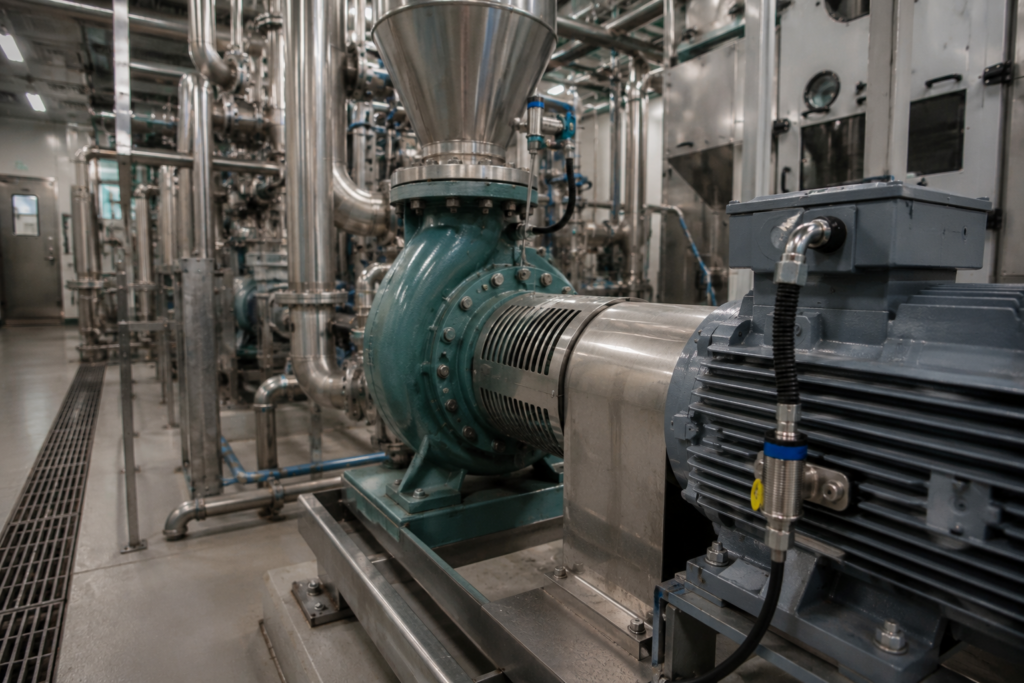
Predictive maintenance in modern pharma plants introduces a condition-based approach supported by equipment data and analytics. Vibration, temperature, motor current and pressure sensors can be installed on selected compressors, centrifuges, tablet presses, HVAC components and filling-line equipment to collect data continuously or at defined intervals, depending on the asset and its operating condition. A machine learning model trained on this data can establish expected operating patterns and identify changes associated with defined degradation or failure modes before functional failure occurs.

Briefly:

  • Preventive maintenance is calendar-based.
  • Predictive maintenance is based on the actual condition of the equipment.

The second method can identify selected degradation patterns that scheduled maintenance may not detect between inspections and can reduce unnecessary maintenance interventions. However, it does not replace statutory inspections, calibration activities, safety checks or preventive maintenance tasks that remain necessary under the approved maintenance programme.

Why New Plants Are Designing This In From Day One

You can retrofit sensors and software on old equipment, but it’s slower and more expensive than wiring a new facility for it from the get-go. This is why AI and automation are increasingly being considered as part of the core engineering brief for greenfield pharma projects, not as an add-on.

It’s important to recognise that predictive maintenance is just one part of a broader transition toward pharma manufacturing automation in new facilities. Several factors are driving this trend.

The costs of sensors, edge devices and data platforms have decreased for many applications, making broader equipment monitoring more feasible. However, monitoring should still be based on asset criticality, identifiable failure modes and a clear business or quality-risk justification rather than automatically covering every asset in the plant.

Regulatory agencies are giving increasing attention to the controlled use of AI within the pharmaceutical product lifecycle. The US FDA’s January 2025 draft guidance presents a risk-based framework for assessing the credibility of AI model outputs used to support regulatory decision-making concerning drug safety, effectiveness or quality, including relevant manufacturing applications. It does not specifically mandate predictive maintenance, but it reinforces the need for defined context of use, appropriate data, model governance and human oversight when AI outputs influence regulated decisions.

Export-oriented manufacturers and pharmaceutical clients may also place greater value on accessible and traceable electronic equipment-health and maintenance records. However, properly controlled paper records can remain acceptable, and the use of an electronic system does not by itself establish GMP compliance.

Losing a batch on a new, costly line is significantly more expensive than losses on depreciated equipment.

How AI for Predictive Maintenance in Pharma Plants Works, Step by Step
How AI for Predictive Maintenance in Pharma Plants Works, Step by Step

Here’s a quick breakdown of the daily run of this on a modern line:

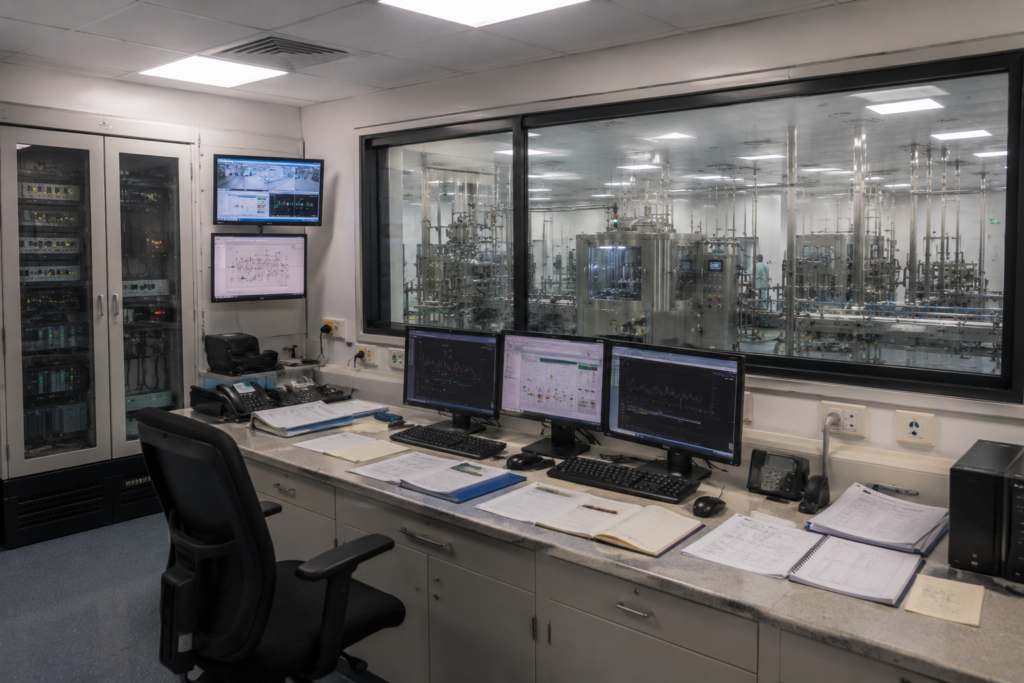
  1. Sensors gather data: Vibration, temperature, torque, and pressure readings are taken from equipment such as tablet presses, granulators, autoclaves, and lyophilisers at a sampling frequency engineered for the equipment, its operating cycle and the degradation mechanism being monitored.
  2. Data goes to a central platform: Readings are ingested into a cloud or on-premise system along with data from the plant historian, MES, and existing SCADA systems. Depending on the application, information may also be integrated from the BMS, EMS, CMMS or enterprise asset-management system. Cloud deployment requires appropriate consideration of cybersecurity, access control, data ownership, availability and backup arrangements. 
  3. Machine learning algorithms search for drift: Models compare live readings with known equipment behaviour and known failure patterns such as bearing wear signatures or seal degradation.
  4. The system raises an alarm before a breakdown: Maintenance receives an early indication when the monitored condition exceeds an approved threshold or the model detects an abnormal operating pattern. The available warning period can range from a short interval to several weeks or months, depending on the failure mode, equipment condition, operating profile and quality of the available data.
  5. Work orders and records are automatically created: Where the analytics platform is appropriately integrated with a CMMS or enterprise asset-management system, reviewed alerts can initiate an approved assessment or work-order process. The configuration, approval route and associated electronic records should be governed according to the system’s GxP impact and the organisation’s maintenance and quality procedures. 

That’s the flow that makes a featured snippet-worthy answer to “How does predictive maintenance work in pharma?”: sensors collect, software analyses, the system alerts early, and the team acts on a schedule, not a surprise.

The Real Benefits Companies Are Reporting
The Real Benefits Companies Are Reporting
  • Fewer unplanned stopovers: Identify equipment drift early, and you’ll lose fewer batches to a mid-run breakdown.
  • Prolonged equipment life: By basing service on actual wear and tear, rather than on a fixed calendar, unnecessary replacement of parts and stress on machinery are reduced.
  • Stronger compliance posture: An unplanned failure of a reactor, centrifuge or critical utility component is not simply a downtime event. It may result in a deviation investigation, product-impact assessment, further testing and, in some cases, batch rejection. Detecting a developing condition early may reduce the probability of a product-impacting failure and provide more information for a timely engineering and quality assessment. It does not automatically eliminate the need for deviations, change control or other quality-system actions.
  • Reduced cost of ownership: Fewer emergency repairs, fewer rush orders for spare parts, fewer overtime hours for maintenance workers.

Pharma Engineering Solutions with AI: Where This Fits in Plant Design

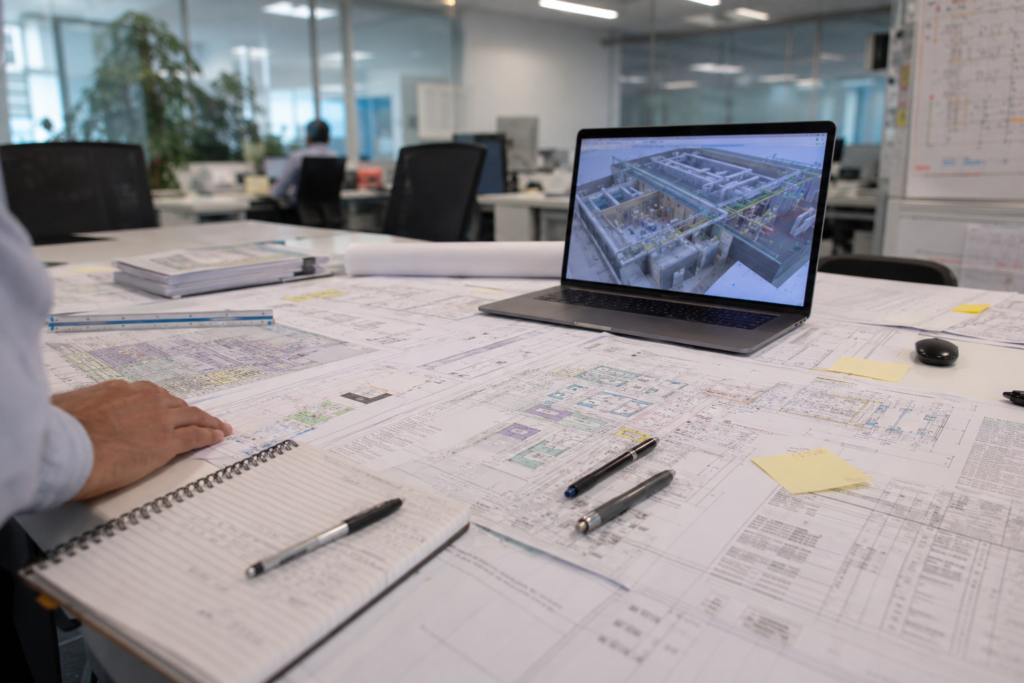
Often, the best results are from projects where automation and monitoring are part of the engineering design process with AI and not added after commissioning. This means deciding at the design stage where sensors are placed, how data flows between the process control layer and the maintenance software, and how the whole setup lines up with commissioning, qualification, and validation (CQV).

This is where companies offering integrated pharmaceutical engineering, automation and digital-infrastructure solutions can bring real value. Pharma Access, for example, works at this very intersection for its turnkey pharma projects, coordinating HVAC, pharmaceutical utilities, process systems, automation, BMS, EMS, IT/OT infrastructure and CQV requirements so that a new facility can be designed with the infrastructure needed to support condition monitoring and future analytics applications. Getting this sequence right at the design stage avoids costly rework once the plant is running.

Challenges in Pharmaceutical Companies in Mumbai and Across India

Mumbai and the broader Indian pharma belt have real strengths here: a large pool of engineering talent, strong export volumes, and companies that already compete on the global stage. However, the challenges faced by pharmaceutical companies in Mumbai and other manufacturing hubs are not small.

Common barriers include:

  • Site-specific infrastructure readiness: Power quality, network reliability, server architecture and cybersecurity capabilities vary between facilities and locations. New projects should therefore assess redundancy, backup power, offline data buffering and system-recovery requirements during the engineering stage.
  • The transition between paper-based and electronic records: Regulatory and inspection environments may involve paper-based, electronic or hybrid documentation. Companies implementing AI-enabled condition monitoring should ensure that relevant records remain controlled, accessible, traceable and suitable for review regardless of the inspection format.
  • Talent and change management: Maintenance teams require training to understand, evaluate and act on AI-generated alerts rather than viewing the system as just another dashboard. Engineering judgement remains essential because an alert should support, rather than replace, a qualified person’s assessment.
  • Budget pressure: Small and mid-sized manufacturers may see digital monitoring platforms as an IT cost rather than an investment in plant reliability, making them slower to adopt than larger export-oriented firms. A phased implementation focused on critical assets can provide a more practical route than attempting plant-wide deployment from the beginning.

The opportunity is that greenfield projects in India can incorporate scalable digital and automation infrastructure from the design stage, avoiding some of the integration constraints that arise when condition-monitoring systems are retrofitted into legacy facilities.

What Regulators Expect

Globally, the FDA has released a draft guidance from January 2025 that explains a risk-based approach to establishing the credibility of AI model outputs used to support regulatory decision-making regarding the safety, effectiveness or quality of drugs and biological products. The guidance can be relevant to manufacturing applications when an AI output supports a regulated quality or regulatory decision, but it is not a predictive-maintenance standard and does not require manufacturers to implement AI-based maintenance.In India, the CDSCO continues to move forward with digital initiatives, including its Digital Drugs Regulatory System. At the same time, pharmaceutical manufacturers should be prepared to present reliable and understandable maintenance information during inspections conducted through paper-based, electronic or hybrid workflows. 

Pharma manufacturers who are deploying automation and condition monitoring need systems that provide clear, timestamped, audit-ready records, not just alerts on a screen, so that domestic and international inspectors can trace every maintenance action back to its cause.

Getting the Engineering Right From the Start
Getting the Engineering Right From the Start

The plants with the best results are not those that tacked AI on as an afterthought. They are the ones where the engineering design, the automation layer, and the maintenance strategy were designed together from the first drawing. That is the true difference between a facility that reacts to breakdowns and one that anticipates them.

If you are planning a new facility and want to build in automation and monitoring instead of adding it on later, Pharma Access partners with pharma companies on this exact type of turnkey planning, from engineering design through construction, CQV, and project management.

By considering equipment criticality, sensor infrastructure, automation architecture, data flow, maintenance-system integration and GxP requirements during the design stage, project teams can create facilities that are better prepared for condition-based maintenance and future AI applications. 

Frequently Asked Questions

Is AI predictive maintenance mandatory for new pharma plants in India? 

No, it is not mandatory under CDSCO or Schedule M now. The applicable requirements focus on appropriate equipment maintenance, calibration, documentation and pharmaceutical quality-system controls rather than prescribing AI as a specific technology. Companies may adopt predictive maintenance where it provides a justified reliability, quality-risk or operational benefit.

How much does predictive maintenance reduce downtime in a pharma plant? 

Results vary from plant to plant, but companies that use real-time analytics and AI monitoring often see significant reductions in unplanned downtime and batch failures, largely because of the ability to detect problems weeks before they become a breakdown.The result depends on asset criticality, detectable failure modes, sensor quality, data history, model performance, maintenance response time and the way the system is integrated into operational procedures. 

What equipment benefits most from predictive maintenance in pharma plants? 

High-value, high-risk assets have the quickest payback. That includes tablet presses, centrifuges, compressors, HVAC, and autoclaves, as a failure on any of those can directly affect the quality of a batch or the classification of the facility.

Does predictive maintenance replace the maintenance team? 

No. It shifts the focus of the team. Now, engineers spend more time doing planned interventions based on real data from the equipment itself rather than routine checks and emergency repairs.The maintenance team still has to assess alerts, determine whether the detected pattern is technically meaningful, coordinate the intervention, complete post-maintenance checks and document the equipment’s return to service. AI supports engineering decisions; it does not replace qualified maintenance personnel. 

Can predictive maintenance help during CDSCO or FDA inspections? 

It can support inspection readiness, but the technology itself does not establish compliance. A well-designed system generates a historical record with time stamps of the condition of equipment and all maintenance activities, which is the audit trail inspectors require during GMP inspections.
Top Pharma Turnkey Company in Andheri West, Mumbai

Top Pharma Turnkey Company in Andheri West Mumbai

Mumbai’s pharmaceutical sector is one of the most active in the country. And within Mumbai, Andheri West has quietly become a preferred address for pharma consultancy and engineering firms. If you are planning to set up or expand a pharmaceutical facility, finding the right pharma turnkey company in Andheri West can save you months of coordination and a great deal of money.

This post explains what pharma turnkey projects services actually cover, why Andheri West works as a base for these companies, and what you should check before signing with any firm.

What Does a Pharma Turnkey Company Actually Do?

A pharma turnkey company takes responsibility for a project from start to finish. The client hands over the requirements, and the firm manages everything: engineering design, procurement, civil construction, equipment installation, and final validation.

Let’s break it down. A standard turnkey scope for a pharmaceutical facility covers:

  • Engineering design: Process flow development, cleanroom classification, HVAC system design, MEP (mechanical, electrical, plumbing), piping, waste management, and automation.
  • Procurement and supply: Sourcing process equipment and machinery that meet cGMP standards.
  • Construction and installation: Civil, structural, and architectural work along with modular cleanroom build-outs.
  • Commissioning, Qualification, and Validation (CQV): Testing and documenting that every system performs as intended before a drug product is manufactured.
  • Project management: Scheduling, budgeting, vendor coordination, and regulatory documentation.

When a firm offers all of these under one roof, the client avoids coordination gaps between multiple contractors when challenges arise during project execution. The turnkey model puts accountability in one place.

Why Andheri West Works for Pharma Turnkey Firms

Andheri West is not a random choice. Here is why the location makes practical sense for a pharma turnkey company in Mumbai.

  • Connectivity to pharma manufacturing clusters: Maharashtra’s major pharma production zones, including those in Navi Mumbai, Taloja, Ambernath, and Badlapur, fall within a 45 to 90-minute drive of Andheri West. Project teams can reach sites without losing half a day to commute.
  • Access to talent: Mumbai has a large pool of pharmaceutical engineers, cGMP compliance professionals, and project managers. Andheri West’s position near the Western Express Highway and its metro connectivity makes it easier for firms to attract and retain qualified staff.
  • Airport proximity: Chhatrapati Shivaji Maharaj International Airport sits adjacent to Andheri. For firms running projects in the MENA region, Southeast Asia, or other international markets, this matters every week. Engineers and project leads can fly out and return without losing two days to travel logistics.
  • Vendor and supplier ecosystem: Andheri and its neighbouring areas in western Mumbai host a large number of industrial equipment suppliers and specialised contractors. A turnkey firm operating from here can hold supplier meetings, inspect samples, and finalise contracts without extensive travel.
  • Regulatory access: Key government and regulatory offices, including those linked to the Central Drugs Standard Control Organisation (CDSCO), are reachable from Mumbai. Being in the city puts a firm closer to the regulatory conversation.

What Services Should a Good Pharma Turnkey Company Offer?

Not every firm that calls itself a pharma turnkey company delivers the same scope. Here is what a genuinely full-service firm should cover.

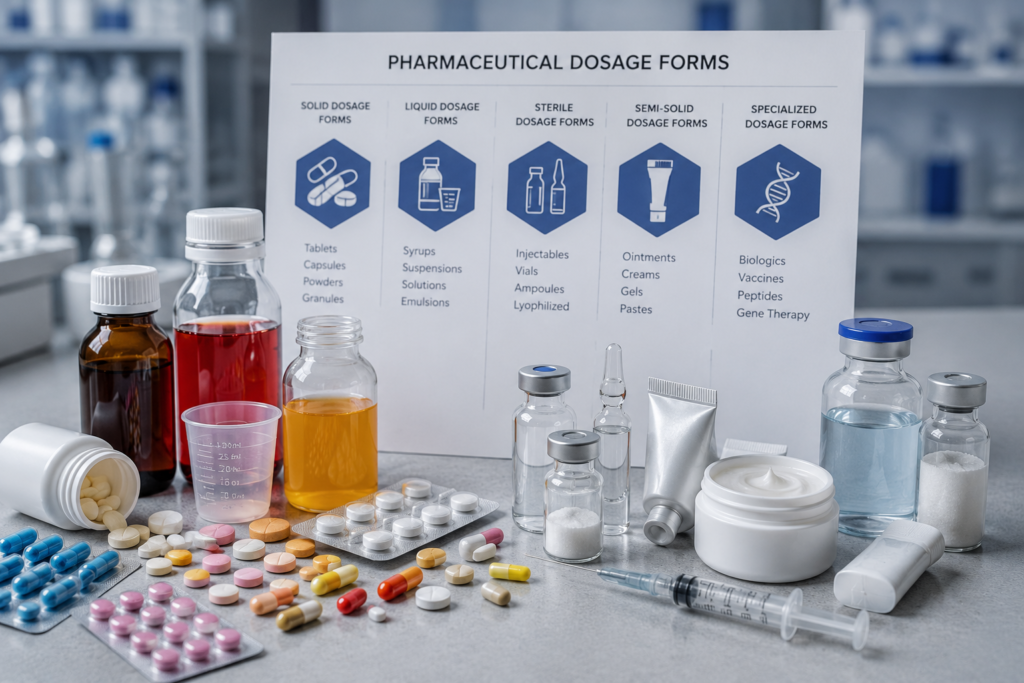
Engineering Design for Diverse Dosage Forms

Engineering Design for Diverse Dosage Forms

The engineering work should go beyond generic cleanroom drawings. A capable firm should design facilities for:

  • Oral solid dosage (OSD): tablets, capsules, sachets, effervescent and extended-release formats
  • Sterile manufacturing: injectables including LVP, SVP, vials, ampoules, pre-filled syringes, and lyophilised products
  • Oral liquid dosage: syrups, suspensions, emulsions
  • Biotechnology: monoclonal antibodies, vaccines, cell and gene therapy, peptides, insulin
  • Active pharmaceutical ingredients (API): covering biological routes, chemical routes, oncology, and cephalosporins

Each dosage form has a different contamination risk profile, and the facility design, HVAC classification, and pressure differentials must match those risks. A firm that has actually built different types of facilities brings a different calibre of thinking to the design table.

Regulatory Compliance Built into the Design

GMP compliance is not something you bolt on at the end. It needs to be baked into every design decision: room finishes, air change rates, material flow, personnel flow, drain placement. A firm that builds facilities for GMP-regulated environments should be familiar with WHO GMP guidelines, US FDA cGMP requirements (21 CFR Parts 210 and 211), EU GMP Guidelines, including Annex 1 where applicable, and the Revised Schedule M requirements under the Drugs and Cosmetics Rules.

The Drugs and Cosmetics Act, 1940, along with the Drugs and Cosmetics Rules and subsequent amendments, governs pharmaceutical manufacturing in India. The Revised Schedule M prescribes the Good Manufacturing Practices (GMP) requirements that pharmaceutical manufacturers are expected to follow. Any pharma turnkey firm working in India should have a thorough understanding of these regulatory requirements.

Commissioning, Qualification, and Validation (CQV)

Commissioning, Qualification, and Validation (CQV)

CQV is where a lot of turnkey projects go soft. Design and construction can look fine on paper, but if the firm cannot qualify the HVAC system, validate the water system, or complete the equipment qualification documentation to a regulatory standard, the client ends up hiring another consultant to fix it. A proper pharma turnkey company in Andheri West should have in-house CQV capability, not just engineering teams.

Modular and Prefabricated Facility Options

Conventional construction takes time. Modular construction, where sections of the facility are prefabricated off-site and assembled on location, cuts project timelines and reduces on-site risk. Some firms have developed proprietary modular facility concepts that allow faster installation with consistent quality.

Project Management Across Geographies

A pharma turnkey firm with a strong track record will have completed projects outside India. This matters because it signals that the firm can manage international vendor relationships, deal with customs and logistics, and coordinate multilingual teams on site.

Critical Utility Systems

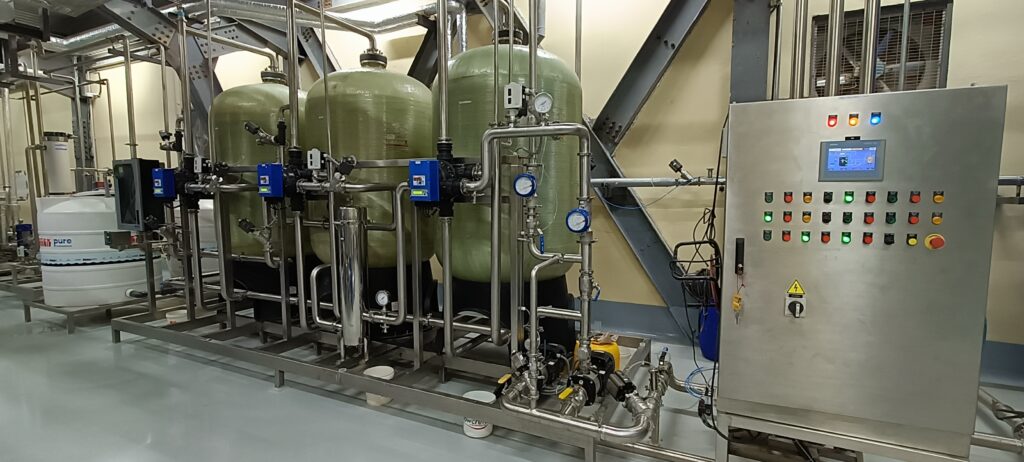
In addition to process equipment and facility construction, a pharmaceutical turnkey project should include the engineering and integration of critical clean utility systems, including Purified Water (PW), Water for Injection (WFI), Clean Steam, Compressed Air, HVAC, Building Management Systems (BMS), and Electrical & Utility Distribution Networks. These systems are essential for maintaining GMP compliance, supporting reliable manufacturing operations, and ensuring consistent product quality throughout the facility lifecycle. 

Pharma Access: A Pharma Turnkey Company in Andheri West

Pharma Access is headquartered at 702, Supreme Chambers, Veera Desai Road, Andheri West, Mumbai 400053. The firm has been in pharma turnkey consulting since 2001 and has delivered over 120 projects across more than 18 countries.

Their scope spans engineering design, procurement and supply, civil construction, CQV, and project management. The firm covers all major dosage forms including biotechnology, sterile manufacturing, OSD, oral liquid dosage, and API facilities.

Pharma Access holds ISO 9001:2015 (Quality Management Systems), ISO 14001:2015 (Environmental Management Systems), and ISO 45001:2018 (Occupational Health and Safety) certifications. internationally recognised management system certifications that reflect the company’s commitment to quality, environmental responsibility, and workplace safety.

Pharma Access combines multidisciplinary engineering expertise with structured project management capabilities to support pharmaceutical projects across diverse dosage forms and regulatory environments. Their team includes over 70 engineering personnel, 12 discipline subject matter specialists, and 8 technical project managers. They also developed a Modular Mobile Facility (MMF) concept, which applies prefabricated construction to pharmaceutical environments for faster project delivery.

Clients include Dr. Reddy’s, Piramal, Aragen, Al Shifa, and projects in Algeria, Saudi Arabia, Egypt, Syria, and the Middle East.

This level of scale and geographic spread is worth mentioning because it tells you the firm has managed regulatory differences, logistics complexity, and technical challenges across different markets.

How to Evaluate a Pharma Turnkey Company Before You Hire One

Next steps matter once you start comparing firms. Here is a practical checklist.

1. Ask for project references in your specific dosage category: A firm that has done 50 OSD plants but never handled a sterile injectable facility is not the right partner for your injectables project. Ask specifically.

2. Check the CQV capability: Request their standard CQV plan and ask who on the team holds the relevant qualifications. If they plan to subcontract the validation work, find out who to and what their quality standards look like.

3. Review their regulatory track record: Have they built facilities that successfully passed WHO inspections, USFDA audits, or EU GMP assessments? Ask for documented outcomes, not just claims.

4. Understand their project management method: A firm running multiple projects simultaneously needs a structured project management system. Ask how they track schedule, budget, and change orders across active projects.

5. Visit a completed facility if possible: Nothing replaces a site visit. Ask the firm to arrange a walk-through of a recently completed project. A completed facility often provides better insight into engineering quality, workmanship, and project execution than any proposal or presentation.

6. Confirm their ISO certifications are current: ISO 9001, 14001, and 45001 certifications are independently audited. Ask for the current certificate and verify the issuing body.

Andheri West vs Other Mumbai Locations for Pharma Consultancy

Some pharma turnkey firms operate from Lower Parel, BKC, or Navi Mumbai. Each has trade-offs.

BKC and Lower Parel are closer to corporate headquarters and banking, but they sit further from industrial corridors. Navi Mumbai is close to manufacturing zones like Taloja and Mahape but can be harder for international travel.

Andheri West balances proximity to the airport, access to western and central industrial corridors, and availability of technical talent from nearby residential areas like Goregaon, Malad, and Borivali. For a firm running international pharma projects, this combination works better than a purely corporate address.

Frequently Asked Questions

1. What is a pharma turnkey company, and what does it include? 

A pharma turnkey company manages the complete delivery of a pharmaceutical facility, covering design, procurement, construction, equipment installation, and validation. The client hands over the project brief, and the firm is accountable for delivering a ready-to-operate facility.

2. Why should I choose a pharma turnkey company in Andheri West specifically? 

Andheri West offers direct access to Mumbai airport, strong connectivity to Maharashtra’s pharma manufacturing clusters, a large pool of qualified engineers, and proximity to key suppliers and regulatory offices. These factors make it a practical base for firms running both domestic and international projects.

3. What regulatory standards should a pharma turnkey firm be familiar with in India? 

Any firm working on Indian pharmaceutical projects should understand Revised Schedule M requirements of the Drugs and Cosmetics Act, WHO GMP guidelines, and CDSCO requirements. For export-oriented facilities, US FDA 21 CFR Parts 210 and 211 and EU GMP Guidelines, including Annex 1 where applicable, needed.

4. How long does a pharma turnkey project typically take from design to validation? 

Project timelines depend on the type of facility. A greenfield oral solid dosage plant may take 18 to 30 months. A sterile or biotech facility often takes longer, ranging from 24 to 48 months, because of the stricter design requirements, cleanroom classifications, and validation workload.

5. What is the difference between an EPC contractor and a pharma turnkey consultant? 

An EPC (Engineering, Procurement, and Construction) contractor covers design, sourcing, and building. A pharma turnkey consultant may also include CQV, regulatory documentation support, and GMP-specific engineering that goes beyond standard civil and MEP work. The pharma-specific layer, including cleanroom design, HVAC validation, and process equipment qualification, is what separates a general EPC firm from a dedicated pharma turnkey company.

How Mobile Racking Systems Improve Efficiency in Pharma Warehouses

How Mobile Racking Systems Improve Efficiency in Pharma Warehouses

A pharmaceutical warehouse is not a storage room. It includes active ingredients, finished drug products, and temperature-sensitive biologics that have a direct effect on patient safety. Every square meter, every access point, every storage decision, is regulatory weight.

This is where mobile racking systems come in handy. These are some of the most practical ways pharmaceutical facilities can get more out of their existing warehouse footprint while remaining aligned with Good Manufacturing Practice (GMP) compliance and Good Distribution Practice (GDP) requirements.

Let’s break it down.

What Are Mobile Racking Systems?

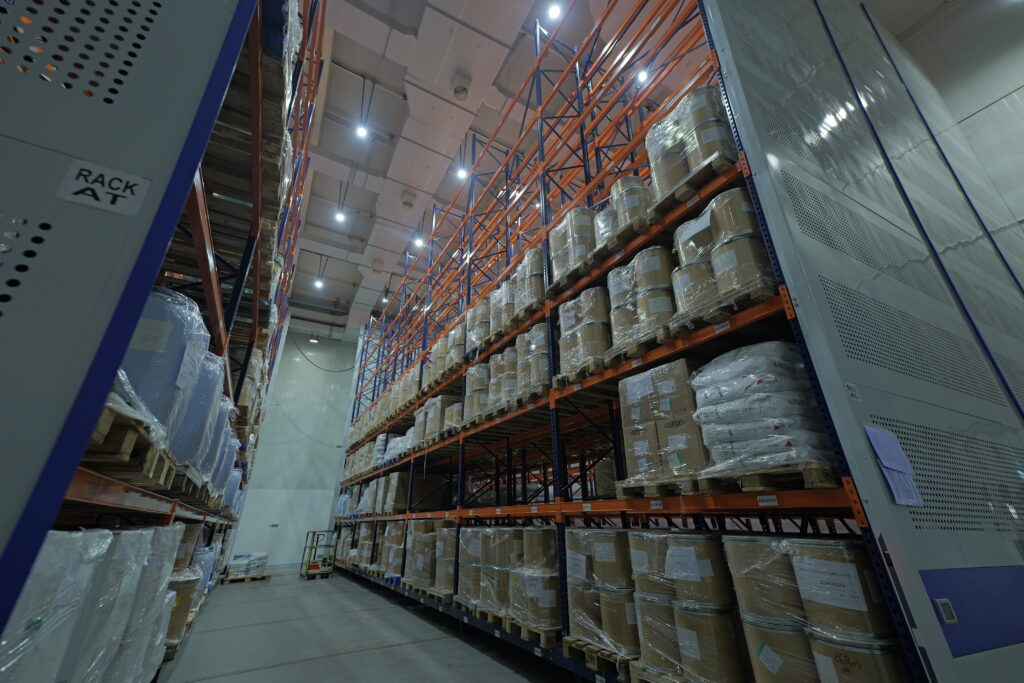
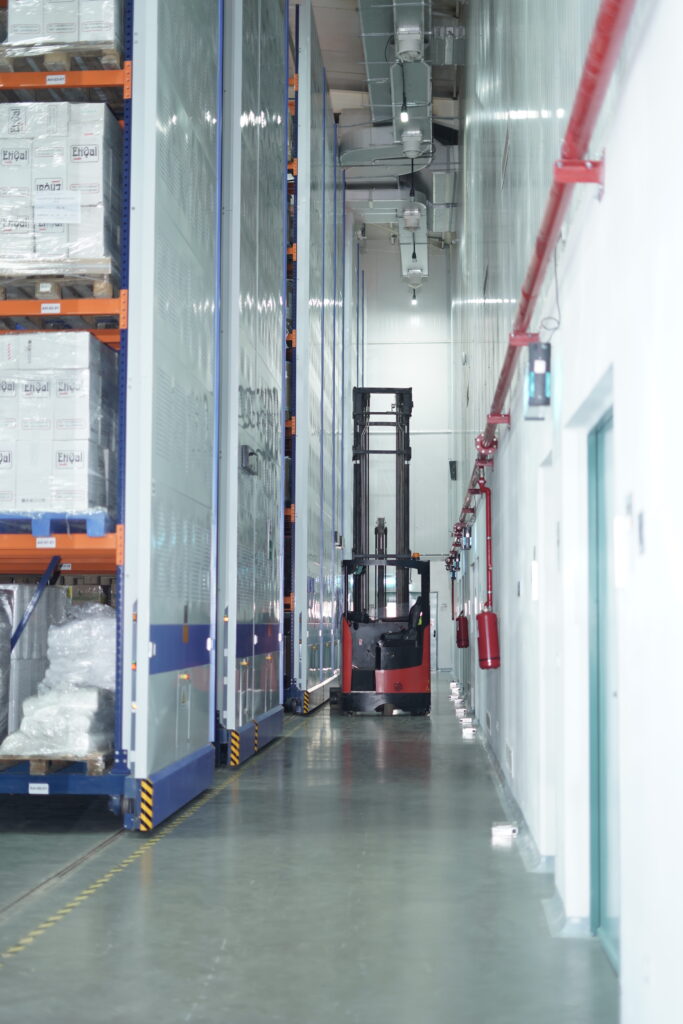
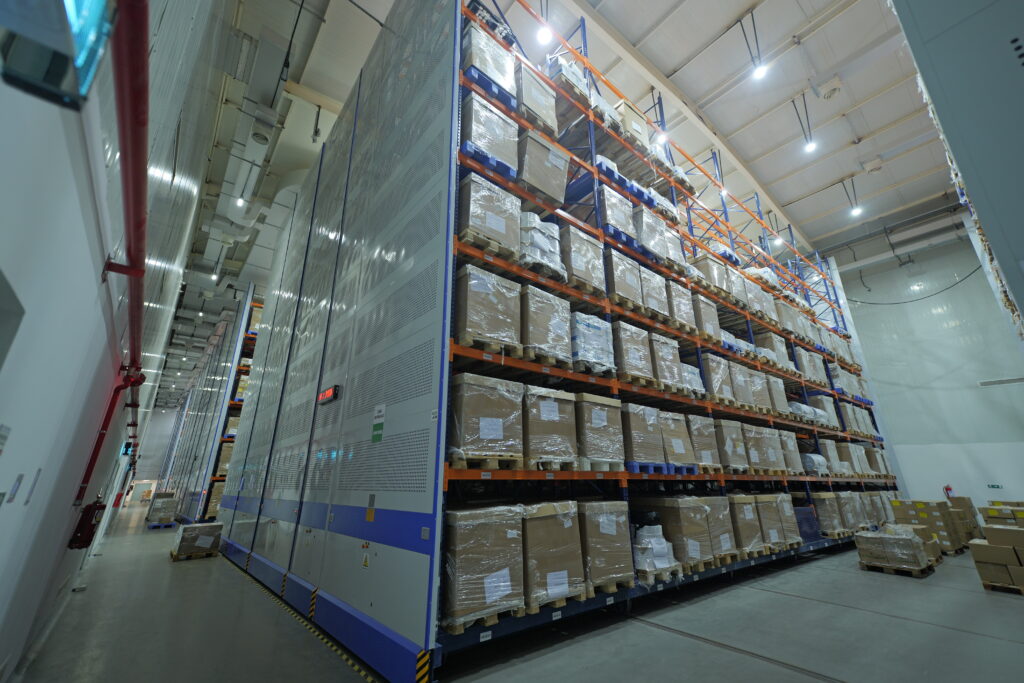
A mobile racking system is a storage system in which shelving units or pallet racks are mounted on motorized or mechanical carriages that move on rails mounted on the floor. Rather than having multiple permanent aisles running between static rows of racking, the whole bank of racks moves to create a single access aisle wherever the operator needs it.

If a worker needs to retrieve goods from a specific row, the adjacent rack units slide apart on their rails, creating an aisle on demand. Most systems open an aisle in 10-20 seconds. Control options range from simple push-button panels to integration with warehouse management systems (WMS).

This design eliminates the dead space that static racking provides. A typical warehouse can use up 50 to 60 percent of its floor space in aisle space alone without storing a single pallet. Mobile racking takes back that space.

Why Pharma Warehouses Have Unique Storage Demands

To understand what mobile racking systems can do, it is useful to know what makes pharmaceutical warehouse storage different from general industrial storage.

The challenge is that Pharmaceutical warehouses are subject to GMP and GDP rules that encompass everything from temperature control and humidity to product segregation, traceability, pest control, and documentation. The World Health Organization’s GDP guidance and the EU’s Good Distribution Practice requirements both require that medicines be stored under controlled conditions throughout the supply chain to ensure their safety and efficacy.

Which in practice means:

  • Clearly separated storage areas for quarantined, released, returned, and rejected materials
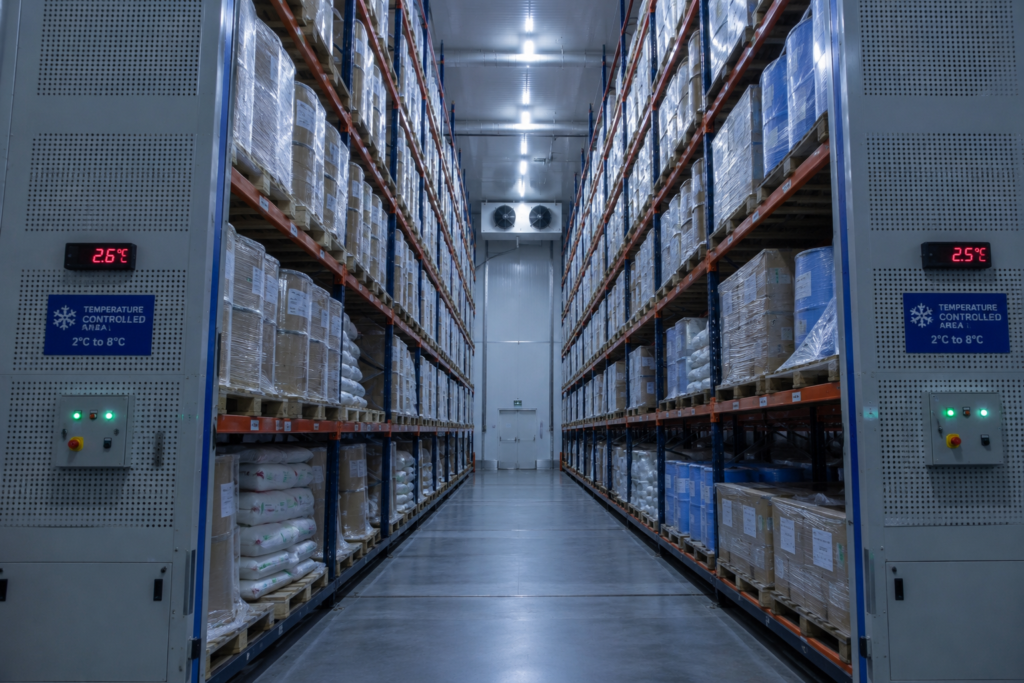
  • Cold chain conditions in temperature-controlled areas (typically +2 to +8°C for biologics and vaccines and +15 to +25°C for ambient pharmaceuticals)
  • FEFO inventory rotation (First Expired First Out) to prevent expired stock from entering the distribution chain
  • Real-time inventory traceability and accurate batch documentation
  • Storage area and racking structure cleaning and housekeeping records
  • Monitoring of humidity and temperature with validated equipment and documented deviations

Static shelving and fixed pallet racking can satisfy some of these needs, but they are much less space efficient and difficult to reconfigure as regulations or product lines change. Mobile racking eliminates both problems.

How Mobile Racking Systems Improve Pharma Warehouse Efficiency

1. Significant Space Gains Without New Construction

Significant Space Gains Without New Construction

The most direct benefit is the increase in storage density. The mobile racking system can significantly increase storage density compared with conventional static racking systems, depending on the facility layout and operational requirements. Some systems remove unused aisles, increasing usable storage capacity by 50 percent or more.

This is a direct financial benefit for pharmaceutical manufacturers in urban locations, leased facilities, or temperature-controlled cold rooms where every cubic meter costs significant energy and construction. Building more warehouse space is expensive and takes a lot of time. In many facilities, expanding the building footprint is not feasible, making storage optimization within the existing envelope a more practical solution.

This is particularly true for cold storage areas. Cold rooms are some of the most expensive real estate in a pharma facility to build and operate. You can get more out of that envelope without expanding it, cutting capital and operating costs.

2. Support for FEFO and FIFO Inventory Management

GMP requires pharmaceutical warehouses to manage the flow of products in and out of storage. FEFO (First Expired, First Out) and FIFO (First In, First Out) principles are applied to ensure that the products do not stay in the storage beyond their expiry date, which is a regulatory non-compliance and patient safety issue.

Mobile racking systems support these practices by providing individual access to each row. With drive-in racking, the pallets are stored in deep aisles with only the front pallet being accessible, whereas with mobile systems, the operator can open up any aisle and access any row whenever they want. This means the warehouse team can pick stock by batch number and expiry date, without needing to work around blocked lanes or physically move pallets.

Mobile racking, when used with a warehouse management system (WMS) that tracks batch numbers and expiry dates in real time, makes FEFO compliance a practical and repeatable process, rather than a manual exercise with room for error.

3. Product Segregation and Contamination Control

The different product statuses in a warehouse need to be physically separated clearly in line with GDP guidelines. Quarantined goods should not be mixed with released stock. Dedicated and clearly identifiable storage areas are required for rejected, returned, and recalled products. Temperature-sensitive and ambient products need to be zoned.

Mobile racking systems can aid in this in a confined floor space. Color coding or lockable mobile system sections can be used to give visual cues for product status areas. Different product categories can be assigned to different carriages. The physical separation is maintained regardless of how the racks move in the course of the access operations.

For high-hygiene pharmaceutical environments, stainless steel construction may be selected due to its cleanability, corrosion resistance, and compatibility with GMP cleaning procedures. It is non-reactive, non-porous, and resistant to cleaning agents routinely used in GMP areas, allowing for easy documentation of maintenance and cleaning validation.

4. Temperature Zone Efficiency in Cold Storage

 Temperature Zone Efficiency in Cold Storage

Cold chain pharmaceutical products (vaccines, biologics, insulin, and associated products) need to be maintained at +2 to +8°C and kept there uninterrupted. Any excursions that are out of range will be subject to documented investigation and may result in batch rejection or recall.

Mobile racking systems are ideal for cold room and freezer environments with configurations rated for operation down to -20°C. The system reduces non-productive storage space within the cold room by minimizing permanent aisles, allowing better utilization of the refrigerated volume. Lower air volumes to condition imply better temperature distribution and less energy consumption by refrigeration equipment.

WHO GDP guidelines require cold storage areas to have backup power systems, temperature mapping that has been validated, and continuous monitoring with documented deviation responses. When properly designed and qualified, a mobile racking system can support more efficient airflow management and temperature distribution within cold storage environments, helping maintain compliance during temperature mapping and qualification activities.

5. Adaptability for Pharma Manufacturing Automation

Adaptability for Pharma Manufacturing Automation

The pharmaceutical industry is moving toward more pharma manufacturing automation in production and warehouse operations. Mobile racking systems are a natural fit for this direction, since they are designed to integrate with modern warehouse management tools.

Push-button controls, barcode-triggered aisle opening, and WMS integrations all allow the racking system to function within an automated or semi-automated warehouse without the full investment of an automated storage and retrieval system (AS/RS). For companies still operating at mid-scale, this is a practical middle ground between fully manual static storage and high-capital robotic systems.

With the growth of operations, mobile racking can be further expanded by increasing the number of carriage units, changing the rail configurations, or adding additional shelving levels without dismantling the core structure. This modular cleanrooms pharmacy design enables the facility to adapt to changing product portfolios and regulatory requirements over time.

Pharma Equipment and Manufacturing Process Design: Where Storage Fits

Warehouse design is often an afterthought in the planning of pharmaceutical facilities. The movement of raw materials, intermediates, and finished goods through the warehouse actually has a direct impact on production scheduling, batch traceability, and GMP audit readiness.

That is why when pharma equipment and manufacturing process design are done properly, warehouse layout is part of the engineering scope, not a separate procurement decision after the manufacturing areas are built. Facility design from the beginning must include racking type, aisle widths, zone designations, cleaning access, and temperature mapping points.

“Warehouse and storage design is an integrated part of the facility engineering scope,” says Pharma Access, which has over 25+ years of experience working on more than 100 pharmaceutical projects in the biotech, sterile, OSD, and API facility categories. Their end-to-end services include engineering design, procurement of pharmaceutical equipment and manufacturing infrastructure, construction and installation, and CQV (commissioning, qualification, and validation). When rack decisions are made in this broader context, the storage system meets the facility’s regulatory and operational requirements from day one, rather than being retrofitted later.

Validation and Qualification Considerations

Mobile racking systems installed in GMP-regulated facilities should be included within the overall facility qualification strategy. Depending on the warehouse classification and intended use, qualification activities may include installation verification, load testing, operational checks, cleaning procedures, maintenance requirements, and integration verification with warehouse management systems (WMS).

Proper documentation of the racking system, including load ratings, maintenance procedures, cleaning records, and qualification reports, helps support inspection readiness and long-term regulatory compliance. Incorporating these considerations during the facility design phase can reduce qualification challenges and support smoother project execution.

Considerations Before Choosing a Mobile Racking System

Considerations Before Choosing a Mobile Racking System

Mobile racking is not a must for every pharmaceutical warehouse. Here’s an easy way to figure out if it makes sense for a given facility:

Mobile racking is a great fit when:

  • Inventory volume exceeds floor space available
  • Cold room or freezer space is costly to build and operate
  • Several product categories require separate storage areas
  • FEFO compliance is hard to manage with the current static racking.
  • The facility wants to broaden its product portfolio without broadening floor space.
  • Static racking is suitable where:
  • Very high throughput. Need to access multiple aisles at the same time, all the time
  • Few SKUs are handled by the warehouse with simple rotation requirements
  • Budget considerations favor low initial capital costs

The structure of the floor also matters. Mobile racking passes concentrated loads via the carriage bases to the concrete floor. So, it is necessary to check the structural load capacity and floor levelness prior to installation. Fire suppression system layouts may also require modifications to maintain sprinkler coverage over mobile rack configurations, and should be reviewed in accordance with applicable local fire safety codes and insurance requirements..

The Role of Pharmaceutical Engineering Consultants in India

India is one of the largest exporters of finished pharmaceutical products and APIs in the world, with a plethora of facilities operating in regulatory jurisdictions like the US FDA, EU GMP, WHO, and CDSCO. In these facilities, storage and warehouse design must adhere to many overlapping sets of guidelines at the same time.

The practical advantage of this process is that there are pharmaceutical consultants in India who specialize in turnkey facility design, such as Pharma Access, based in Mumbai. They understand the local regulatory environment, have relationships with qualified equipment and racking vendors, and have documented experience with warehouse qualification to international inspection standards.

It is far more cost-effective for a manufacturer facing an EU GMP or WHO pre-qualification audit to have the warehouse racking and zone segregation design reviewed by an experienced consulting team before construction than to have to remediate after an inspection observation. Documentation packages for mobile racking must be included in the qualification file from day one and must contain load calculations, cleaning validation protocols, and GDP segregation zone maps.

Frequently Asked Questions

1. What is a mobile racking system, and how does it differ from static racking?

Mobile racking systems have shelving or pallet racks installed on motorized carriages running on rails on the floor. Aisles open on demand rather than remaining permanently available between every row. This leads to a dramatic increase in storage density, with some systems providing up to three times more pallet positions in the same floor space as static configurations.

2. Are mobile racking systems compliant with GMP and GDP warehouse requirements?

Yes, if properly specified. Mobile racking systems can be color-coded or lockable to meet GMP and GDP segregation requirements for products. Stainless steel options meet pharmaceutical surface cleanliness requirements. In addition, the facility design documentation shall address load capacity, floor strength, and fire suppression layout requirements for the system.

3. Can mobile racking systems be used in pharmaceutical cold rooms?

Yes. Mobile racking is very suitable for cold room and freezer applications, with some systems able to operate down to -20°C. Mobile racking reduces the unnecessary aisle air volume in the cold room, which contributes to a more uniform temperature distribution, thereby facilitating GDP temperature mapping and monitoring compliance.

4. How does mobile racking support FEFO inventory management in a pharma warehouse?

Mobile racking means that operators can open the required aisle on demand to access any row at any time. Unlike deep-lane drive-in racking, there is no need to move pallets to reach a particular batch number or expiry date. When using a warehouse management system that tracks expiry dates and batch numbers, FEFO rotation becomes a reliable and auditable process, rather than a manual workaround.

5. When should pharmaceutical companies involve consultants in warehouse racking decisions?

The sooner the better. The way you rack has implications for floor load calculations, fire suppression layouts, GDP zone segregation design, temperature mapping protocols, and the qualification documentation package. Having experienced pharmaceutical consultants in India or internationally involved during the facility engineering design stage and not post-construction avoids expensive design changes and helps to ensure that the storage system is inspection-ready from day one of operation.

How Modular Clean Rooms Support GMP Compliance in Pharmaceutical Manufacturing

How Modular Clean Rooms Support GMP Compliance in Pharmaceutical Manufacturing

All drug products reaching patients are based on Good Manufacturing Practice (GMP). Getting it right inside a pharmaceutical facility means controlling the air, the water, the surfaces, and every utility that touches your process. One of the most effective methods manufacturers are using today to meet these needs is modular clean rooms for pharmacy and biotech production.

Let’s examine how modular cleanrooms support GMP compliance in pharmaceutical manufacturing.

What Are Modular Clean Rooms for Pharmacy?

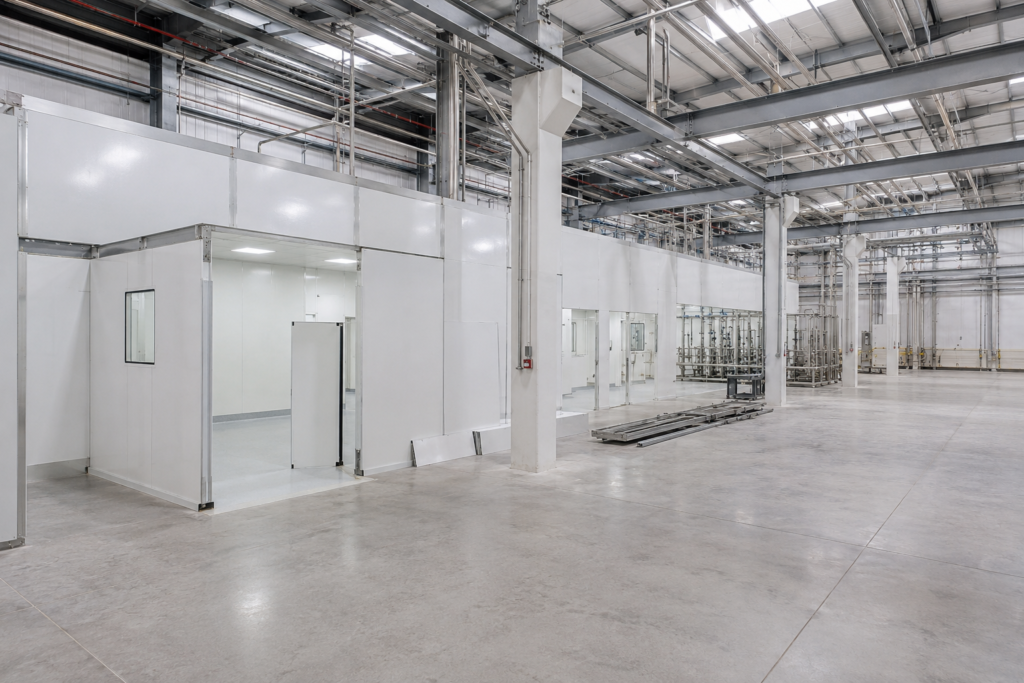
A modular pharmacy cleanroom is a pre-fabricated and pre-engineered controlled environment made from factory-manufactured panels, frames, HVAC modules, and accessories that are assembled on site. Unlike traditional stick-built construction, which assembles raw building materials piece by piece to create clean spaces, modular systems are delivered as finished components ready to install.

The cleanliness of air in the cleanroom is classified by the International Organization for Standardization according to ISO 14644-1:2015. The standard specifies nine classes of air cleanliness according to the maximum allowed number of airborne particles per cubic meter of air. The most relevant classes to pharmaceutical manufacturing are ISO 5, 7, and 8, which are commonly used alongside EU GMP Annex 1 Grades A through D depending on the process and contamination control requirements. For example, ISO Class 5 allows no more than 3,520 particles (≥0.5 µm) per cubic meter — about 100,000 times cleaner than normal room air.

Modular systems can be designed to meet ISO Class 3 through Class 8, with the most common for pharmaceutical applications being Class 5 through 7.

References:

Why GMP Compliance Starts With the Room Itself

Current Good Manufacturing Practice (CGMP) requirements for the manufacture of pharmaceuticals are codified by the U.S. FDA in 21 CFR Parts 210 and 211. Section 211.42 states that buildings shall be of suitable size, construction, and location to facilitate cleaning, maintenance, proper operations, and contamination prevention. The requirements are mirrored in the EU GMP Annex 1, updated in 2022, and are directly mapped to ISO cleanroom classifications.

Here’s why that matters in terms of room design: Regulatory inspectors frequently focus on environmental control deficiencies during inspections, which can result in FDA Form 483 observations, warning letters, and production interruptions. Getting your clean room architecture right from day one is not optional; it plays a critical role in whether your facility can successfully withstand a regulatory audit.

This is where modular pharmacy clean rooms come into play, providing manufacturers with a design that is built and tested to specification before it ever reaches the job site. Panel flatness, joint sealing, surface finish, and HVAC integration have all been confirmed as part of the factory quality control process before installation.

Clean Utilities vs. Black Utilities: Why Both Matter in a Modular Setup

Clean Utilities vs. Black Utilities:

One of the key considerations in pharmaceutical facility design is the distinction between clean and black utilities. This separation, inside a modular clean room, supports GMP compliance and contamination control objectives rather than being solely a design preference.

Clean utilities are utility systems that come into direct contact with the product or the product-contact environment. These include purified water (PW), water for injection (WFI), clean steam, process gases, and compressed air. “Each of these must meet rigid purity specifications, be qualified by qualification protocols, and be continuously monitored throughout the product life cycle.”

Black utilities are infrastructure systems that do not come into direct contact with the product but support facility operations. These include potable water, steam from a standard boiler, chillers, HVAC supply, electrical feeds, fire suppression, and more. Although the black utilities are outside the direct GMP boundary, their reliability has a direct impact on the performance of the clean side. A bad chiller disrupts HVAC temperature control; a boiler outage disrupts sterilization.

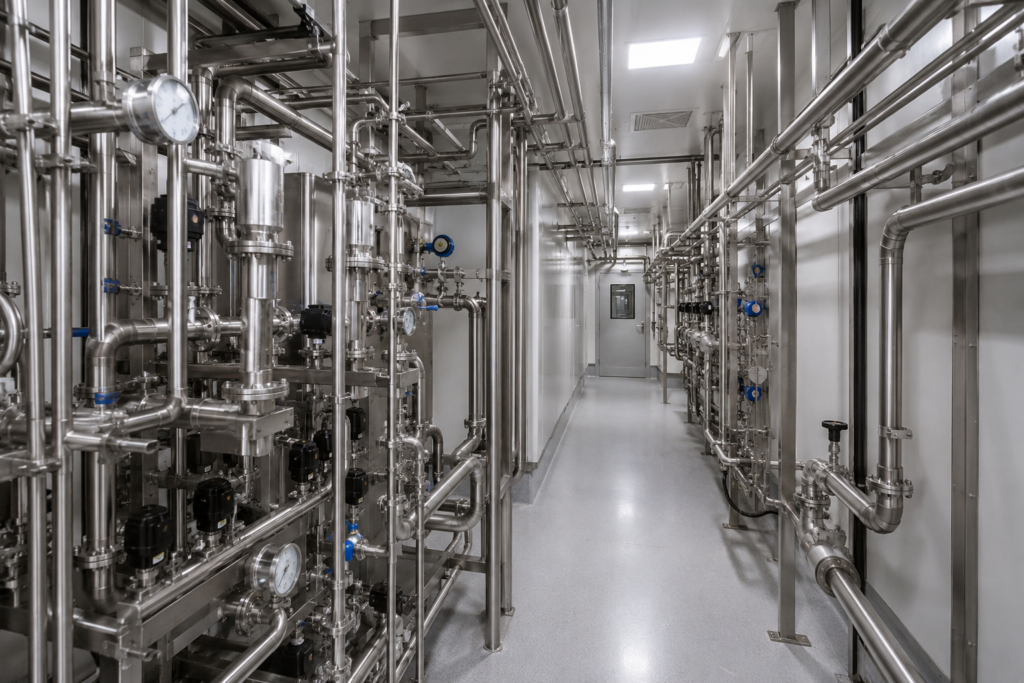
In a modular pharmacy clean room system, the clean and black utility zones are physically separated as part of the architecture, from the ground up. The modular wall system pre-designs the routing of WFI loops, clean steam lines, and process gas distribution, eliminating the dead legs and contamination risk points that often occur when improvising utility runs on site with traditional construction.

Modular Cleanroom Accessories That Support Regulatory Performance

Modular Cleanroom Accessories That Support Regulatory Performance

Modular cleanroom panels and frames are just the tip of the iceberg. The accessories that fit into the system have a direct impact on ISO classification and GMP compliance. Here’s what a well-specified modular arrangement typically includes:

  • HEPA and ULPA filtration units are built flush into ceiling grids, providing the necessary airflow and air change rates required to maintain room classification based on the facility’s contamination control strategy and HVAC design requirements.
  • Flush-mounted cleanroom lighting eliminates particle-trapping ledges and meets photometric requirements for production and inspection tasks.
  • Pressure differential pass-through chambers and airlocks between clean zones and adjacent spaces to prevent cross-contamination.
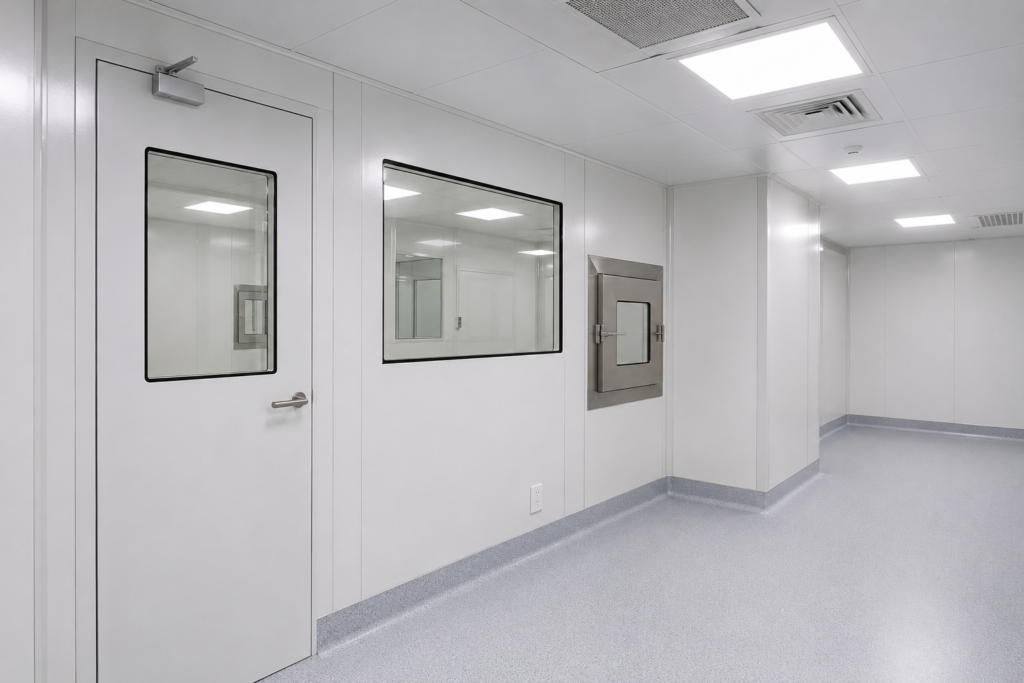
  • GMP-rated doors and windows with smooth, non-porous surfaces and gasket seals to keep classification boundaries at entry points.
  • Cove flooring transitions eliminate the 90-degree angles where particles and microbes can collect.
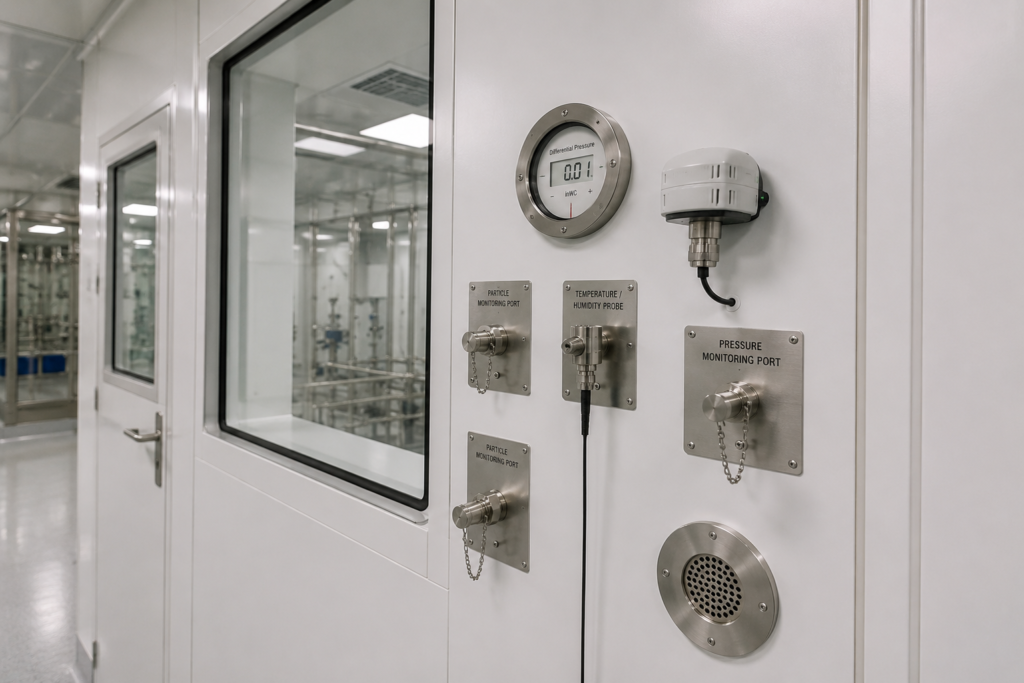
  • Wall panels with pre-installed environmental monitoring ports for particle counters, temperature probes, and pressure sensors without breaking the cleanroom envelope.

Panel surfaces in GMP-compliant designs should be smooth, non-porous, easy to clean, and resistant to cleaning and disinfection agents. Many manufacturers provide low-surface-roughness finishes to support cleanability and contamination control objectives. The modular panel manufacturers specify these values at the factory level, eliminating the ambiguity of site-applied coatings on traditionally built walls.

The Construction Advantage: Speed, Quality, and Less Risk

The Construction Advantage: Speed, Quality, and Less Risk

The speed of installation is one of the most practical reasons pharmaceutical manufacturers prefer modular pharmacy clean rooms over traditional construction. Studies show that modular systems can be significantly faster to deploy than traditional stick-built equivalents, depending on project scope and site conditions. Typical installation periods for modular cleanrooms can range from several weeks to a few months, whereas traditional construction projects often require substantially longer schedules.

Next steps from a project perspective also become clearer. Off-site fabrication in a factory reduces on-site labor hours—a lean manufacturing case study showed a 41% reduction in field hours for a modular facility with more than 85% of project hours completed off-site.

This is important for GMP compliance, as construction activity can introduce contamination risks that require additional controls and monitoring. In a pharmaceutical facility that’s active every day, a traditional cleanroom build is performed, which creates dust, particles, and moisture that need stringent controls. A modular approach significantly reduces that on-site exposure window.

Compliance also has another underrated benefit: reconfigurability. As regulations change or product lines shift, cleanroom modular panels can be moved, expanded, or upgraded without tearing down the entire space. This protects the long-term capital investment and can simplify future modifications and requalification activities when facility requirements or regulatory expectations evolve.

Pharmaceutical Procurement Consulting: Why Expertise Matters

Specifying and procuring a modular clean room system for a pharmaceutical facility is fundamentally different from purchasing conventional construction materials. The specifications are for structural panel performance, HVAC capacity calculations, filter grades, utility interface requirements, surface material certifications, fire ratings, and documentation packages for commissioning, qualification, and validation.

This is where consulting on pharmaceutical procurement can be a real differentiator. The right consulting partner bridges the gap between design intent and qualified vendors, verifies vendor documentation against applicable GMP and industry requirements, and manages the documentation trail that inspection teams will review. In procurement on a cleanroom project, getting it wrong means spending too much on specifications you didn’t need or underspecifying in areas that will lead to observations during a regulatory audit.

Organizations often benefit from working with experienced engineering and project delivery partners that can integrate design, procurement, construction, installation, and CQV activities under one coordinated approach. Pharma Access provides these capabilities through its turnkey project delivery model. Pharma Access’s team has 25+ years of experience on 120+ pharmaceutical projects in 18+ countries, managing everything from modular clean room design and engineering to procurement, construction, installation, and CQV (commissioning, qualification, and validation). The modular cleanroom design capability is one of a wider turnkey offering that encompasses HVAC system design, piping and plumbing, clean utility routing, and environmental monitoring integration.

Pharma Access also offers project management for facilities planning, sterile manufacturing, OSD, biotech, or API production that keeps regulatory timelines, construction progress, and quality milestones in sync from start to commissioning.

Commissioning, Qualification, and Validation in a Modular Clean Room

Commissioning, Qualification, and Validation in a Modular Clean Room

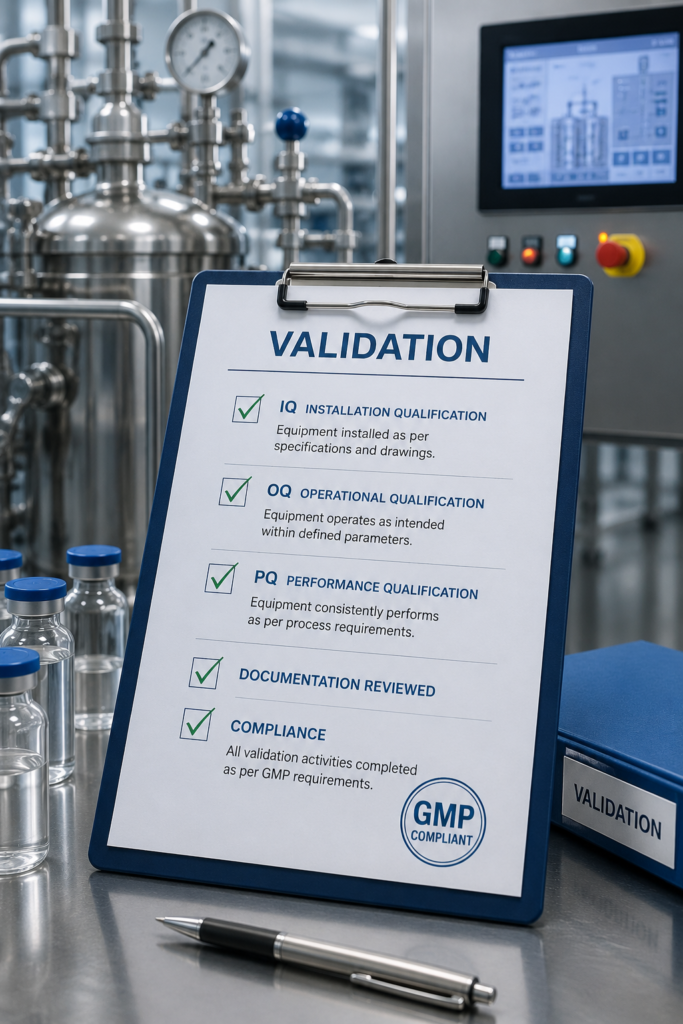
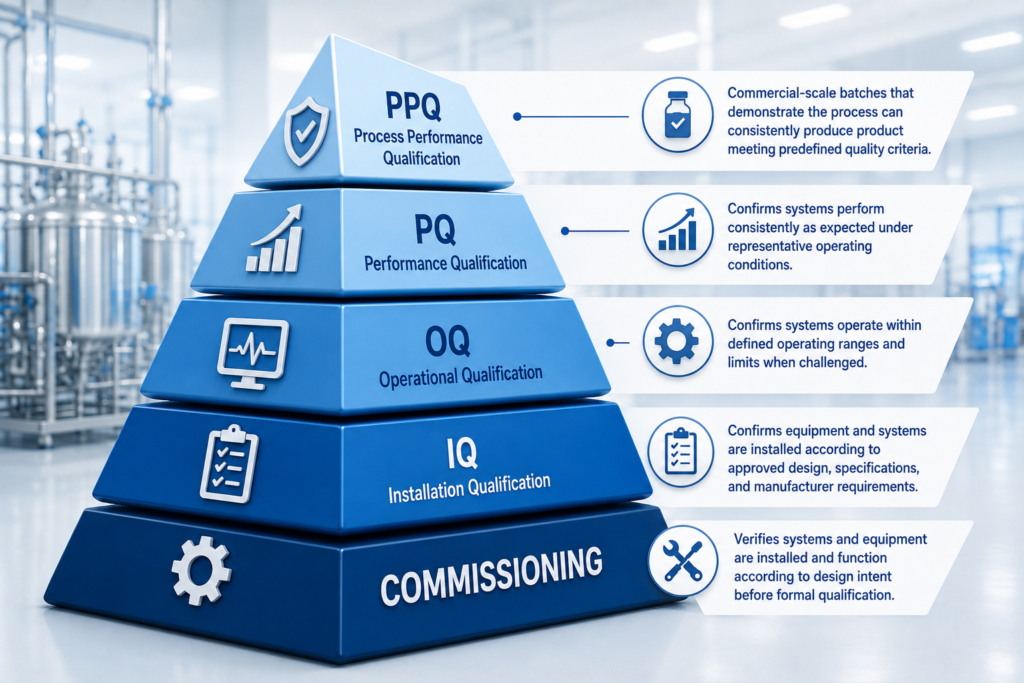
A modular clean room that meets the criteria of ISO classification is not necessarily GMP compliant. The qualification process includes Design Qualification (DQ), Installation Qualification (IQ), Operational Qualification (OQ), and Performance Qualification (PQ) to demonstrate that the facility and its systems consistently perform as intended.

ISO 14644-2 recommends retesting of ISO Class 5 spaces at a maximum of 6 monthly intervals and ISO Classes 6 through 9 spaces at 12 monthly intervals. In addition to classification testing, GMP requires integrated environmental monitoring of particulates, temperature, humidity, differential pressure, and microbial load mapped against defined alert and action limits.

Manufacturers can benefit from working with experienced teams such as those at Pharma Access, whose CQV services include qualification of both clean and black utilities, to provide a structured path from completion of construction to the first validated batch. Their CQV-centric design methodology is engineered in, not added on at the tail end, closing the gap between design intent and qualified reality.

Frequently Asked Questions

1. What is a modular clean room for pharmacies, and how does it differ from a traditional clean room?

The modular cleanroom for a pharmacy is made up of wall panels, a ceiling system, and integrated HVAC components that are factory-produced and installed on-site. Traditional clean rooms are constructed on-site from raw materials. Modular systems offer faster installation times (typically 4 to 12 weeks versus 6 to 18 months), better quality control during fabrication, and are more easily reconfigured over time as regulatory requirements or product lines change.

2. Which ISO classification do pharmaceutical modular clean rooms typically need to meet?

Most pharmaceutical manufacturing applications are ISO Class 5 through 8 or EU GMP Annex 1 Grades A through D. Aseptic filling and other critical sterile operations require ISO Class 5 (Grade A). The non-sterile formulation and support areas usually run at ISO Class 7 or 8. The precise classification depends on the dosage form, type of process, and applicable regulatory guidelines.

3. What is the difference between clean utilities and black utilities in a pharmaceutical facility?

Clean utilities include purified water, water for injection, clean steam, and process gases. They are in direct contact with the product or the environment in which the product is prepared and must comply with GMP purity specifications and be fully validated with documentation. Black utilities include steam boilers, chillers, potable water, and the HVAC supply air that supports the facility but does not contact the product. While clean utilities generally carry stricter regulatory and qualification requirements, both clean and support utilities must operate reliably to maintain GMP compliance.

4. How do modular cleanroom accessories contribute to GMP compliance?

Accessories such as flush-mounted HEPA filters, pre-installed environmental monitoring ports, pressure-rated pass-through chambers, and GMP-rated doors all contribute to maintaining the classification boundary and contamination controls as specified by ISO 14644-1 and EU GMP Annex 1. The panel surface roughness, coved flooring transitions, and airtight joint systems also directly reduce particle accumulation and microbial risk, all of which are factors that inspectors are trained on in site audits.

5. When should a pharmaceutical company engage a pharmaceutical procurement consultant for a clean room project?

Preferably at the beginning of the engineering design phase. Procurement consulting converts facility design requirements into vendor specifications, checks vendor compliance documentation with current GMP and ISO standards, and manages the documentation package necessary for qualification. The longer you wait to get involved, the more likely you will have specification gaps, rework, or qualification delays that push out product launch timelines significantly.

How Automation Helps Pharma Manufacturers Improve Production Efficiency

Automation Helps Pharma Manufacturers Improve Production Efficiency

A tablet press that runs at 400,000 units an hour means nothing if the batch fails the quality check. A continuous filling line still wastes money if it needs continuous manual intervention to keep it in spec. Pharma manufacturing has always been about precision, not speed. Automation enables manufacturers to achieve both precision and productivity while maintaining compliance.

This article explores the reality of how pharma manufacturing automation works, what tangible improvements it provides in production output and product quality, and what facility design decisions will make or break an automation project.

What Pharma Manufacturing Automation Actually Means

What Pharma Manufacturing Automation Actually Means

The term is used rather loosely. It’s a robotic arm on a packaging line in some conversations. In other cases, it means a fully integrated manufacturing execution system (MES) that links process equipment, quality testing, environmental monitoring, and batch documentation into a single data environment.

Here is the clearer definition: 

Pharma manufacturing automation is the use of controlled, mechanized, electronic, and software systems to perform manufacturing tasks with reduced  or no human intervention while producing the documentation necessary for regulatory compliance.

The last part is important. Automation in pharmaceutical manufacturing is more than a production tool. This is a compliance tool. FDA 21 CFR Part 11 establishes the criteria under which electronic records and electronic signatures can be used in place of paper-based records in a GMP environment. If any automated system deployed in a regulated pharma facility does not meet these requirements, it creates more regulatory problems than it solves.

Where Automation Creates the Biggest Gains

Batch Record Automation and Electronic Batch Records (EBR)

One of the biggest sources of error in pharmaceutical manufacturing is manual batch records. Batch failures and regulatory findings are the result of transcription errors, missing entries, incomplete logbooks, and illegible handwriting.

Electronic batch records use validated software systems, rather than paper, to capture process data in real time. Every step in a manufacturing process, from weighing raw materials to in-process checks to final release testing, is automatically recorded as it occurs. The system flags deviations immediately instead of waiting for a manual review at the end of a shift.

This results in less human error, faster batch release, and a complete audit trail that regulators can review during inspections. The FDA has long supported the use of electronic records in manufacturing, and electronic batch records are a key component of the agency’s guidance on pharmaceutical quality systems.
Process Analytical Technology (PAT) and Real-Time Monitoring

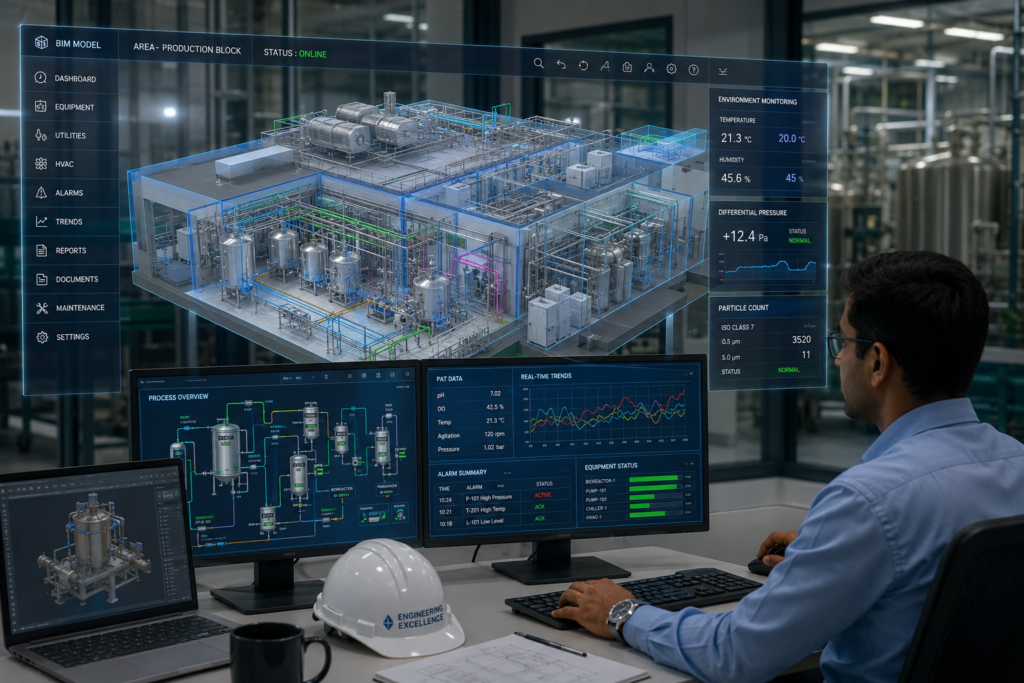
Process Analytical Technology (PAT) and Real-Time Monitoring

In traditional pharmaceutical manufacturing, samples are tested at the end of a batch. By the time a result comes back showing the product is out of spec, the entire batch may be rejected or need to be reprocessed.

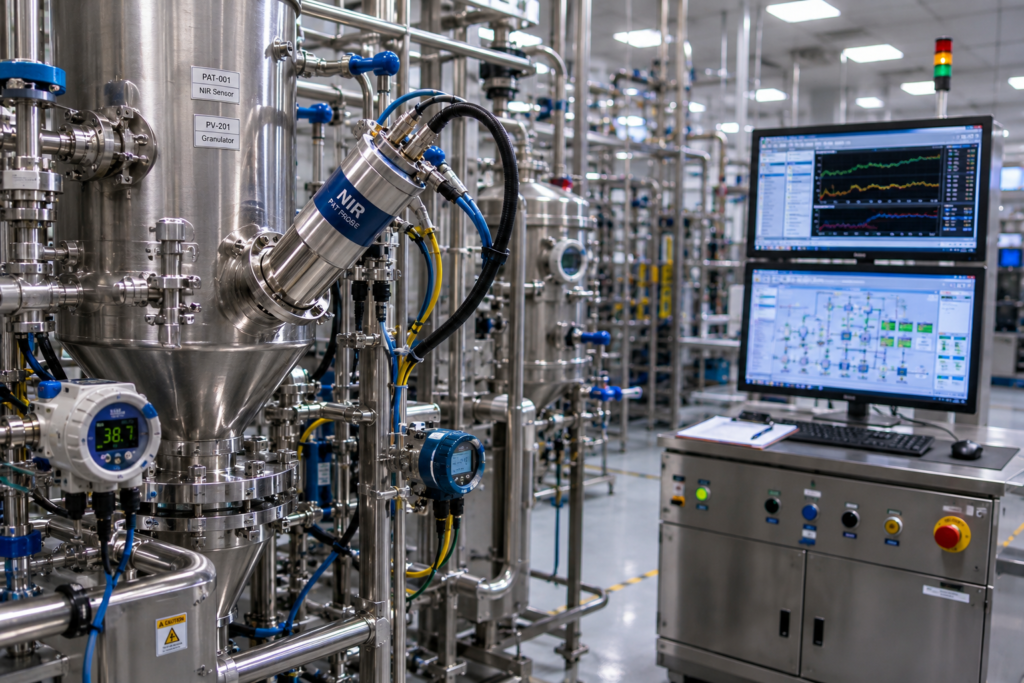
PAT changes this model. Process analytical technology is the use of sensors in the manufacturing process itself to measure critical quality attributes in real-time. For example, NIR spectroscopy can be used to monitor the moisture content of granules during drying without sampling or process interruption. Inline viscosity measurement can follow a liquid formulation through a mixing step and alert operators if the product goes out of validated parameters.

The FDA issued its PAT guidance in 2004, describing PAT as a means to incorporate quality into manufacturing rather than test for quality at the end.

The use of PAT in combination with an automated feedback control allows the manufacturing system to self-correct. It compensates for drifts in the drying temperature. If blend uniformity is below the threshold, the blending step is extended automatically. These are not manual interventions, but automated process controls within validated ranges.

Read More: Pharmaceutical Facility Design and Construction

Automated Filling and Packaging Lines

Automated Filling and Packaging Lines

Aseptic filling is a contamination-sensitive operation in pharmaceutical production and is of utmost importance in sterile injectable manufacturing. There is a risk of contamination from human intervention in a cleanroom environment each time an operator enters a classified zone.

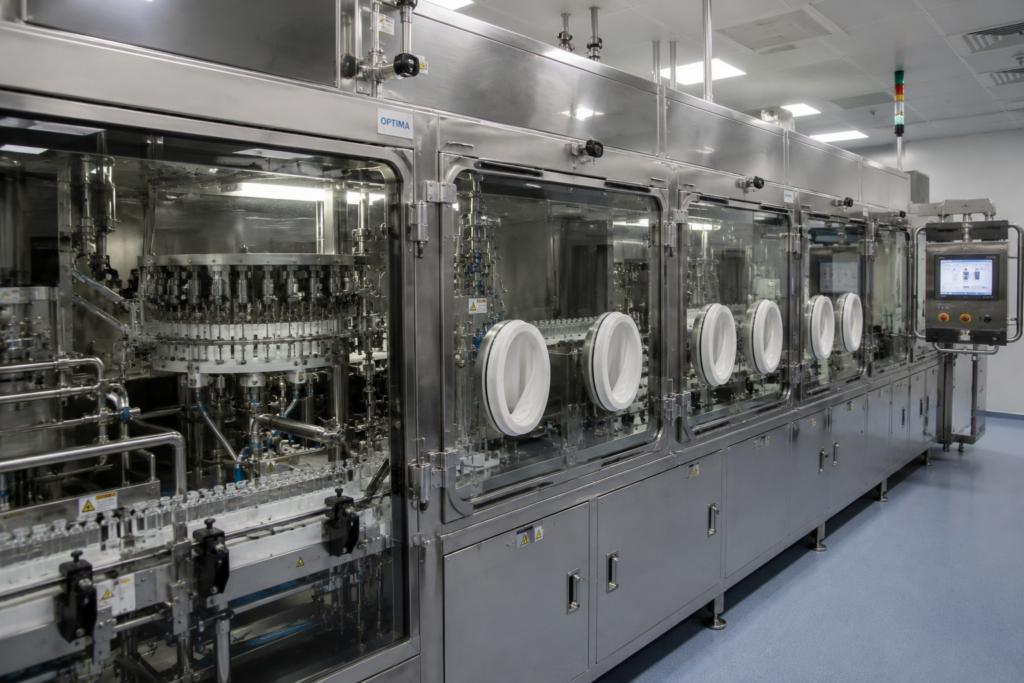
Automated filling lines with isolator technology or restricted access barrier systems (RABS) maintain a physical barrier between operators and the fill zone. Robotic systems are used for vial placement, filling, stoppering, and capping. This reduces contamination events directly and supports the contamination control strategies (CCS) emphasized under the revised EU GMP Annex 1.

Vision inspection systems replace manual visual inspection of fill volume, label placement, cap torque, and package integrity on packaging lines. These systems operate at line speed and provide objective, documented inspection records rather than subjective operator judgments.

Warehouse and Material Handling Automation

Warehouse and Material Handling Automation

Raw material management in a pharmaceutical facility is not just a logistics activity; it is a compliance activity. Materials must be  quarantined, sampled, tested, released, weighed, and dispensed with full traceability. Material identification or weighing errors can taint a batch or lead to a costly investigation.

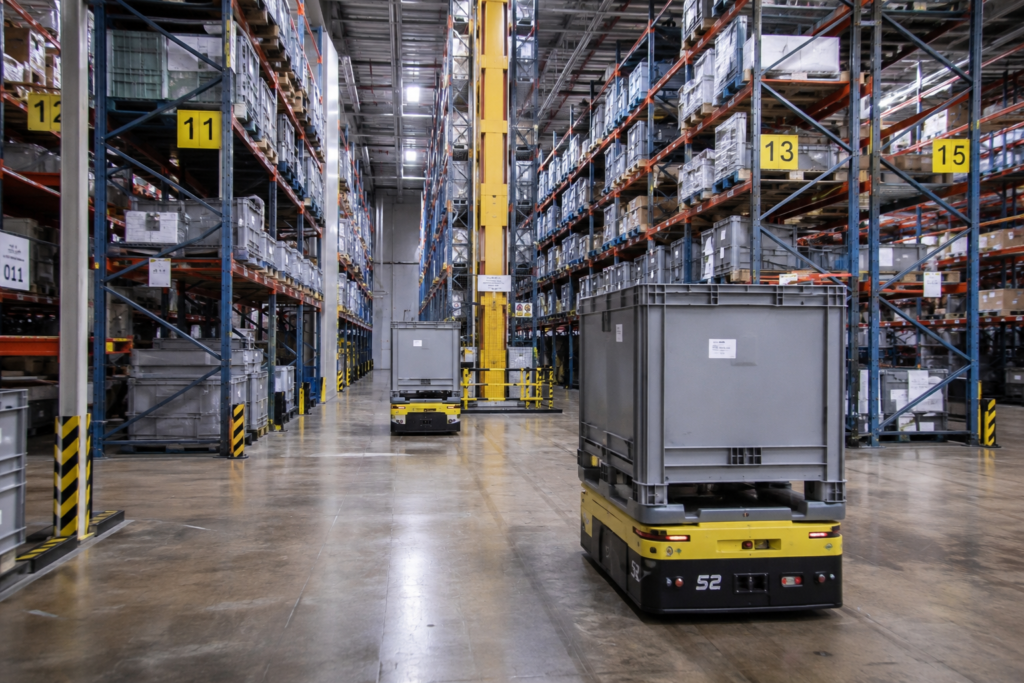
Automated warehouse systems such as barcode and RFID-based inventory management, automated guided vehicles (AGVs), and dispensing systems with integrated label verification help to reduce the probability of the wrong material or the wrong quantity arriving at a manufacturing area. When these systems are integrated with the MES, every material movement is automatically included in the electronic batch record.

The Facility Design Connection

What many manufacturers miss is that automation is most effective when the facility is built with automation in mind. It is technically possible to construct a sophisticated automation system in a facility designed for manual operations, but it causes problems.

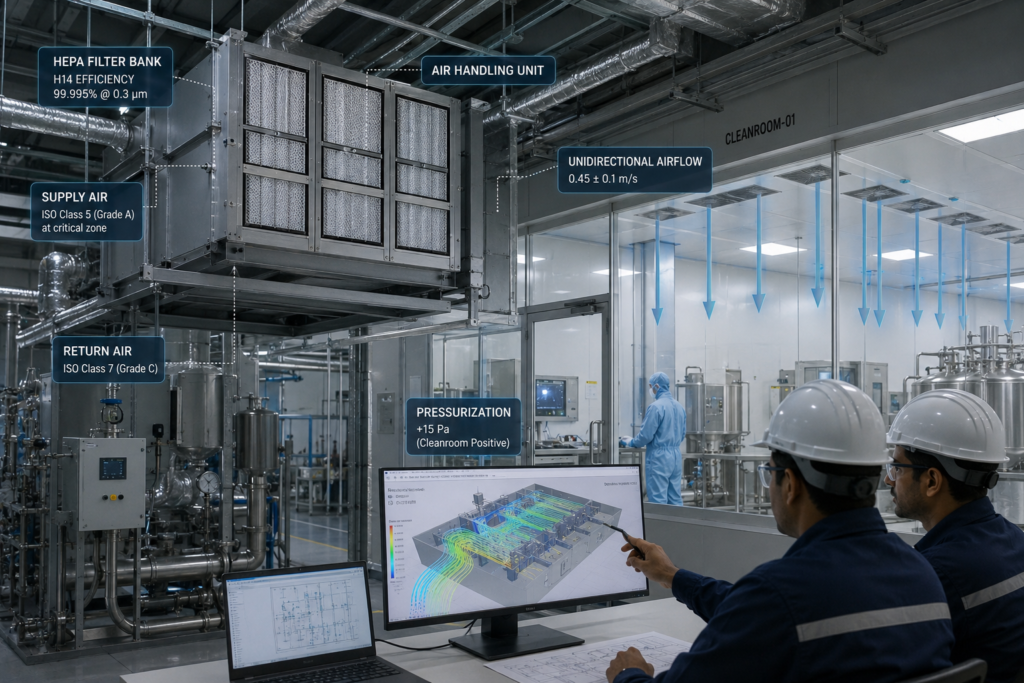
Let’s take it apart. A room must be built around a fully automated filling line: specific dimensions for the equipment footprint, ceiling heights to accommodate HEPA filter banks above the fill zone, conduit routing for control cables, utility connections at precise locations, and personnel access routes that do not cross the aseptic core. If the room were not designed with these requirements, the automation setup would be an expensive engineering hack.

Automation planning is included in the engineering design services of pharmaceutical facilities from the very beginning of the design At Pharma Access, this integrated approach is reflected in the Engicution methodology, where engineering design, automation planning, and project execution are developed together rather than as separate activities. . That is, not sequentially but in collaboration between process engineers, automation engineers, and facility designers. The design phase defines the architecture of the automation system (including PLC selection, SCADA layout, MES integration, and network topology) so that the facility is built to support it.

This thinking is central to what the team calls “Engicution” at Pharma Access—a combination of engineering and execution as one discipline that integrates facility design, automation planning, and project delivery from the outset. . When pharma turnkey project consultants in India and globally design and build a facility as a single integrated scope, automation needs to drive construction decisions, not the other way around.

Safety in Pharmaceutical Facility Design and Automation

Automation is also changing the safety equation in pharma manufacturing. And here’s why this matters directly.

Occupational exposure risks to production workers are present with many pharmaceutical products, including cytotoxic oncology drugs, hormones, and highly potent APIs (HPAPIs). Manual handling of these materials still presents residual risk, even with personal protective equipment.

Automated closed systems remove the worker from direct contact with hazardous materials. Robotic dispensing systems, automated weighing stations, and sealed transfer lines between process vessels minimizes operator exposure. Safety in pharmaceutical facility design is not a separate workstream from automation planning; it is the same conversation.

The National Institute for Occupational Safety and Health (NIOSH) guidance on occupational exposure to hazardous drugs supports the use of engineering controls (including automated closed systems) as the primary protective measure over administrative controls and personal protective equipment.

What a Phased Automation Approach Looks Like

Not every manufacturer can afford or needs full automation from day one. Facilities can develop automation capability over time through a phased approach, without impacting current production operations.

A practical series:

  1. Start with electronic batch records.” Substitute paper batch records with a validated EBR system. This delivers immediate compliance benefits and builds the data infrastructure upon which more sophisticated automation depends.
  2. Add automated environment monitoring. Replace manual particulate, temperature, and humidity sampling with continuous monitoring systems that report data directly to quality systems.
  3. Implement inline process monitoring (PAT). Start with installing sensors in the process steps that are the riskiest or most valuable, where the real-time data can impact the outcome of the batch the most.
  4. Automate the handling and dispensing of materials. Integrate warehouse and dispensing systems with the MES to automatically build material traceability into the electronic record.
  5. Move into robotic or automated fill-finish. This step provides the greatest reduction in contamination risk for sterile products, and generally, the investment is justified in reduced batch failure rates.

Each phase needs to go through the same qualification process as any other GMP system installation qualification (IQ), operational qualification (OQ), and performance qualification (PQ) with documentation to support regulatory submissions. 

Choosing the Right Partner for Pharma Automation Projects

Pharmaceutical manufacturing automation is not a product purchased from a catalog. It is a system that must be designed, built, validated, and maintained within a cGMP manufacturing environment.

The best projects are those where process engineering, automation engineering, and facility design are brought together as one well-organized team. When these are siloed, the gaps between them create integration problems that are costly to address post-commissioning.

Pharma Access provides engineering design services for pharmaceutical facilities that include automation planning in the base design scope. With over 120 projects across 18+ countries and facilities ranging from oral solid dosage to biotech and sterile injectables, the team understands that every plant has unique automation requirements that must align with the product, regulatory market, and production model.

The goal is always a facility where equipment, automation layer, and quality systems work hand in hand from day one without major corrections after commissioning.

FAQs 

1. What is pharma manufacturing automation, and why does it matter for compliance?

Pharma manufacturing automation involves mechanical, electronic, and software systems to execute manufacturing steps and collect records needed for GMP with minimal human intervention. This is important for compliance as automated systems, when validated correctly, generate documentation that is more consistent and complete than manual processes, thereby reducing the risk of regulatory findings during inspections.
2. How does automated batch record software differ from regular manufacturing software?

EBR software is specifically validated for use in GMP environments under 21 CFR Part 11 or equivalent regulations. It records process data in real time, enforces step sequences, prevents unauthorized changes, and maintains a complete audit trail. Standard manufacturing or ERP software doesn’t meet these requirements without additional validation.

3. Can existing pharmaceutical facilities adopt automation without a full rebuild?

Yes, but the scope of what is possible is dependent on the existing facility layout, utility infrastructure, and equipment. Most current facilities can implement a phased approach, beginning with electronic records and environmental monitoring. Robotic filling is typically fully automated and requires space modifications or new construction to accommodate equipment footprints, utility connections, and environmental control requirements.

4. What is Process Analytical Technology (PAT), and how does it help production?

PAT uses sensors directly embedded in the manufacturing process to measure product quality attributes in real time, such as moisture content, particle size, or blend uniformity. This enables the process to be monitored and adjusted during production, rather than waiting for end-of-batch testing, which reduces batch failures and accelerates release timelines.

5. How does safety in pharmaceutical facility design connect to automation decisions?

Closed automated systems reduce worker exposure by removing the need for manual handling of hazardous substances, for example, in facilities that handle hazardous materials such as cytotoxic drugs or highly potent APIs. Coordinating automation decisions with safety engineering during the facility design stage is significantly more effective and cost-efficient. Adding closed systems after construction is much more expensive than including them at the outset.

Complete Guide to Pharmaceutical Facility Design and Construction

Pharmaceutical Facility Design and Construction

Building a pharmaceutical plant is one of the most technically demanding construction projects in any industry. Every room, every pipe, and every air handling unit has a regulatory weight. Poor design decisions can cause months of rework, delay a product launch, or result in a failed pre-approval inspection.

This guide walks you through how pharma facility design and construction actually work, from early planning to commissioning, and what separates projects that go smoothly from those that don’t.

What Pharmaceutical Facility Design and Construction Actually Involves

Most people outside the industry think of a pharmaceutical factory as a clean, white building with people in lab coats. The truth is much more complex.

A pharmaceutical facility is a system of systems, such as HVAC, electrical, plumbing, process piping, cleanrooms, containment zones, water treatment, waste management, automation, and building structure. Each system must comply with current Good Manufacturing Practice (cGMP) requirements and interface with the other systems without introducing the risk of contamination or compliance gaps.

Here’s a regulatory baseline: the U.S. FDA’s 21 CFR Parts 210 and 211 establish minimum requirements for drug manufacturing facility design and construction. They cover everything from the finishes on floors and walls to the patterns of personnel flow and placement of equipment. The European counterpart, EU GMP Annex 1 (revised 2022), takes this same approach and applies it with particular depth to sterile manufacturing environments.

These are not optional, and they are not something you can retrofit after construction. “Whether a facility can be qualified and approved depends on design decisions made on day one.”

What Pharmaceutical Facility Design and Construction Actually Involves

Phase 1: Concept and Feasibility

Every pharmaceutical facility project begins with a product brief. 

Before any drawing is made, the project team must have clear answers to these questions:

  • What dosage forms will be manufactured at the facility? (tablets, injectables, biologics, APIs)
  • To which regulatory markets will the product be submitted? (FDA, EMA, WHO, CDSCO)
  • How often and in what quantity will it be produced?
  • Is this a new facility, an expansion of an existing facility, or an upgrade to an existing facility
  • These responses are not administrative. They directly impact the facility design, cleanroom classification, containment strategy, and utility requirements.

For example, a plant producing oral solid dosage forms (tablets and capsules) for the Indian domestic market has very different HVAC, containment, and regulatory documentation requirements than a plant producing sterile injectables for FDA submission. It is a frequent and expensive mistake to treat them as the same type of project.

The feasibility phase also includes site selection, environmental impact assessment, utility availability checks, and a preliminary cost model. Skipping or rushing this phase will result in design conflicts later that are much more expensive to fix.

Phase 2: Pharmaceutical Facility Engineering and Design

Pharmaceutical Facility Engineering and Design

This is where the project is formed on paper, long before a shovel hits the ground. Several engineering disciplines contribute to pharmaceutical facility design.

Process Design and Room Layout

The process defines the facility, the facility should not define the process. A process flow diagram (PFD) is drawn for each step in production from the receipt of raw materials to the dispatch of the finished product. This flow then dictates the layout of the rooms, with the sequence of operations designed to minimize the risk of cross-contamination and unnecessary movement of material.

Adjacency of rooms counts. Clean and non-clean areas must be separated by airlocks, pressure differentials, or both. Personnel and material flows should be designed to minimize cross-contamination risks and avoid undesirable intersections between clean and less-clean process streams. These are not preferences; they are cGMP requirements.

HVAC and Cleanroom Design

HVAC and Cleanroom Design

In a pharmaceutical facility, the HVAC system does much more than just control temperature.

 It is responsible for:

  • Controlling airborne particle levels in accordance with ISO 14644 classification standards
  •  Maintaining room pressure cascades to contain contaminant migration
  •  Providing appropriate air change rates in each classified zone
  •  Maintaining temperature and relative humidity within validated ranges
  •  Ensuring the performance of HEPA and ULPA filtration systems

The revised EU Annex 1 mandates a formal Contamination Control Strategy (CCS) document for sterile manufacturing areas linking HVAC design decisions with product contamination risk analysis. This is not a post-construction document; this is a design phase requirement.

MEP Systems: Mechanical, Electrical, and Plumbing

Utilities in pharmaceutical facilities have to meet standards far beyond normal commercial construction. Water for Injection (WFI), Purified Water (PW), clean steam, compressed air, and nitrogen systems all require specific material specifications, installation methods, and ongoing monitoring programs.

The ASME BPE standards define requirements for piping materials, weld quality, slope for drainability, and surface finish requirements for bioprocessing equipment.

Electrical systems must support hazardous-area classifications where applicable, emergency power for critical process equipment, and building management system (BMS) integration for environmental monitoring.

Quality by Design (QbD) in Facility Engineering

QbD is an ICH-endorsed approach that incorporates quality into design decisions instead of testing later. QbD, when used for facility design, refers to recognizing the design parameters that most influence product quality and exercising control over them from the beginning.

Pharmaceutical facility engineering consultants who design facilities using QbD find them easier to validate, quicker to qualify, and less likely to be cited in regulatory findings during inspections.
One of the most common reasons pharmaceutical projects experience delays, cost overruns, or validation challenges is the disconnect between engineering, construction, and qualification teams. Successful projects integrate facility engineering, execution, and CQV planning from the earliest stages of design to ensure continuity throughout the project lifecycle. 

Phase 3: Procurement and Construction

After the design is approved and released for construction, the project moves to procurement and site execution. This is where many projects waste time and money.

That’s because pharmaceutical construction is not your run-of-the-mill commercial construction. General contractors are not equipped to handle the specialized contractors, materials traceability, and installation documentation that are needed for cleanroom panel systems, HVAC ductwork, process piping, and utility systems.

In a pharmaceutical project, procurement is not just the purchase of equipment and materials, but that process also includes vendor qualification, review of certifications, and management of factory acceptance tests (FATs) on major equipment items before they depart from the manufacturer’s facility.

Good project management at this point includes tracking design changes via a formal change control process. Any change to the approved design, even if minor, such as moving a drain, must be reviewed for its GMP impact before it is implemented. Informal ‘field changes’ that do not go through this process create gaps in the documentation that surface during validation.

Phase 4: Commissioning, Qualification, and Validation (CQV)

Procurement and Construction

CQV is the formal process that connects construction completion to regulatory approval to manufacture. 

Here’s how it works in order:

The commissioning process verifies that all systems are properly installed and functioning as the engineers intended. The result is engineering documentation, test records, and punch lists.

  • Installation Qualification (IQ) is the confirmation that equipment and systems are installed according to approved specifications and vendor requirements.
  • Operational Qualification (OQ) tests the ability of equipment and systems to operate correctly over the whole operating range.
  • Performance Qualification (PQ) establishes that the entire manufacturing process, in this facility and with this equipment, consistently produces a product meeting its predetermined quality characteristics.
  • Utilities (water systems, HVAC, and clean steam) are qualified in parallel with equipment qualification. Then comes cleaning validation and process validation.

The whole CQV package is the heart of the regulatory submission. During Pre-Approval Inspections (PAIs), this documentation is reviewed by inspectors of the FDA, EMA, or other agencies. Documentation gaps in CQV are among the most common findings during Pre-Approval Inspections (PAIs), even when the physical facility itself appears compliant.

Turnkey Pharma Facility Projects: What They Actually Deliver

A turnkey pharma facility project has one team to look after the whole scope: design, procurement, construction, and CQV. This is not like hiring a design firm, another contractor, and an independent validation consultancy and hoping they will all work together.

The turnkey model’s practical advantage is continuity. The documentation trail is unbroken when the same team that designs the HVAC system also commissions and qualifies it. Validation protocols are based directly on the design intent. The team knows where all the design decisions came from and why.

Pharma Access has completed turnkey pharmaceutical facility projects in over 18 countries, including biotech, sterile manufacturing, oral solid dosage, and API facilities. The team consists of pharmaceutical facility engineering consultants working from process design through CQV, which means clients get one accountable team and not a broken chain of vendors pointing fingers at each other when things go wrong.

Greenfield vs. Brownfield: Which Is Right for Your Project?

  • Greenfield projects are built on new land without any existing structure. They allow the most design freedom but also take the most time. You need to do site preparation, civil works, and construction sequentially before you can start manufacturing.
  • Brownfield projects are expansions or upgrades to existing facilities. They speed things up but bring limitations: existing column grids, ceiling heights, utility entry points, and the need to keep ongoing manufacturing operations running during construction.
  • The decision depends on the timeline, budget, site availability, and whether existing infrastructure can meet the technical requirements of the new project. During the feasibility period, pharmaceutical facility engineering consultants review both options and recommend the one most consistent with the client’s production schedule and capital budget.

FAQs

1. How long does pharmaceutical facility design and construction take from start to finish?

A typical greenfield pharmaceutical facility will take three to five years from concept approval to first product batch. This includes design (6-12 months), construction (12-24 months), and CQV (12-18 months). Under good conditions, modular construction approaches can shorten this timeline by twelve to eighteen months.

2. What is the difference between GMP design and standard commercial construction?

GMP design translates regulatory requirements into the physical aspects of each facility, including room finishes, airlock design, pressure differentials, utility systems, and personnel flows. Standard commercial construction meets the building codes but has no equivalent documentation, traceability, or validation requirements.

3. What cleanroom classification does my pharmaceutical facility need?

That depends on the product and the manufacturing step. Oral solid dosage facilities often operate in controlled but non-aseptic environments, Aseptic fill-finish operations require an ISO Class 5 (Grade A) at the point of exposure within an ISO Class 7 (Grade B) background. Your pharmaceutical facility engineering team should define classifications based on the contamination risk profile of the product and the intended regulatory market.

4. What does a pharmaceutical facility engineering consultant actually do?

Pharmaceutical Facility Engineering Consultants • Process Design • Room Layout • HVAC • MEP and Utilities Design Often combined with equipment selection, vendor management, construction supervision, and CQV. The scope depends on the project, but the best consultants will take the facility from concept drawings to regulatory approval, not hand off mid-project.

5. What is the role of pharmacy consultancy services in a facility project?

Pharmacy consultancy services offer regulatory and technical expertise for facility projects, assisting clients in making design decisions compliant with current GMP standards in their chosen markets. Good pharmacy consultancy services identify regulatory risks early, before construction locks in decisions that are costly to reverse.

Trends and Challenges in Biopharmaceutical Facility Design

Trends and Challenges in Biopharmaceutical Facility Design

The biopharmaceutical manufacturing arena has evolved more in the last decade than in the previous three decades combined. Stricter global regulations and looming timelines are forcing facility designers, engineers, and project teams to reevaluate nearly every assumption they once took for granted, and emerging drug modalities are adding to the complexity.

This article examines the current state of biopharmaceutical facility design, what is driving the next wave of projects, and the real obstacles teams face when planning, building, and qualifying these facilities.

Why Biopharmaceutical Facility Design Is Under More Pressure Than Ever

Biologics are in increasing demand. Cell and gene therapies, monoclonal antibodies, antibody-drug conjugates (ADCs), and mRNA-based products are now making up a growing portion of clinical pipelines globally.

Here’s why this is important for facility design: Each of these product types has its own contamination risk profile, contained environment needs, and regulatory classification. In most cases, converting a monoclonal antibody facility into a cell therapy manufacturing facility requires significant redesign due to differences in process, containment, and operational requirements. If you get the design wrong from the beginning, you create downstream problems that cost a lot more to fix than they would have cost to prevent.

The U.S. FDA guidance on Current Good Manufacturing Practice (cGMP) for biologics and EMA’s Annex 1 requirements for sterile manufacturing (updated in 2022) make it clear that regulators expect facility design to be part of the quality system, not simply a construction exercise.

Cleanroom biotech production facility inspection

Key Trends Shaping Biopharmaceutical Facility Design Today

1. Modular and Prefabricated Facility Concepts

Traditional stick-builds take three to five years to complete. That timeline is a huge problem for a company racing to get a biologic from Phase III trials to commercial manufacturing.

Modular construction can fix this. Prefabricated cleanroom modules, utility skids, and process equipment assemblies are manufactured in controlled environments off-site and installed on-site in a fraction of the time. This also reduces construction variability, a direct contributor to cGMP compliance risk.

The rise of modular facility models represents a real shift in the way pharma companies view speed-to-market without sacrificing quality or regulatory standing.

2. Flexible Multi-Product Facility Layouts

This approach made sense when demand patterns were stable and blockbuster biologics remained in production for decades. That model is increasingly being replaced by more flexible manufacturing strategies. Manufacturers now want facilities that can handle two or three products, sometimes across modalities, without full shutdowns between campaigns.

To understand this shift, consider the operational requirements. Flexible facility design means the ability to change over from one campaign to the next, closed-system processing, and equipment designed for clean-in-place and sterilize-in-place (CIP/SIP) cycles without dismantling the line.

To do this right requires early design decisions on segregation strategy, airlock placement, HVAC zoning, and cross-contamination controls. These are not afterthoughts; they are design constraints that determine the entire facility layout.

3. Closed Processing Systems and Containment

Biological products, especially those derived from living organisms or employing viral vectors, have to be strictly contained. Manufacturers need to convince regulators that their containment strategy will not allow release to the environment and will protect operators.

Closed processing systems, in which product pathways are isolated from the manufacturing environment, are becoming the rule rather than the exception. This change affects biosafety cabinet selection, transfer port design, design of single-use assemblies, and waste deactivation systems.

WHO GMP design guidelines for biological products emphasize the importance of documented containment strategies, contamination control measures, and risk-based facility design as part of an effective quality system.

4. Single-Use Technology Integration

Single-use bioreactors, bags, tubing sets, and filters have revolutionized upstream and downstream processing. They remove the cleaning and validation of stainless steel equipment from batch to batch, reducing changeover time and the risk of cross-contamination.

The problem in designing the facility is that single-use systems need careful planning for waste management. Running a 2,000-liter single-use bioreactor produces a lot of plastic waste. Waste segregation, deactivation, and disposal pathways must be incorporated into the facility design from day one. This consideration is often overlooked during early-stage facility planning.

5. Pharma 4.0 and Continuous Monitoring

Real-time monitoring systems and more advanced automation are being adopted in newer facilities using Process Analytical Technology (PAT) frameworks. While still emerging in biologics manufacturing, continuous processing approaches are gaining interest in selected upstream and downstream bioprocessing applications.

This results in specific design requirements: sensor placement, data infrastructure, validated software systems, and the integration between the manufacturing execution system (MES) and quality management systems. These considerations influence not only software selection but also broader engineering design requirements.

The Biggest Challenges in Biopharmaceutical Facility Design

The Biggest Challenges in Biopharmaceutical Facility Design

Regulatory Variability Across Markets

A facility designed for FDA approval may need substantial documentation rework to meet the requirements of EMA, PMDA (Japan), or CDSCO (India). The ICH guidelines give us a common language, but in practice, each agency has its own interpretation.

Next steps for any project team: Map target markets early in design. Facility design and regulatory strategy should be developed together from the earliest project stages.

HVAC and Cleanroom Design Complexity

Biopharmaceutical facility HVAC systems are more than just temperature and humidity. They govern the rate of air change, differential room pressure, particle counts, and levels of microbial contamination. The updated requirements in Annex 1 have raised the bar on contamination control strategies by requiring a formal Contamination Control Strategy (CCS) document that ties HVAC design to product risk.

Designing an HVAC system to be compliant with ISO 14644 cleanroom classifications and also meet cGMP requirements for pressure cascades and segregation between different classified areas requires specialized engineering knowledge and careful computational fluid dynamics (CFD) modeling.

HVAC and Cleanroom Design Complexity

Skilled Workforce Shortages for Specialized Facilities

GMP manufacturing knowledge and knowledge of the specific biology of living cell products are required of engineers working in cell and gene therapy facilities. This is a rare combination. Project teams often find that there is a shortage of qualified validation engineers, commissioning specialists, and quality system experts.

And in fact, a talent shortage can be just as much of a bottleneck to a facility project as construction delays. Workforce planning should begin during the design phase, not after construction is complete.

Balancing Speed with GMP Compliance

Investors and boards want facilities up and running fast. Regulators want documentation, validation, and quality systems that take time to build correctly. These two pressures are constantly pulling in different directions.

Shortcuts in design documentation, equipment qualification, or utilities validation will cost more in the long run. Pharmaceutical industry facilities have a long history of passing construction inspections but failing pre-approval inspections because of a lack of a complete design-to-commissioning documentation trail.

Sustainability Requirements

The carbon footprint of a biopharmaceutical facility includes water-for-injection (WFI) generation, clean steam systems, and HVAC, as well as energy-intensive processes. Regulatory agencies are starting to require environmental impact assessments, and large pharma companies are developing internal sustainability goals that drive their vendor and facility selection.

Facility designers now have to think about energy recovery systems, low-GWP refrigerants for HVAC, and water recycling strategies in addition to traditional GMP requirements.

What Good Biopharmaceutical Facility Design Actually Looks Like

Good design is a product of a clear product brief. What product is being manufactured? What are target markets? What is the anticipated batch size and campaign frequency? What is the 10-year production outlook?

From those responses, a design team lays out the process flow, which defines the room adjacency diagram, which then feeds the HVAC design, utilities matrix, and equipment list. The order is important. Issues are expected when teams attempt to retrofit a product process into a building that was not designed for it.

This approach is known at Pharma Access as “Engicution,” an integration of engineering thinking with execution precision right from the earliest project stage all the way through commissioning, qualification, and validation (CQV). Our teams have delivered turnkey biopharmaceutical facilities across more than 18 countries, enabling design decisions that reflect regulatory realities across multiple markets rather than a single jurisdiction.

At this level, biotech turnkey consulting means one team owns the design, procurement, construction, and validation process. Such continuity reduces information loss between project phases, one of the most prevalent sources of compliance gaps in complex facility projects.

How Indian Pharma Consultancy Is Shaping Global Facility Projects

India has emerged as a trusted source for pharma consultancy services for biopharmaceutical projects across the world. The country’s established generics industry and its long relationship with FDA, WHO, and other global regulatory standards have created engineering and consultancy firms with real global experience.

Mumbai’s pharma consultancy in particular caters to a cluster of Indian and multinational pharma companies with manufacturing ambitions in Asia, Africa, and the Middle East. Companies working from this base frequently have experience across regulatory jurisdictions from the CDSCO to the EMA, providing a practical cross-market design perspective that single-market consultants cannot easily match.

FAQs

1. What is the difference between a GMP facility and a biopharmaceutical facility?

A GMP facility is a place where current good manufacturing practice (CGMP) regulations are followed. A biopharmaceutical manufacturing facility is a unique kind of GMP facility that is designed to manufacture biological products such as vaccines, antibodies, or cell therapies. These facilities require special containment, cleanroom design, and validation requirements beyond those in standard pharmaceutical manufacturing.

2. How long does it take to design and build a biopharmaceutical facility?

A typical biopharmaceutical facility can expect to spend three to five years from concept to the approval of the first batch. In good conditions, modular facility approaches can reduce this to two to three years. Timing depends on regulatory market targets, product type, site complexity, and readiness of the design and engineering team.

3. What cleanroom classification do biopharmaceutical facilities need?

Most aseptic biopharmaceutical manufacturing processes require Grade A (ISO Class 5 equivalent) conditions at critical processing points, supported by Grade B environments for aseptic operations. Grade C and Grade D areas may be used for less critical processing steps depending on the process design and risk assessment. The exact classification depends on the product, process, and regulatory authority requirements of the target market.

4. What is commissioning, qualification, and validation (CQV) in pharma facility design?

CQV is the process of assuring that a facility and its equipment perform as designed and meet GMP requirements. Commissioning checks that systems are operating to engineering specifications. Qualification (IQ, OQ, PQ) tests that the equipment fulfills user requirements. “Validation” means that the manufacturing process consistently produces a product that satisfies quality specifications. All three must be in place before a facility can gain regulatory approval.

5. Why should I work with a turnkey biopharmaceutical facility consultant rather than managing separate design and construction firms?

A turnkey consultant is responsible for the whole project scope. One team designs, procures, builds, and validates, so there is less information loss between stages, clearer documentation trails, and one point of accountability for meeting schedule and regulatory requirements. Fragmentation in project management is one of the most common drivers of cost overruns and regulatory delays in complex biopharmaceutical projects.

Pharma Procurement Consulting: A Complete Guide 2026

Pharma Procurement Consulting

Building or expanding a pharmaceutical manufacturing facility involves far more than pouring concrete and installing equipment. At the center of every successful facility project sits a function that often goes unnoticed until something goes wrong: procurement. Get it right, and your project stays on schedule, within budget, and audit-ready from day one. Get it wrong, and you face delayed installations, failed qualifications, and regulatory holds that can push a product launch back by months.

This guide breaks down what pharma procurement consulting actually covers, why it demands a different approach than procurement in other industries, and what to look for when choosing a partner for your next project.

In this guide, we’ll explain exactly what pharma procurement consulting involves, why it needs a different approach to procurement elsewhere, and what to look for when choosing a partner for your next project.

What Is Pharma Procurement Consulting?

Pharma procurement consulting is a professional service that assists pharmaceutical and biotech manufacturers in sourcing, evaluating, and acquiring the equipment, materials, and systems necessary to build and operate GMP-compliant manufacturing facilities.

It’s not just about price negotiation. This is where a competent consultant handles vendor qualification, technical specification reviews, factory acceptance testing (FAT), lead time planning, customs and logistics coordination, and procurement documentation supporting regulatory submissions.

Why This Matters 

The U.S. Food and Drug Administration (FDA) and European Medicines Agency (EMA) expect manufacturers to maintain appropriate control over the quality of systems, equipment, and components used within their facilities. And that accountability begins with procurement. Risk assessment is a key component of supplier qualification and should be conducted before any GMP-relevant material or equipment enters the supply chain, as described in the ICH Q9 Quality Risk Management guidelines.

The procurement in a pharma facility project usually has three categories:

  • Process Equipment (Manufacturing Lines, Bioreactors, Filling Machines, Tableting Machines, Lyophilizers)
  • Utility systems (purified water, water for injection, clean steam, HVAC, compressed gases)
  • Building materials and MEP components (cleanroom panels, HVAC ductwork, piping, electrical systems)

Each category has a different regulatory weight, lead time profiles, and vendor qualification requirements.

Why Pharma Procurement Is Different from Standard Industrial Procurement

The distinction is important. In a typical construction or manufacturing project, procurement is about cost, delivery schedule, and basic technical fit. 

Three more layers apply in turnkey pharmaceutical projects.

Need for regulatory documentation: For each GMP-critical piece of equipment, a documentation package must be available. 

This includes certificates of compliance, material certificates, calibration records, and vendor qualification documentation.

The International Society for Pharmaceutical Engineering (ISPE) Baseline Guide on Commissioning and Qualification promotes a science and risk-based approach that links procurement documentation to qualification activities such as Installation Qualification (IQ) and Operational Qualification (OQ).

Supplier qualification before purchase: The FDA and WHO expect manufacturers to establish appropriate supplier qualification processes for GMP-relevant materials, services, and equipment before routine procurement activities take place. 

This means auditing a vendor’s facilities, reviewing their quality management system, and verifying their ability to consistently produce to specification. Such a process alone can take several weeks for complex equipment such as isolators, filling lines, or bioreactor systems.

The lead times that drive your project schedule: In pharmaceutical construction, the whole project schedule is driven by long-lead-time equipment.

From ordering to delivery, it can take 12 to 18 months to manufacture a filling line or a lyophilizer. If procurement is behind, the whole project moves. A pharma procurement consultant maps these critical path items from day one and sequences the purchasing activity accordingly.

Pharma procurement consulting requires a comprehensive knowledge of import regulations, transportation, handling, preservation, and logistics requirements for GMP-relevant equipment and the ability to arrange factory acceptance testing on the vendor’s premises before shipping.

Pharma Procurement Consulting Fits into a Turnkey Pharmaceutical Project

How Pharma Procurement Consulting Fits into a Turnkey Pharmaceutical Project

In a drug manufacturer’s chosen turnkey pharmaceutical project delivery model, procurement is one of the most time-sensitive workstreams. The contractor is responsible for all equipment and systems under one contract scope, not just the engineering design.

This is how a well-managed procurement workstream in a turnkey project works:

  • Step 1: Develop procurement strategy & vendor list: The project starts with the consultant developing a procurement plan that prioritizes all items according to lead time, regulatory impact, and budget. For each class of equipment, there are approved vendor lists.
  • Step 2: User Requirement Specifications (URS) and technical evaluation: The team prepares a URS for each piece of equipment before a purchase order is issued. Vendors are required to submit technical proposals, which are evaluated against the GMP requirements, local regulatory guidelines, and project specifications. The risk management principles of ICH Q9 are used to define which systems require full supplier qualification and which ones can be assessed with a lighter touch.
  • Step 3: Audits of supplier qualifications: Our procurement team performs on-site audits of short-listed vendors for GMP-critical equipment. The audit verifies the quality systems, the manufacturing capabilities, the controls of the documentation, and the ability to support the factory acceptance testing.
  • Step 4: Purchase order tracking and expediting: Once the vendor has been selected, purchase orders are issued, including all technical and commercial terms. An expediting function is responsible for monitoring the progress of production, solving deviations, and controlling delivery schedules to safeguard the construction schedule.
  • Step 5: Factory Acceptance Testing (FAT): FAT is performed at the vendor’s factory before equipment shipment. The team makes certain that the equipment complies with all URS specifications in controlled conditions. Deviations detected at FAT are much cheaper to correct than deviations detected after installation.
  • Step 6: Logistics and Import Coordination: Equipment must arrive at the site in good condition and with complete documentation. International projects demand synchronization of customs clearance, cold chain logistics (where relevant), and site readiness.

Advanced Engineering Solutions for Pharmaceutical Facilities and Their Link to Procurement

Procurement and engineering are no longer separate functions in a modern pharma project. Advanced engineering solutions for pharmaceutical facilities operate under the premise that nothing is ordered until design intent and equipment capability are aligned.

  • Here’s why it matters, in practice, If the HVAC engineering team designs a cleanroom for ISO Class 5 airflow performance, but the air handling unit procured cannot achieve the specified air change rates under operational conditions, the entire cleanroom qualification fails. This sort of mismatch, only discovered after installation, can set a project back six to 12 months.
  • When applying Quality by Design (QbD) to procurement, decisions on equipment selection are based on engineering models and process understanding rather than just catalog specifications. Consultants can test assumptions about the performance of equipment before a purchase order with simulation-based engineering tools.
  • This is the methodology that pharma engineering consultants in Mumbai and across India have been perfecting through decades of project delivery across regulated markets.
    Pharma Access, a Mumbai-based pharma turnkey consulting firm that has executed over 120 projects in 18+ countries, integrates procurement within EPCMV (Engineering, Procurement, Construction, and Management with Validation) delivery model. Their team uses sophisticated engineering simulation tools to coordinate equipment procurement with facility design before any commitment to purchase.

What to Look for in a Pharma Procurement Consulting Partner

There are a few concrete factors that are key when selecting a procurement consulting partner for a pharmaceutical facility project.

  • Vendor networks established: A good pharma procurement consultant has long-term relationships with equipment manufacturers in different geographies. This means better commercial terms, priority production slots during equipment supply crunches, and direct technical access for FAT coordination.
  • Regulatory expertise in target markets: A facility providing products to the U.S. market must meet FDA cGMP. One providing Europe must meet EMA GMP (EudraLex Volume 4). Projects in the MENA region or Southeast Asia may need to meet WHO GMP or local health authority requirements. Your procurement partner should know which documentation standards are required in your target market.
  • Qualification capability in-house: Qualification and procurement are interlinked.
    Having a partner that can write IQ protocols, perform FAT, and deliver the documentation needed for regulatory submissions can significantly reduce the cost and schedule risk of having to coordinate separate procurement and validation teams.
  • Experience with your dosage form: The procurement for a sterile injectable facility is fundamentally different from the procurement for an oral solid dosage plant. Sterile facilities need isolators, barrier systems, aseptic filling lines, and validated water systems, requiring a different vendor network and qualification approach than tablet presses and capsule fillers.
  • Breadth across geographies: For companies building facilities outside their home country, a pharma procurement consultant with an on-the-ground presence or established local vendor networks in the target country reduces logistics risk, improves lead time reliability, and eases customs and import coordination.
vendor audit

Pharma Engineering Consultants in Mumbai: A Hub for Global Project Delivery

Mumbai has emerged as one of the leading centers of pharmaceutical engineering consultancy in the world. The city’s pharma consulting ecosystem has grown in tandem with India’s rise as one of the world’s largest manufacturers of generic drugs and APIs.

Pharma engineering consultants in Mumbai regularly undertake projects in Africa, the Middle East, South East Asia, and Eastern Europe. This geographic footprint ensures that their vendor networks, regulatory skills, and construction management capabilities go far beyond the borders of India.

Since its inception in 2001, Pharma Access, which is based out of Andheri West, Mumbai, has developed a broad international project footprint. The company has executed pharmaceutical turnkey projects in countries such as Algeria, Saudi Arabia, Egypt, and many others in the MENA and Asia-Pacific regions. Their scope of supply on these projects includes process equipment, utility systems, cleanroom building materials, and laboratory instrumentation, all in one integrated project delivery structure.

FAQs

Q1. What is the difference between pharma procurement consulting and general procurement consulting? 

When you’re consulting on pharma procurement, you need to know the GMP regulations, the standards for qualifying suppliers, and the requirements for validating equipment. General procurement consulting is about cost and supply chain efficiency. In pharma, every sourcing decision also has a compliance aspect that typically needs to be documented and maintained in an audit-ready manner, changing both the process and the skill set needed.

Q2. How early in a pharmaceutical facility project should procurement consulting begin? 

Procurement planning should start in the basic engineering phase (ideally 18 to 24 months before the target date for the handover of the facility). Long-lead equipment, such as filling lines, lyophilizers, and bioreactor systems, can have 12- to 18-month lead times for manufacturing. Early procurement consultation safeguards the construction schedule and prevents costly delays.

Q3. Do pharma procurement consultants handle factory acceptance testing? 

Yes, a full-service pharma procurement consulting partner does FAT at the vendor’s facility before shipping equipment. FAT helps verify that equipment performs in accordance with URS requirements before shipment, allowing deviations to be identified and addressed before installation.

Q4. What regulatory standards govern equipment procurement in a GMP pharmaceutical facility? 

The procurement of equipment in a GMP facility is driven by FDA cGMP regulations (21 CFR Parts 210 and 211 for drugs), EMA GMP guidelines (EudraLex Volume 4), WHO Technical Report Series guidelines, and ICH Q9 Quality Risk Management. The ISPE Baseline Guide on Commissioning and Qualification also gives the industry reference framework for linking procurement documentation to qualification activities.

Q5. Can pharma procurement consulting cover biotech and advanced therapy manufacturing facilities? 

Yes, and biotech facilities require specialized procurement knowledge given the complexities of bioreactors, chromatography systems, tangential flow filtration (TFF) skids, and single-use systems. Supplier qualification of such systems must take into account standard GMP documentation requirements as well as extractables and leachables data, biocompatibility standards, and single-use assembly integrity testing.

Reducing Compliance Risks in US Pharma with Strategic Project Management

Reducing Compliance Risks in US Pharma

The Cost of Getting It Wrong Is Not Abstract

FDA inspections continue to show that pharmaceutical facilities must maintain strong CGMP systems, and warning letters remain one of the most visible signs that compliance gaps have not been addressed. A warning letter is a serious regulatory communication that can lead to further enforcement action if violations are not corrected. A consent decree is a court enforced agreement that can stop or limit production, force third party audits, and subject the firm to case-specific financial penalties for missed corrective action deadlines. Abbott Laboratories spent close to $1 billion on a single consent decree they received in 1999. Warner-Lambert paid an estimated equally steep price to comply with a consent decree they received in 1993, the original fine was only $10 million.

You don’t need to be a mathematician to know that compliance risk in pharma manufacturing in the U.S. is not a regulatory burden issue. It can make or break your company. The real question is how do you manage compliance risk before it’s too late, and why strategic pharmaceutical project management is one of the most effective ways to do that.

Why Compliance Risk Accumulates During Projects

The majority of compliance issues discovered during FDA inspections are NOT the result of intentional wrongdoing. They are the consequence of choices made during the design, build, validation, and startup of a facility without consideration of regulatory implications or made under time constraints, with inadequate cross-functional collaboration, or without early regulatory guidance.

Pharma companies start a capital project to design and construct a new manufacturing facility or renovate an existing one. Engineering works in silos. Quality and validation are involved at the end of the process. Change control is nonexistent during construction. Qualification documents are hurriedly put together just before FDA’s pre-approval inspection. Equipment and systems not designed with qualification in mind fail to qualify. The FDA inspection uncovers deficiencies that were built into the project from day one.

Effective pharma project management breaks this cycle. It synchronizes engineering, quality, regulatory, and validation efforts from day one so that compliance requirements drive design choices, not limit options once the facility is built.

What Strategic Pharma Project Management Looks Like in Practice

Phase Zero: Compliance Embedded Before Design Begins

A compliant project starts years before the first line is drawn on an engineering blueprint. We in the industry refer to this as Phase Zero, or the project initiation phase. During this phase the scope, regulatory envelope, and risk profile for everything downstream are defined.

The best pharma project management teams in the USA do these things during Phase Zero:

Define your URS with regulatory requirements integrated as design inputs, rather than afterthoughts.

Capture FDA expectations up front via the guidance ICH Q9 Quality Risk pharma Management and ICH Q10 Pharmaceutical Quality System. Leverage risk assessments to inform and prioritise decisions about aseptic zoning, HVAC design, contamination control, and more.

Establish your validation master plan (VMP) in parallel with your engineering plan (EP), not after the EP is done.

Identify and assign qualified personnel to execute on quality assurance, calibration, and validation requirements early enough that they can provide meaningful input during design reviews.

Researchers at Pharmaceutical Technology reached the same conclusion as project managers who work on these projects every day. In order to build a facility that was designed and constructed with Good Manufacturing Practices (GMP) regulatory compliance in mind – with the lowest possible risk profile – key decisions can’t be left to later phases of the project. Decisions made later can lead to expensive retrofitting.

That’s where a pharmaceutical project management company in the USA can really add value. They know where compliance risk will fall during facility design and drive project scope with that understanding from day one.

Design Reviews as Risk Control Points

Design Reviews as Risk Control Points

When design activity starts, project management has to begin managing each design review as a risk control milestone as well as a phase-of-project milestone. Every design decision including room classification, zone pressure differentials, HVAC capacity and redundancy, routing of utilities, placement of equipment, material flow, and personnel flow has regulatory consequences. 21 CFR Parts 210, 211 and especially 21 CFR  require that facilities be designed to minimize the potential for contamination and cross-contamination, to allow cleaning and maintenance and be suitable for the intended use.  

Design decisions that introduce potential contamination paths, insufficient separation of product grades, or difficult to qualify utility systems can lead to FDA observations  time and time again. It is considered best pharma project management practice in the USA to have QA representatives participate in design reviews during the engineering phase of new builds or renovations. Quality engineers can evaluate drawings vs cGMP requirements. Design features that would cause problems during qualification are caught and corrected during engineering, when it is inexpensive to fix, rather than during qualification, when it is costly and schedule impacting.

Change Control During Construction

One commonly overlooked contributor of compliance risk in pharmaceutical facility projects is failed change control during construction. Engineering changes occur on every construction project. On a pharmaceutical facility project, each and every engineering change must be analyzed for impact to the GMP design intent, qualification strategy, and future validated state  of the facility prior to implementation of the change.

This requires the project management team to have an active change control process in place during construction. Whether the change is to an HVAC unit, a cleanroom surface finish, a utility connection point, equipment specifications or room layouts; the change must be reviewed through a formal, documented process including quality input and validation impact analysis. Changes requested verbally or informally without written documentation are setting the stage for non-compliance discoveries during FDA inspections.
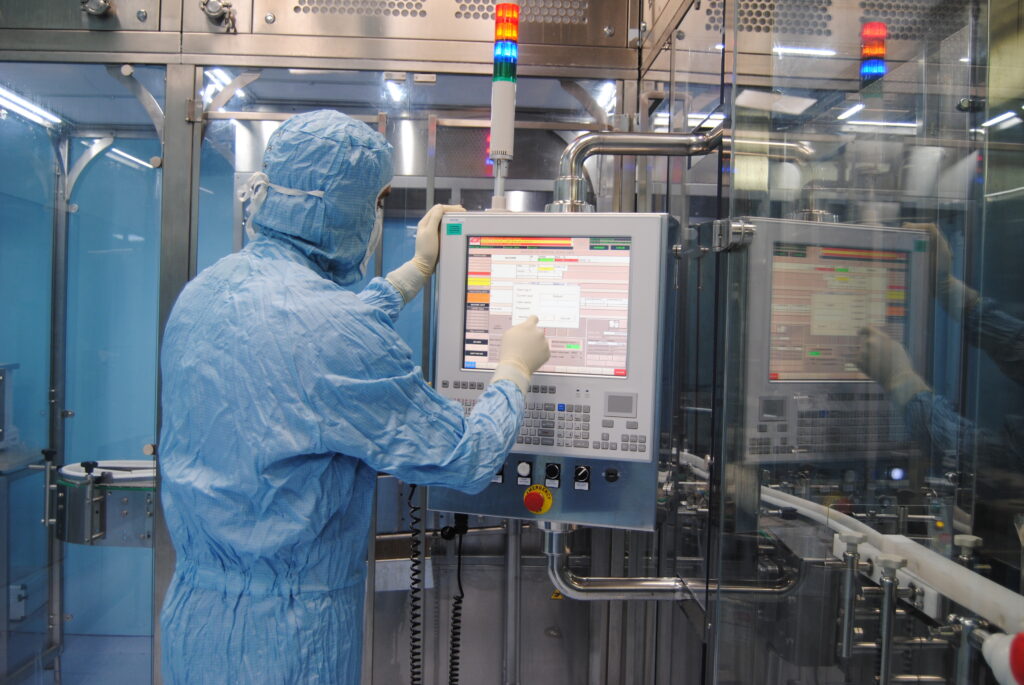
Project teams that manage construction change control as a quality management function instead of just a cost/schedule management function will deliver a project that comes out of construction with no invisible deviations to fix prior to qualification.

CQV

CQV: Where Project Management and GMP Compliance USA Requirements Meet

It is during Commissioning, Qualification, and Validation (CQV) when the quality of all prior project decisions is realized. Risk associated with regulatory compliance also comes to a head during this stage if previous stages have not been executed with regulatory output considered.

Here is what project teams are responsible for during CQV during a pharmaceutical facility project:

  • Commissioning – ensures installed systems and equipment operate according to design intent, resulting in documented evidence of proper installation and operation.
  • Installation Qualification (IQ) – ensures equipment and systems are installed as designed.
  • Operational Qualification (OQ) – provides documented proof that systems operate within designed parameters when challenged.
  • Performance Qualification (PQ) – provides documented proof that systems perform consistently as expected during representative operating conditions.
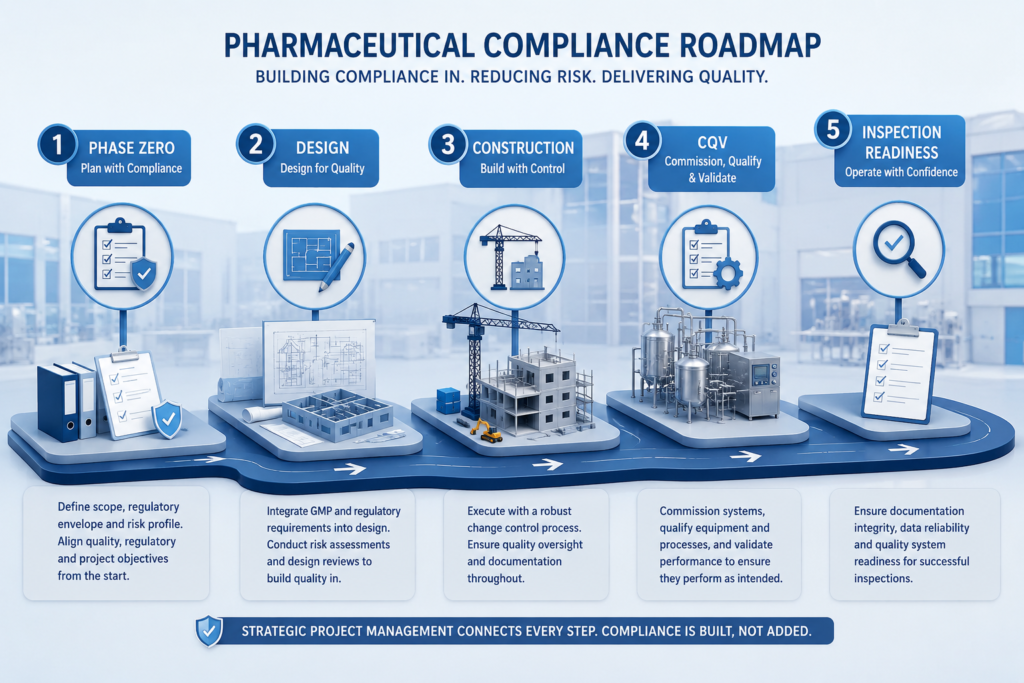
Process Performance Qualification (PPQ) batches made during commercial-scale manufacturing runs that prove a process can be produced consistently are an important part of FDA’s process validation lifecycle and support readiness to manufacture drug products for the US market.

Validation often becomes a project within your project. When it comes to project managing validation, Pharmaceutical Technology’s article on the topic is clear: Validation should have its own project manager, project team, project plan, and schedule that correlates with, but isn’t necessarily dictated by, the construction schedule. It also dictates that Quality Assurance and metrology teams are made aware of upcoming workloads with enough lead time to schedule resources. Lastly, the FDA district office local to your project should be made aware a new facility is being constructed.

Pharma compliance risk management teams that incorporate CQV specialists into the project delivery process from day one and treat qualification documentation as a foreseen deliverable of every design and construction decision will build facilities where regulatory filings and pre-approval inspections are predictable.

Specific Risk Zones and How Project Management Addresses Them

Data Integrity and Documentation Control

Data Integrity and Documentation Control

FDA has continued to increase its scrutiny on data integrity at manufacturing sites in in recent years. Data integrity gaps may include undocumented spreadsheets, missing audit trails, uncontrolled user access, incomplete electronic records, or deleted laboratory results without proper investigation. Data integrity risk starts long before IT creates a corrective action plan. It starts during project delivery when computer system validation is scoped, when decisions are made on what laboratory instruments to purchase, when specifying and implementing electronic batch record systems. 

A pharmaceutical specific project management firm with USA based teams working on facility projects  brings data integrity into scope during the procurement process. This ensures systems chosen and installed during construction have audit trails, validated access controls and time locked electronic records before qualification starts.

CAPA Systems and Quality System Readiness

FDA inspectors commonly cite issues such as failure to qualify suppliers properly, failure to timely root cause product failures or complaints, or inherent breakdowns in CAPA programs as systemic control failures. They are quality system issues, and they are observed when the FDA visits your pharma facility no matter how well constructed the building may be. 

Project Management USA, At Strategic pharma projects, quality system readiness is one of the deliverables of the project. Developing and approving SOPs, training people on those SOPs, defining CAPA/deviation management processes, qualifying the QMS itself and preparing complaints, batch record, deviation, and change control workflows. These things all have to be planned, resourced and executed before the first batch made for regulatory submission is manufactured. Pharma Access is a turn-key pharma engineering and project management company with 25+ years of experience on over 100 projects in 18 countries. 

We have made the integration of these efforts a fundamental project delivery discipline. We view the requirements for GMP compliance and the engineering execution as parallel lines driving toward the same goal – a facility ready to produce, inspect and supply.

The Business Case for Getting This Right

In plain language, the FDA’s deputy commissioner said it best: “If you think your company needs FDA inspectors to tell you where you are not in compliance, you’ve made a very expensive mistake.” This stance is supported by hard facts. Investing in pharmaceutical compliance US with effective project management discipline up front through Phase Zero planning, design reviews, construction change control and integrated CQV and quality system readiness is a fraction of the cost of remediating problems found during an inspection. Companies who receive consent decrees spend money they would have used for research and development on compliance monitoring and remediation. Some are sold off or bought out as a direct result. Schering-Plough’s first fine under a consent decree was $500 Million.

The risk of non-compliance pharma companies face is not solely technical in nature. It’s also organizational and built into how projects are planned, staffed and governed. A pharmaceutical project management company US leader that introduces regulatory strategy into the project management function from Phase Zero is not an overhead expense. It’s a risk management investment that can be measured.

FAQs

Q1: What is a pharmaceutical project management company and why does it matter for US FDA compliance? 

A pharmaceutical project management company coordinates engineering design, procurement, construction, qualification, validation, and quality system delivery for pharmaceutical facility and manufacturing projects. In US FDA-regulated environments, project management that integrates compliance requirements from the beginning reduces the risk of design deficiencies, documentation failures, and qualification delays that generate FDA observations and warning letters.

Q2: What are the most common compliance risks during pharmaceutical facility projects in the USA? 

The most common compliance risks during pharma facility projects include late engagement of quality and validation teams, inadequate change control during construction, systems not designed with qualification in mind, data integrity gaps in electronic systems, and insufficient CAPA and documentation infrastructure at manufacturing startup. All of these are addressable through structured pharma project management USA approaches applied from Phase Zero.

Q3: How does GMP compliance USA get built into facility design through project management? 

GMP compliance is built into facility design through early involvement of quality assurance engineers in design reviews, use of ICH Q9 Quality Risk Management frameworks to assess design decisions against contamination and contamination control risks, validation master planning during the engineering phase, and construction change control that evaluates every design modification for its impact on the validated state of the facility.

Q4: What is the financial impact of pharmaceutical compliance failures in the US market? 

The financial impact of pharmaceutical compliance failures includes direct costs fines of $15,000 per day under consent decrees, product recall costs, facility shutdown expenses, and third-party consultant fees and indirect costs including lost product approvals, revenue loss during remediation, reputational damage affecting partner and investor relationships, and diversion of R&D funding into compliance remediation. Historical consent decrees have cost individual companies up to $1 billion.

Q5: How does pharma compliance risk management differ in facility projects versus ongoing operations? 

In facility projects, pharma compliance risk management focuses on decisions made during design, procurement, and construction that determine the regulatory baseline the facility starts from cleanroom design, HVAC qualification, utility validation, data systems integration, and quality system setup. In ongoing operations, risk management shifts to maintaining that baseline through environmental monitoring, CAPA governance, change control, periodic reviews, and inspection readiness. Both depend on quality being built in from the start rather than tested retrospectively.